I have 200 browser tabs open right now. That is not a metaphor. I have been reading every beat reporter, every columnist, every postgame transcript since Sunday night’s Spurs-Thunder game ended somewhere around 1 AM eastern and I still cannot tell you with any confidence what this series is going to look like when it is over. That is not a bad thing. That is a great thing. That is what you want from a Western Conference Finals.
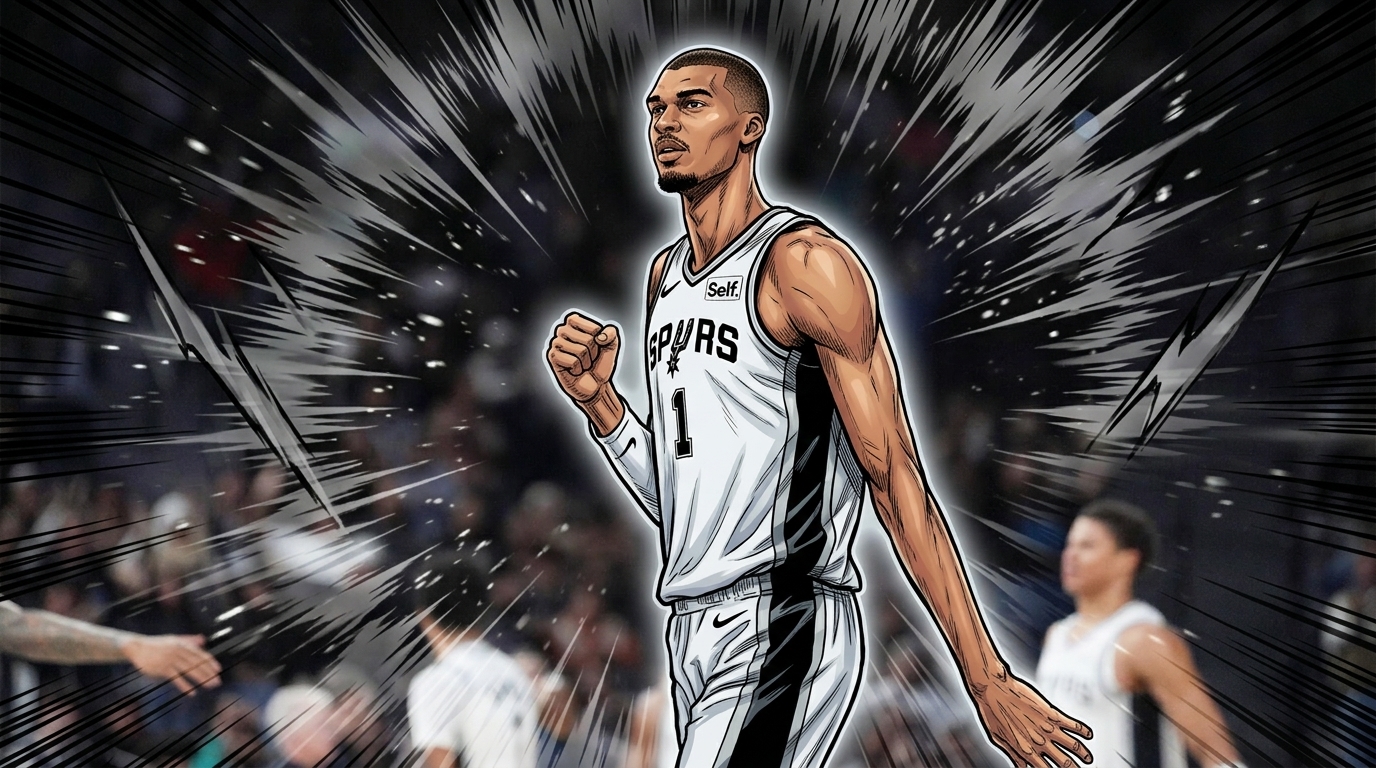
Here is the institutional question that has to be answered before Game 2 tips tonight: does the NBA have two franchise pillars at the top of the mountain right now, or does one of them have to come down? Shai Gilgeous-Alexander won 83 of 100 first-place MVP votes this season. Victor Wembanyama just put up 41 points and 24 rebounds in a double-overtime Conference Finals debut without his starting point guard. The SGA vs Wembanyama WCF 2026 collision everyone has been anticipating for two years is finally here, and Game 1 already cracked something open.
One narrative has to lose. Let’s map the terrain before it calcifies.
What SGA’s Back-to-Back MVP Actually Means Going Into This Series
The trophy was handed to Shai Gilgeous-Alexander in a pregame ceremony on the floor of Paycom Center on Sunday — the same night the Oklahoma City Thunder would go on to lose Game 1 at home in double overtime. The symmetry was brutal and possibly clarifying.
The numbers behind SGA’s MVP season by the numbers are genuinely historic. According to NBA.com, he averaged 31.1 points, 6.6 assists, shot 55.3 percent from the field, 38.6 percent from three, and 87.9 percent from the line in 33.2 minutes per game — all career bests. He was the first guard to average 30-plus points at that efficiency level in NBA history. He also led the entire league with 175 clutch points, averaging 6.5 points per game in clutch situations. He is a proven closer. That is not a narrative, it is a résumé.
The 83-to-10 margin over Nikola Jokic and Victor Wembanyama in first-place votes was not a close call — it was a landslide. He became the 14th player in league history to win back-to-back MVPs and the first guard to do it since Stephen Curry. The Oklahoma City Thunder went 64-18 for the second consecutive season with the best record in the NBA.
All of that is real. All of it is documented. And then Game 1 happened and SGA went 7-of-23 from the field, scored 24 points on 30.4 percent shooting, and posted four turnovers in 51 minutes of play. Postgame, he said: “I have to be better.” He named himself as the problem.
That kind of accountability is part of why media voters went 83-10 for him. But the shooting line is the shooting line. The worst shooting game of his entire 2026 postseason, in Game 1 of the Conference Finals, at home, against the team that is supposed to be the underdog. Before you write the whole thing off as a one-game sample: ESPN noted pre-series that SGA “hasn’t been at his best this postseason,” which reads less as alarm and more as a suggestion that there is still upside in reserve. If he’s been playing at less than his best and the Thunder are still in this series, that has implications.
The question for Game 2 tonight at Paycom Center, 8:30 PM ET on NBC/Peacock, is simple: which version of Shai Gilgeous-Alexander shows up?
Wembanyama’s 41-Point, 24-Rebound Game 1: The Historical Context
Let me just put the full box score on the table before we contextualize it, because it deserves to be read in full. Victor Wembanyama: 41 points, 24 rebounds, 3 assists, 3 blocks, 49 minutes played. Playoff career highs in points and rebounds. In a Conference Finals debut. Without De’Aaron Fox.
https://twitter.com/NBA/status/2057259805492826416
The historical frame: Wembanyama joined Wilt Chamberlain as the only players in NBA history to post 40-plus points and 20-plus rebounds in a Conference Finals debut. He also became the youngest player in league history to record a 40-20 game in any playoff game at 22 years and 134 days old.
He also holds the 2025-26 NBA Defensive Player of the Year award — the first unanimous DPOY in league history. So what you have is the best defensive player in the NBA putting up Wilt Chamberlain offensive numbers on the same night, against the team with the best record in basketball, in double overtime, without his starting point guard. That is a complete sentence.
The sequence that decided the game in overtime is going to live in highlight packages for a long time. Spurs trailing by three with 27 seconds left in OT1. Wembanyama buries a 28-foot three-pointer to tie the game at 108. Game goes to double overtime. Spurs win 125-118. He played 49 minutes — the most of his basketball life.
Wembanyama’s postgame on the “best player in the world” question: “Do I feel like it right now? I feel tired. But it’s not a question I’m wondering right now. We’ll see. The world is 8 billion people, so it’s 8 billion opinions.” On whether the MVP vote feels personal: “Yeah, for sure. Everything you just said.” On Fox’s absence: “We had to cover up for our guy Fox who will be hopefully available next game.”
Dylan Harper also went for 24 points, 11 rebounds, 6 assists, and 7 steals. De’Aaron Fox’s injury situation — ankle, questionable for Game 2 — is the variable that makes all of the above even more extraordinary.
What Are Analysts Actually Saying About the Thunder-Spurs Series?
The short, direct answer for anyone who just wants the consensus: analysts are split between declaring Wembanyama the new best player in the world based on Game 1 alone, and those urging caution because SGA has the proven closing credentials and the Thunder have the superior overall roster. Most agree this is the most significant two-player series in over a decade.
CBS Sports declared Game 1 “the night Wembanyama became the best player in the world.” That is a declarative editorial judgment published within hours of the final buzzer. Bleacher Report called it a generational performance. Yardbarker labeled this the most significant two-player series since 2009.
The counterpoint, also from CBS Sports pre-series: SGA has the clutch credentials — 175 clutch points, a proven closer — and Wembanyama has been better overall in the playoffs while SGA has been better when it counts. The 83-to-10 MVP vote reflected where the media consensus was before the series began. Game 1 immediately challenged that consensus.
ESPN noted the structural tension before tip-off: Wembanyama is DPOY, SGA is MVP. Best defensive player versus best offensive player. The WCF is the test that validates or deflates both theses simultaneously. That framing holds up. You can’t have both. The series resolves the question that the awards split left open.
The SGA vs Wembanyama WCF 2026 matchup is being covered as a Wembanyama coronation, but almost nobody is writing off SGA. The historical record on back-to-back MVPs in playoff situations is more complicated than the Game 1 narrative allows. Wembanyama had to play 49 minutes to win at home without Fox, against a team whose best player had his worst shooting game of the postseason. What happens when SGA is at 80 percent instead of 50? The analysts declaring this series over are getting ahead of themselves. Both things can be true simultaneously.
One Narrative Has to Die — What Game 2 Decides
Here is how I see how the terrain looks going into tonight on the SGA vs Wembanyama WCF 2026 battlefield.
If SGA bounces back — anything in the 32-35 point range, efficient, some clutch moments — the Game 1 narrative gets complicated immediately. The media cycle that started declaring Wembanyama the new king has to absorb a correction. The Thunder are still a 64-win team. They didn’t win the best record in basketball twice by accident. The roster around SGA — Alex Caruso went for 31 points off the bench in Game 1 on eight threes — is genuinely deep.
If Wembanyama does something close to a repeat performance, or even a 28-10 workhorse game while the Spurs find a way to win, the coronation becomes harder to delay. The “best player in the world” conversation moves from hot take to genuine thesis.
The Fox variable changes everything. If De’Aaron Fox is available and functional for Game 2, the Spurs have a second playmaker who can keep the offense moving without forcing Wembanyama into 49-minute hero ball again. If he’s out, Wembanyama has to do that again, and the Thunder will be running different schemes knowing what’s coming. Even superhuman players have diminishing returns across consecutive high-usage nights.
There is also the MVP trophy ceremony factor nobody is quite saying out loud. Shai Gilgeous-Alexander received that award in the pregame ceremony, on his home floor, in front of his home crowd, and then went 7-of-23. That is probably not a coincidence. “I have to be better” is not the quote of someone who thinks the situation is fine.
What to watch for tonight: SGA’s pull-up jumper in the first half — if he’s converting that shot at his usual clip, the Thunder are fine. Wembanyama’s foul situation — OKC will scheme to put him in trouble early, force him off the floor in key moments. And Harper’s second-game adjustment: the Thunder have tape now on a player who went 24-11-6 with 7 steals, and how both sides adjust is the series subplot nobody is covering enough.
You can follow how the Spurs got here and track De’Aaron Fox’s injury situation for the full picture going into tonight. Game 2 is at Paycom Center, 8:30 PM ET, NBC/Peacock.
One of these narratives cracks tonight. I have no idea which one. It’s going to be a long night.