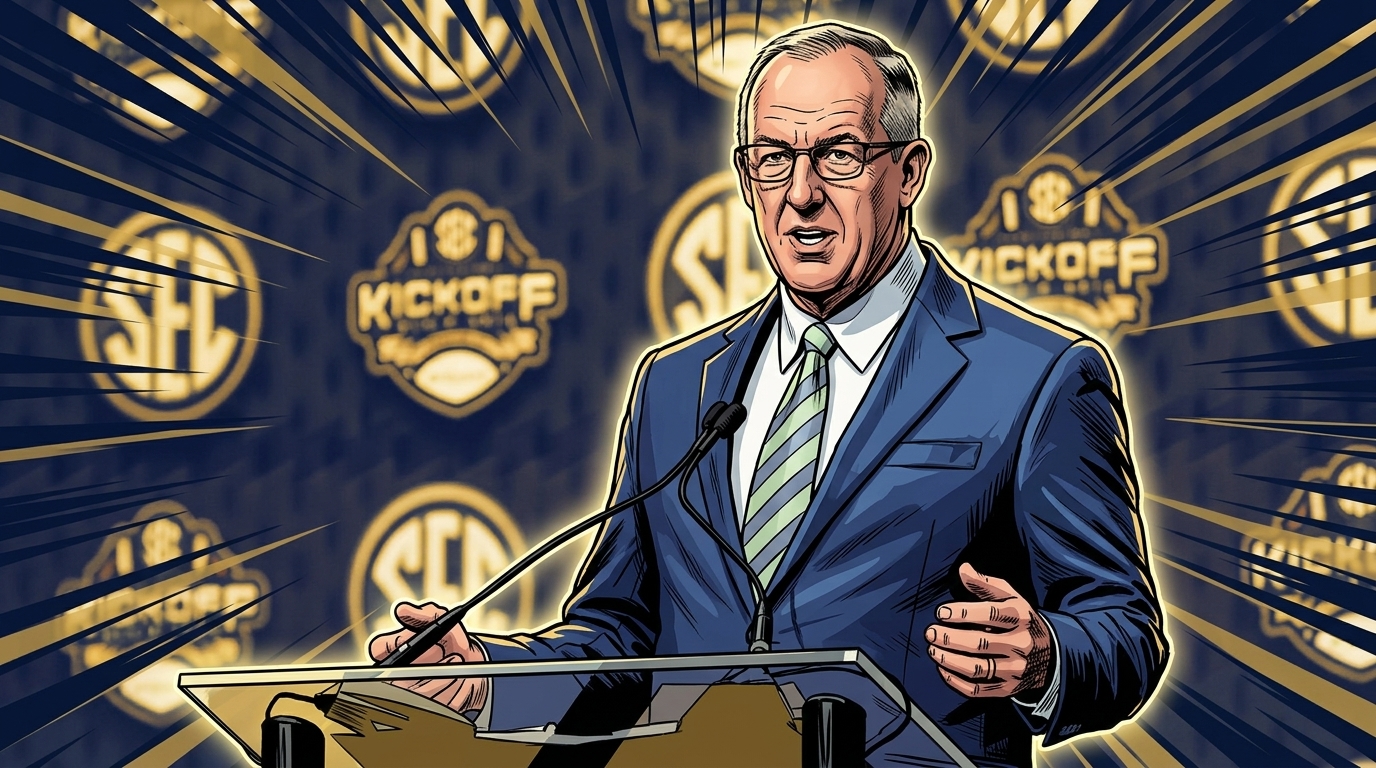

The SEC announced this week that all conference athletes must watch a mandatory sports gambling education video before they can play a regular season game in 2026-27. The video, designed in partnership with IC360 (the real-time gambling monitoring company formerly known as US Integrity), will teach athletes how to recognize betting risks, understand NCAA policies, and report suspicious activity.
That all sounds very responsible. It also sounds like a liability shield dressed up as a public health initiative.
Here’s what the SEC is not doing: examining the system that created the problem. The conference just signed a 10-year, $3 billion exclusive broadcast deal with ESPN that began in 2024-25. ESPN, in turn, integrates betting odds into its broadcasts, runs DraftKings partnerships, and airs gambling commercials during the very games these athletes are playing in. A Washington Post investigation published two weeks ago used AI to analyze 50 hours of televised sports and found a gambling reference, promotion, or commercial every four minutes on average. FanDuel and DraftKings spent a combined $2.7 billion on marketing in 2025 alone.
So the SEC’s position is: we will educate you about the dangers of gambling while the networks we sold our rights to bombard you and every fan watching with gambling content approximately 15 times per hour.
Commissioner Greg Sankey framed the initiative around recent high-profile incidents. “The rise in sports gambling, including some recent well-documented incidents among college and professional athletics, as well as developments around prediction markets, makes this a high-priority initiative for the Southeastern Conference,” Sankey said. He’s not wrong about the incidents. Brendan Sorsby, the Texas Tech quarterback who transferred on a reported $5 million NIL deal, checked into residential treatment for a gambling addiction after the NCAA discovered he’d placed thousands of bets via a gambling app. Five days ago, Pete Thamel reported the NCAA denied Sorsby’s reinstatement request for the 2026 season.
https://x.com/PeteThamel/status/2059371475560202290
That’s a real person with a real addiction whose career is functionally over. And the SEC’s response is a video. Not a reckoning with how their broadcast ecosystem normalizes betting for every 18-year-old watching on a Saturday. Not a conversation about whether $12 billion wagered on SEC games in a single academic year represents a systemic problem rather than an individual one. A video.
The numbers behind this are staggering. According to the SEC’s own data, 58% of 18-to-22-year-olds have engaged in at least one sports betting activity. Among students living on college campuses, that number climbs to 67%. Seven of the SEC’s 12 member states have legalized sports betting. The athletes watching this mandatory video will walk out of their compliance meeting, turn on the TV, and see the same conference logo plastered next to a DraftKings odds graphic before kickoff.
Front Office Sports reported in April that college athletes are still betting despite NCAA bans, using family members’ identities and illegal bookies to get around restrictions.
https://x.com/FOS/status/2042180723944382765
“We were going to bet regardless, no matter what,” one former Big East soccer player told FOS. That quote should terrify the SEC, because it means the video won’t work. You cannot educate someone out of an addiction that your own product actively incentivizes. The SEC isn’t going to stop cashing those broadcast checks. ESPN isn’t going to stop running odds tickers. The sportsbooks aren’t going to stop spending $2.7 billion a year to reach the exact demographic that plays SEC sports.
What the SEC is doing is building a paper trail. When the next Sorsby happens, when the next Brad Bohannon texts a gambler about a pitcher’s injury before a game, when the next integrity scandal breaks, the conference will point to this video and say: we told them. We educated them. We did our part. The liability falls on the athlete, not the institution.
That’s not education. That’s indemnification. And every athlete forced to sit through this video before they can take the field should understand exactly what they’re watching: a conference covering its legal exposure while its broadcast partners sell the thing they’re being warned about during every commercial break.