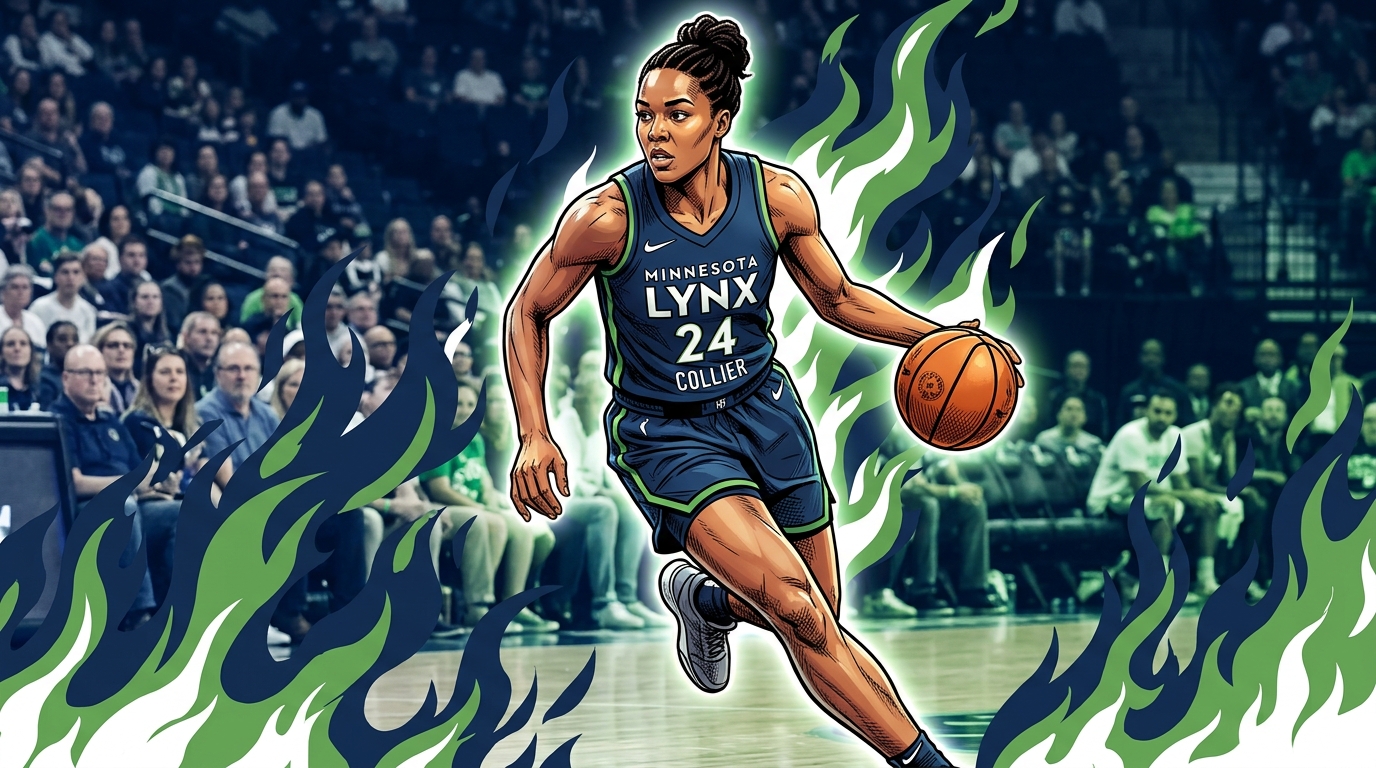

Angel Reese became the fastest player in WNBA history to 1,000 career rebounds Friday night, and she did it in the same game Caitlin Clark broke her own record for fastest player to reach 300 points and 100 assists in a season. Both fanbases woke up Saturday morning convinced their person won.
That’s not a bug. That’s the whole product.
The Dream beat the Fever 113-96 at a sold-out State Farm Arena (17,044 fans, Dawn Staley courtside, Latto two rows up), according to ESPN and the Washington Post. Reese hit the milestone at 4:29 left in the third quarter: offensive rebound off an Allisha Gray miss, putback bucket, record. She did it in 79 games. Tina Charles needed 89. The milestone wasn’t manufactured for TV; it came off a crash, which is exactly the point.
“People don’t realize rebounding is harder than you think,” Reese said. “Going in and crashing every single time to get second chance opportunities on the offensive end — they’re not just from my shots. They’re from my teammates.”
That’s the part the highlight reel skips. Reese already owns the records for fastest to 500, 600, 750, and 900 career rebounds. She’s averaging 11.9 boards a game, leading the league, doing it on the Atlanta Dream after her April trade from the Chicago Sky. The record is a landmark, not a flash.
Clark finished with 26 points and seven assists in the loss, and also became the fastest player in WNBA history to 300 points and 100 assists in a single season, reaching it in just 16 games. She broke her own record from her 2024 rookie year, when she needed 19. She has done this before, and she did it again. Broke her own record — again. That keeps happening.
https://x.com/espnW/status/2068406258080661853
What made this specific game different from the previous matchup between these two, or their Commissioners Cup matchup earlier this month, is that neither player was incidental to the other’s record. Reese’s milestone required her to be the best rebounder on the floor against a Fever team that ran its offense efficiently enough to stay within striking distance through three quarters. Clark’s milestone required her to keep distributing on a night her team was getting blown out by 17 in the third quarter. They weren’t sharing the spotlight. They were both earning it, separately, in the same building, on the same night.
I grew up watching Diana Taurasi play in Phoenix and spent a few years in Chicago when the Sky were winning championships. I’ve watched the WNBA for a long time, and I’ve never seen a single regular-season game generate this kind of dual-fandom gridlock. Usually one side gets the good night. Friday, neither did. Or both did, depending on where you sit.
The Bird-Magic comparison gets made too easily in sports. But what Bird and Magic actually did was give the NBA a rivalry that worked on two tracks simultaneously: you could be a Celtics fan and watch Magic run the Showtime break and feel something, and you could be a Lakers fan and watch Bird make a ridiculous bank shot and feel something else. The product was bigger than either team. Clark-Reese is running the same engine. You don’t need to follow the WNBA to have an opinion about who had the better night on Friday. That’s not an accident.
Clark’s box score had 7 turnovers alongside the 26 points. The Fever committed 19 total; the Dream scored 20 off them. Atlanta won by 17. But Clark’s 14-assist performance earlier this season established she’s capable of historic outputs even when the team falls short. The record she set Friday is the same kind of proof: individual excellence, team loss, no contradiction there.
The fastest player in WNBA history to 1,000 career rebounds crashed the glass on a night the fastest player in WNBA history to 300 points and 100 assists in a season scored 26 in a loss. This is what a real rivalry looks like.
Both sides won. That’s how you know neither did.