Gregg Popovich coached his last game on November 2, 2024, and none of us knew it yet. He had a mild stroke before tip-off against the Timberwolves, was hospitalized, and began the long, uncertain process of recovery. He was 75. He had coached the Spurs for 29 years. The organization waited. Then February came, then May 2, then the announcement: he would step down, become President of Basketball Operations, and hand the bench to Mitch Johnson.
That title — President of Basketball Operations — is what you call someone when “still here, just different” doesn’t fit on a business card.
What happened next is a story about what a legacy actually looks like, as opposed to what we usually call one.
Popovich Didn’t Coach This Team. He Made It.
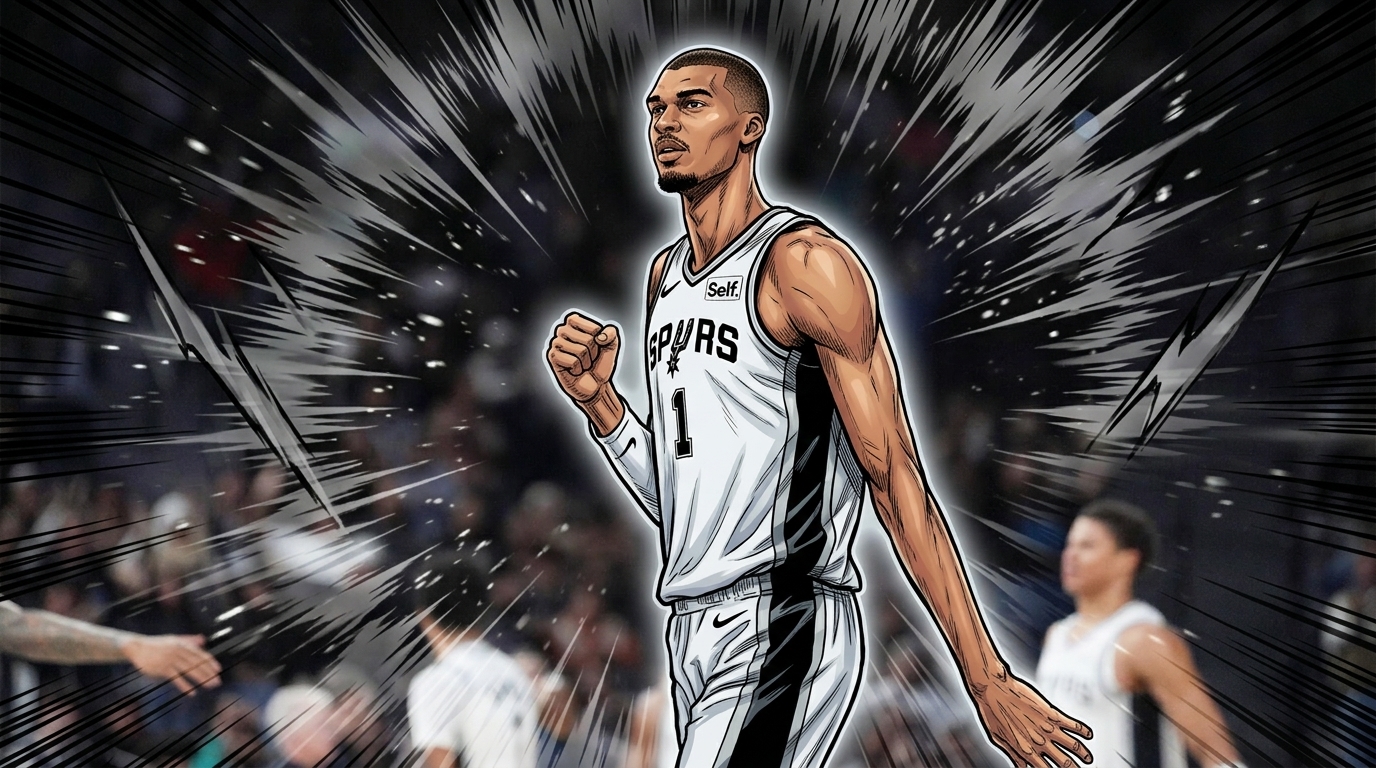
Mitch Johnson took a roster built around a 22-year-old French center and went 62-20 — which, if you’d said that on November 3, 2024, would have gotten you laughed out of any arena in the league. The best record the Spurs have had since 2016-17. The most wins in a decade. Johnson is a good coach and deserves the credit, but the offensive and defensive philosophies, the culture, the institutional knowledge in that locker room — that’s 29 years of one man’s fingerprints.
The Conference Finals lineup the Spurs ran when De’Aaron Fox was out with ankle soreness was the youngest starting five in Conference Finals history: an average age of 22 years and 346 days. Dylan Harper, 20. Stephon Castle, 21. Julian Champagnie, 24. Devin Vassell, 25. Wembanyama, 22. They were 279 days younger than the 1977 Portland Trail Blazers, who previously held the record. Popovich built the culture those kids were playing inside.
Victor Wembanyama was the centerpiece from the day Popovich lobbied to stay after the tanking years, after the Tim Duncan era closed, after they bottomed out chasing the pick that eventually became Wemby. That was a choice — to believe the franchise could rebuild, to trust that the process would work, to still be there when it did. The stroke stopped him from coaching the player he drafted. It didn’t stop him from being present.
What the Locker Room Visit Actually Meant
The Spurs lost Game 3 to Oklahoma City 123-108. They had led by 15 and watched it disappear. The series sat at 2-1, OKC.
Popovich walked into the locker room afterward. According to reporting by NBC Sports, this was the first time all season he had done that. Not in October. Not in January. Not in the playoffs before that night.
De’Aaron Fox described the moment to reporters: “Pop’s been around throughout the course of the season, but that was the first time he walked into the locker room. And it was like, ‘Nah, that’s BS. That’s not how we play basketball.’”
Fox’s account of it was a piece of sports reporting that will get replayed for years: “We open that door, we see Pop come in, and it’s like, ‘Awwww.’” Not reverence, exactly. More like: you don’t get to disappoint this particular person. “Obviously, he had some choice words for us. That was the first time all season that he came into the locker room right after a game and told us how he felt. Everybody felt that.”
Shannon Sharpe cried on air when this story came out. The specific sentence that got him: understanding the level of respect required for a 77-year-old man, in the condition Popovich is in, to still walk into that room and demand more.
The Spurs won Game 4 by 21. Wembanyama went for 33 points, 8 rebounds, 5 assists, 2 steals, 3 blocks. They won Game 6. They won Game 7 in Oklahoma City, 111-103, with seven players in double figures and SGA’s 35 points going to waste because the rest of OKC’s starters combined for 31.
The Full Arc
The series was 2-1 OKC before the locker room visit. It ended 4-3 San Antonio. That’s the connective tissue, and no, you can’t draw a straight causal line, but anyone who’s played a team sport understands what Fox was describing. Someone with standing walked into a room. The standard was restated. The team remembered who they were supposed to be.
When it was over, on May 30, 2026, Wembanyama was asked about Popovich. What he said belongs in whatever record gets kept of this era.
“He goes through some things we can’t even imagine. So I need to call him. I need to see him. I need to talk to him. Because there’s no way I can understand right now how he feels.”
He went further: “I don’t know if he’s ever going to do an interview about it. When I talk to him, it’s going to be only stored in my head, except if I record it in secret. But I need to talk to him so quick.”
That’s not a quote about basketball. That’s a quote about what it means to have someone believe in you before you gave them any reason to.
In May 2025, when Popovich made the retirement official, Wembanyama posted what amounted to a letter:
https://twitter.com/wemby/status/1918408239508488378
The phrase “it was an honor to be a part of those 29 years” is worth sitting with. Wembanyama played one season with Popovich on the bench. The other 28 years built the culture, the credibility, and the draft pick selection process that produced Wembanyama in the first place. He was right to claim all of it.
This is Wembanyama’s Finals. It’s also Mitch Johnson’s, and De’Aaron Fox’s, and Castle’s. But the 1999 Finals were Popovich’s too — he won that series 4-1 against the Knicks, who happen to be, of all things, the opponent again — and nobody would argue with you for saying the 2026 version is his in the same way. This is the franchise he built. This is the player he waited for. The legacy was always going to end up here; it just took the longest and hardest possible road to get there.
Game 1 is Wednesday, June 3, in San Antonio. The Earvin “Magic” Johnson Trophy that Wembanyama just won as WCF MVP will be on display somewhere in the arena. Popovich will be watching. That’s enough.