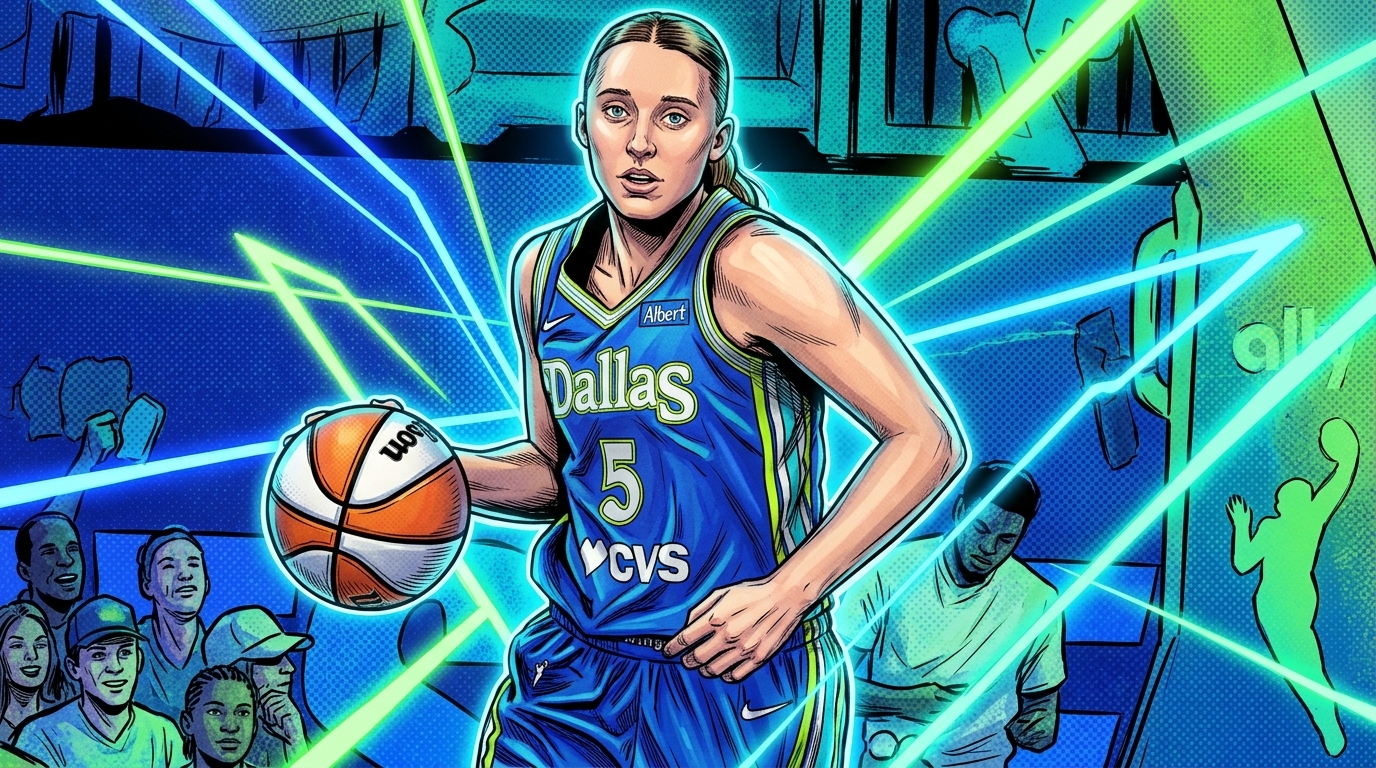

Paige Bueckers finished a postgame press conference after a 96-81 win over Chicago — 22 points, 11 rebounds — and said the quiet part out loud: the WNBA, a league built on the labor and legacy of Black women, currently employs zero Black women as head coaches. Then the internet called her a puppet.
That reaction is the story. Not the comment.
Why Did It Take a White Star to Say This Out Loud?
Bueckers’ quote was unscripted, delivered in response to a reporter’s question, and grounded in something specific: her stepmom, her AAU coach, the women who shaped her. “This league was built on a lot of Black women,” she said, “so it’s definitely right for them to get the same equal opportunity as everyone else.” Direct. Personal. Factually correct.
The fact itself is damning enough without any embellishment. In 2022, three Black women held head coaching jobs in the WNBA — Tanisha Wright, Vickie Johnson, Noelle Quinn. Now there are none. Zero. The only other times that happened in thirty seasons were 2006 and 2020. This is not a slow drift. It’s a cliff.
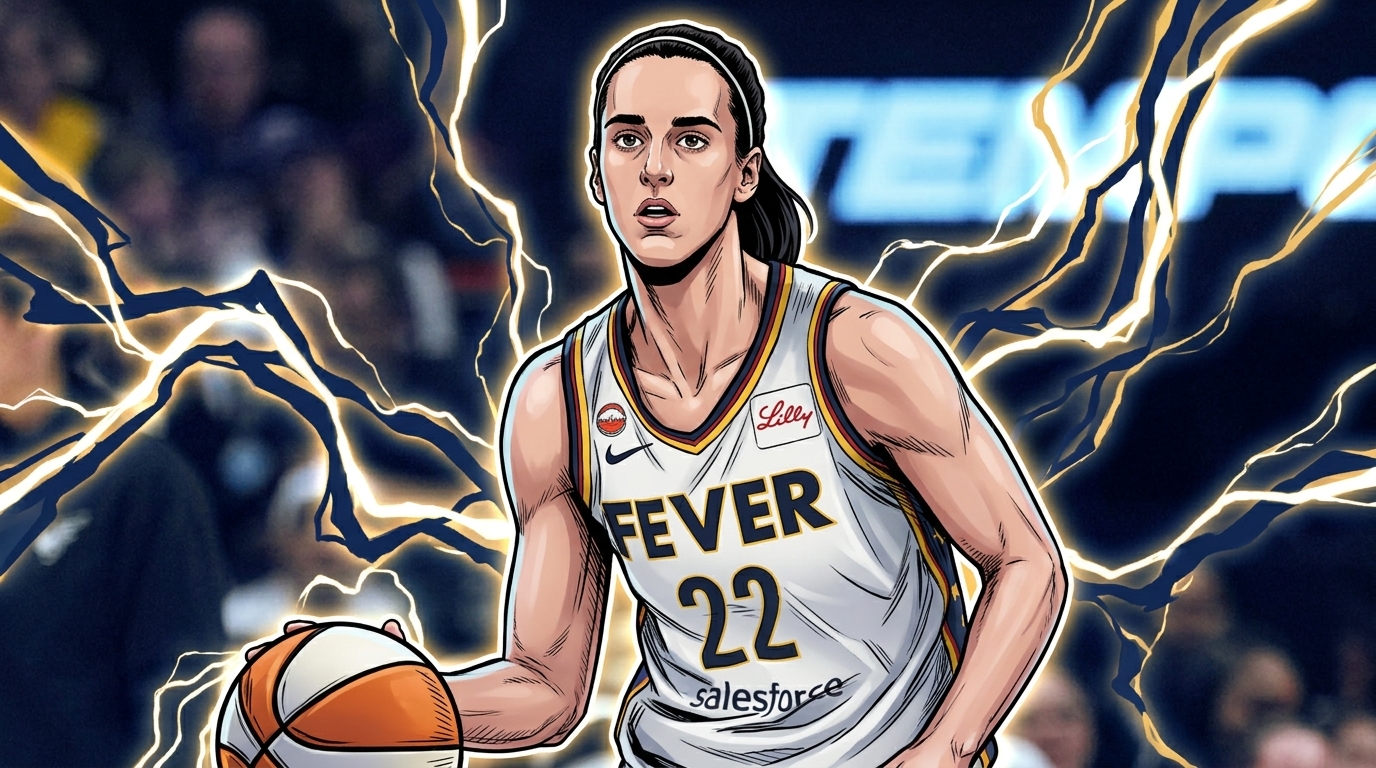
Caitlin Clark gets asked about the racial dynamics of the WNBA’s spotlight regularly. She answers carefully, diplomatically. Bueckers just answered directly. The different responses will be compared forever, and that comparison is also a data point.
Noelle Quinn was the last. She coached Bueckers at Breeze BC in the Unrivaled winter league — they had a working relationship — and the Storm didn’t renew her contract after 2025.
https://x.com/landonbuford/status/2076699035302260830
Quinn had said months before her firing that it gets heavy being the only one. “It’s important. It gets heavy sometimes, and I don’t talk about it often in front of you guys.” She said that while still employed. Then she was gone. Then there were none.
Quinn also said, plainly: “It’s not by accident. I believe it’s intentional.”
What Does the “Groomed” Backlash Actually Reveal?
Here is what critics decided to focus on instead of any of that: Bueckers must have been coached to say it. “Groomed.” “Reading a script.” The argument is that a 24-year-old with 20.7 points and 6.3 assists per game — an All-Star starter in her second season — couldn’t have arrived at this opinion herself.
I watched the clip. She’s not reading anything. She’s answering a question about her life.
Think about what that actually requires you to believe. That Bueckers, who named her stepmom and her AAU coach by relationship, who described how Black women shaped her upbringing in specific terms, did so because someone handed her a cue card. That she lacks both the intellect and the autonomy to form a view about something she watched up close.
The argument isn’t subtle. It says: a young white woman cannot have genuinely internalized this. Which is exactly what Bueckers was arguing the problem looks like.
This isn’t a defense of Bueckers’ framing being perfect — she’s speaking from the outside, and there’s a version of this where the league’s Black players and coaches do the talking and don’t need a star to amplify it. That’s a fair critique. But “groomed” isn’t a critique. It’s a dismissal designed to make the underlying facts disappear.
What Happens Now?
Fifteen head coaches in the WNBA. Seven are women. Two are Black — both men: Tyler Marsh with the Chicago Sky, Sydney Johnson with the Washington Mystics. Dawn Staley, arguably the best women’s basketball coach alive, runs a college program. The league’s own expansion is happening right now, which means new head coaching jobs are being created. The decisions being made in this moment will shape the next decade.
The WNBA’s coaching diversity conversation isn’t abstract. It’s a hiring question with specific names, specific openings, and specific people making choices. What Bueckers did was name the outcome of those choices publicly, with her platform, in a league where that platform matters.
Whether she was the right messenger is a conversation worth having. Whether the facts she cited are true is not.
The people who called her groomed answered Quinn’s question for her.