
We’ve spent two decades watching college players fight to reach the NFL faster. Now sixteen of them, all carrying signed NFL contracts, are suing to get back to college football, and a federal judge just told them they might get to.
On Wednesday, a Louisiana judge granted a temporary restraining order clearing a path for those sixteen players to leave their NFL teams and return to college for a fifth season. The NCAA was ordered to open the transfer portal for one week to accommodate them. None of it happens automatically, though (nothing about this NCAA eligibility fight has been simple), and that’s the part getting lost in the noise.
What the TRO Actually Lets These Players Do
A Louisiana federal judge granted 16 players with signed NFL contracts a temporary restraining order letting them void those deals and return to college for a fifth season, provided their NFL teams release them by September 1, 2026. Nothing is finalized until that release happens.
That deadline is the entire story right now. The TRO doesn’t unwind an NFL contract on its own; it opens a window of less than two weeks in which a team can choose to let a player go. If a team says no, the player stays put, portal order or not. This ruling builds on a messier legal thread that started July 31, when federal judge Charlotte Sweeney granted Class of 2022 athletes a potential fifth year of eligibility, then narrowed it two days later, reaffirming a ban on players with signed pro contracts, keeping the 105-man roster cap, and requiring players be under 20 at the start of their five-year clock. We’ve already covered the NCAA’s five-for-five eligibility mess in detail, and Wednesday’s order is really a second, more direct challenge aimed squarely at the players Sweeney’s version left out: the ones who already cashed an NFL paycheck.
Why Jack Pyburn Is the Test Case That Matters
Jack Pyburn is the name attached to this case, and he’s also the one player in the group whose situation cuts against the tidy narrative. The undrafted edge rusher, formerly of LSU and Florida, signed with the Buccaneers for a roughly $15,000 bonus and about $100,000 in guaranteed money he’d be forfeiting by leaving. He hasn’t left. He’s currently competing for one of Tampa Bay’s 53 roster spots, coming off a preseason game against the Jets in which he logged two sacks. His legal argument centers on a 2023 ACL tear at Florida that cost him a season he never got back, which is a real grievance and a genuinely sympathetic one. It also means Pyburn is suing for the right to leave a team he’s actively trying to make.
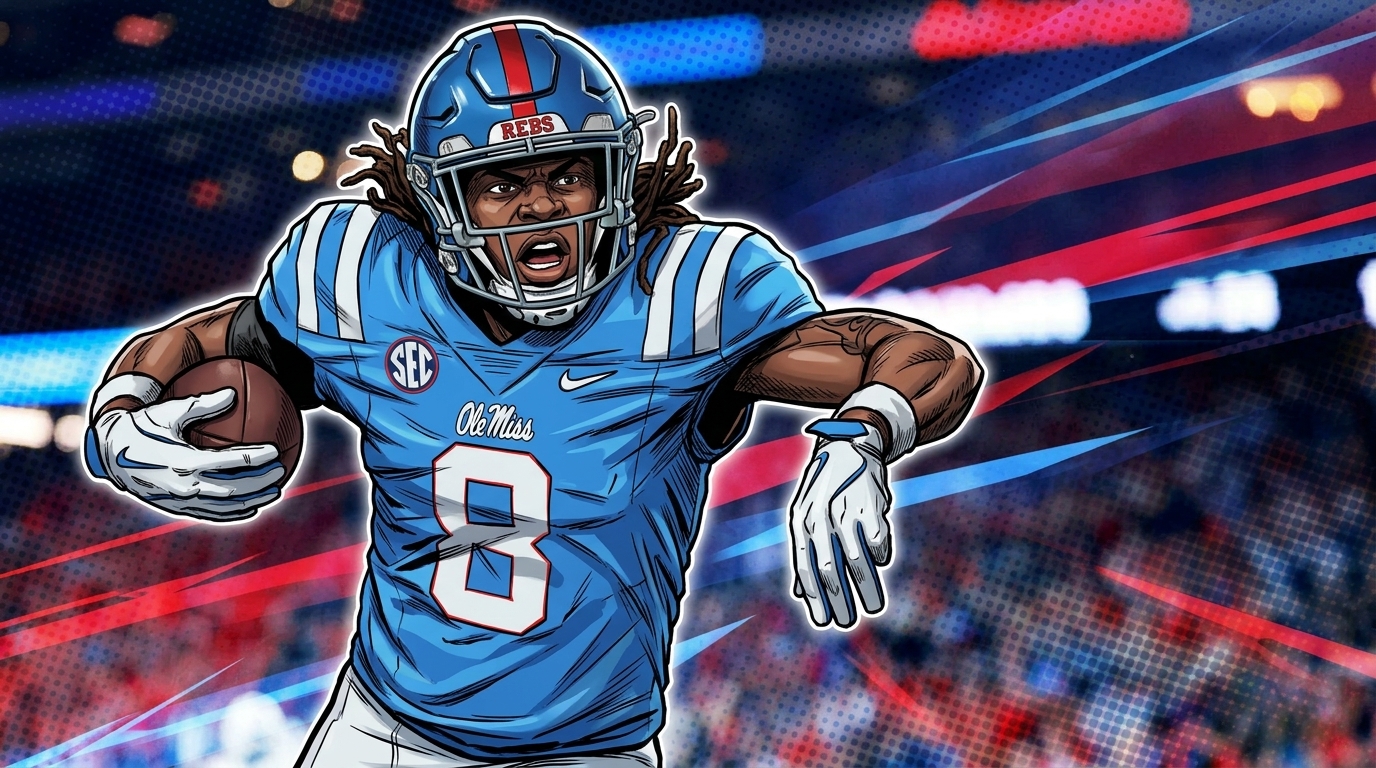
He’s not alone in the awkward middle. Three former Ole Miss starters are part of the same sixteen: Dae’Quan Wright, Xzavian Harris, and Wydett Williams, all undrafted free agents (Harris signed with the Saints) now seeking release to enter the portal. The rest of the group reads like a cross-section of the sport rather than a handful of edge cases: James Madison linebacker Trent Hendrick, last year’s Sun Belt Defensive Player of the Year with reported minicamp interest from the Browns and Chiefs before Michigan came calling; SMU’s TJ Harden; Oregon State’s Anthony Hankerson; Notre Dame’s Junior Tuihalamaka; South Carolina’s DQ Smith. On3 and 247Sports have been tracking the full list as it’s grown, which tells you this wasn’t one agent’s idea. It’s become a strategy.
(Somewhere in an NFL front office this week, someone is explaining to their boss why “a player suing to un-sign himself” wasn’t in the offseason plan.)
Here’s how Schefter framed the mechanics of it as the order came down:
https://twitter.com/AdamSchefter/status/2090186160634986677
None of these guys is packing a bag yet. As of this week, Pyburn is still on Tampa Bay’s roster, and so is everyone else in the group, waiting on decisions that belong to the NFL teams, not to them.
Is a Fifth College Season Worth More Than an NFL Roster Spot?
For at least sixteen players, the answer right now is functionally yes: they’d rather have the legal option to trade a signed NFL deal for one more year of college eligibility than bank on making an NFL roster. That’s not a fringe legal theory anymore. It’s become an organized wave with its own list of names and its own law firm strategy.
Clay Travis and others in sports radio have been framing this as a mirror image of the old fight, where players used to sue for the right to reach the NFL early, and now they’re suing for the right to leave it. I think that framing undersells what’s actually happening. The old lawsuits argued the NFL was worth more than whatever amateur rule stood in the way. This wave argues the opposite: that a fifth college season, complete with the visibility, control over their own market, and a real shot at getting drafted instead of scrapping for a 53rd roster spot, is worth more than the paycheck some of these guys already signed for. Neither the NFL’s collective bargaining structure nor the NCAA’s eligibility framework was built with that possibility in mind, which is exactly why this is playing out in a Louisiana courtroom instead of a front office. It’s the same underlying fight that surfaced when a federal judge reopened the transfer portal for basketball players earlier this year — different sport, same unresolved question about who actually controls an athlete’s eligibility clock.
(Pyburn’s $15,000 signing bonus isn’t a rounding error in this story, it’s the whole story in miniature. That’s what a UDFA deal looks like before anyone outside the building knows your name, and it’s a genuinely small number to be the thing standing between a player and a legal fight this large.)
Whether any of this actually happens still depends on NFL front offices doing something they have zero obligation to do: releasing a player, on purpose, before September 1, so he can go be someone else’s problem in college. Some teams might see a clean roster spot and take it. Others might decide a fifth-round dice roll they already made is worth keeping, if only to see it through. Either way, we’re about to find out how many of these sixteen actually make it back to a college sideline, and how many spend the fall finding out the hard way that a signed contract still means something after all.