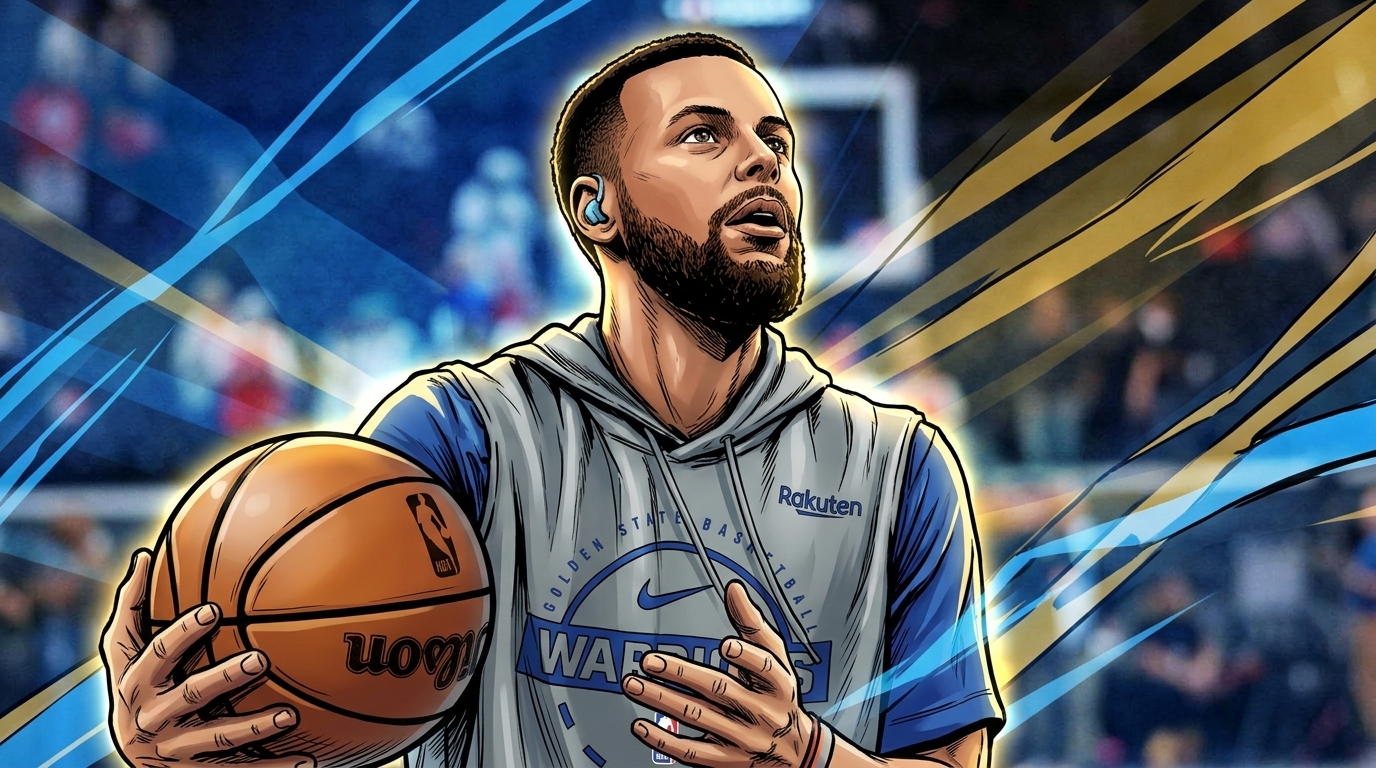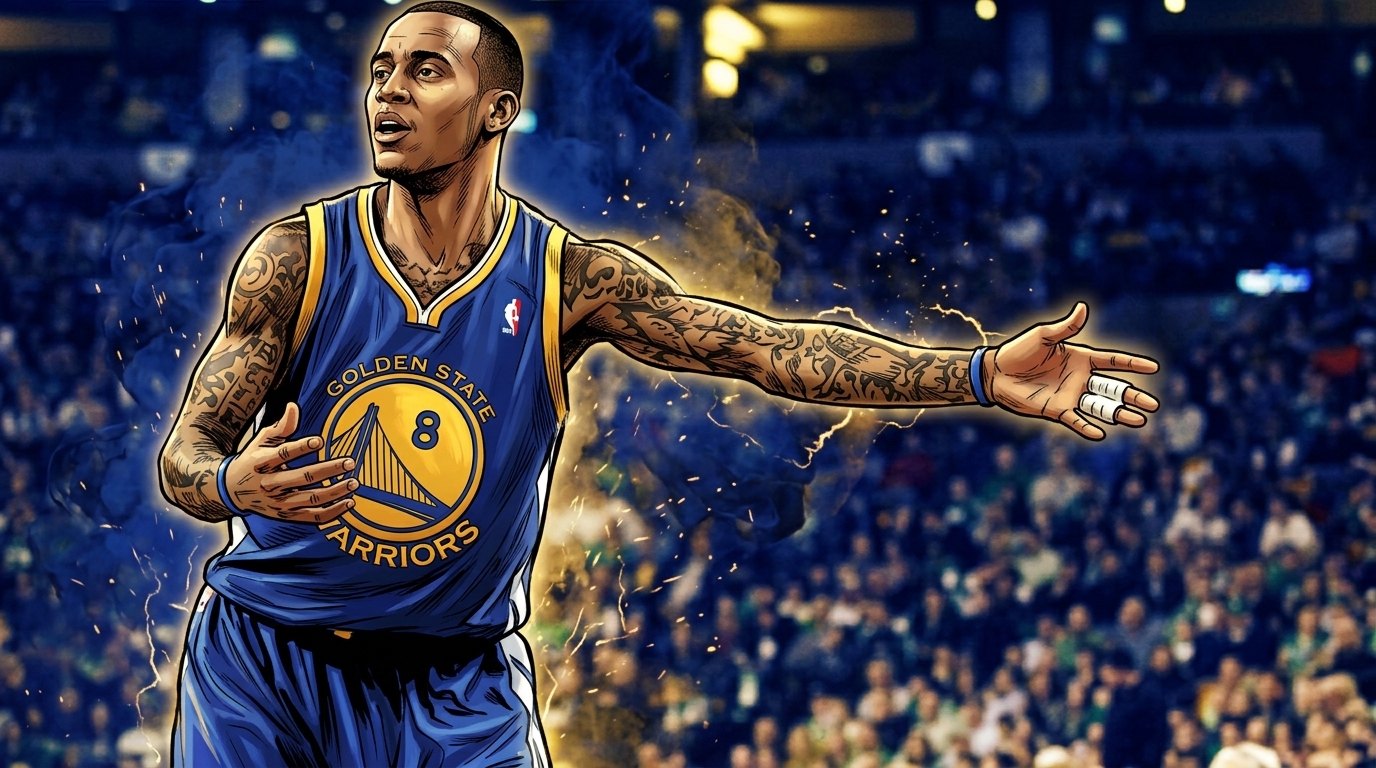

Monta Ellis says a switch with Curry changes nothing: swap him in for the Warriors teams that won four championships and you get the same four championships, same rings, same parade route. The debate keeps resurfacing because Ellis keeps bringing it up, unprompted, like a man revisiting a crime scene to compliment his own alibi.
The move only works if you perform it fast enough that nobody notices the switch: first you erase the scouting report that got you traded, then you claim credit for the exact outcome that report was written to prevent. Rewind to the 2012 trade and the reasoning is sitting right there in the transaction file. Golden State shipped Ellis to Milwaukee in a trade built around Andrew Bogut, aimed squarely at breaking up a backcourt the front office had come to see as small and defensively thin. That is not a hypothetical grievance from a message board; it is the reasoning Ellis himself supplied three years earlier, and he is now asking the public to forget he ever supplied it.
Here is Ellis, this year, doing the accounting: “If you switched me and Steph out with the team that won the championships, it’d be the same thing,” he told reporters. Same thing. Note the tense — present, confident, unbothered by the fact that he is the only person in this sentence who has publicly testified, under his own name, to exactly why it would not be the same thing.
Because Ellis has stood by the comment that got him traded in the first place before. “We would have had two small guys in the backcourt,” he said of pairing with a rookie Curry, adding that “the West was tough at that time. We were just too small.” Asked point-blank whether he could see himself sharing a backcourt with Curry, Ellis didn’t hedge: “Can’t. Just can’t.” That comment wasn’t a throwaway; he backed it up with specifics, citing Kobe Bryant and Brandon Roy as the kind of backcourt-sized problem two six-foot-three guards couldn’t handle. He was careful to note the comment wasn’t personal toward Curry. It didn’t need to be personal to be a diagnosis, and the diagnosis is the whole case against his current math.
Think of it as a patient who refuses a surgery, explains to the surgeon exactly why the surgery is necessary, gets a different doctor to perform it three years later, and then walks around insisting the first doctor’s diagnosis was fiction because the operation worked. Ellis wrote the referral himself in 2009; Golden State just followed it. The Bogut trade that broke up the backcourt wasn’t cruelty or roster churn for its own sake. It was the front office agreeing with Ellis’s own scouting report and finally acting on it.
Warriors GM Larry Riley said the trade would add “an element of toughness… scoring, rebounding and a defensive presence in the middle. We’ve lacked those elements in recent years,” which is a polite executive’s way of describing the exact hole Ellis had already mapped out. Bogut later put a sharper point on why the pairing needed dismantling, describing Ellis as “very, very ball dominant” with “a bit of a rivalry in that locker room between him and Steph.” The Bogut trade wasn’t just about size. It was about fixing the exact backcourt problem Ellis had already confessed to.
None of this is stopping people from having opinions about it.
https://twitter.com/Fullcourtpass/status/2086289439744004230
The math gets worse the further out you zoom. The Warriors’ first championship of the Curry era came in 2015, with Klay Thompson, Draymond Green, and Andre Iguodala filling out a roster Ellis had already left three years prior; it’s the only one of the four titles where an Ellis-for-Curry swap is even a coherent thought experiment. The 2017 and 2018 championships required Golden State to sign Kevin Durant in free agency in the summer of 2016, a roster decision with precisely zero relationship to anything Ellis did or didn’t do in 2012. Swap him in for that team and you’re not replacing Curry; you’re pretending Durant’s contract signed itself regardless of who was standing next to him.
Not everyone online is buying the revisionist accounting either.
https://twitter.com/TheDunkCentral/status/2086317415206416388
Same thing requires forgetting two separate documents: the scouting report Ellis wrote on himself in 2009, and the free-agency transaction in 2016 that had nothing to do with him at all. That’s a specific kind of amnesia, and it happens to be the convenient kind. Ellis is allowed to have this opinion; he isn’t owed an unchallenged hearing for it, not when the paper trail reads this clean. The league keeps producing men who’d like credit for the version of history where they were never the problem, and you’ll find no shortage of them in the rest of our NBA coverage.