
We’ve spent the past two days tracking five separate pieces of trade-deadline movement, and only one team is doing anything that looks like genuine roster construction. The Los Angeles Dodgers are running background checks on two different starting pitchers at once. The New York Mets already dealt away a top reliever. The Boston Red Sox lost their big midseason addition to a fractured wrist before he’d played a full week in uniform. The Baltimore Orioles solved a real roster problem with a minor-league arm and zero fanfare. Monday’s 6 p.m. ET deadline is three days out, with a full weekend of games left to play, and the distance between what teams say about themselves and what they’re actually doing is already visible.
That gap is the real mlb trade deadline 2026 story here, not any single trade. We said this deadline was going to be chaos, and so far the chaos isn’t loud. It’s quiet, procedural, and mostly about pitching depth, which is exactly the kind of deadline that rewards paying attention to the moves themselves instead of the noise around them.
What Are the Dodgers Actually Doing at the Deadline?
The Dodgers are pursuing two starting pitchers at once: a controllable multi-year arm in Hunter Greene and a short-term rental in Clay Holmes. It reads as a hedge against a specific, known risk in the health of their current rotation, built by a team with the prospect capital to run two plans in parallel. (Not many front offices get to shop like this. Most are picking one lane.)
The Dodgers’ real top target remains Tarik Skubal, and the interest in Holmes and Greene looks less like a change of heart than a fallback in case the Dodgers’ pursuit of Tarik Skubal comes up empty. Per dodgerblue.com, Los Angeles has scouted Holmes’ rehab outings directly, including in-person looks at a pitcher who’s been out since May with a fractured right fibula. Holmes carries a 2.39 ERA in 2026 and is in the second year of a three-year, $38 million deal with a $12 million player option for 2027 he’s expected to decline, which makes him a straightforward rental addition to fill a rotation void while Glasnow and Ohtani work back from their own absences.
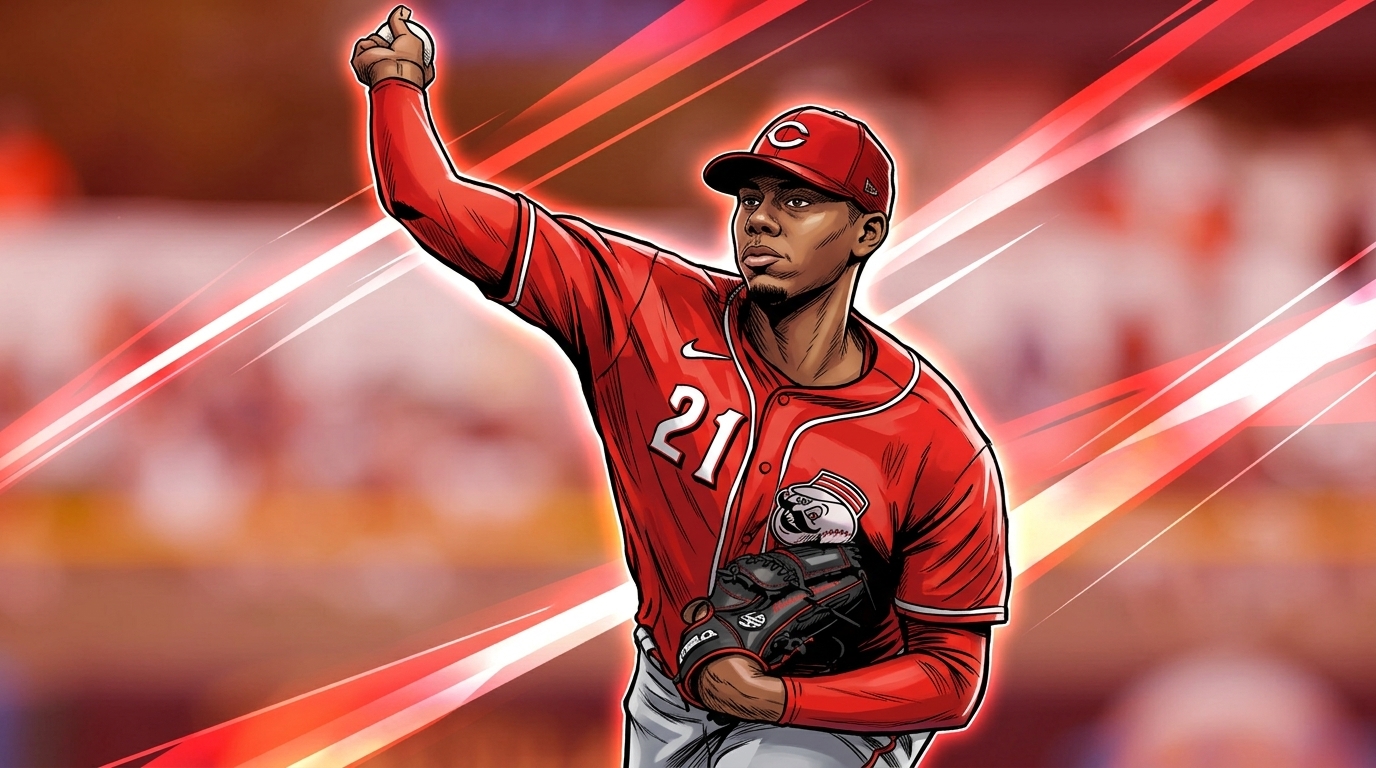
Is Hunter Greene Really Getting Traded?
One evaluator puts it at a 50-50 proposition, and if he goes, the Dodgers are viewed as the most likely landing spot simply because they’re the only realistic contender with enough prospect capital to get a deal done. That’s a specific, narrow kind of favorite status, earned by matchup rather than by the Reds actively shopping him.
Greene’s 2026 season looks rough on the surface, a 7.06 ERA across four starts after having bone chips removed from his throwing arm. But that number is a small, injury-shortened sample sitting on top of two full healthy seasons, a 2.76 ERA with 301 strikeouts over 258 innings across 2024 and 2025. He’s controllable beyond this year, too, at $15.33 million in 2027 and $16.33 million in 2028 with a $21 million club option for 2029, which is the whole reason a rental market and a Hunter Greene market are two different conversations. Per SI.com, the Cincinnati Reds aren’t shopping him, but they’d listen to the right offer. (A blockbuster is available to whoever’s willing to pay Reds prices, not Reds urgency.)
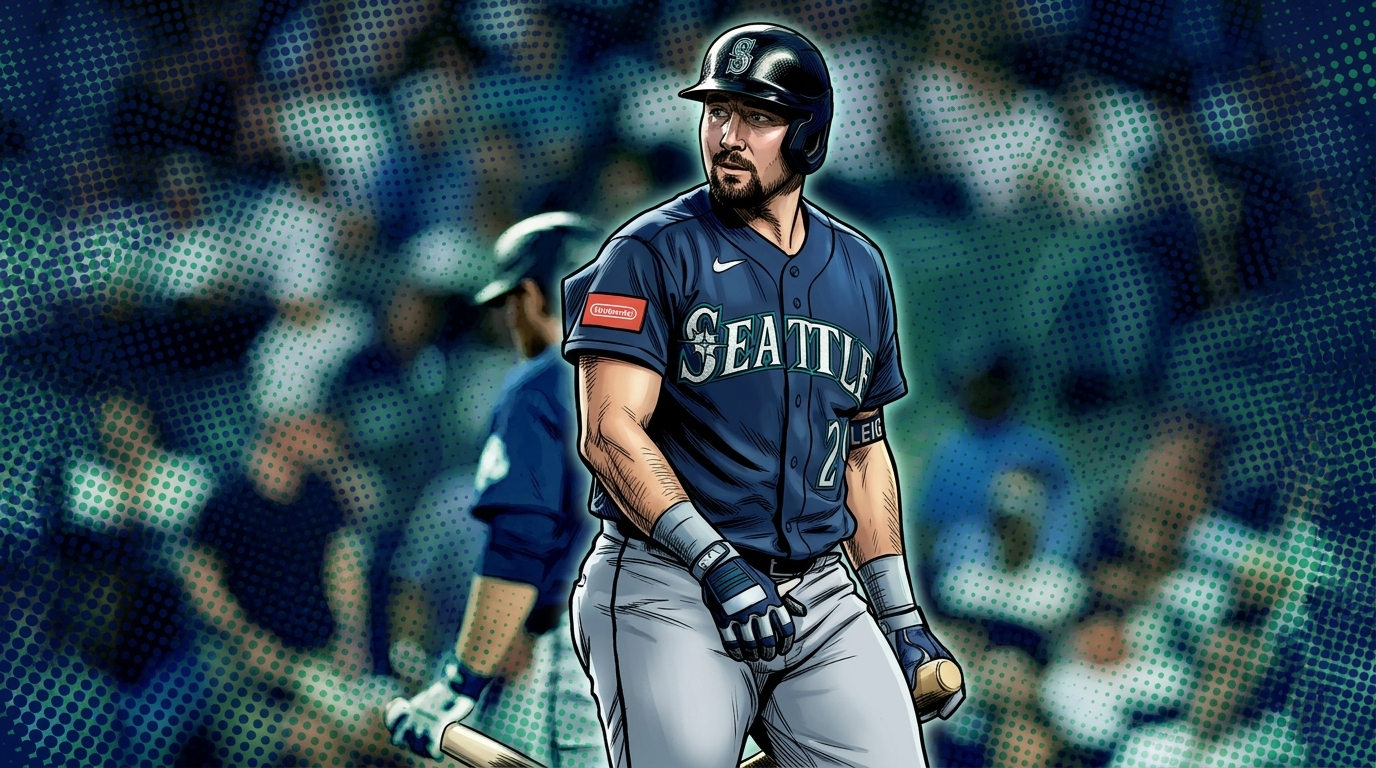
What Happened to Curtis Mead in His Red Sox Debut?
Curtis Mead was hit on the left wrist by an Athletics pitcher in the fourth inning of his first game in a Boston uniform. It looked minor at first, the team called it a contusion after X-rays came back negative, but a follow-up MRI this week found a nondisplaced fracture. Per ESPN, he’s expected to avoid surgery and miss six to eight weeks.
There isn’t a trade-strategy angle to salvage here, and it would be a disservice to pretend a pitch finding a player’s wrist tells us something profound about scouting or asset management. (Mead had played exactly one game in a Red Sox uniform before the wrist injury ended his week — you don’t get a smaller sample size than that.) It belongs in this piece for one reason: it’s the counterexample to everything else on this list, the reminder that not every deadline storyline is a signal about organizational intent. Some of it is just an ordinary fastball finding an unlucky spot on the worst possible day.
Why Did the Mets Trade A.J. Minter to the Twins?
This one shouldn’t read as a surprise. Per Jeff Passan’s reporting, the Mets’ sell-off was already the expectation before the Minter trade happened, with as many as six pitchers, Weaver, Raley, Minter, Brazoban, Holmes, and Peralta, drawing interest from other teams. Minter is simply the first of that group to actually change addresses.
New York, at 47-63, sent A.J. Minter to the Minnesota Twins for infield prospects Billy Amick and Bruin Agbayani. (Bruin’s father, Benny Agbayani, played outfield for the Mets in the late ’90s and early 2000s, a bit of trivia that lands better in a group chat than in a trade release.) This is what the Mets’ fire sale actually looks like in practice, and it started before this trade, not with it.
https://x.com/JeffPassan/status/2083036855407132790
Passan’s framing there matters more than the trade itself: this isn’t the Mets revealing a plan, it’s the Mets executing one that had already been reported. Clay Holmes, the same pitcher the Dodgers are checking in on from the other side of this piece, is sitting on that same six-name list.
What Do the Orioles Get in Jake Rogers?
The Orioles get a needed veteran catcher for the cost of a minor-league arm, filling a hole created by injuries at the position. It’s the least dramatic move on this list, and possibly the smartest, because it solves an actual problem instead of making a statement.
Baltimore acquired Jake Rogers from the Detroit Tigers for minor-league right-hander Zane Barnhart, per MLB Trade Rumors. Rogers had spent all six years of his career in Detroit before the Tigers designated him for assignment to make room for Javier Baez coming off the 60-day injured list. The Orioles needed the depth badly: both Adley Rutschman and Samuel Basallo are on the injured list, leaving Baltimore without either of its primary catching options. (No press conference necessary when the move is just filling an obvious hole.)
Five moves, one weekend of games left, and a pattern that holds across all of them: what a team says about itself and what it actually does are two different signals, and this year’s mlb trade deadline is where you find out which one was true. The Dodgers are running two pitching plans at once, and that kind of parallel pursuit speaks louder than any radio hit about “staying opportunistic.” Minter was just the first domino in a sell-off Passan had already reported before it happened. Baltimore addressed a real need, no drama attached.
I think the most instructive move here isn’t Hunter Greene, even though he’s the best player in motion. It’s the gap between the Red Sox and everyone else. Boston made a legitimately smart, low-cost addition in Curtis Mead, and the value of that move got erased by a pitch before it ever had a chance to pay off. That’s the part of the deadline nobody can game-plan around, and it’s a reminder that not every outcome on this list is about front-office intent. Some of it is just variance, arriving at the worst possible time.
If Hunter Greene moves before Monday, it’s almost certainly to Los Angeles, and it will be the loudest confirmation yet that the Dodgers are building for a three-peat with the same aggression that produced back-to-back titles in 2024 and 2025. If he doesn’t, watch the Mets keep selling, since Holmes might be the next name to move, and watch whether the Red Sox’s kind of bad luck becomes some other contender’s cautionary tale before Monday’s 6 p.m. ET deadline arrives.