
The New York Mets are 41-57, playing .384 baseball, and they are going to the August 3 trade deadline as sellers; this is a sentence that requires no editorial embellishment.
Steve Cohen spent $368.7 million on this roster (second in baseball only to the Dodgers) and the working theory was that spending without ceiling would produce winning without ceiling. The theory has been stress-tested by 98 games. It did not hold. The Mets went 3-12 in the 15 games before the All-Star break. They have accumulated $1.671 billion in payroll over five seasons, more than any franchise in baseball, and roughly $310 million in luxury tax penalties for the privilege. The return on that investment, as of this writing, is a 41-57 record and a front office that has informed rival executives the sale is on.
https://x.com/SNY_Mets/status/2077874965508968584
The protected list (Juan Soto, Carson Benge, A.J. Ewing, Christian Scott, Nolan McLean) tells you everything about what the Mets think they bought and what they think they got. Soto is protected because Soto is Soto. The four prospects are protected because they represent the future the present was supposed to make unnecessary. Everyone else is merchandise: Freddy Peralta, Clay Holmes, A.J. Minter, Brooks Raley, Luke Weaver. David Peterson already went to the Cubs. The Mets assembled these players to win a championship; now they are assembling packages to ship them somewhere that might.
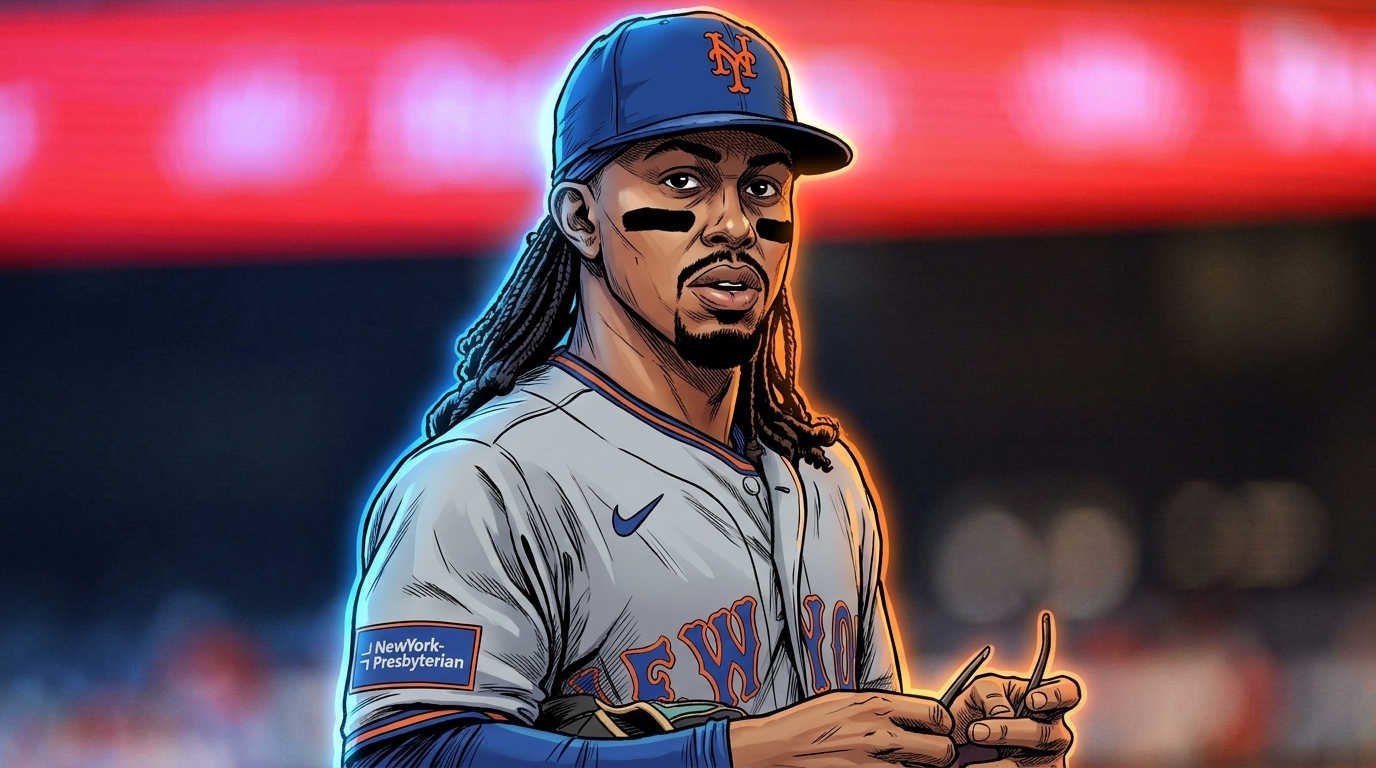
Francisco Lindor is technically not on the protected list. This has generated more coverage than it probably deserves, because Lindor has a full no-trade clause (10-and-5 rights that mean any trade requires his written consent) and when Joel Sherman of the Post asked Lindor directly whether he would waive it, Lindor said “no comment.” Twice. Jon Heyman has since reported that Lindor “isn’t going anywhere,” and Cohen himself told Heyman’s podcast he does not envision trading either Lindor or Soto. So the honest version of the Lindor trade deadline story is: a rival executive confirmed he’s available in the abstract, and Lindor has a clause that makes the abstract irrelevant. The conversation is mostly a story about how far the narrative has fallen — that “Lindor not untouchable” is even a sentence anyone says out loud.
There is a defensible version of what the Mets are doing. The relievers (Holmes, Minter, Raley) were always the most likely trade chips; a contender renting a proven closer at the deadline is not a sign of institutional collapse, it is normal baseball. The Mets are not rebuilding. The stated goal is a 2027 contention window, which means they want to keep Lindor and Soto and shed the parts that didn’t cohere around them. Reasonable. Coherent, even.
But the coherence of the exit strategy cannot retroactively justify the incoherence of the construction. Lindor is 32 years old, hitting .210 with a left calf strain that cost him two months, and owed approximately $155 million through 2031. He is a great player. He has been a great player on a team that collected great players the way someone furnishes an apartment by purchasing only the most expensive individual items; the couch is magnificent, the desk is magnificent, the chairs are magnificent, and yet somehow there is nowhere to sit. You can spend your way to Lindor. You cannot spend your way to the roster that makes Lindor matter.
That is the actual story of this trade deadline. Not whether Lindor waives his NTC — he won’t. Not whether Cohen loses money, because he doesn’t. The story is that you can spend $1.671 billion over five years and still end up with the fundamental problem that money cannot fix: individual talent does not automatically add up to a team. The Mets have been selling that addition as arithmetic for half a decade. The first half of 2026 is the proof that it is not.