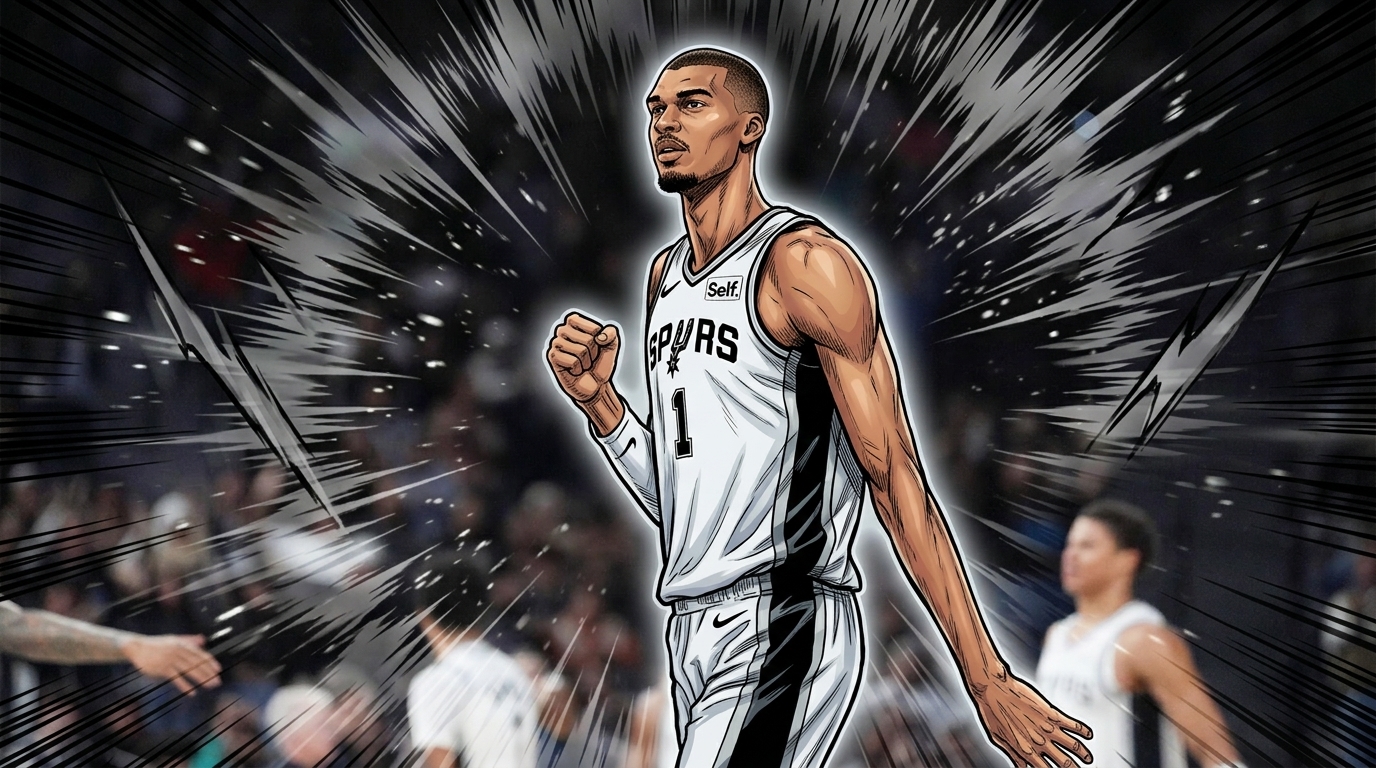
Three things are true about Kevin Garnett’s critique of Victor Wembanyama, and the trick is holding all three at once.
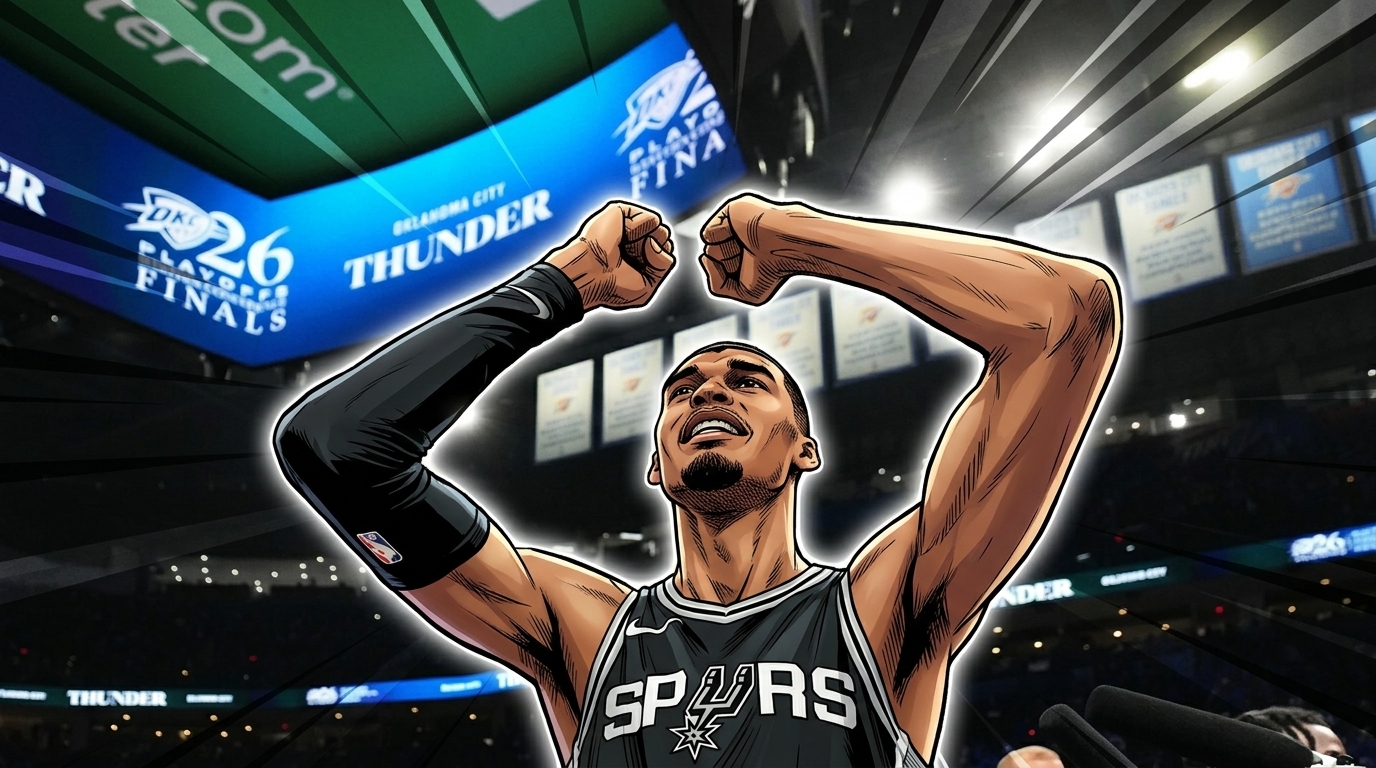
First, the critique itself: on a recent episode of the KG Certified podcast, Garnett watched footage of Wembanyama crying after the Spurs’ Game 7 WCF win over the Thunder and said, “He’s crying in the Western Conference Finals. That was too emotional for me.” He followed it up: “Man, he got four more games to try to get. You gotta go through the Finals now.” His argument was pragmatic: job’s not done, save the tears.
Second, the context: Kevin Garnett spent the summer of 2025 training Wembanyama. Not as a photo-op. As a mentor who wanted him to be ready. That’s the person making this critique, not a commentator reaching for content but someone with genuine investment in what Wemby becomes. This is old-school father-figure logic: I didn’t come this far to watch you celebrate at the wrong mile marker.
Third, the irony: in June 2008, after the Celtics won the NBA championship, Kevin Garnett stood on the court and spent two and a half minutes with ESPN’s Michele Tafoya absolutely losing it — crying, screaming “Anything is possible!”, raving at a volume that made the broadcast difficult to follow. It remains one of the most publicly emotional moments in modern NBA Finals history. Garnett wasn’t criticized for it. He was celebrated.
https://twitter.com/TheDunkCentral/status/2061961829295730959
These three things don’t cancel each other out. They explain why the Kevin Garnett Wembanyama emotional debate spread the way it did, and why Wembanyama’s existing answer lands so much harder than anything a communications team could have prepared.
The answer wasn’t written as a response to KG. Wembanyama gave it to L’Equipe journalist Maxime Aubin in an interview published in late April, months before this podcast episode, before this specific controversy. He was talking about a different moment, a different emotional display after a regular-season game against the Clippers. Asked about showing vulnerability, he said: “I think it’s first and foremost a fear of judgment, like this feeling that you have to act a certain way, social codes, I guess. Personally, I refuse to carry the burden of having to hide my emotions.”
That quote is circulating now as his rebuttal. It isn’t. It’s something more durable: a standing philosophical position from a 22-year-old who has apparently already figured out something that takes most people decades to work through.
What makes Wembanyama’s statement worth examining isn’t the line itself. “I refuse to carry the burden of having to hide my emotions” is a clean sentence but not a novel idea. What makes it interesting is the context. This is a player who just averaged 27.3 points, 10.9 rebounds, 3.1 assists, and 2.7 blocks across seven WCF games and was named Conference Finals MVP. If you watched what he did in this series, you know the emotion wasn’t weakness. He cried because he cares about winning this badly, not because the moment overwhelmed him. His teammate De’Aaron Fox put it plainly after the game: “He’s dragging us along, but we’re trying to push him to that mountaintop.” The emotional display wasn’t a distraction from his competitive focus. It was an expression of it.
The old guard’s argument — and KG’s articulation of it is among the more honest versions — is essentially: the cost of this level of competition is invisible suffering, and the players who can absorb that cost without showing it are the tougher ones. Don’t let them see it affect you. Save it for after. This isn’t cruelty. It’s a survival philosophy built by people who played through eras when showing emotion was treated as weakness and the league gave you very little help processing what it took out of you. Garnett built a persona around this. It carried him to a championship. He believes it works.
What Wembanyama embodies more fully than almost anyone in the league right now is the counter-argument: the old survival philosophy has a documented body count. Some of the players from the KG era who hid everything are fine. Some are not. The generation that came up watching what that approach costs is, collectively, less interested in adopting it. They read the injury reports from the last twenty years. Some were physical. Some were mental. They’re paying attention to which is which.
Wembanyama is now heading into the NBA Finals, four games still to win, exactly where KG said he should be focused. Whether he wins or loses those four remaining games, his answer about emotion isn’t going back into a box. The debate KG opened, accidentally or otherwise, is the right one for this specific moment in the league’s history.
KG was wrong about Wemby crying too early. He was also, in his own way, asking the right question. Wembanyama had put his answer on record months before the podcast even aired.