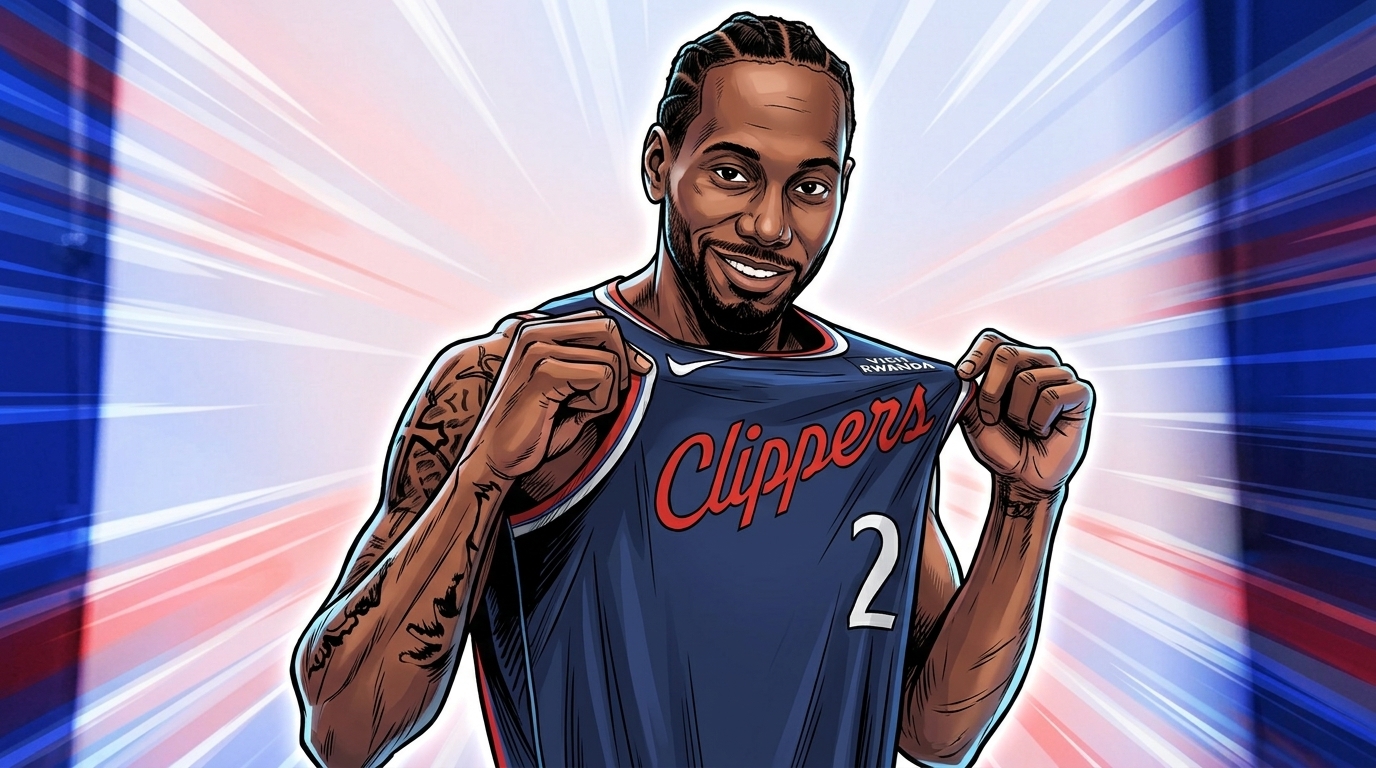

Every summer, we convince ourselves that Kawhi Leonard is going to finally be legible — that this will be the offseason when his intentions become clear and the league can deal with him like a normal star with a normal set of demands. Every summer, we are wrong. But here’s the thing: Kawhi isn’t actually being cryptic this time. He’s telling you exactly what he wants. The rest of the league just doesn’t like the answer.
The situation, as reported by Jake Fischer of Yahoo Sports and corroborated by RealGM: Leonard holds a no-trade clause on the final year of his deal, a $50.3M guaranteed salary for 2026-27. His preference is to remain in Los Angeles and work out an extension with the Clippers. But if a trade happens, he will only waive that clause for Toronto or San Antonio. The Clippers’ ask, per Tim MacMahon of ESPN, is a “legitimate pay cut” on any extension, which is a polite way of saying they want one of the five best players of his generation to discount himself on his final major contract.
https://twitter.com/JakeLFischer/status/2070187525021315126
Why Would Kawhi Want to Return to Toronto or San Antonio?
Let’s establish what Kawhi’s two destinations actually represent, because the easy read (sentimentality, nostalgia, unfinished business) is almost certainly wrong. Kawhi Leonard is not a sentimental person. The man barely gives post-game interviews voluntarily.
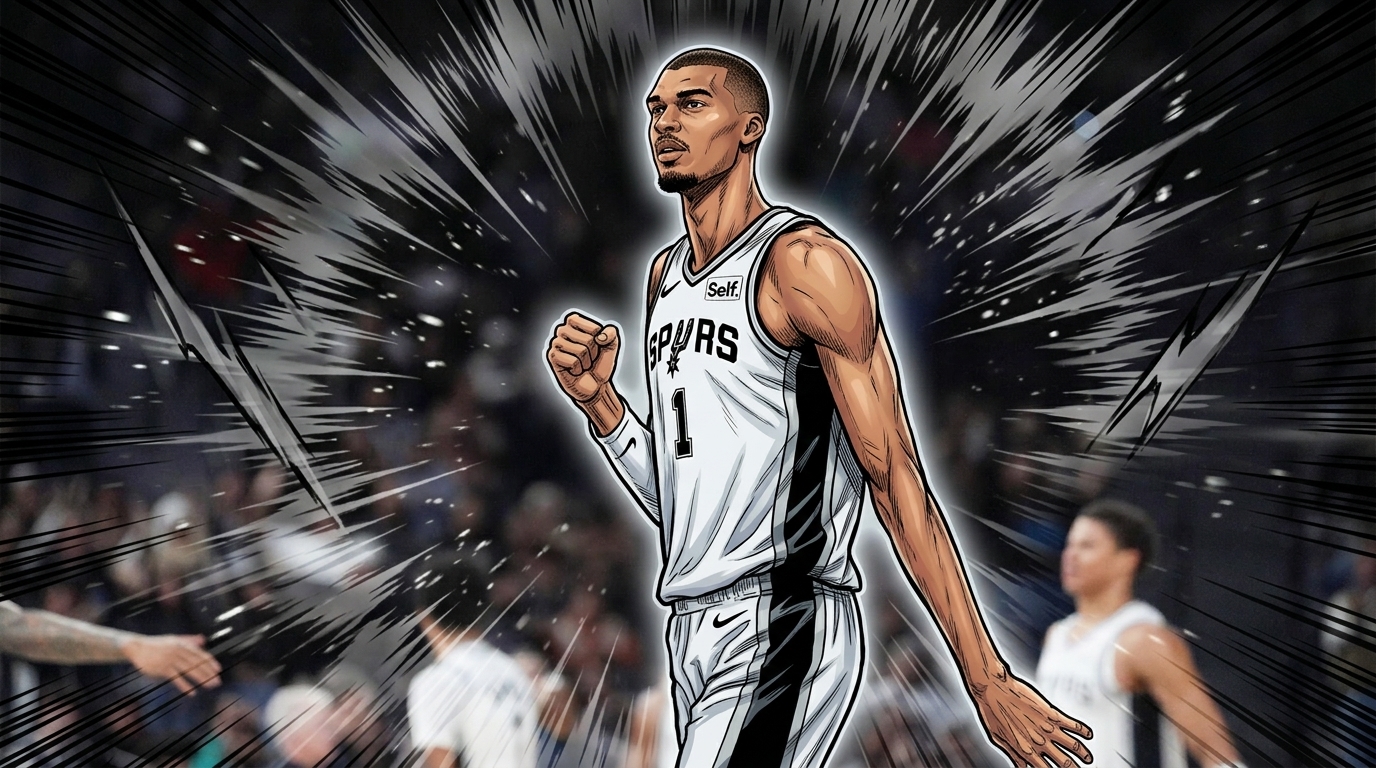
San Antonio is where he won his first championship in 2014 and spent the first eight years of his career. It is also where things ended so badly that the ending became its own chapter in NBA lore: a quad injury managed poorly, a rift with the medical staff and front office, a trade demand that sent him to Toronto. The Spurs bridge is, by most accounts, scorched. But the Spurs of 2026 are a different organization, one reshaped by what Gregg Popovich built and what came after (for context on what the Spurs have become after Popovich), and Leonard may see something worth revisiting there. Or the Spurs are simply a leverage play. It’s genuinely hard to know.
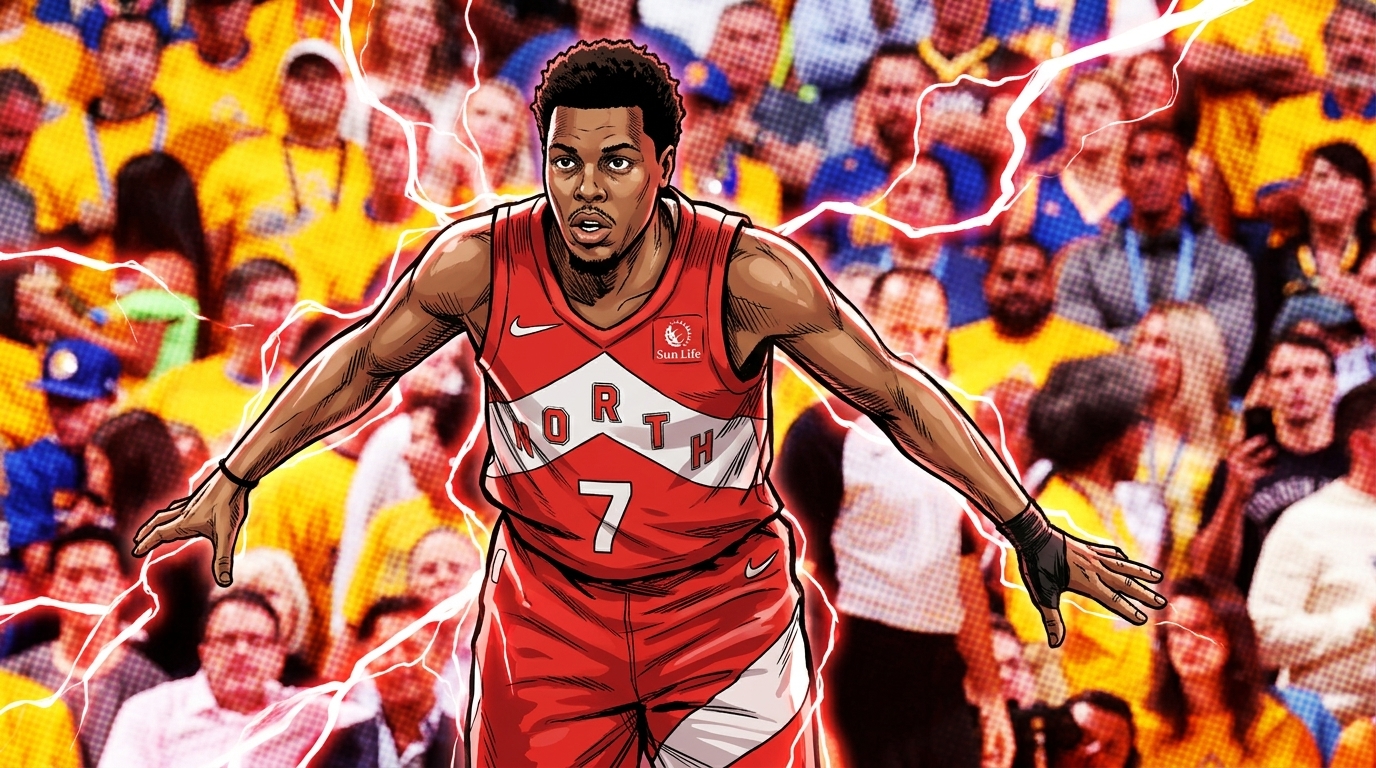
Toronto is the more interesting case. Kawhi spent one season with the Raptors in 2018-19, made 60 regular season appearances (he and the load management concept were practically synonymous by then), and won a championship in one of the most improbable single-season arcs in recent NBA history. He left via free agency for the Clippers. Nobody in Toronto held it against him. You can’t hold free agency against a player, even if the city got a little queasy watching him go. The Raptors have since expressed genuine interest in a reunion, with reported trade conversations centered on Brandon Ingram and draft compensation.
The timing matters here. Toronto spent much of this offseason pursuing LaMelo Ball, a move that would have reset the franchise around a different kind of star. That ended on June 25 when the Hornets sent LaMelo and Josh Green to Minnesota for Naz Reid and picks (a deal the Raptors were reportedly finalists for). With the LaMelo door closed, a Kawhi reunion moves from interesting subplot to primary objective. The Raptors are now his lead suitor, and both parties appear to know it.
What Does the Clippers’ Pay Cut Demand Actually Mean?
The Clippers asking Kawhi to take a pay cut is not as unreasonable as it sounds on the surface (and it sounds pretty unreasonable on the surface). Leonard will be 35 years old entering 2026-27. His $50.3M guaranteed salary, the final year of the three-year, $149.5M deal he signed in January 2024 per Spotrac, is one of the largest single-year guarantees in the league. The Clippers have built a roster that has been perpetually waiting for Kawhi to be healthy enough to justify it, and the gap between the investment and the returns has been the defining frustration of the franchise’s entire Intuit Dome era.
Here’s the counterargument: Leonard averaged 27.9 points on 50.5 percent shooting last season, with 6.4 rebounds and 3.6 assists across 65 starts — seventh in MVP voting. When he plays, he is still elite. The case for a pay cut rests entirely on injury risk and longevity concerns, which are real but also apply to basically every star his age. Asking him to discount himself is asking him to absorb the financial cost of a risk that is, at this point, equally shared by both sides.
Chris Haynes of NBA TV made the stakes explicit on June 24: “If an extension is not worked out…I expect the Clippers look to move Kawhi. I don’t expect that he will stay and play on an expiring deal.” That’s a fairly clean ultimatum. Complicating it is Clippers owner Steve Ballmer, who has maintained internal resistance to trading Leonard outright, which creates the particular kind of organizational paralysis where the public posture and the private preference are pointing in different directions.
https://twitter.com/ClutchPoints/status/2069631262181257676
Can the Raptors Actually Build Around a 35-Year-Old Kawhi?
This is the honest question underneath all the trade speculation, and it doesn’t have a clean answer. Kawhi at 35, on a new contract in a new city, with a knee injury history that has defined the last seven years of his career, is a complicated asset. The Raptors would be acquiring him with the understanding that he may play 55 games in a good year, that you build your rotation around his load management schedule, and that the ceiling is genuinely high if he stays healthy through a playoff run.
The comparison Toronto’s front office is probably making, whether they admit it or not, is to the 2019 version: a player who missed time, who required careful handling, who delivered when it mattered. They’re betting the version that shows up in April looks more like that than the version that appeared in maybe three games in 2022.
Brandon Ingram as the centerpiece of the return package is reasonable for both sides. Ingram is 28, under contract, and gives the Clippers a younger, more available wing to build around. The draft compensation fills out a package that acknowledges Kawhi’s age without insulting his actual on-court production.
The Aspiration Investigation Wildcard
None of this trade calculus accounts for what may be the largest variable in the room. The NBA is investigating whether Clippers owner Steve Ballmer arranged a $28M endorsement deal between Leonard and Aspiration (a now-bankrupt green banking company) as a way to circumvent the salary cap. Both Leonard and his uncle and adviser Dennis Robertson have been interviewed. Commissioner Adam Silver described the investigation as “far along” in a June statement.
If the NBA voids any portion of Leonard’s contract as a result, the $149.5M deal signed in 2024 could be invalidated, which would fundamentally change the trade math. A player with a voided contract is not the same asset as a player with $50.3M guaranteed. The investigation creates a scenario where the Raptors could end up acquiring more uncertainty than they bargained for, and where the Clippers’ leverage in any negotiation depends entirely on how Silver’s office ultimately rules. Nobody is going to finalize a trade around an asset of that uncertainty without some resolution, or at least more clarity, from the league office first.
Where Will Kawhi Leonard Play Next Season?
Kawhi Leonard’s most likely destination for 2026-27 is Toronto, contingent on the Raptors and Clippers reaching agreement on a package centered on Brandon Ingram and draft picks, and contingent on the NBA Aspiration investigation not voiding or altering his contract. The Spurs remain an option but appear to be more leverage than genuine preference. Leonard staying in Los Angeles on a restructured deal is possible but requires the Clippers to accept a number closer to his current salary, which they have explicitly said they will not do.
The read here is that this situation resolves before training camp — one way or another. Either the Clippers find a number Kawhi accepts, or they trade him. Ballmer’s internal resistance to trading him is real but not permanent; franchises that publicly dig in almost always eventually deal when the alternative is a star playing out an expiring deal with no commitment to staying.
What’s striking about the entire situation is how little Kawhi has actually said. His silence isn’t confusion or evasion. He told his people what he wanted. Fischer reported it. The framework is clear. The 2014 Spurs team and the 2019 Raptors team are the two franchises where Kawhi Leonard won championships, two places where the endings were ugly enough to become legend, and the two places he’d apparently accept a trade to. That’s not an accident. That’s a man who knows exactly what he values, even if he won’t tell you directly.
For more on what this summer means for the league’s biggest names, follow our NBA offseason coverage.