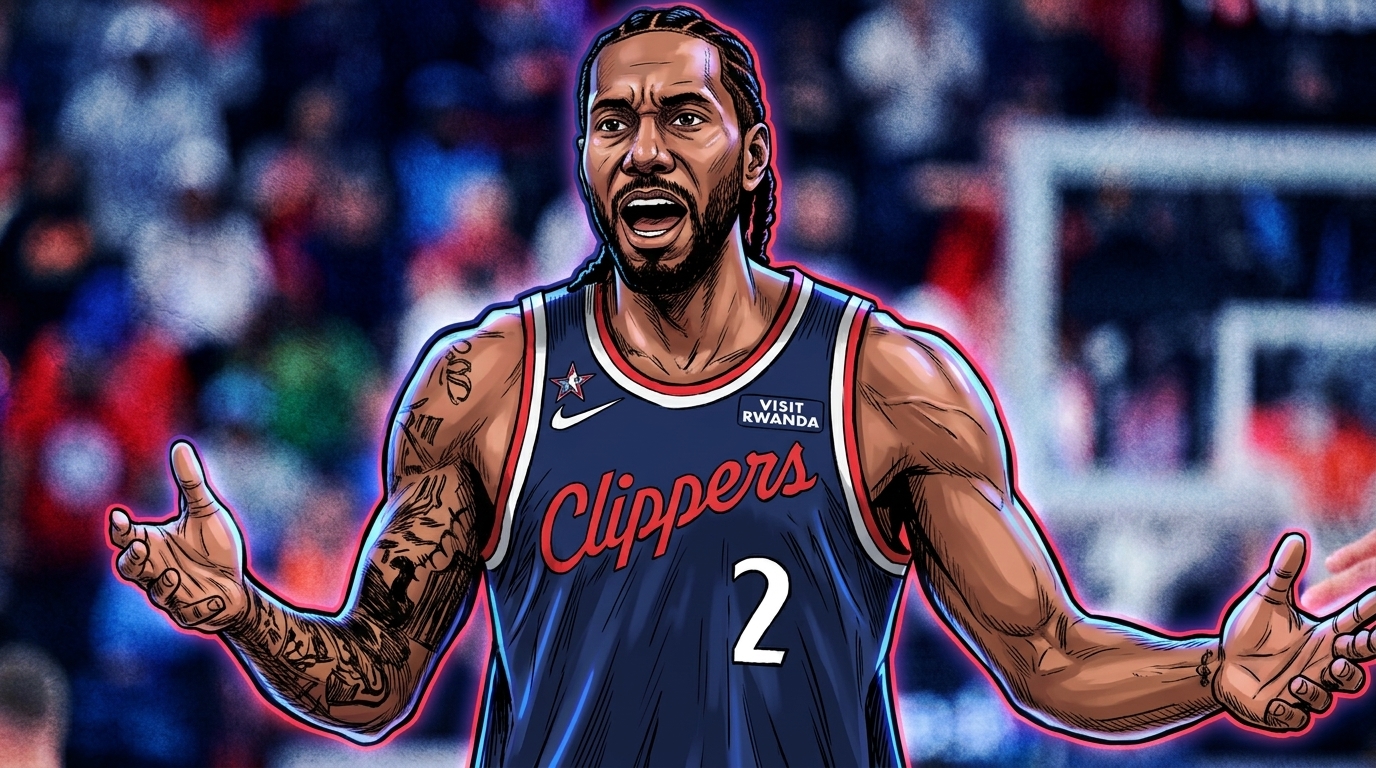

The NBA is investigating whether the Clippers built Kawhi Leonard’s salary-cap sheet on money funneled through a green-banking company that no longer exists, run in part by a man now serving 14 years for wire fraud; the league’s presumptive fix, once that investigation wraps, is to let the exact trade that triggered the whole inquiry happen anyway.
The Clippers and The Raptors agreed to the deal on June 30: Leonard to Toronto for Brandon Ingram, Gradey Dick, unprotected first-round picks in 2031 and 2033, a 2027 first-round swap, and two second-rounders. It has sat unfinished for five weeks because the trade can’t be finalized until the league’s investigation, run by outside counsel Wachtell Lipton, concludes, and the Raptors have refused to absorb the risk of penalties that could alter or void the contract they’d be inheriting. The league, according to Shams Charania, hasn’t agreed to indemnify Toronto against that risk either.
Think of it like a home closing where the inspection happens after the movers are already booked. The buyer has picked the paint colors, the seller has started packing, and everyone involved would prefer the termite report simply confirm what both sides had already decided to believe. That’s roughly the position the NBA has put itself in with the Clippers’ cap-sheet investigation: the trade at the center of it was agreed to in June, is reportedly still expected to close once the process ends, and the only open question is whether the house gets sold with a discount or a fumigation clause attached.
It’s a useful frame because it explains how everyone involved is behaving. The Raptors are declining to assume risk, not withdrawing the offer. The league is investigating fraud, not blocking a transaction. Every actor here is acting as if the closing date is real and only the paperwork is delayed. That’s the tell: an investigation whose outcome nobody involved appears to be treating as uncertain.
The underlying question is whether Leonard’s $28 million endorsement deal with Aspiration Fund Adviser LLC, signed in 2022 and backed by a personal $60 million investment from Clippers owner Steve Ballmer, was compensation for real services or cap space wearing a green-banking company as a costume. Aspiration also paid $300 million over 23 years for the naming rights to the Clippers’ arena, making Ballmer simultaneously the company’s investor, the team’s owner, and the landlord collecting rent from himself. Aspiration went bankrupt; its co-founder, Joe Sanberg, pleaded guilty to wire fraud and is serving 14 years.
The investigation has since widened well past Aspiration. Investigators are examining whether the Clippers covered expenses for Leonard without reimbursement, and have surfaced a previously undisclosed second endorsement deal reportedly involving Daktronics, the company that makes the arena’s scoreboards. They’ve also found scrapped Aspiration marketing materials for a Groot-inspired campaign tied to a tree-planting initiative that never launched publicly, proof, if nothing else, that the fictional economy around Leonard had a sense of humor about itself.
NBA commissioner Adam Silver has at least attached a deadline to the process: “I would say this can be wrapped up — and needs to be wrapped up — before next season.” Charania has reported the expectation shared around the league; once the investigation clears, the same trade goes through largely unchanged.
https://twitter.com/ShamsCharania/status/2075293917118136739
The Clippers, in that same reporting, describe themselves as fully cooperative, “participating in dozens of interviews, providing tens of thousands of documents.” That’s the vocabulary of an organization getting audited, not one bracing for its franchise cornerstone’s trade to collapse. Ballmer has called any suggestion he knew what Aspiration was doing “crazy,” pointing to Sanberg’s conviction as evidence the team was itself defrauded; the Clippers describe themselves publicly as victims. Leonard has dismissed the coverage as the work of “clickbait analysts” and disputed the claim that he performed no services for Aspiration.
If the league finds the Clippers circumvented the cap, the available penalties include fines, forfeiture of draft picks, and voiding or altering Leonard’s contract terms, the last option being a strange way to punish a team for a trade everyone still expects it to complete. Nothing in the reporting suggests which way the investigation is leaning. The process is the entire deliverable so far.
Whatever Wachtell Lipton concludes, the two teams reportedly still end this the same way they started it: Leonard in Toronto, Ingram and Dick in Los Angeles, the only real variable being how long it took the league to approve something it apparently never intended to reject.