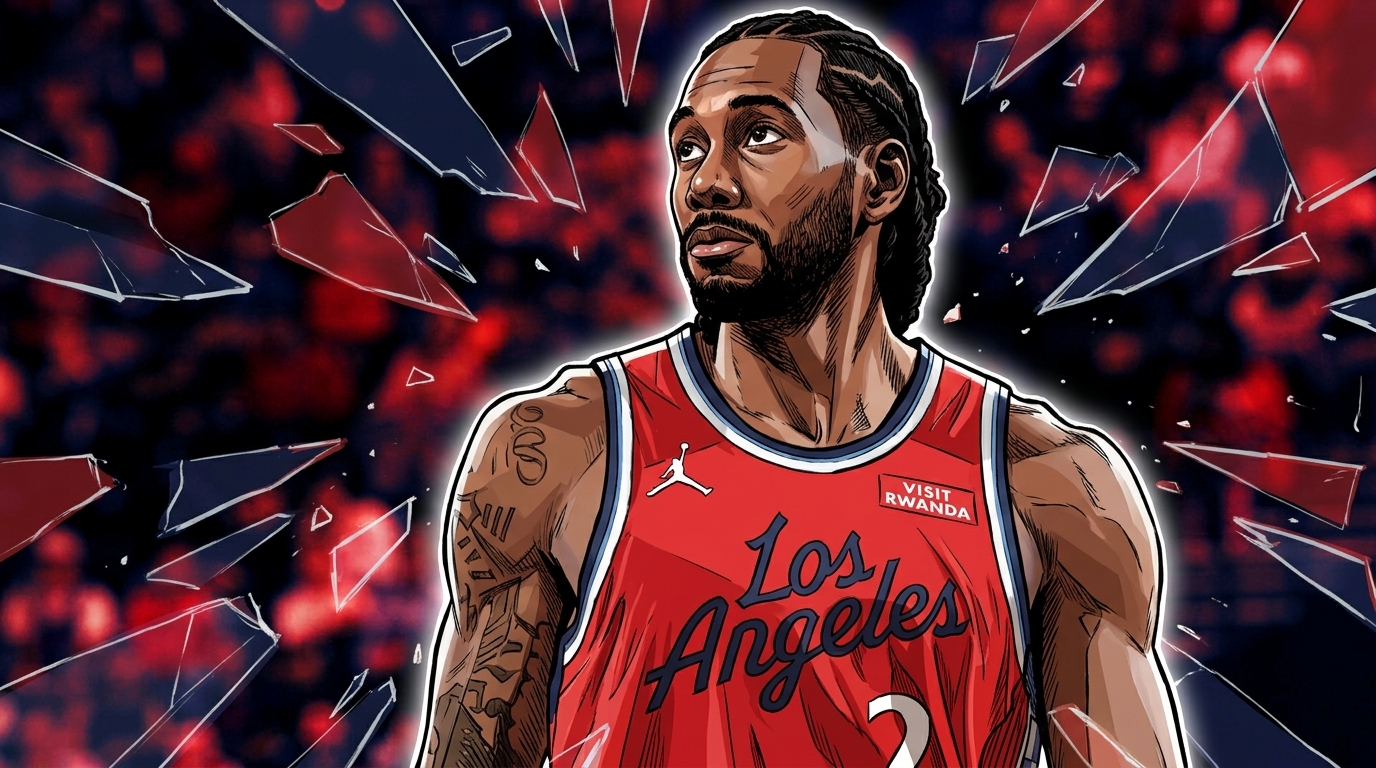
We’ve been watching this investigation expand for ten months, and somewhere between September 2025 and this week, it stopped looking like a single compliance failure and started looking like something the NBA can’t quietly resolve with a fine and a press release.
Per HoopsHype and reporting from The Athletic and the New York Times published July 14, the league’s probe into the Los Angeles Clippers and Kawhi Leonard has grown to three distinct prongs: the original Aspiration endorsement deal and its alleged salary cap circumvention, improper expense coverage for Leonard, and — this is the part that changes the temperature of everything — a previously unreported endorsement deal with a second, unnamed company. Wachtell Lipton, an outside law firm, is leading the probe. This is no longer a one-deal story.
The June 30 trade sending Kawhi Leonard to the Toronto Raptors for Brandon Ingram, Gradey Dick, unprotected first-round picks in 2031 and 2033, a 2027 first-round swap, and two second-rounders is in legal limbo. The league told the Raptors they’d assume the risk of any penalties if they completed the trade. Toronto declined.
https://twitter.com/ShamsCharania/status/2075295801635688622
The Clippers responded: the deal “can only be finalized if the Raptors’ ownership group assumes the risk of penalties.” Two organizations pointing at each other across a room full of draft picks while the league adds a new folder to its case file.
https://twitter.com/ShamsCharania/status/2075293917118136739
What the Second Company Changes
The Aspiration deal (a $28 million Leonard endorsement bundled into a $300 million, 23-year partnership with the Clippers, with Steve Ballmer invested in Aspiration on the side) was already complicated. Then Aspiration co-founder Joe Sanberg was convicted and sentenced to 14 years in federal prison for fraud. The Clippers have maintained, consistently, that they were victims of Sanberg’s deception. (The original deal included a scrapped campaign featuring Leonard as a Groot-type character. This actually happened.)
But a second, previously unreported endorsement company changes the narrative geometry. The fraud-victim defense is harder to sustain across multiple deals. Two separate alleged arrangements under scrutiny, plus improper expense coverage as a third prong, no longer looks like a bad actor who fooled a franchise. It looks like a pattern of conduct. And patterns are what leagues punish hardest, because they suggest institutional intent rather than individual error. The second company remains unnamed; Wachtell Lipton is still assembling what it means.
What Does the NBA Actually Do With This?
If Wachtell Lipton finds the Clippers guilty, potential punishments range from fines and voided draft picks to suspension or contract voiding of Kawhi Leonard. The only NBA precedent for voiding a player’s contract came in 1999, when the Minnesota Timberwolves lost five first-round picks and were fined $3.5 million over a secret deal with Joe Smith. Two of those picks were eventually returned. Smith’s contract was voided.
Per Shams on the Shump Street podcast, worst case is “Kawhi Leonard’s contract being voided, or him being suspended for a significant period of time,” roughly 40 or 20 games to the full season. Adam Silver, speaking at NBA Summer League in Las Vegas, said: “My timeline remains this summer. This needs to be wrapped up before next season.”
The Joe Smith precedent is what should make both sides uncomfortable. The Timberwolves were penalized because the league needed to establish that secret star-recruitment arrangements had consequences. The Clippers’ alleged arrangements are, on the current evidence, more elaborate.
The counterargument worth taking seriously: the Clippers didn’t recruit Kawhi. Leonard was already under contract. The alleged arrangements involved his endorsements, not his playing salary. Whether that distinction matters legally under the CBA is what Wachtell Lipton is determining.
I believe the league finds a middle path here: franchise penalties, lost picks, and a Kawhi suspension in the range of games rather than a voided contract. The Joe Smith nuclear option has been used once in NBA history. The league will use it as leverage while settling for something that looks severe without setting a precedent they can’t walk back.
The Selective Enforcement Question Nobody Wants to Answer
The uncomfortable context: what the Clippers allegedly did is not novel. The league fined the Lakers $500,000 for Rob Pelinka’s early contact with Paul George. Draymond Green was fined $50,000 for suggesting Devin Booker should leave Phoenix. Star-player orchestration has been standard practice for decades, and the enforcement record is, to put it gently, selective.
(The investigation began in September 2025. Kawhi averaged 27.9 points per game in 65 games that season, a career high, while playing out his contract. He showed up at Summer League on July 13 and greeted Raptors brass during Kyle Lowry’s one-day contract ceremony. The situation has a specific kind of absurdism to it.)
What makes this case different is the documentary trail. The Aspiration deal was large, structured, and involved a Ballmer investment. The fraud conviction created a public record. And now there’s a second company. The league isn’t just responding to a tip; they hired outside counsel and have been at this for ten months.
Silver’s word choice mattered. “Needs to be” implies external pressure: from team owners, from the Players Association watching what a voided contract precedent means for every future player, from two franchises that can’t plan their asset base around a frozen trade.
The question I keep returning to isn’t whether the Clippers are guilty. It’s whether the NBA has the appetite to deliver punishment proportional to what the evidence appears to show, when that punishment falls on a franchise owned by one of the league’s wealthiest owners. The Timberwolves in 1999 were a small-market team. The Clippers in 2026 are something different.
What to watch: whether the second company’s identity surfaces before Wachtell Lipton concludes, whether the Raptors renegotiate their risk assumption as the investigation narrows, and, most importantly, what the punishment structure looks like when Silver delivers it — assuming his deadline holds. For context, our earlier coverage of the Aspiration allegations and the trade’s structural risk read differently now that a second company is confirmed.