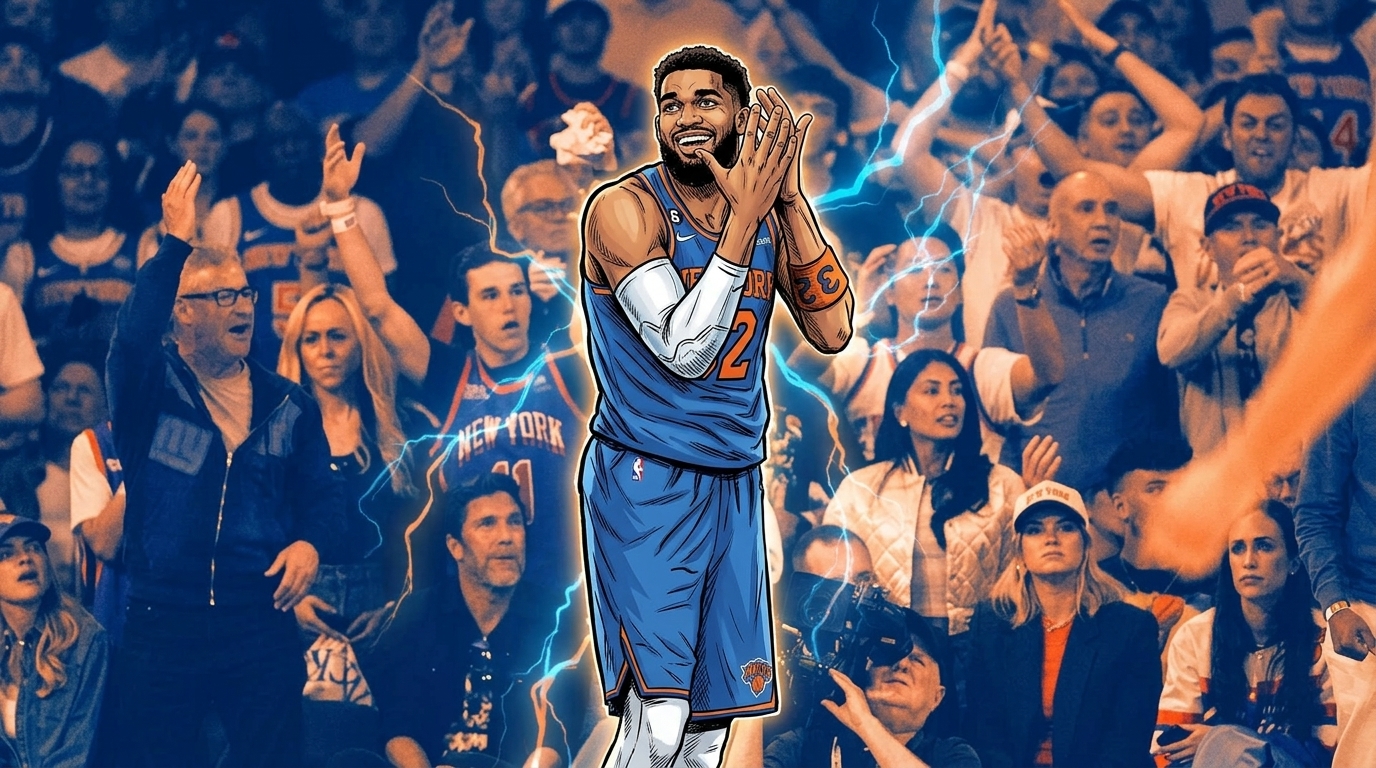

There’s a version of this story that writes itself: basketball player wins championship, girlfriend gets a platform boost, lifestyle content multiplies. I’ve watched that loop run so many times I could produce it from memory, down to the Forbes sidebar and the “power couple” headline. The WAG economy is generally a one-directional thing: athlete rises, partner catches the updraft, and the media covers the ascent as though it were a love story rather than a capital story. But something different happened with Jordyn Woods and Karl-Anthony Towns this June, and the difference is worth slowing down to actually look at.
The tell was the Guggenheim.
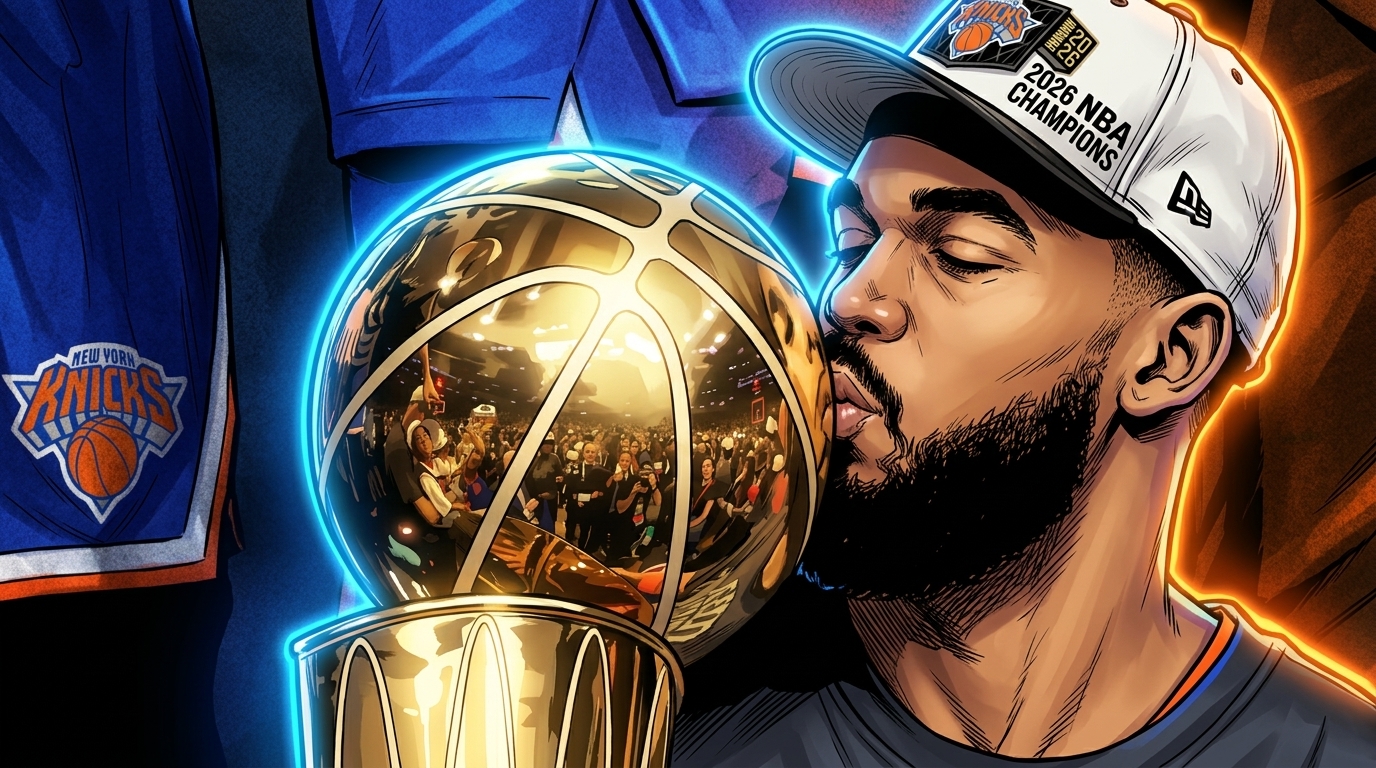
After the Knicks won the 2026 NBA Finals 4-1 over San Antonio (first title in 53 years, KAT averaging 19.5 points and 12.5 rebounds per game through the postseason, setting the NBA single-postseason plus-minus record at +258), the story that broke through the championship noise wasn’t about the basketball. It was about a handbag. Specifically, it was about Jordyn’s orange Woods by Jordyn Tux Clutch Mini, which she’d been carrying courtside through New York’s entire 13-game winning streak. When MSG’s no-bag policy kept it out of Game 3 and the Knicks lost, the narrative calcified into something the internet could hold. When the bag returned for Game 5 and the Knicks won the championship, KAT told the media: “I want everyone in New York to know that bag won the championship.” He posted on Instagram that it belonged in the Whitney or the Guggenheim. The Guggenheim director publicly responded that they were “delighted and on it.” By June 24, the bag was in a pop-up at Café Rebay.
Think about what actually happened there. A piece from Woods by Jordyn, Jordyn’s own fashion label and apparel brand that she built and has been running, is now a museum artifact. That didn’t happen because KAT won. It happened because KAT won AND Jordyn had a brand worth naming AND KAT knew it and named it publicly AND the product was already coherent enough that a major cultural institution wanted to touch it.
The discourse around this has mostly been about the superstition angle, which is fine and fun and I don’t want to oversell my own reading of it. But the way audiences latched onto the lucky bag story tells you something about what audiences are actually looking for when they follow couples like this one. People want the relationship to be the content. The relationship as product, the love story as brand story. What makes Woods and Towns interesting, and genuinely different from the standard WAG template, is that their actual brand stories run on separate tracks that occasionally, productively collide. If you look at what Jordyn has actually built over the last six years, the relationship is almost incidental to the business timeline.
She launched SECNDNTURE in 2018. FRSTPLACE, her fitness and wellbeing app, came in 2021. Woods by Jordyn expanded into inclusive footwear in 2025. This year she’s in a Target “Curated By” program covering beauty and lifestyle products. This is not a celebrity-adjacent hustle. This is a company, built deliberately over years, in the size-inclusive wellness space, with real product and real distribution. When Jordyn talked to the Hollywood Reporter about the Finals, she explained that she’d made the bag sample herself in advance of the playoffs because she wanted to wear something from her own brand to the games. “I wanted to wear something that’s part of my own brand, Woods by Jordyn.” The lucky bag didn’t materialize from celebrity adjacency. She made it. She designed it. She decided to wear it. The superstition story emerged from an act of brand intentionality.
https://twitter.com/NBA/status/2066063751711752271
KAT’s postgame shoutout (“That bag held it down. Shout-out to Woods by Jordyn”) was also, whether he meant it precisely this way or not, a product endorsement by the Finals MVP directed at his fiancée’s label. The bag sold out online immediately after.
https://www.instagram.com/p/DYBVieIkU6H/
There’s something I find genuinely worth sitting with here, which is how rare it is for the athlete-partner dynamic to generate this kind of compound value. The WAG economy usually flows one way, and our WAG guide to the 2026 Finals covers the broader picture of what courtside presence does and doesn’t do for a partner’s brand. What the Woods-Towns story actually represents is something closer to a merger of two already-running operations that happen to be romantically entangled. Jordyn said it herself: “We’ve been together for six years, and when you’re with someone, their dream becomes yours.” That’s true. It’s also true that her dream was already operational and generating revenue before KAT’s championship made it suddenly legible to every lifestyle editor in the country.
https://www.instagram.com/p/DZu59PogR7n/
The media’s instinct, and this is the thing worth critiquing because it reveals something about how the celebrity machine misreads women adjacent to sports, is to frame this as Jordyn having a “moment” because KAT won. That frame erases six years of actual work. She built a brand in the size-inclusive wellness space before she was famous for being in the stands at MSG. The Guggenheim didn’t want her bag because of the championship alone. They wanted it because the bag was already a designed object, produced by a real label, that had accumulated narrative weight through genuine cultural presence. You can’t luck your way into that. You have to have something worth noticing first.
She said, regarding the one game she couldn’t bring the bag: “I kept wearing it and they didn’t lose. The one time we lost was when I couldn’t bring my bag into Madison Square Garden.” That’s the hook, the superstition, the content loop. Totally understandable, great television. But underneath it is the fact that she’d been going to those games and going viral earlier this postseason as a person with her own cultural identity, not just as a plus-one. The bag was hers. The brand is hers. What KAT did was win in a way that made more people pay attention to something she’d already been building. That’s the actual story, and it’s a better one than the one that writes itself.