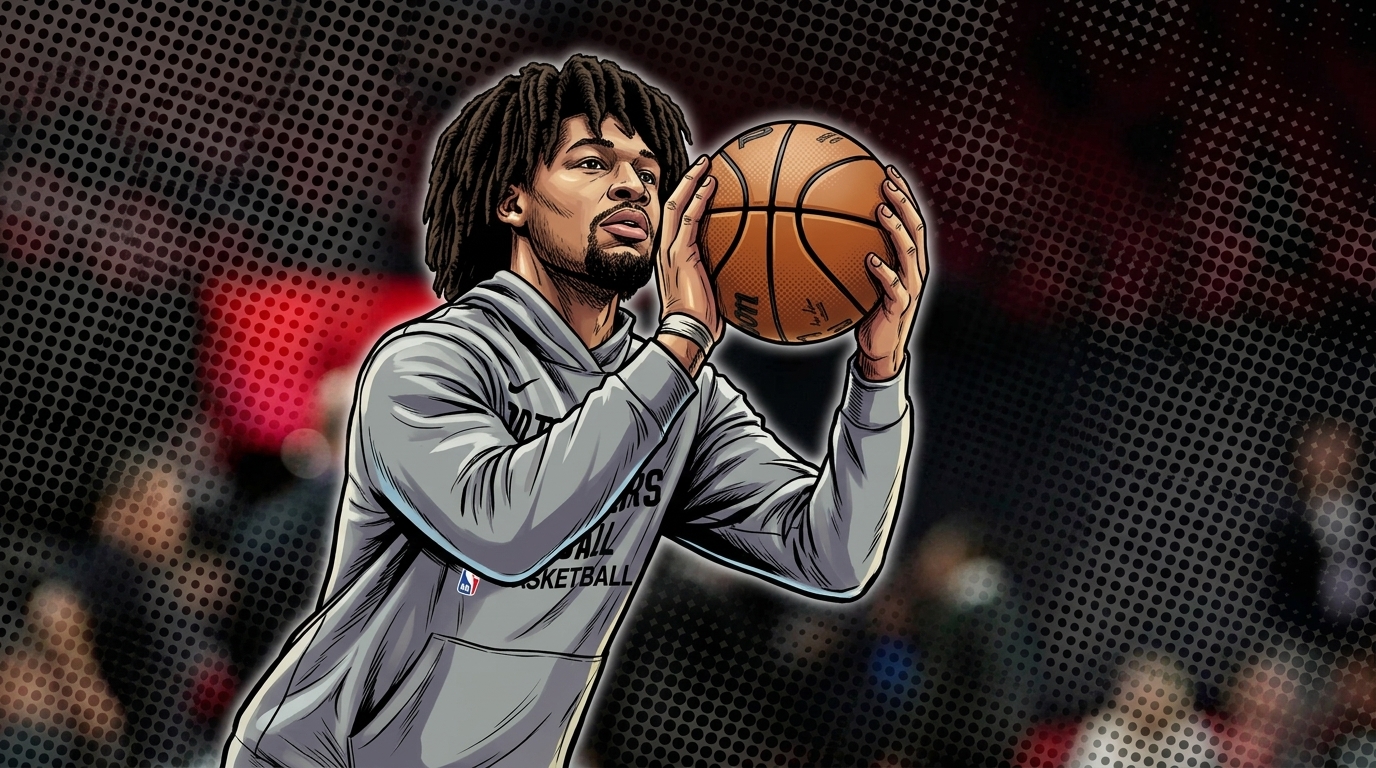

We’ve been watching this build for two years — the quiet acknowledgment that the Giannis era in Milwaukee was running out of runway, then the 32-50 season that made the acknowledgment official, and now the hard deadline that turns a slow-moving saga into a ticking clock. The Giannis trade deadline (June 23) isn’t a rumor or a projection. It’s a date set by ownership: either Giannis Antetokounmpo signs a max extension and stays a Buck, or he gets traded before the NBA Draft. Per ESPN’s Shams Charania, the Bucks are open for business. Everything else flows from there.
https://twitter.com/ShamsCharania/status/2053876566615044190
The framework here matters. This isn’t a player demanding a trade or an organization forcing one. It’s a co-owner: Jimmy Haslam, who also runs the Cleveland Browns with the kind of blunt business efficiency that produces quotes like “sometime over the next six or seven weeks we’ll decide whether Giannis is going to sign a max contract and stay with us or he’s going to play somewhere else.” He drew a line and stuck to it. Co-owner Wes Edens has been equally direct: “Either he will be extended or he’ll be traded.” Two owners, one message, one deadline. That clarity is both unusual and consequential.
What Does Giannis’ Contract Actually Say?
Giannis Antetokounmpo has one year guaranteed on his current deal at approximately $58.5 million for 2026-27, with a player option for 2027-28 worth $62.8 million. Beginning October 1, any team (including a trade destination) can offer him a four-year, $275 million extension under CBA rules, the largest contract available to any player in the league. That extension eligibility is the real prize. It’s why the Giannis trade deadline (June 23) functions as a forcing event: the Bucks need to know whether they’re building around him or rebuilding without him before the draft reshuffles every team’s roster math.
If Giannis is traded before June 23, his new team can immediately begin extension conversations come October. If he isn’t traded by draft night, the Bucks either need a verbal commitment on an extension or they’re entering next season with a two-time MVP on an expiring contract and no resolution. Haslam’s background is in decisive, deadline-driven business decisions. He didn’t set this date arbitrarily.
Why the Heat Are the Team to Watch
The reported frontrunner package from Miami (Tyler Herro, Kel’el Ware, Jaime Jaquez Jr., the No. 13 pick, and two future first-rounders) has been widely described as the most complete offer on the table. On June 8, Brian Windhorst told ESPN Get Up: “Giannis, I think, wants to be in Miami.” Sam Amick and Eric Nehm at The Athletic were blunter: “Many people around the league, from agents to executives, continue to believe that Antetokounmpo will end up in Miami.”
All of this is probably true. It’s also worth reading the fine print. When Milwaukee opened the process in May, the expectation was a robust bidding war. What materialized instead, per June reporting, was considerably more tepid. The Heat aren’t winning a competitive bidding war; they’re winning by default because no one else has matched their offer. That’s a different situation than “Miami is where he wants to go and the deal is done.” The current frontrunner status is fragile: one legitimate counteroffer from a team that can move cap space and assemble picks changes the calculus entirely. For our earlier breakdown of the Heat’s case, the package is real, but the leverage isn’t.
The buried story in the Giannis sweepstakes is that two-time MVPs shouldn’t have tepid markets. The fact that Miami leads primarily because no one else has stepped up aggressively suggests either that teams don’t believe the deal gets done, or that Giannis’s injury history and the price of the package have cooled interest faster than anyone anticipated. (Shams Charania reported in February that the Bucks were keeping Giannis through the trade deadline, engaging in talks but ultimately holding. That hesitation, in a 32-win season, tells you something about how the organization values him. Or how difficult the market already was.)
What Milwaukee Needs in Return
The Bucks’ ask, from what’s been reported, is a package anchored by a young rotation player plus future picks. Herro fills that role reasonably well: he’s 26, under contract, and has legitimate second-option upside. Ware is the high-ceiling big. The two future firsts are the sweetener. What Milwaukee is NOT getting is a top-10 pick or a proven star in return. If this trade happens, it’s the beginning of a full rebuild, not a pivot to a new contender window.
That rebuild context matters for understanding the CBA mechanics that govern this deal and what Milwaukee does next. Trading Giannis clears the books, adds youth, accumulates draft capital, and starts a clock on a 3-5 year return to relevance. It’s the correct decision given the 32-50 season. It’s also a concession that the championship window the Bucks opened in 2021 is now permanently closed.
Growing up in Milwaukee, watching Giannis arrive as an awkward 19-year-old in 2013 (skinny, barely able to speak English, dunking on people with a 7-foot-3 wingspan that nobody quite knew what to do with) and then watching him become the best player in the world for a few years, and then win a title in 2021, means the rebuild announcement lands differently than it would for a casual fan. This was the best thing Milwaukee sports had ever seen. The Giannis trade deadline (June 23) is the formal end of it.
The Teams That Are Actually Realistic
The field has narrowed more than the trade rumor cycle suggests. According to HoopsRumors citing Windhorst, Giannis wants to stay in the Eastern Conference, which eliminates the Western Conference teams that might otherwise have the assets to compete.
The Warriors are out. Multiple reports indicate Giannis isn’t interested in moving west, and the idea of going to Golden State to play alongside an established superstar in the final years of his prime has been characterized as a nonstarter. The Celtics have been speculative since the start; Windhorst has thrown cold water on the idea, noting he’s not sure Boston is ready to move the pieces a deal would require, and there are no confirmed direct talks between the two teams. The Rockets have assets but are also Western Conference. The Western Conference preference alone eliminates most of the teams that could theoretically match Milwaukee’s ask.
Realistically, the pool is: Miami (frontrunner), the Cavaliers (could offer Evan Mobley as the centerpiece, which is a more interesting trade than anything Miami has), the Knicks (who have assets but complicated cap situations), and potentially a dark-horse team that hasn’t surfaced publicly yet. The Cavaliers angle is underreported. Mobley is 24, a defensive anchor, and a legitimate building block in a way that Herro isn’t. Whether Cleveland wants to move him is a different question.
What’s conspicuously absent from all of this: any sign that Giannis himself has pushed publicly for a specific destination. The reporting is all agent-to-executive whispers. His silence is either strategic or genuine uncertainty, and nobody outside his camp knows which.
What Happens on June 23 (and After)
The Giannis trade deadline (June 23) functions as a forcing mechanism in both directions. If a trade is agreed before draft night, the new team gets Giannis entering the final year of his deal with a mutual understanding about an October extension. If no trade happens by June 23, the Bucks either receive a verbal commitment on an extension (which would restart a rebuilding process with their franchise cornerstone intact) or they enter next season in the worst possible position: a 32-win team paying $58.5 million to a player who could walk for nothing in 13 months.
The third scenario, which nobody talks about but which is always possible: June 23 passes with no trade and no commitment, Giannis plays out 2026-27 on his current deal, and the Bucks trade him at the February 2027 deadline as a rental. That’s the scenario Haslam’s deadline was designed to prevent. Whether the deadline actually prevents it depends on whether Miami (or anyone else) submits a package Milwaukee finds compelling enough to pull the trigger before draft night.
The Giannis trade rumors have been cycling since February. The difference now is that his player option and the June 23 deadline have created a hard endpoint, and per CBSSports’s ongoing coverage of the situation, both sides appear to understand what the other wants. Whether what they want overlaps is the question that gets answered in the next six weeks.
The Heat package remains the most likely outcome. But “most likely” in a tepid market with a hard deadline and a player whose preferences aren’t fully public is not the same as “done.” June 23 settles this one way or another — and Milwaukee, for the first time since 2021, is going to have to figure out what it looks like on the other side.