
There’s a category in sociology called “achieved status”: the kind you earn through your own work, rather than inherit or acquire by proximity to someone else’s. I think about it every time a sports outlet runs a story about Georgina Rodríguez and has to work to explain who she is before getting to the point.
She has 73.1 million Instagram followers. She earns $716,000 per sponsored post, according to market research firm VANTIX. She has a two-season Netflix documentary and Vogue covers. She is, by the only metrics the attention economy actually tracks, a bigger celebrity than most of the athletes playing in this tournament. And yet the sports media keeps reaching for the word “WAG,” coined by UK tabloids in the Wayne Rooney era, as if that sufficiently describes what she is.
Pop culture expert Toni Ferrara put it plainly: “If there is a queen of football WAG culture, it’s Georgina Rodríguez… Georgina is a celebrity brand in her own right.” Ferrara also predicted “every camera” would focus on Rodríguez at this tournament. That’s not a compliment to the cameras. That’s a description of gravitational pull.
https://www.instagram.com/p/DZfUgGuMRrW/
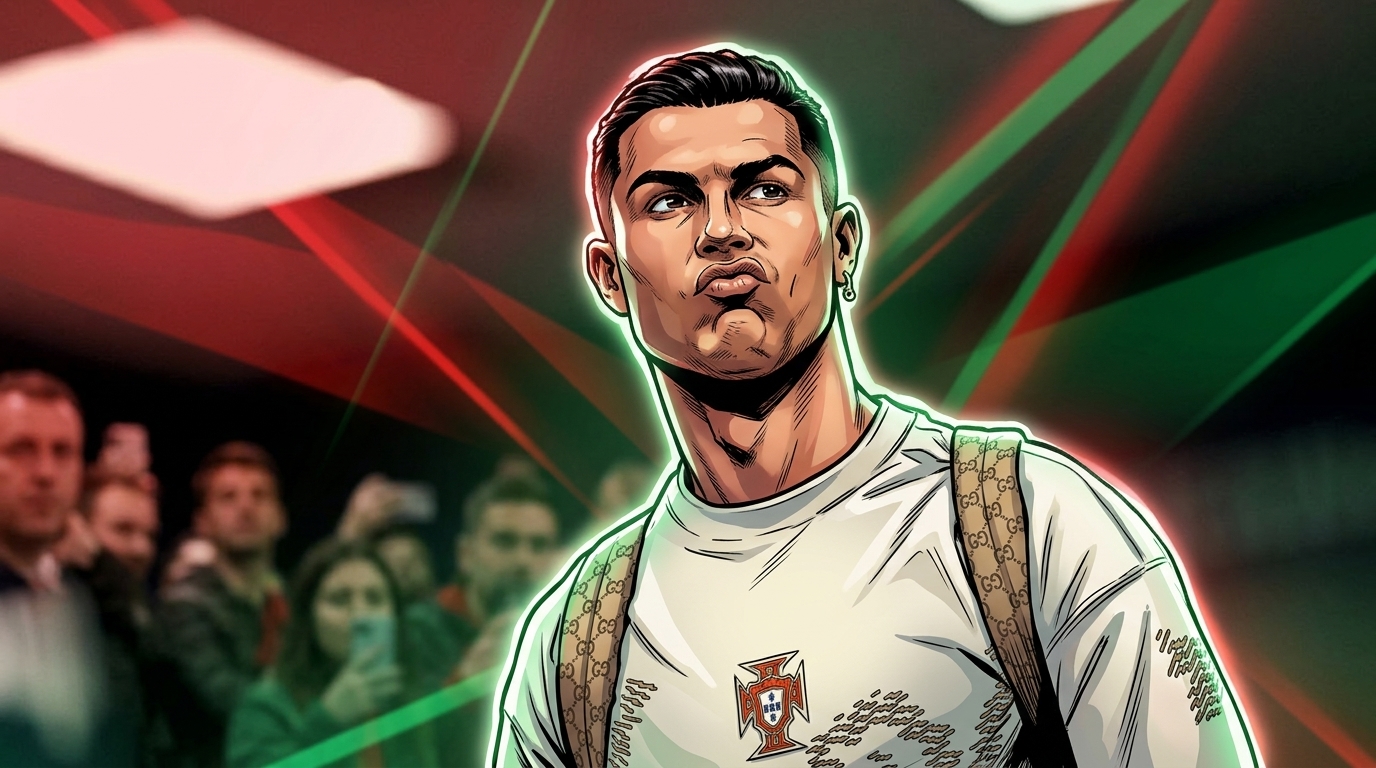
Portugal beat DR Congo 1-0 at NRG Stadium in Houston on Wednesday, João Neves scoring in the sixth minute, Ronaldo’s sixth World Cup, the last dance narrative that will follow him all summer. Outside the stadium, hundreds of CR7-jersey fans stood in the rain for hours before kickoff. This is the machinery of global football fandom, and it’s real. But there’s a parallel media cycle operating at a different frequency, one that Rodríguez drives herself. When her social media actions move (a liked post, a new campaign drop, a birthday story for her twins Eva and Mateo), that cycle spins independently of whatever is happening on the pitch.
https://twitter.com/TeamCRonaldo/status/2045570547778523337
The WAG framing has never really been about the women. It’s a narrative convenience for publications that need to populate match-day coverage without doing the work of explaining why someone is interesting on their own terms. When you call Georgina Rodríguez a WAG in 2026, you’re revealing something about your publication’s assumptions — that the interesting question is “how does she relate to the athlete?” rather than “how did she build this?” The discourse tells you who the media thinks the audience is: people who need the girlfriend angle as a portal into celebrity, rather than people who already know who Georgina Rodríguez is.
I covered women’s soccer long enough to recognize this pattern. The label is a diminishment dressed as coverage.
This morning’s Trinity Rodman piece touched on a version of this problem: athletes and adjacent figures who get subsumed into someone else’s story, no matter how much their own story has grown. Rodríguez’s case is more extreme because she isn’t even an athlete. She built her platform from genuine obscurity (she was working at Gucci in Madrid when she met Ronaldo in 2016) and turned it into something with real monetary weight. Chopard. L’Oréal. Charlotte Tilbury. Calzedonia. Brands that don’t write $716,000 checks to people who are merely adjacent to fame.
https://www.instagram.com/p/DZionvPMfxG/
The WAG economy at this tournament is genuinely fascinating on its own terms — Antonela Roccuzzo at $391,000 per post, Ester Expósito at $240,000, and Rodríguez at the top of every ranking by a distance that isn’t close. There’s an entire shadow industry being organized around these women’s attendance at games they didn’t play in. But treating that economy as a curiosity rather than a subject is where the media keeps getting it wrong. Rodríguez isn’t interesting because she shows up. She’s interesting because she built infrastructure that would exist without Ronaldo, and the proof is that it has.
She announced her engagement to Ronaldo in August 2025 with an Instagram post. Her response: “Yes, I do. In this and all my lives.” That’s not a WAG posting. That’s a celebrity managing her own narrative, controlling her own image, writing her own lines.
Ronaldo’s sixth World Cup is a real story. The question of whether he can still do it at this level, whether Portugal has what it needs around him: that’s what the match coverage is for. But the cameras that follow Rodríguez to her seat aren’t covering the match. They’re covering something else: a person who has made herself impossible to ignore, operating in the same physical space but in a completely different media reality.
The WAG label isn’t just insufficient. It’s a category error. And the fact that outlets keep using it anyway tells you more about their editorial imagination than it does about Georgina Rodríguez.
Dani Cortez covers culture and sports for Swipe Sports. She has a sociology degree from UT Austin and is from San Antonio. She’s been watching Spurs basketball since she was twelve and has no plans to stop.