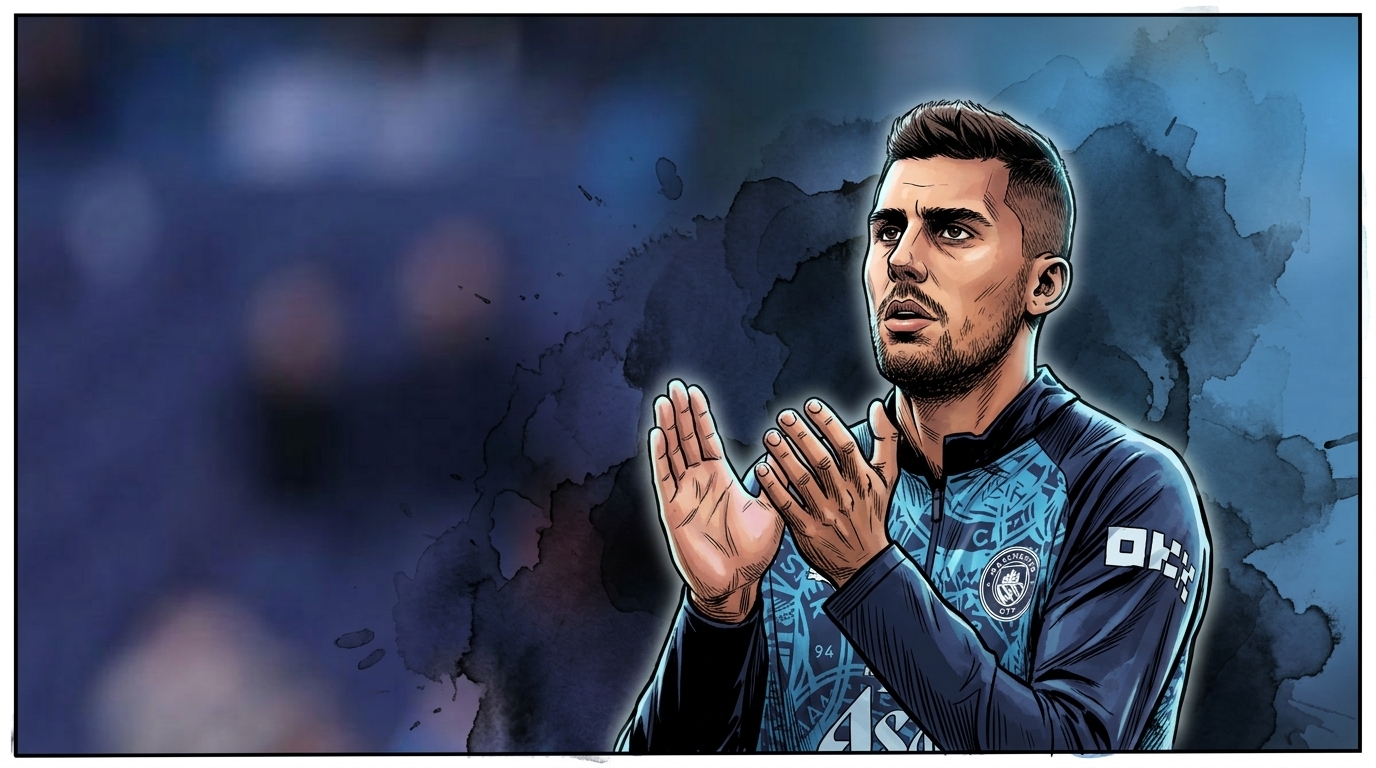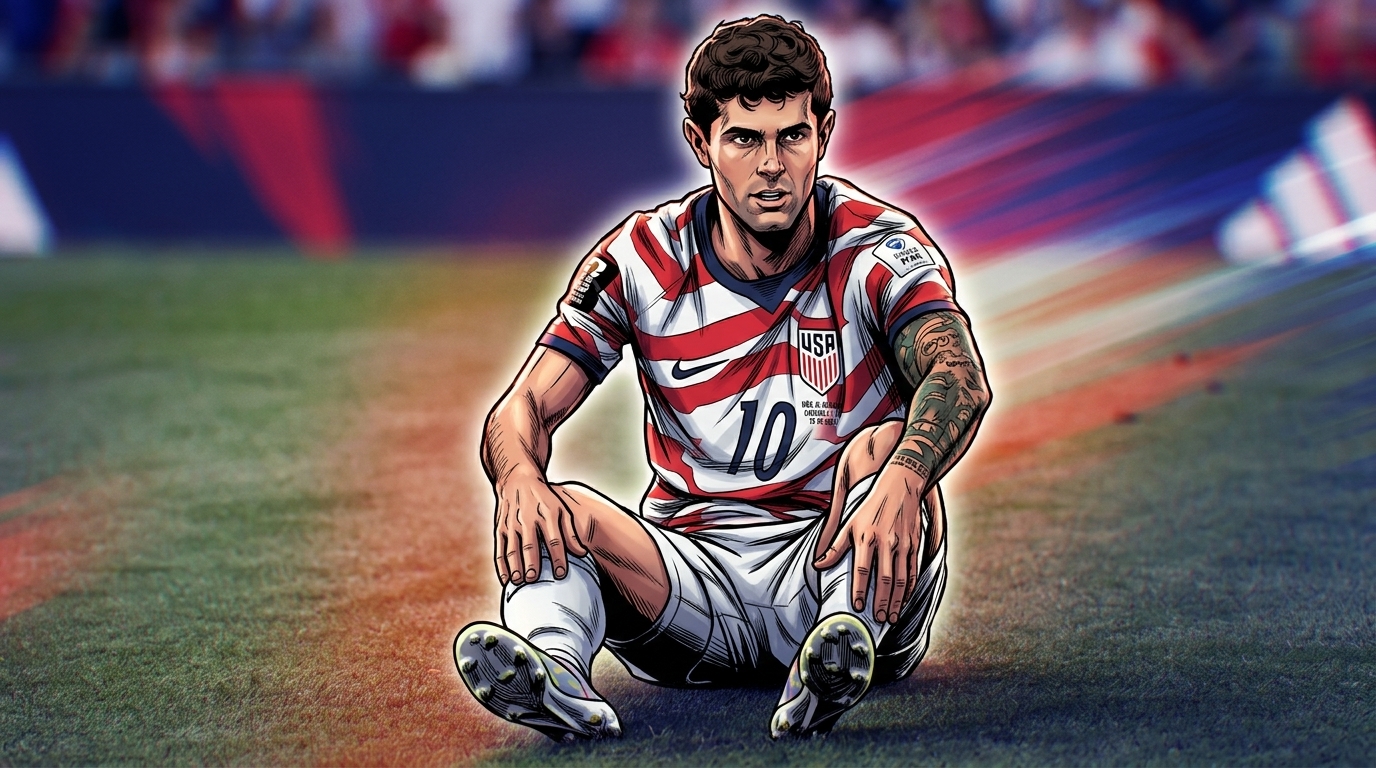

We’ve known for a while now that the United States men’s national team has one player who genuinely terrifies opposition defenses. One player who dictates the tempo of a match from a wide position, who forces double-teams that open central space for everyone else, who can retain the ball in tight corridors when everything around him is chaos. We’ve built an identity around that player. And now, with Australia less than 24 hours away, Christian Pulisic is in modified training, wearing a compression sleeve, and the words “day-to-day” are doing a lot of diplomatic work.
As Tom Bogert reported, Pulisic’s status remains uncertain ahead of Friday’s USMNT-Australia match in Seattle. The calf — the same calf he tweaked in training before the Paraguay opener, the same calf that took a direct kick in the first half of that match — is the thing standing between the United States and its most coherent offensive identity. U.S. Soccer confirmed the “day-to-day” designation via Yahoo Sports. Mauricio Pochettino told reporters Pulisic is “good,” which is the kind of answer coaches give when they don’t want to reveal anything and also don’t want to incite panic.
Both are probably true simultaneously.
https://twitter.com/tombogert/status/2066947203726541163
What Pulisic Actually Does (And Why Nobody Replicates It)
Before we get into replacement options, it’s worth being precise about what the USMNT actually loses if Pulisic can’t start against Australia.
Against Paraguay, Pulisic repeatedly stretched the defensive shape, dragging center-backs out of position in the left channel and creating the central corridors that Gio Reyna and Tyler Adams needed to operate. He grabbed a first-half assist before the calf forced him off at halftime. The US won 4-1. The second-half numbers were fine. But the first half, the stretch when Pulisic was dictating the rhythm, was when the game was effectively decided.
This is not about goals or assists, though those matter. It’s about what his movement does to a defense before the ball ever reaches him. Left-channel runners who can hold the ball under pressure while center-backs close in are a specific type of player. They are not interchangeable with high-energy pressers or technically gifted playmakers. They are their own category. (Pulisic, to his credit, has spent the better part of a decade making people forget this distinction exists.)
The question Pochettino is now working through is: can the United States tactically reorganize around Pulisic’s absence well enough to beat a compact, transition-lethal Australian side? The answer requires understanding what each replacement actually provides, and what it doesn’t.
Who Replaces Pulisic If He Can’t Start Against Australia?
The short answer: no one player directly replaces what Pulisic does. The realistic options are Tim Weah, Brenden Aaronson, and a tactical pivot that shifts Gio Reyna into the primary playmaking role between the lines.
Tim Weah brings explosive pace and direct vertical runs. He stretches defensive lines in a different way, threatening in behind rather than operating in tight space. What he doesn’t bring is Pulisic’s ball retention under pressure or his ability to slow the game down in tight corridors when the US needs to build rather than burst. Weah is a threat. He is not a system anchor.
Brenden Aaronson offers relentless pressing and positional energy, exactly the qualities that make him useful off the bench late in matches when the opponent is tired. As a starter against a compact Australian shape that defends deep, his ceiling is lower. He’s less penetrative on the dribble, less dangerous in one-on-one situations, and his presence doesn’t force the same defensive adjustments Pulisic forces. Aaronson made the point himself, somewhat diplomatically, when asked about the uncertainty: “When I’m in England, they tell you exactly what it is…But it is different…in international football.” (He was speaking about injury transparency, but the observation doubles as a comment on the difficulty of planning around ambiguity at this level.)
A Reyna-centered rebuild is the most interesting option, and the most disruptive. Moving Reyna into the primary playmaker role between the lines would give the US genuine vision and tight-space creation in central areas, but it is a full tactical rebuild, not a substitution. It changes spacing, pressing triggers, transition responsibilities. Balogun potentially benefits: without Pulisic drawing double-teams from the left, the central space that unlocks Balogun’s runs might actually increase. The tradeoff is the US loses its left-channel threat almost entirely, which is a significant shape adjustment against a team that has spent considerable effort preparing for what the US normally looks like. More on Reyna’s complicated path to this roster: the fact that he’s here matters, and so does the context of how he arrived.
Why Australia’s Setup Makes a Pulisic Absence Worse
Australia beat Turkey 2-0 on the back of a compact block, one that Popovic has drilled to become a rigid five-back shape out of possession, and a transition game that punishes any team that leaves gaps when losing the ball. The Socceroos’ defensive setup is designed to push play wide, channeling opponents toward the wings rather than allowing central penetration. The corridors where Pulisic operates.
This creates a specific problem. Against a US attack that is already compromised, Australia has already built its defensive architecture around the very areas the US will struggle to threaten. If Weah starts and operates predictably in the vertical channel, Australian wide midfielders (who track back to defend the wings as a primary responsibility) will have a map for exactly where to be. The element of Pulisic-specific chaos, the part where he forces individual defenders to make decisions they’re not comfortable making in tight space, disappears.
The deeper concern is transition. Australia is lethal on the counter precisely because they can absorb pressure from compact shape and release quickly. A US team that can’t maintain sustained possession pressure because its most reliable ball-carrier is absent (or operating at 70 percent) is exactly the team Australia’s setup is built to exploit. NBC Sports’ coverage of the injury situation frames the Australia match as a “key” test for this US team. That framing was accurate before the injury uncertainty. It’s understated now.
What This Game Means (And Why 80% Pulisic Still Matters)
This is the first World Cup meeting between the United States and Australia, and both teams arrive undefeated. A win puts the US in an extremely strong position to advance from Group D. A loss complicates everything that follows, particularly if goal differential becomes relevant. The game matters more than the group-stage billing usually suggests.
Which is why the specific nature of Pulisic’s situation is worth parsing carefully: day-to-day, training separately, wearing a compression sleeve. There is a version of this where Pulisic starts, plays through discomfort, and operates at somewhere between 75 and 85 percent of his normal capacity. That version is probably still preferable to the alternatives, for reasons Tyler Adams articulated: “He picked up a knock a few days before the game and got kicked in the same spot again during the game. When you go into halftime, things obviously get tight, but he’ll be fine.” Adams’ public optimism is the right tone. But optimism doesn’t determine whether Pulisic can accelerate at full speed in the left channel when a center-back closes within three yards.
Antonee Robinson offered the honest version: “I’m not sure the exact terminology of his injury…We’ve still got a couple of days.” A couple of days. Which means Pochettino has 48 hours to either confirm his best player or commit to a full tactical rebuild significant enough to give Australia a coherent scouting advantage. (This is the second calf issue for Pulisic in this tournament cycle. The calf, at least, is consistent.)
Pulisic himself was measured: “I just got a bit of a kick in the first half, so I’m really hoping it’s nothing, taking a little bit of precaution, but I’m hoping I’ll be fine in the next few days.” The phrase “hoping I’ll be fine” from a professional athlete, in a World Cup context, translates roughly to: the staff doesn’t fully know yet. The Inquirer’s account of the timeline confirms what the vague official statements obscure: this is a situation that requires management, not just rest.
What to watch for Friday: whether Pulisic is in the starting lineup, how early in warmups he’s moving at full pace, and, if he plays, how freely Pochettino allows him to track back and defend. A Pulisic who is being protected on the defensive side is a Pulisic who probably shouldn’t be starting. The version that shaped Pochettino’s tactical identity with this squad was always a two-way player. Anything less changes the math.
The US can beat Australia without Pulisic. They can also beat Australia with a Pulisic operating at reduced capacity. What they almost certainly cannot do is pretend the distinction doesn’t exist and expect the same results. Pochettino knows this. The 48 hours ahead of kickoff in Seattle are about deciding which version of the truth to build a game plan around — and how far Pulisic’s form before the tournament has actually carried into these opening weeks.
The calf will tell them by Thursday. Until then, the roster depth that didn’t look like a concern last week is suddenly the most important variable in the United States’ World Cup.