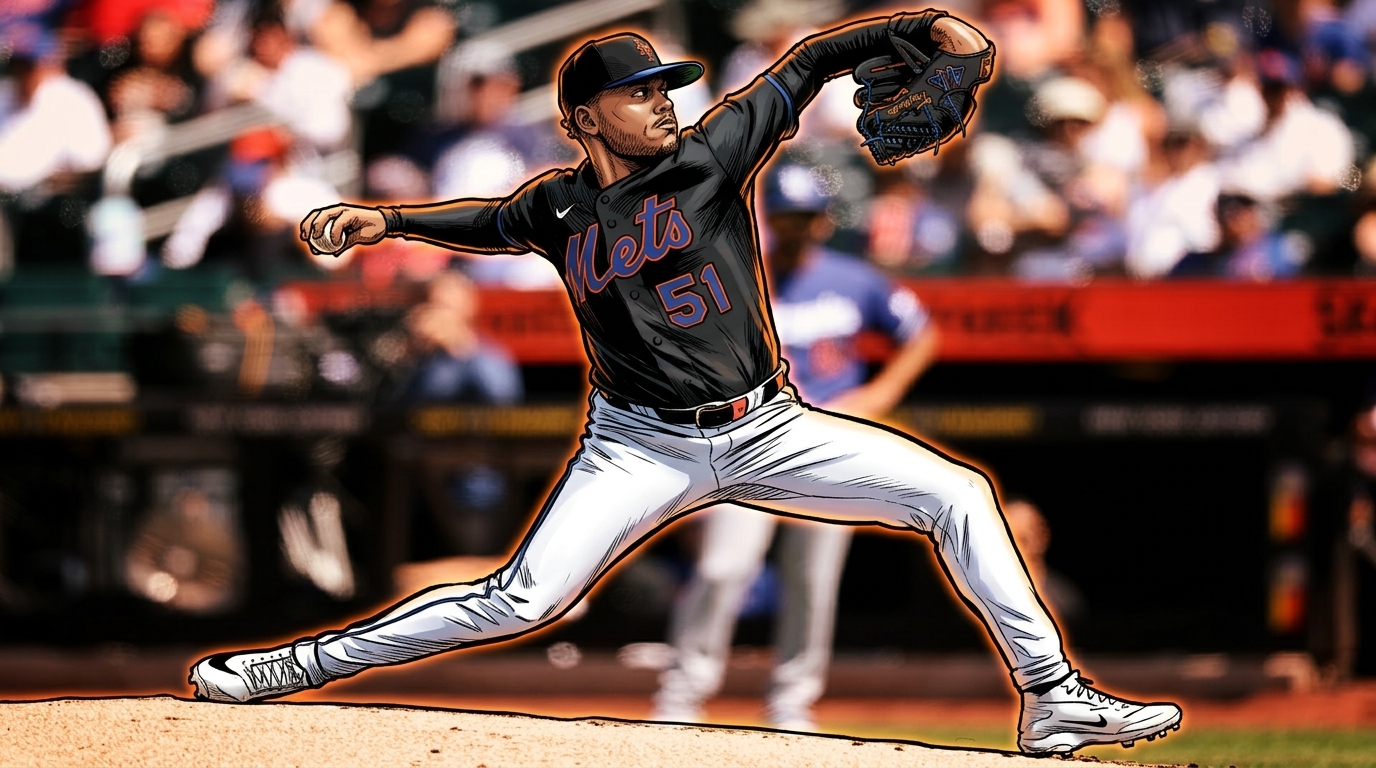

Freddy Peralta’s ERA has ballooned from 2.70 to 4.99 in six months, and the team most seriously discussing a reunion is the one that traded him away in the first place.
The New York Mets acquired Peralta and Tobias Myers from the Milwaukee Brewers on January 21, giving up Jett Williams and Brandon Sproat, prospects ranked third and fifth in the farm system, per ESPN. Peralta arrived off a 2025 All-Star season, going 17-6 with a 2.70 ERA and 204 strikeouts across 33 starts for Milwaukee. Williams and Sproat were the kind of controllable, close-to-ready talent front offices build rotations and lineups around for six years, not seven months. On paper, that package looked lopsided in New York’s favor before he threw a single regular-season pitch in a Mets uniform.
It has not stayed that way.
Peralta’s stat line has cratered since the trade: a 4.99 ERA, 1.48 WHIP, 113 strikeouts against 48 walks over 113.2 innings, and a 5-9 record through 22 starts. His last 11 outings look worse than even that season-long number suggests. Over that stretch he has a 6.71 ERA across 51.2 innings, with his strikeout, walk, whiff, and home run rates all trending the wrong direction, according to MLB Trade Rumors.
A .361 BABIP in that span suggests some bad luck is mixed in. It does not come close to explaining all of it.
Here is what New York gave up to get him.
https://twitter.com/JeffPassan/status/2014167429606261220
Six months later, that trade reads like a deal Milwaukee won without needing to wait for results, and it is the quiet story sitting underneath every other Mets headline this trade deadline. The Brewers have their own motive for a reunion beyond nostalgia: Brandon Woodruff is done for the season after shoulder surgery, and Peralta would slot directly into the rotation spot he left behind. Peralta reportedly never wanted to leave Milwaukee to begin with — this reads less like coincidence than a return to the obvious answer.
The market circling him now has a familiar shape: the Tampa Bay Rays have interest of their own, and the Philadelphia Phillies scouted his most recent start. A match with the Chicago Cubs “feels unlikely,” per the same reporting, which leaves three plausible landing spots and a shared read on the player: useful innings for the stretch run, not a difference-maker worth surrendering a real prospect to get.
That’s the story sitting underneath the trade rumors: the Mets are the ones selling low, not the team fielding calls about a bounce-back arm. Peralta’s $8 million salary and pending free agency keep the asking price modest by design, and no contender has to pay ace prices for a pitcher trending the wrong way in a contract year. Twenty-two starts of evidence have piled up against the January price tag, and the resulting collapse in his trade value has nothing to do with injury or off-field noise, just performance that stopped matching the contract attached to it.
I’ve caught two of those last 11 starts live, and the fastball still looks the same. The results just are not following it anymore.
Sellers across the arms-heavy trade market are learning the same lesson this deadline: name recognition stopped mattering the moment results quit backing it up, and Peralta is just the clearest case. It is also happening alongside the Mets’ broader fire sale, a front office suddenly willing to admit more than one bet went wrong at once. A reunion sends Peralta back to the only team that ever wanted to keep him, at a fraction of what it charged the Mets to take him away in January.
The Mets bought high. Now Milwaukee gets him back at a discount.