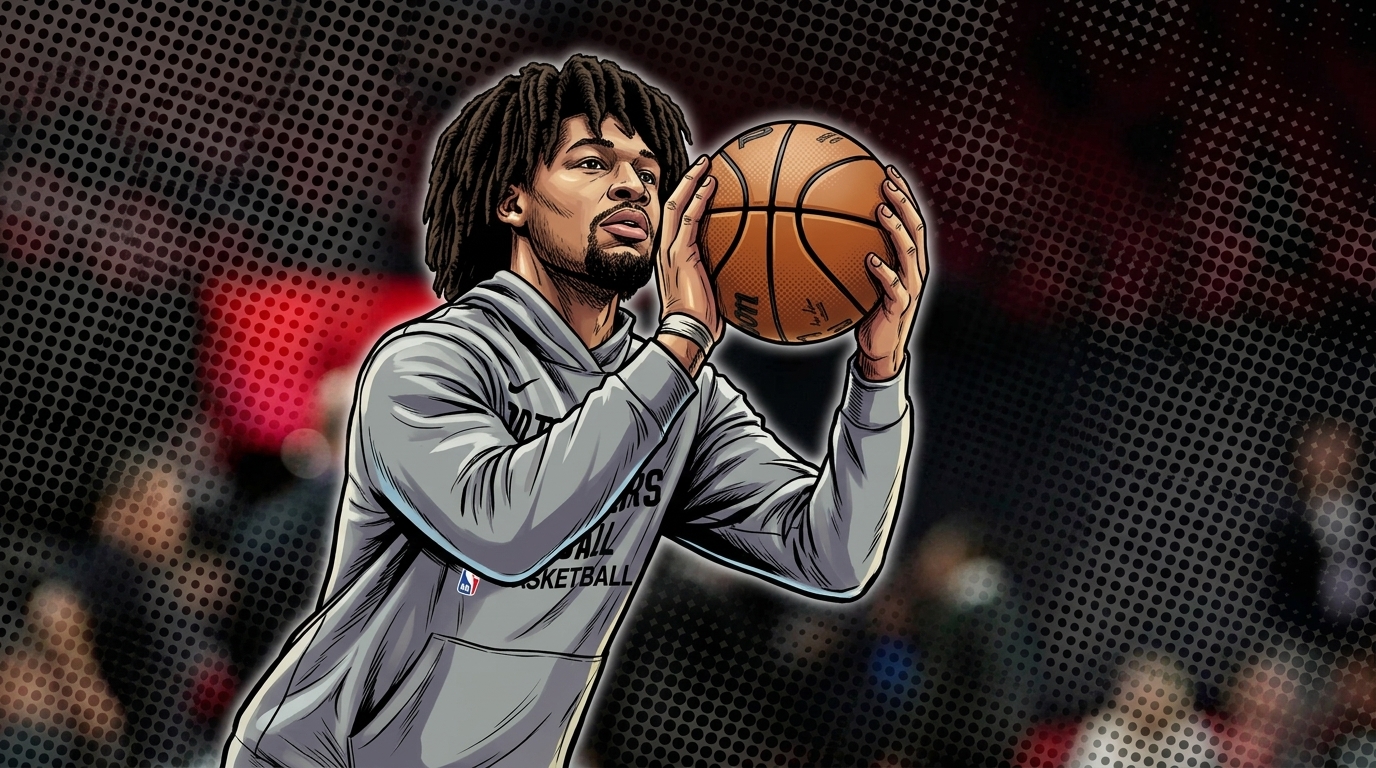

Phoenix guaranteed $73 million to Dillon Brooks through the 2029-30 season this week, and nobody in the building seemed to think it required much of a debate. Three years, an average north of $24 million a year, fully guaranteed, no options; the front office ran the numbers on the league’s most disliked player and decided the villainy was worth keeping around at full price.
Brooks arrived last offseason as the least glamorous piece of the trade that sent Durant to Houston, a technical-foul machine plugged in to guard whoever the Suns’ other wings couldn’t handle. The extension’s first-year salary lands just over $22 million, which keeps him out of free agency in 2027 and, more to the point, keeps the front office from ever having to explain to Mat Ishbia why they let him walk.
He answered for it on the floor. Brooks posted a career-high 20.2 points, 3.6 rebounds and 1.8 assists across 56 games, missing 18 with a fractured left hand, and Phoenix still finished as a 45-win playoff team built partly around his willingness to be despised on national television.
He also led the entire NBA in technical fouls — 17 of them in just those 56 games — which is the kind of number that gets most players benched and got Brooks a raise instead. That number isn’t a one-season spike; it traces back to a rap sheet that includes 49 technicals and roughly $373,000 in career fines dating to Memphis, where he built his game in the image of Joe Dumars, Vin Baker and Dennis Rodman, three players whose shared talent wasn’t scoring so much as making the other team miserable.
This is the part where you’d expect some hand-wringing about culture and locker-room chemistry, and Phoenix skipped it. Front offices used to treat a player like Brooks as a controlled substance, useful in small doses, dangerous if it built up in the system. The Suns are treating him more like a utility bill: a fixed cost that shows up every month whether you like it or not, budgeted for because the alternative is worse than the aggravation.
Nobody at Suns headquarters issued a statement about embracing chaos; they just wrote the check. Mat Ishbia made up his mind back in January, months before there was a number attached to any of it:
https://x.com/Mishbia15/status/2008268422698988017
Trade calls he wasn’t taking, a player he wasn’t moving. That’s an owner who’d already run the audit and decided the villain was worth keeping on staff.
The other detail missing from the easy version of this story: Phoenix isn’t betting on somebody it just met. Jordan Ott has been the head coach since June 2025, not an incoming hire inheriting a mess; he ran the entire 2025-26 season that turned Brooks into a 20-point scorer and the Suns into a 45-win team, and did it well enough to draw real Coach of the Year buzz along the way. Re-signing Brooks under the coach who already produced a career year out of him is a lot closer to a renewal than a leap of faith.
Phoenix isn’t alone in figuring this out, either. Front offices used to quietly non-tender the players who made everyone’s blood pressure spike, treating abrasiveness as a cost with no offsetting return. Somewhere along the way, someone ran the correlation between technical fouls and defensive versatility and noticed the annoyance was doing actual work on the floor. Brooks just happens to be the version of that math currently sitting in Phoenix, itemized and fully guaranteed.
For anyone still working out how a bench villain fits next to the actual stars on this roster, the rest of our NBA coverage has the rest of the offseason. This particular move is the simple one: they liked what Brooks did, so they’re paying for more of it.
None of this required Phoenix to like Dillon Brooks, and it’s a safe bet nobody in that front office does, not personally. They noticed he was profitable to have around, priced the aggravation into the number, and signed off. The technicals will keep coming.
So will the invoice, every year, through 2030.