
Darian Mensah took the $10 million and left. Jeremiah Smith turned down $10 million and stayed. Both decisions happened in the same week. Neither man is wrong. The sport that produced both outcomes has no idea what it is.
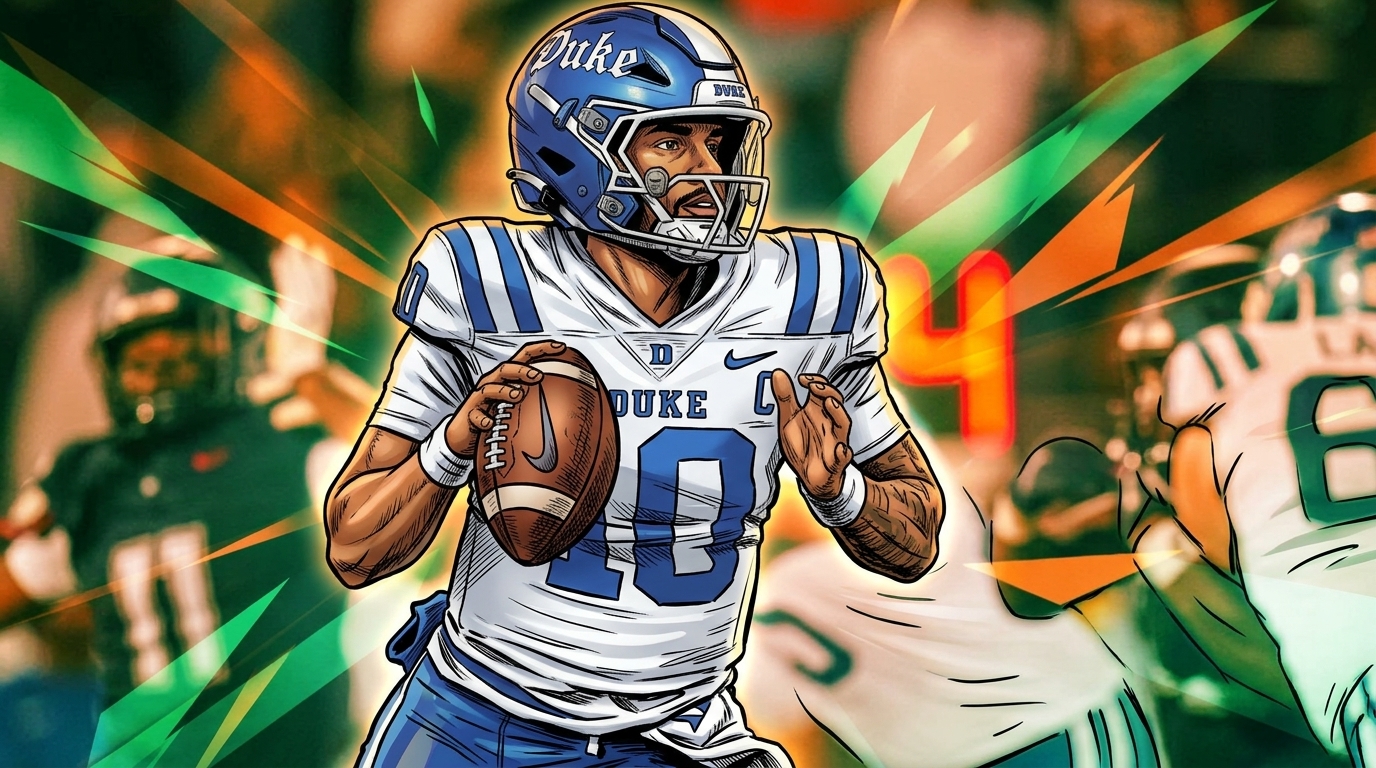
The Mensah deal is legitimately staggering when you lay it out flat. Miami reportedly owed Duke a $4 million buyout just to pry him loose from his existing NIL contract, then paid him well above the $4 million per year he was already earning in Durham. Aaron Torres put it plainly:
https://x.com/Aaron_Torres/status/2012298878406770805
That’s $10 million, all-in, for one quarterback, for one year. And Mensah earned it. He threw for 3,973 yards last season, 34 touchdowns, six interceptions, 67 percent completion rate, and dragged Duke to its first outright ACC title since 1962. Duke sued him in Durham County Superior Court when he tried to leave. He settled and committed to Miami anyway. Mario Cristobal got his guy. The market spoke.
Then Smith spoke louder. Ohio State’s receiver turned down “over $10 million, easy” — his words, per SI.com — to stay for his junior year. “No reason to go back home, not when I’m at the best place in the country. I came to Ohio State for a reason, to win championships, develop as a player and a person and keep building on this legacy.” We wrote about Jeremiah Smith’s decision to stay at Ohio State earlier today. It was one of the more genuinely surprising sports stories of the spring.
Here is the uncomfortable part the NCAA does not want to sit with: both of these decisions make complete sense.
For 100 years college football ran on a single answer to the question of why players stay. Loyalty. Tradition. Love of the program. The answer was enforced partly by genuine belief and partly because there was no alternative — you stayed or you left for the NFL, and the NFL didn’t want you until it decided you were ready. NIL didn’t invent a new system so much as it forced honesty about the market that was always underneath the old one. Mensah found out what he was worth and collected. That’s rational. Smith found out what he was worth and decided the championship run mattered more than the check. That’s also rational. My sister sent me a meme about Smith in our group chat that morning with no context, just a screenshot of the number, and three question marks. Reasonable response.
The thing that should actually unsettle people isn’t that Mensah took the money. It’s that Smith’s decision now reads as unusual. The old value system still exists — Smith proved it’s real, not just rhetoric coaches feed recruits. But it’s optional now, and everyone knows it’s optional, and that changes what it means to invoke it. When staying at your school is a choice you weigh against an eight-figure offer and decline, you’re not playing by the old rules anymore. You’ve just decided the new rules happen to point the same direction.
The NCAA built a structure where both answers are correct and then called it amateurism. That’s the trick. Not that the sport is broken — it’s that it works perfectly fine as a market and has no vocabulary left for anything else.
Mensah’s already in Coral Gables. Smith’s already in fall camp prep. The sport moves on. The question our college football coverage keeps coming back to is what it even means to be an amateur when $10 million is a reasonable thing to turn down.