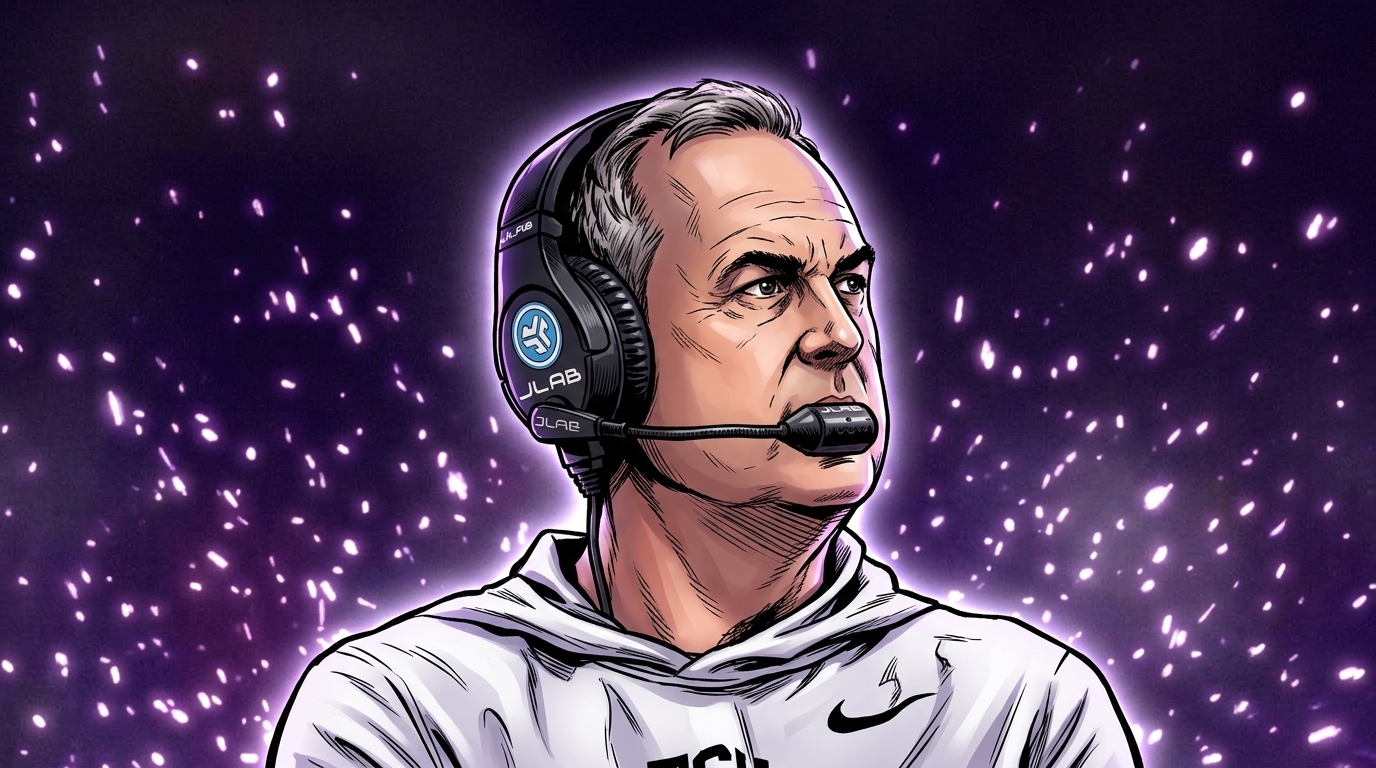

Tennessee handed a 19-year-old $2 million, moved him six hours from home, and then measured him in sacks. When it went wrong, and it went wrong completely, the institution absorbed the sunk cost and called it support. Chaz Coleman never played a single down for the Vols. He was medically disqualified, failed to report to summer workouts, and was dismissed late June. The NIL collective will not be audited. Josh Heupel will not be fired. I cannot believe we are watching this play out like it was inevitable, like the whole damn system didn’t produce it.
The NIL transfer economy was designed to account for exactly one kind of risk: on-field performance. Collectives and athletic departments modeled the downside as “player doesn’t produce.” They did not model “player is a teenager navigating a life-altering sum of money, a new city, a new program, lingering vertigo from a head injury, and the weight of being the most expensive bet your department has ever made.” That version of risk never made it into the contract. It rarely does, because it requires treating the player as a person rather than a line item.
Coleman came out of Penn State as the No. 2 edge rusher and fifth overall player in the 2026 transfer portal, a true freshman with nine games of production and a pass-rush grade that made NIL collectives reach for their calculators. Tennessee beat out Ohio State and LSU for his commitment. The recruiting pitch featured Jim Knowles and other former Penn State coaches, familiar faces meant to ease the transition. Two weeks into spring practice, Coleman was largely absent. He didn’t play in the Orange & White Game on April 11. The vertigo from a Penn State head injury had never fully resolved. The homesickness, by multiple accounts, was severe enough to compromise his ability to compete. CBS Sports described the pressure of going from fringe four-star to overnight millionaire as a compounding factor. None of that is in the standard NIL collective playbook.
Here is what Josh Heupel said publicly after the spring game:
“Chaz is dealing with some things off the field, and he’s got to handle that and go through that process. We’re here to help and support him in all of those ways and will continue to do that.”
https://twitter.com/AdamSparks/status/2043058999948382632
That quote is doing a lot of work with very few words. “He’s got to handle that” is a phrase that sounds like compassion and functions as abdication. The institution that handed a teenager $2 million and flew him to Knoxville is now framing his inability to handle the situation as a personal process he must navigate. Tennessee is “here to support him,” but Coleman couldn’t practice, couldn’t compete, and is now dismissed. The support structure that would have been worth something (mental health resources integrated before the crisis, transition counseling, someone whose job was Coleman the human being rather than Coleman the edge rusher) was never the point.
He was dismissed in late June. ESPN confirmed the medical disqualification. Tennessee is keeping him on scholarship, which is the one clean thing in this story, and they are reportedly not on the hook for the full $2 million, which is the one clean thing for Tennessee. The transfer portal closed behind him — Coleman cannot re-enter until January 2027 at the earliest.
https://twitter.com/ESPNRittenberg/status/2070507746932224339
What I keep coming back to is how thoroughly the college football’s NIL era was built on the assumption that the transaction was the hard part. Get the money right, get the portal paperwork right, lock in the commitment before Ohio State does — and then it’s just football. It turns out that when you extract a 19-year-old from everything familiar and drop him into an environment defined by the dollar amount attached to his name, you haven’t solved the human problem. You’ve deferred it. And when it surfaces, the institution calls it off-field stuff, keeps the scholarship as a gesture of goodwill, and starts pulling up next January’s portal board.
Tennessee’s NIL collective will do this again. Every collective will. The system isn’t broken — it’s working exactly as designed, for everyone except Chaz Coleman.