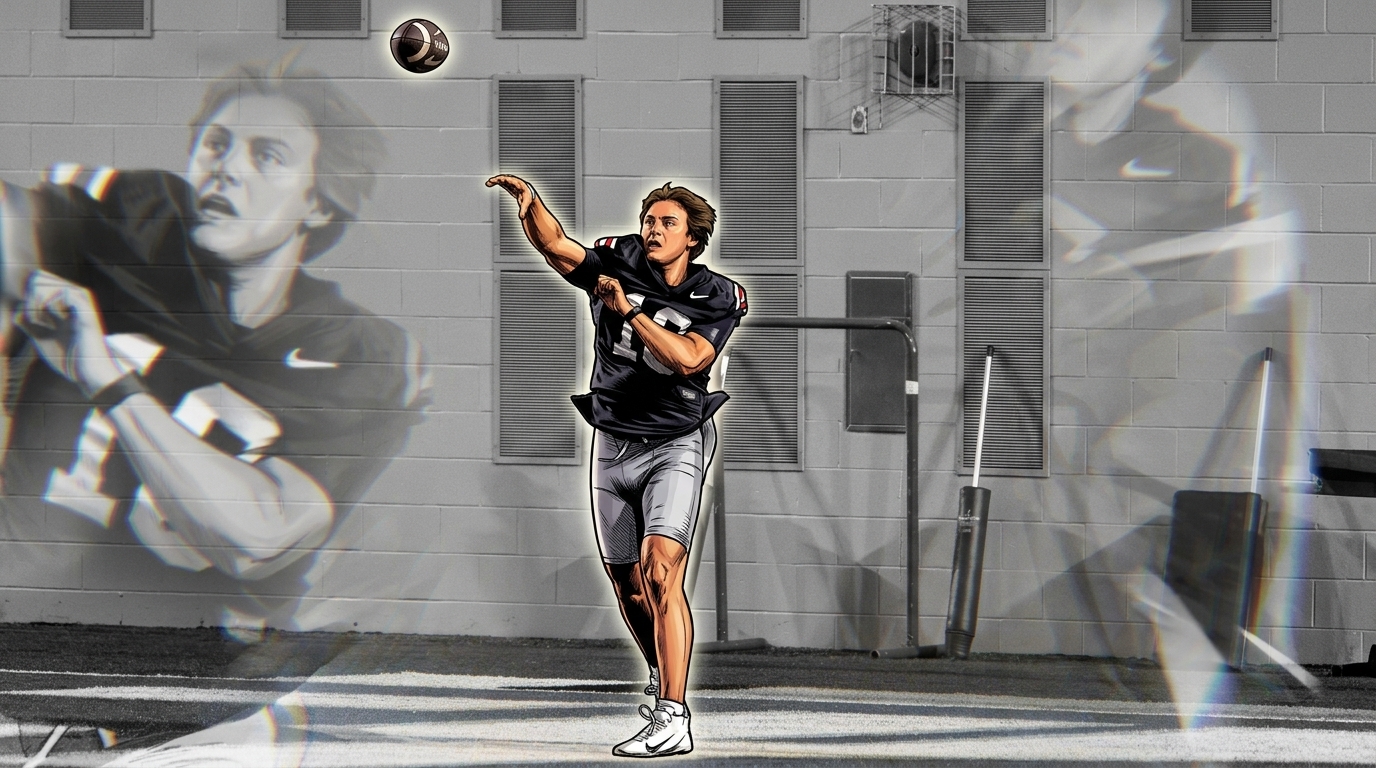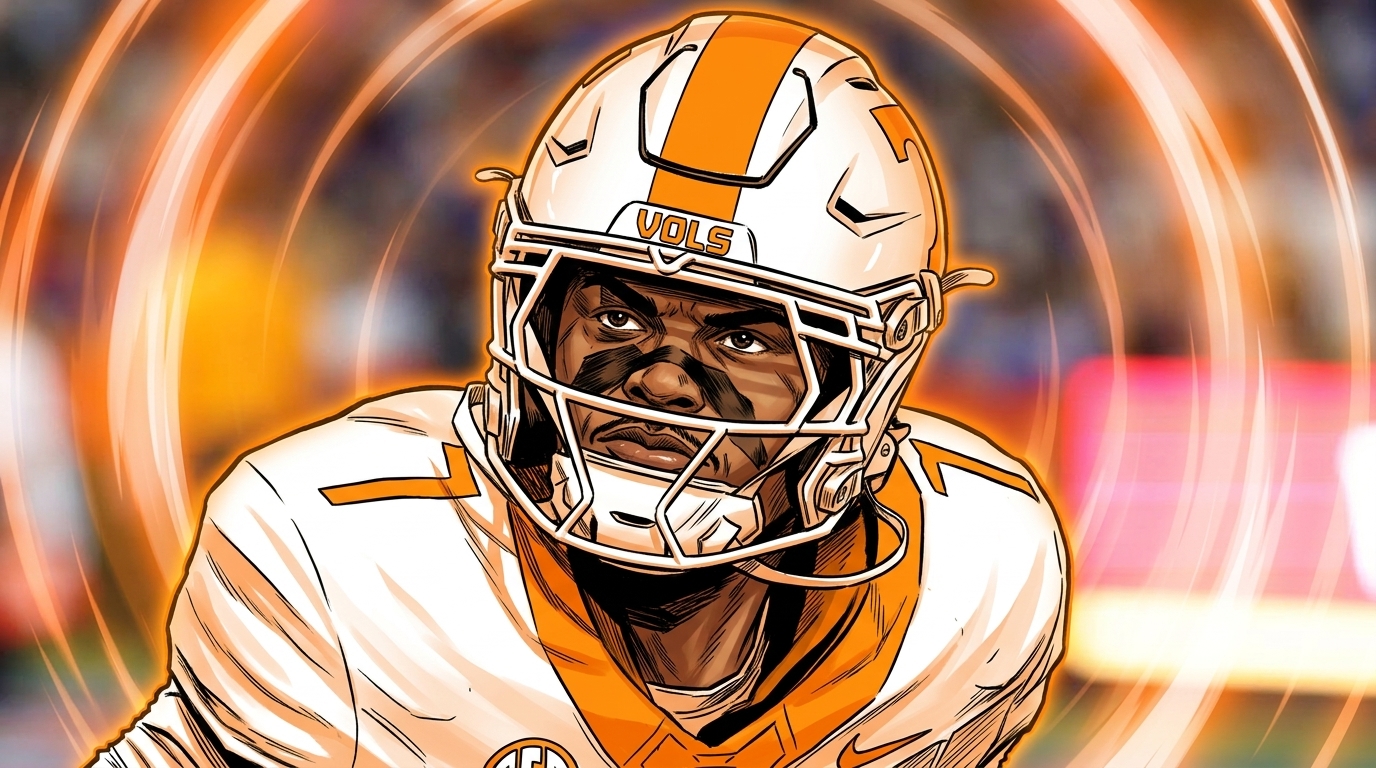

There’s a stat buried in Trinidad Chambliss’s 2025 season that explains why Kirk Herbstreit and Stephen A. Smith just blew up the sport’s biggest offseason storyline, and it isn’t the one everybody keeps repeating.
It’s this: Chambliss threw three interceptions across a full season as Ole Miss’s starter. Arch Manning threw seven in his first year running Texas. Everything else in the Trinidad Chambliss vs. Arch Manning conversation entering 2026, the completion rate, the rushing yards, the whole “face of the sport” debate, traces back to that gap. One quarterback protected the ball like his team’s season depended on it, because it did. The other didn’t, and still walked into the summer as the presumptive face of college football. Chambliss out-passed Manning on efficiency, cut his turnovers by more than half, added nearly 130 rushing yards Manning didn’t have, and dragged Ole Miss to a CFP semifinal while Texas missed the playoff field entirely. That production sits right there in the box score, plain as anything, and until last week almost nobody outside Oxford was making noise about it.
What Herbstreit and Stephen A. Actually Said
Herbstreit made the case on The Pat McAfee Show: “The face of the sport going into this season, as much as people are going to talk about Arch Manning, I really think Trinidad Chambliss at Ole Miss … He is so refreshing, when you get around this guy, you’ll instantly fall in love with his personality,” according to Saturday Down South.
ESPN’s own account was running Herbstreit’s Ole Miss praise from that same Pat McAfee Show appearance all week, which is usually a sign a storyline is about to run laps around the internet.
https://twitter.com/ESPNCFB/status/2084706999787303418
Stephen A. Smith didn’t need a soundbite to make his case just as loud. On First Take, he ranked Chambliss above Manning among SEC quarterbacks entering 2026 and refused to hedge: “I don’t see how anybody can just put Arch Manning ahead of him. I’m sorry, I’m not doing that,” he said, per Pro Football Network, pointing to Chambliss’s full season of play and his College Football Playoff performance as the deciding factor. Two of the most-watched voices in the sport arriving at the same conclusion independently is the kind of agreement worth checking against the actual stat sheet.
Is Trinidad Chambliss Better Than Arch Manning?
By 2025 production, yes. Chambliss completed 66.1% of his passes to Manning’s 61.4%, threw three interceptions to Manning’s seven, out-rushed him by nearly 130 yards, and led Ole Miss to a CFP semifinal while Texas missed the playoff field entirely despite all the preseason hype around Manning.
Why the Playoff Gap Matters More Than the Name Recognition Gap
Start with the completion percentage, because it’s the stat that’s easiest to misread. A jump from 61.4% to 66.1% sounds modest until you translate it: that’s roughly five extra completions per 100 attempts, which over a full season adds up to dozens of plays where the offense stayed on schedule instead of facing second-and-long. Chambliss wasn’t just more accurate. He was more accurate on the throws that keep drives alive.
Then there’s the turnover math, which is the real headline. Three interceptions across an entire starting season is elite ball security, the kind of number that lands a quarterback on preseason All-American lists instead of just a nice-stat-line writeup. Seven interceptions isn’t disastrous, but it’s more than double Chambliss’s total, and in a sport where one bad read at the wrong moment ends a season, that gap compounds fast. Add the rushing numbers — Chambliss’s 527 yards and 8 touchdowns on the ground against Manning’s 399 and 10 — and you’ve got a quarterback who did more with his legs and far less damage with his arm.
But that’s not even the most interesting part. Ole Miss took that quarterback and turned him into a 13-2 season, a win over Tulane, a 39-34 shootout win over Georgia in the Sugar Bowl, and a trip to the CFP semifinal at the Fiesta Bowl, where they lost a heartbreaker to Miami on a late Carson Beck touchdown run. The Rebels finished No. 3 in the final poll, the program’s best finish in 63 years, according to Wikipedia’s season summary. Texas, with the quarterback who entered the year as the presumptive Heisman favorite, went 9-3 in the regular season, lost to a Florida team that finished 4-8, and got left entirely out of the playoff field, finishing No. 13 nationally even after a Citrus Bowl win over Michigan salvaged the record to 10-3.
That’s the part of this comparison that name recognition can’t paper over. The stat gaps are real, but the playoff gap is the one that ends up on a trophy case. Manning’s Heisman odds were already a bet on his best six games rather than a full season, and by year’s end the résumé that mattered belonged to the guy who took his team somewhere Manning’s team never got to visit.
What Manning Still Has Going for Him
None of this makes Manning a bad quarterback, and it doesn’t settle the face-of-college-football conversation for good. He’s 22, he plays for the most scrutinized program in the sport, and 24 passing touchdowns with 10 more on the ground is a legitimately productive season by any normal standard. It just wasn’t the best quarterback season in his own conference, let alone the country. The Manning name still carries weight nationally in a way Chambliss’s doesn’t yet, and one more year under center in Austin could close a lot of this gap in a hurry.
Pete Golding, Chambliss’s own head coach, isn’t ready to hand out a crown either. “I need Chambliss to be the face of college football at the end of the year, not now,” Golding said, a fair check on a conversation that started before a single 2026 snap has been played, per coverage from hottytoddy.com. Pete Golding’s Ole Miss program has real incentive to keep the noise down and let the results speak for themselves again.
He’s right that this needs another full season to hold up. But his caution is about tone, not substance. The stats already exist, and they already say something specific. Herbstreit and Stephen A. weren’t guessing when they made their picks. They were reading the same box score everyone else had access to and reaching the conclusion the data actually supports. Chambliss enters 2026 as the better proven quarterback, and until Manning’s own numbers catch up to his headlines, that’s not a close call.