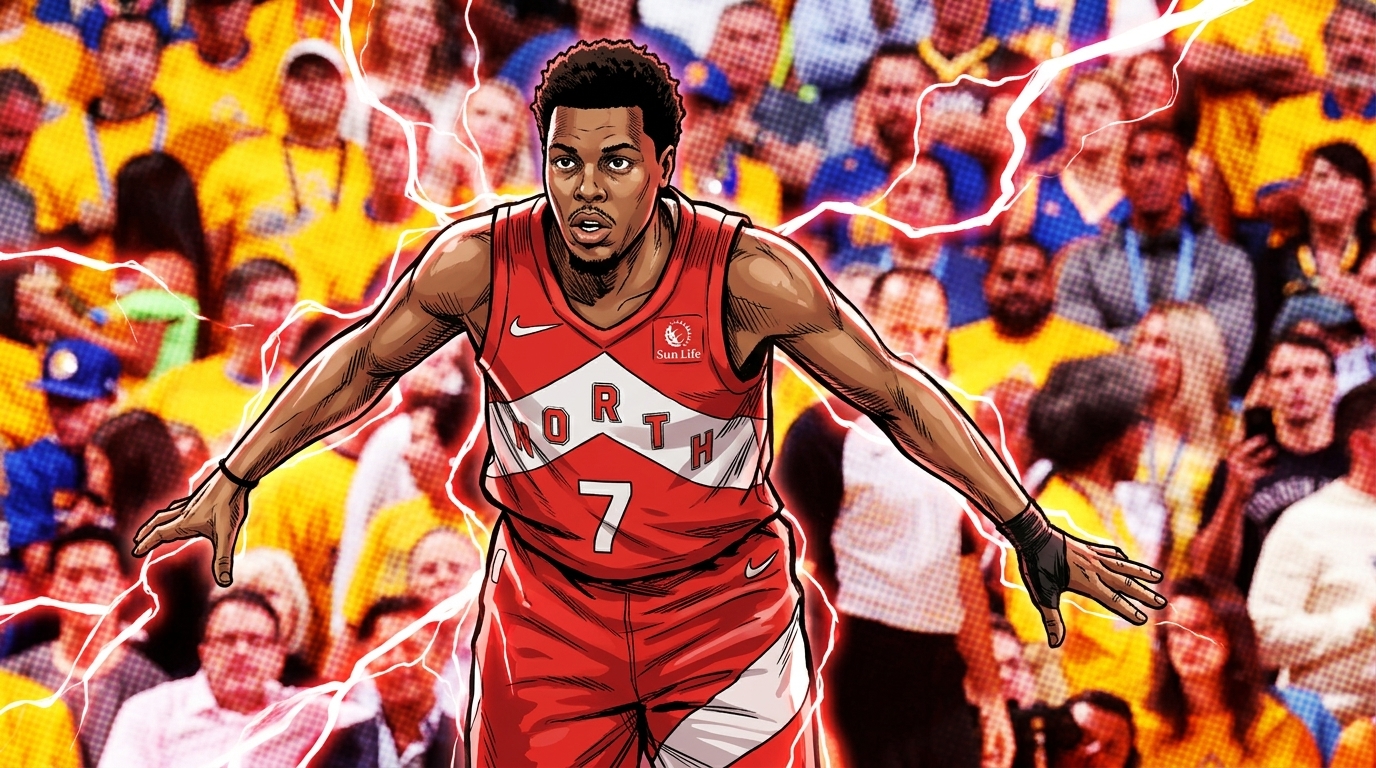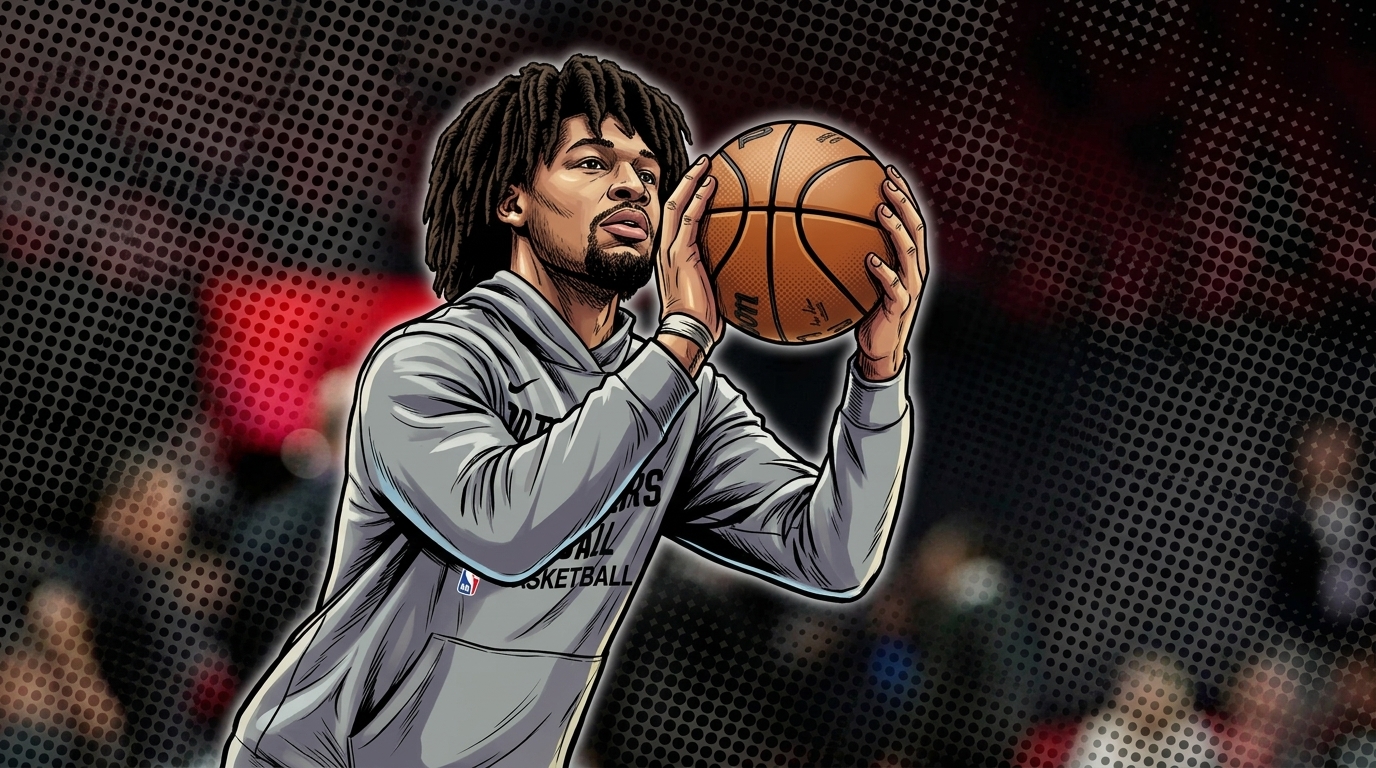

Dennis Schroder is now a Charlotte Hornet, which makes him a member of his twelfth different NBA franchise, one shy of Ish Smith’s all-time record. That number is going to dominate the group chats this week. The number that should actually hold your attention is 29.7 million: the amount of room the Cleveland Cavaliers just bought themselves below the first tax apron, in a trade that has almost nothing to do with what either player puts up on a stat sheet.
Shams Charania reported Wednesday that Cleveland is sending Schroder and cash to Charlotte for guard Tre Mann. On its face, it’s a minor depth-chart swap: a 13-year veteran journeyman for a 2021 lottery pick who’s barely played the last two seasons. Read the salary sheet instead of the box score, though, and the trade looks like exactly what it is — a front office clearing its own runway.
What Cleveland Actually Gave Up
Start with the simple math. Schroder is owed $14.8 million this season. Mann is owed $8 million. That’s $6.8 million off Cleveland’s books immediately, money that would’ve otherwise sat on a bench guard averaging 10.8 points, 4.9 assists and 2.7 rebounds across 70 games split between Sacramento and Cleveland last year. Solid backup production. Not the number a team builds a rotation around.
Mann isn’t walking into the same role. He shot .360 from the field and .323 from three for Charlotte in 2025-26, appearing in just 53 games while missing most of the previous season with a back injury. Those are bench-fringe shooting numbers for a former 18th overall pick who was supposed to be further along by year five. Cleveland didn’t make this trade because it believes Mann is about to unlock something the Hornets never found. It made this trade because Mann’s contract is short and cheap in a way Schroder’s no longer is. But roster fit was never really the point of this trade, and the deal’s real teeth are further out: per Hoops Rumors, Schroder’s 2027-28 salary carries $4.35 million in guaranteed money on a $15.5 million team number, while Mann’s $8 million for that same year is a full team option with zero guarantee attached. Cleveland didn’t just shave this year’s number. It erased a future commitment and replaced it with an escape hatch.
Charania posted the trade terms as they broke:
https://x.com/ShamsCharania/status/2088344335326560610
Nobody is going to remember Tre Mann’s shooting splits in six months. They might remember what Cleveland did with the flexibility this move created.
Why Does $29 Million Below the Apron Matter?
Staying well below the NBA’s first and second tax aprons preserves tools a team loses once it crosses those lines: trade exceptions, salary aggregation, and access to the full taxpayer midlevel exception. Cleveland’s trade buys roughly $29.7 million of first-apron room, freeing the front office to maneuver on a Harden re-signing or an in-season upgrade without triggering a hard cap.
That $29.7 million figure comes from Yossi Gozlan of The Third Apron, who also has Cleveland sitting about $42.3 million clear of the second apron. Bobby Marks at ESPN has it slightly higher, around $32 million and $44 million respectively — the two trackers use different assumptions for incomplete roster charges, which is normal this early in an offseason, and they agree on the part that matters: this trade meaningfully widened Cleveland’s runway on both lines.
I run three fantasy baseball leagues off a projection model I built myself, and the lesson transfers cleanly here. You don’t build the model to justify the roster moves you already made. You build it to be ready for the ones you haven’t made yet. Cleveland didn’t restructure its cap sheet to feel good about a backup guard swap. It restructured to have options in March that it doesn’t have in August.
The Harden Math This Was Really About
None of the apron room means much without naming what it’s actually for. Cleveland is trying to work out a new deal with James Harden, who’s expected to command something in the $25-30 million range annually if he re-signs, and the front office also has its eye on wing defenders Peyton Watson and Jonathan Kuminga. Watson is a restricted free agent, Kuminga unrestricted, and pursuing either one through a sign-and-trade using cap exceptions would hard-cap Cleveland at the apron it’s currently trying to distance itself from.
That’s the part the “12th team” jokes miss entirely. A front office doesn’t structure a trade around apron thresholds it isn’t planning to test. Harden’s own willingness to take a pay cut to stay compliant has been part of this equation for months, and Peyton Watson’s restricted free agency standoff is a textbook example: sign-and-trade math gets a lot easier when you’re not staring at a hard cap. Clearing this much room before the Harden number is even finalized tells you Cleveland is trying to solve for both moves at once, not choosing between them.
What Cleveland Can Do With the Room
Practically, this buys the Cleveland Cavaliers a taxpayer midlevel exception worth roughly $6.1 million, full access to salary-matching flexibility in any in-season trade, and the ability to aggregate multiple smaller contracts into a bigger one without immediately bumping into a hard cap. None of that shows up in a box score. All of it shows up the moment this team needs to make a move it can’t make right now.
That’s the pattern with almost every apron-driven trade nobody wants to write about in August. The teams that end up making the February deal are almost always the ones that quietly cleared the room for it back when the roster news looked boring. Cleveland front-loaded that decision by two months, before free agency even settled, which tells you the front office isn’t waiting to see how this season goes before it decides whether flexibility matters.
The Schroder trade will get covered as a punchline, and it’s a fair one — twelfth team, ninth career trade, a resume that reads like a scavenger hunt. But punchlines don’t explain why a team engineers a $6.8 million savings and a $29 million cushion in the same trade. Cleveland isn’t done building this roster. It just made sure it has the room to finish the job.