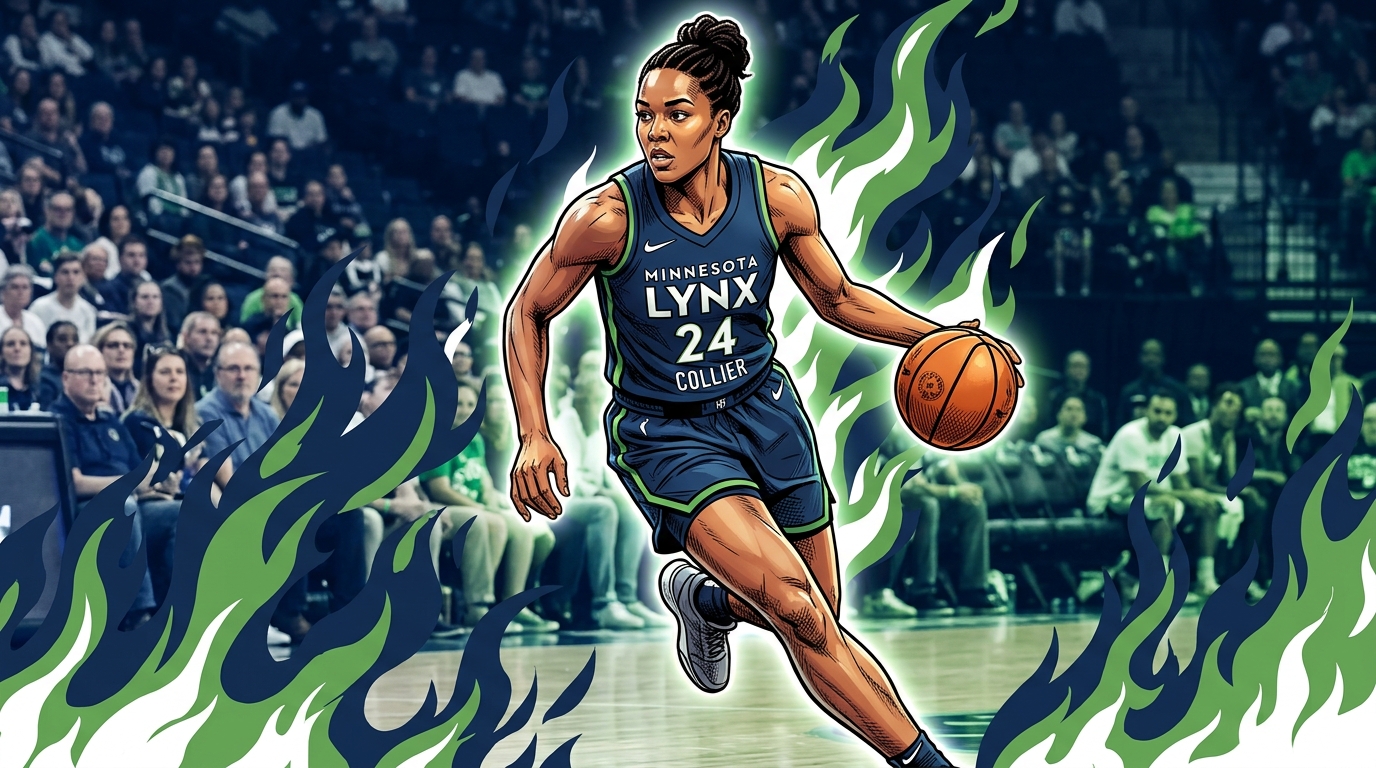

Twenty times in her career, Caitlin Clark has walked off the floor with at least 20 points and 10 assists on the stat sheet. No other player in WNBA history has done that more than 10 times. Number 20 came Saturday night in a comeback win over Dallas, and the part of that box score that actually explains what’s happening with the Indiana Fever right now wasn’t the 29 points. It was the 10 assists that came with only one turnover attached to all that decision-making.
That’s the tension worth sitting with before Indiana plays Atlanta tonight. Everyone already knows the Fever are hot, three straight wins and eight of their last ten to push the record to 22-12. Fewer people are asking why the offense looks like a different operation than it did a month ago. The answer is sitting at the top of a leaderboard most casual fans never check.
Does Caitlin Clark Lead the WNBA in Assists?
Yes. Clark leads the WNBA in assists per game this season at 8.3, narrowly ahead of Alyssa Thomas’s 8.2. Over her last 10 games, she’s averaging 26.3 points and 9.4 assists on 50.6 percent shooting, the exact stretch her coach points to when she calls Clark the offense’s maestro.
Fox Sports has her atop the league leaderboard, which by itself is a counting stat and not much of an argument. What turns it into one is the shooting number sitting next to it. Fifty point six percent from the floor over the 10-game run SI.com has been tracking means Clark isn’t padding assist totals by heaving up bad shots for teammates to clean up after. She’s setting up looks that go in, which is the actual mechanical definition of running an offense instead of just decorating one.
That stretch opened with a 45-point, 40-and-10 night against Seattle, the first 40-point, 10-assist game in WNBA history. I ran the box score three different ways trying to find a comparable guard season to put it next to and kept landing on the same conclusion: there isn’t one yet. The sample is small. The direction isn’t.
What ‘Maestro’ Actually Means for the Fever Offense
Stephanie White didn’t reach for that word by accident. Here’s how Indiana’s coach described watching her point guard operate this week:
https://twitter.com/RomeovilleKid/status/2088457902419739087
White isn’t the only person inside the building talking like this. Veteran guard Tyasha Harris admitted she’s still adjusting to watching it up close: “I’m in awe watching CC play. Sometimes it’s like it’s normal and — it’s not. So, it’s just great to be on her side officially.”
Translate that out of locker-room language and the claim gets specific. The sets aren’t just built to get Clark a shot anymore. They’re built to get her a read, on the trust that she’ll make the right pass out of it more often than not. That’s a real change in how the offense is designed, and White isn’t just being polite about it. A team built to feed one scorer runs its sets to a single spot on the floor and lives or dies on whether the shot falls. A team built around a maestro runs sets that create two or three live options off the same action, with the ball guaranteed to end up wherever the defense is weakest. The first kind of offense is easier to scout. The second kind punishes you for guessing wrong, which is exactly what White means when she says it’s tough to match up with Indiana once Clark is dictating tempo.
That’s also why the turnover number from Saturday matters more than the highlight numbers. A single giveaway while running an offense at that speed isn’t just clean point guard play. It’s the box score signature of someone making the safe read instead of forcing the spectacular one, over and over, for most of a game. A guard putting up 29 points usually gets there by hunting shots. Clark got there by making the extra pass first and letting the scoring follow.
Why Tonight’s Dream Matchup Is the Real Test
Clark has won five of her eight career meetings with Angel Reese since 2024, a solid record against one of the league’s most physical rebounders. Reese is averaging 15.6 points and 12.0 rebounds a night this season, per Rotowire, a rebounding number that leads the WNBA outright. That matters here specifically. Leading the league in second-chance opportunities usually means turning missed shots into live-ball transition chaos, and transition chaos is where turnover-prone point guards get exposed. Clark just posted a 10-assist, one-turnover game two nights ago against exactly that kind of pressure. That’s not a matchup Atlanta wants to lean into.
Atlanta enters the night 21-12, half a game back of Indiana in the standings, off a 104-69 win over Connecticut that says their own offense is finding a groove too. My sister, who wins more of our family’s sports arguments than I’d like to admit, would tell you Atlanta has the receipts here: this is the fourth and final meeting of the season series, and the Dream lead it 2-1.
Fair. But the version of the Fever that dropped those earlier meetings isn’t walking onto the floor tonight. The version that’s 8-2 over its last 10 games and getting historic box scores out of its point guard is. Set that against a Dream team that just won by 35 and this reads less like a measuring stick and more like a statement game for whichever side wins it. A win tonight would do more than extend the streak — it would add real weight to the Fever’s case as legitimate contenders, not just a team riding one player’s box scores.
Give me the Fever. The data on the point guard is unambiguous, and unambiguous data on a hot streak beats a season series every time I’ve checked it. Catch the rest of our WNBA coverage before Indiana and Atlanta tip at 5 p.m. ET on ESPN and Disney+.