Mike Brown walked to the podium after the Cleveland Cavaliers blew a 22-point fourth-quarter lead and handed the New York Knicks a 115-104 overtime win in ECF Game 1, and he said the quiet part into the microphone: “It was no secret that we were attacking Harden. Just like we have to try to figure out ways to guard Harden and [Donovan] Mitchell, they have to figure out ways to guard Jalen.”
No secret. That’s the phrase. Not an adjustment. Not a gamble. A known, documented, pregame plan that Kenny Atkinson had every reason to anticipate — and then watched execute itself for 7:52 while sitting on two timeouts he would use exactly one of.
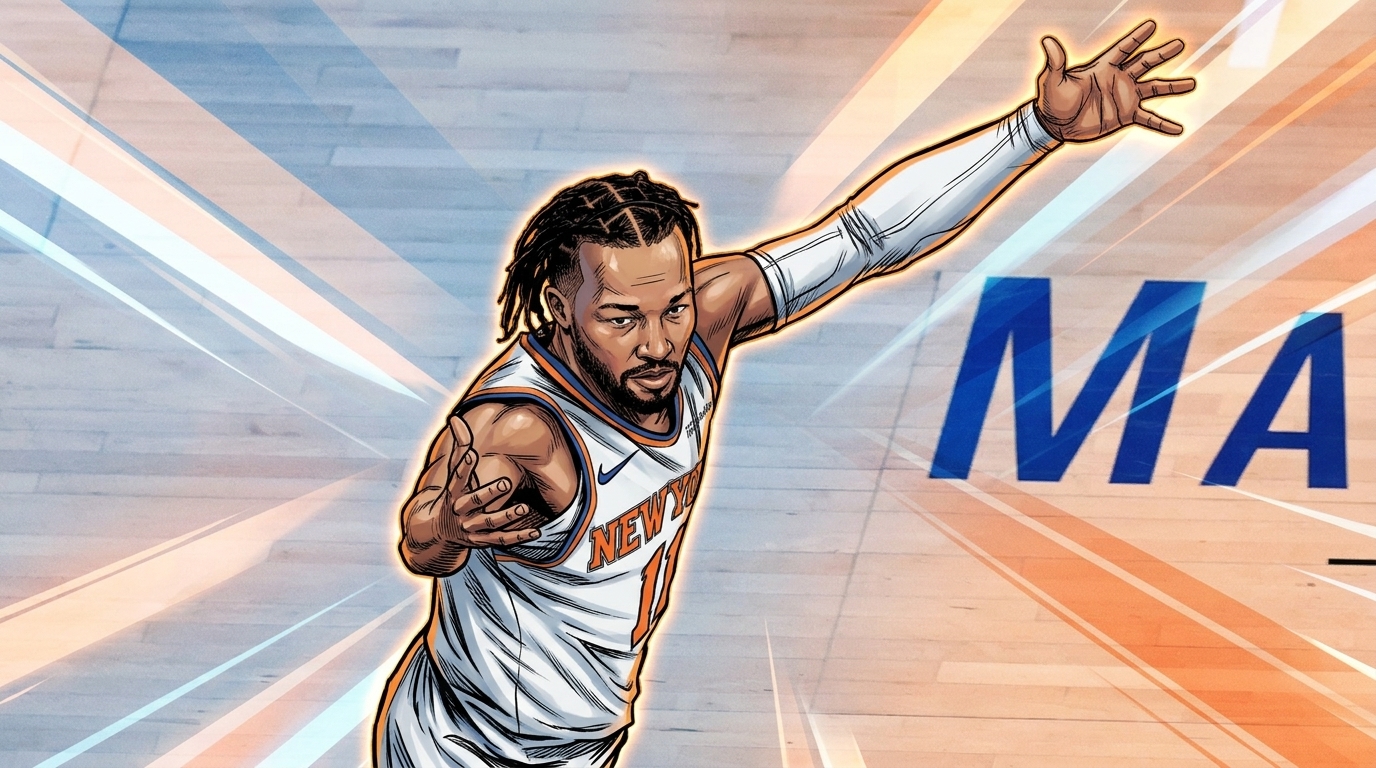
The Brunson Harden ECF Game 1 matchup was not improvised on the Knicks’ bench. Jalen Brunson ran 21 ball screens at James Harden in the fourth quarter and overtime alone, per ESPN tracking data. Nine of those ended in isolations. Harden allowed 1.6 points per possession on ball screens and 1.9 in isolation situations across Q4 and overtime combined. Those numbers are not close calls. They are a controlled demolition. Brunson finished 7-of-11 against Harden specifically in the fourth — 63.6% — and scored 16 of his 38 points in that quarter while the Cavaliers collapsed from a 22-point lead to nothing.
Atkinson called one timeout during the entire collapse. One.
He had two at the end of regulation. His explanation postgame, per ESPN and SI: “I like to hold my timeouts. I didn’t want to have one timeout at the end of the game, one- or two-point game. I tried to hold them.” He was saving timeouts for a close finish that he was manufacturing by refusing to use them. The Cavs led 93-71 with 7:52 left. That’s not a close game. That’s a game you can afford to disrupt.
https://twitter.com/NBA/status/2056929956161016192
The argument that you were protecting end-of-game possessions falls apart the moment you acknowledge — as Brown did, openly — that the Knicks’ coaching decisions in targeting Harden were not spontaneous. This was not Brunson going rogue. This was a scheme. Stopping a scheme requires intervening in it. Atkinson could not have intervened without a timeout, and he chose not to use one until it was functionally irrelevant.
Harden, for his part, did not hide from what happened. He admitted postgame that he “cannot be left on an island alone against Brunson.” That sentence should have ended Kenny Atkinson’s evening differently than it did. A player telling you, after the game, that the situation he was left in was untenable — that’s not an indictment of Harden. That’s an indictment of the man who left him there.
This matters more because Atkinson told reporters before this series, per Yahoo Sports, that Harden was “one of our best defenders.” He believed that entering Game 1. He watched it disproved in real time and did not adjust. Harden went 1-of-6, 0-of-3 from three in the fourth quarter. He and Donovan Mitchell combined for 1-of-10 shooting and 3 points during the decisive run. Mitchell finished with 29 for the game but went just as cold when it counted.
The Brunson Harden ECF Game 1 sequence will get discussed for a while in terms of Brunson’s greatness — and it should, he’s the best NBA playoffs closer alive right now — but the more important story is institutional. The Knicks ran the second-largest fourth-quarter comeback since 1997 on a plan Mike Brown essentially confirmed was public knowledge entering tip-off. That means at some point in those 7:52, Atkinson saw the Knicks executing the thing he knew they were going to do, and made a choice not to stop it.
The Brunson Harden ECF Game 1 story isn’t that Jalen Brunson is great. Everyone knew that. It’s that Kenny Atkinson had two timeouts, a known threat, and a player on the floor admitting afterward he couldn’t handle it alone — and still chose to watch.
James Harden shot 5-of-16 for the game, committed 6 turnovers, and defended 21 ball screens. He was on an island. Atkinson put him there and kept him there. The Cavs trail 1-0.