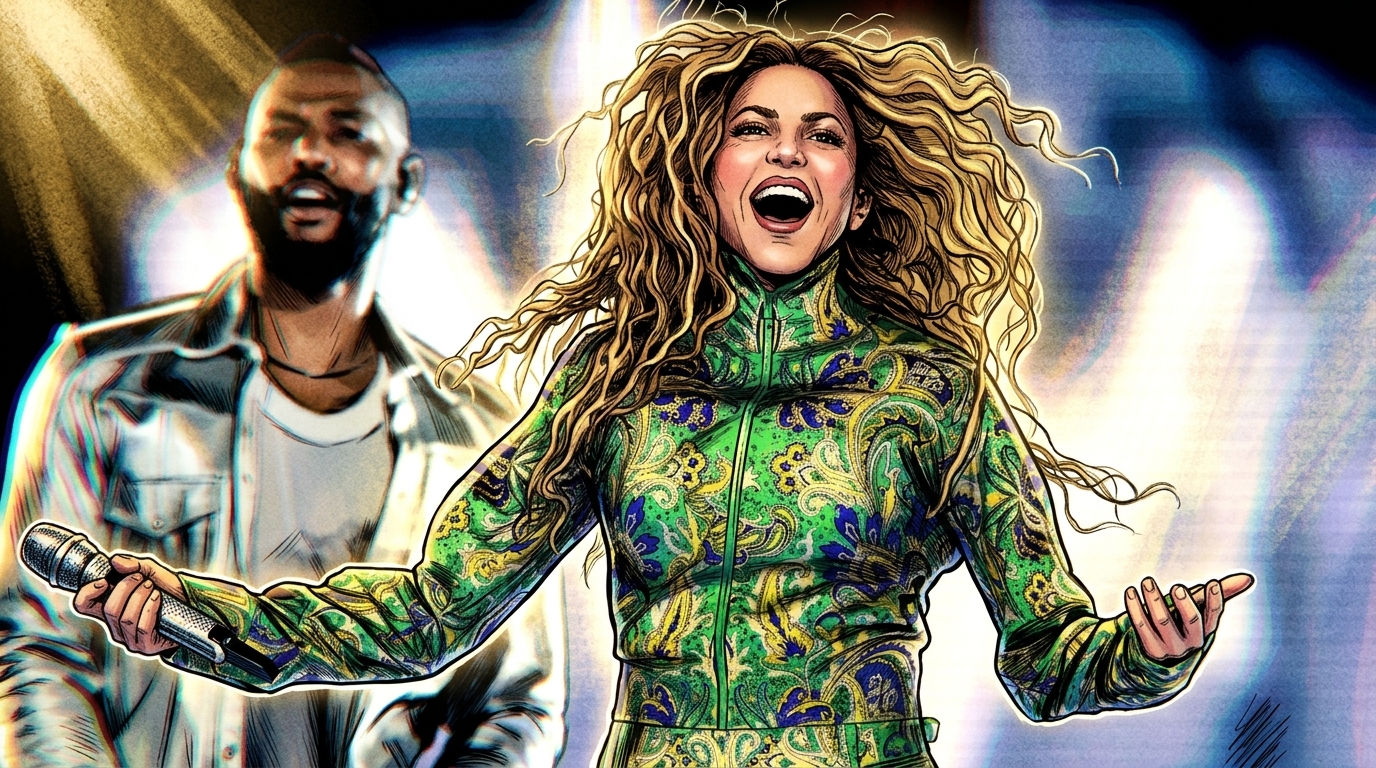

Shakira and Burna Boy performed the official World Cup anthem “Dai Dai” at Estadio Azteca on June 11, opening the 48-team 2026 World Cup before Mexico faced South Africa in Group A. That’s the headline. The actual story is what it meant that those two artists were standing on that particular field.
The Azteca has hosted a World Cup final and a World Cup quarterfinal that produced the two most famous goals in the sport’s history. Pelé lifted a third title there in 1970. Maradona conjured the Hand of God and the Goal of the Century there in 1986. The opening ceremony honored both men. And now, in 2026, the stadium becomes the first in history to open three separate World Cup tournaments, a distinction that no venue anywhere on earth will likely ever match. They acknowledged all of it. The weight was visible.
But the World Cup 2026 opening ceremony wasn’t really about looking backward.
FIFA made a specific argument with its performer lineup, and it’s one worth paying attention to because FIFA almost never gets the cultural framing right. A Colombian artist and a Nigerian Afrobeats star performing on Mexican soil, in front of 80,824 people, with the entirety of Latin America and Africa watching — that’s a statement about who this sport belongs to. Not to European broadcast windows. Not to a trophy handed around by a dozen men in suits. To Shakira calling Mexico “home” when she landed days before the show. To Burna Boy’s opening notes landing on the diaspora like a signal fire.
“Dai Dai” — which means “let’s go” or “come on” in Italian, which is extremely on-brand for a FIFA anthem — hit 100 million YouTube views before the first whistle blew anywhere. Co-written and performed by Shakira and Burna Boy, it means the two artists most responsible for making the World Cup feel like a global cultural event rather than a European club tournament have now done it together, in Mexico City, on the same stage, for the biggest version of this tournament that has ever existed.
I watched the ceremony open and kept waiting for the moment where it felt like an official event, a thing produced by committee, where the energy deflates and the performers are just marking time until the game. It never happened.
Alejandro Fernández sang the Mexican national anthem. Tyla sang South Africa’s. J Balvin, Ryan Castro, Maná, Los Ángeles Azules, Lila Downs, Andrea Bocelli — the lineup was genuinely plural in a way that these ceremonies almost never are. Salma Hayek Pinault appeared. The tribute to Pelé and Maradona was earned rather than perfunctory, because the venue earns it. The Azteca doesn’t need decoration. It carries history in its concrete.
https://twitter.com/FIFAWorldCup/status/2019793566550347828
This matters to anyone who follows soccer closely because the 2010 moment still lingers. When Shakira performed “Waka Waka” for South Africa’s tournament, there was real controversy. South African artists protested FIFA’s choice of a Colombian to front the anthem, and Freshlyground was added as a collaborator partly to address that pressure. Sixteen years later, Shakira is back on a World Cup stage and Burna Boy is standing next to her, and the argument isn’t about who belongs. The argument is over. The ceremony was the answer.
The first 48-team World Cup, the first tri-nation host tournament in history, opened in Mexico City on a Thursday morning with a Colombian woman and a Nigerian man telling 80,000 people what this sport is actually for.
That’s not a ceremony. That’s a thesis statement.