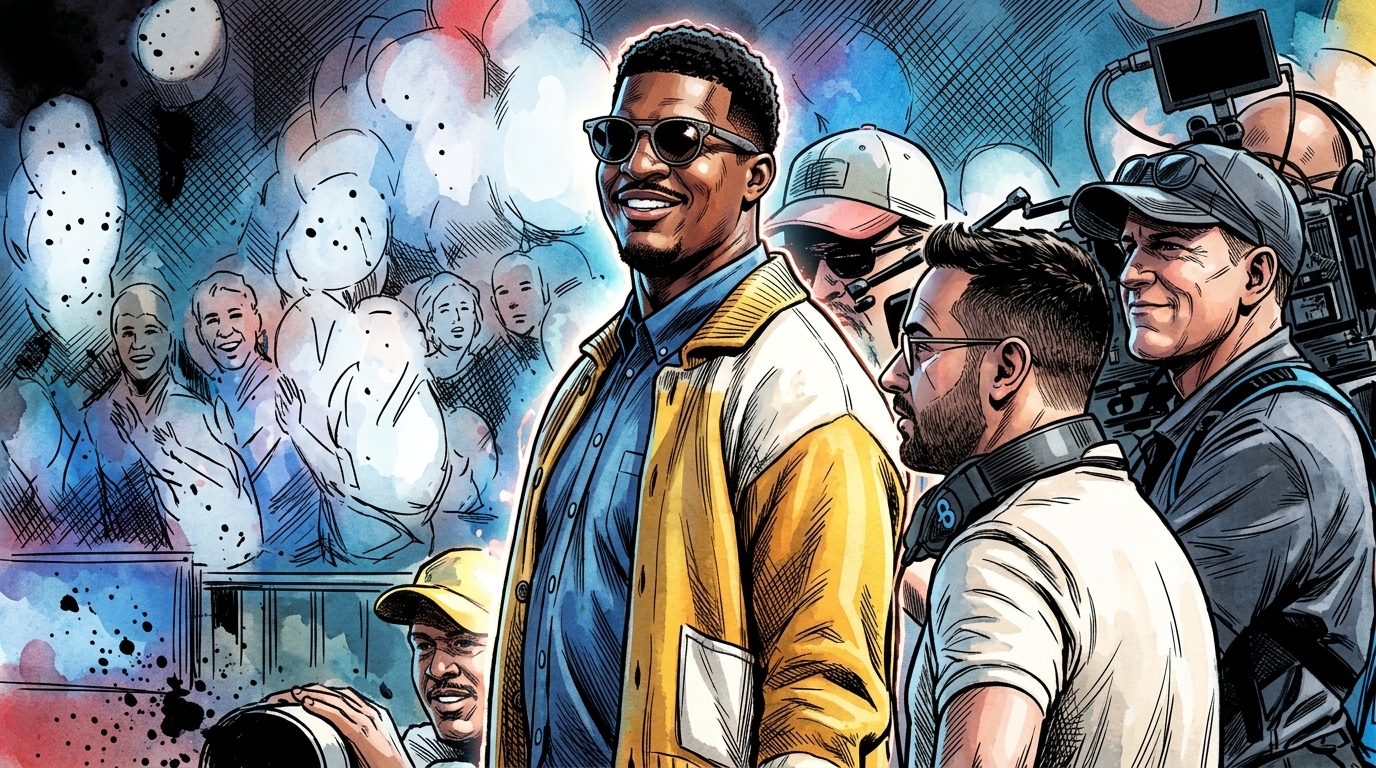

Jameis Winston — backup quarterback for the New York Giants, Fox Sports World Cup correspondent, former #1 overall pick, 12-year NFL veteran — put on a Japan jersey with WINSTON on the back, grabbed a blue trash bag after Sunday’s 2-2 draw with Netherlands, and spent time cleaning up the stands at AT&T Stadium row by row alongside Japanese fans, including one in a wheelchair.
Nobody asked him to. No camera crew was trailing him with an official assignment. He just did it.
The first reaction from the internet was exactly what you’d expect: clout-chasing accusations, PR stunt allegations, the modern sports fan’s reflex of stripping every warm moment down to a transaction. Which is why Alvin Kamara’s response lands so cleanly.
https://twitter.com/A_kamara6/status/2066530736958472248
Former Saints teammate, no incentive to lie, twelve words: he really just a genuinely good dude in real life. That’s not a defense. That’s a character witness.
The Japan cleanup tradition is real and it’s been real since 1998, when Japan made their first World Cup appearance. It’s rooted in something specific: Japanese schools don’t have janitors — students clean their own classrooms, their own hallways, their own lunch areas. You carry your trash because there are no public cans. It becomes reflex, then identity. Scott North, a sociology professor at Osaka University, described it to ESPN as Japanese fans demonstrating “pride in their way of life and share it with the rest of us.” Yoshinobu Yamamoto cleaned the Dodger dugout after pitching in World Series Game 2. Same ethic, different uniform.
So the tradition was already there, waiting. What made Sunday different was a 6-foot-4 man in a custom Japan jersey with his own name on the back, working a trash bag down a section of American stadium seats with the same energy he’s always brought to everything — which is to say, full throttle, no irony, completely sincere.
https://twitter.com/FOXSports/status/2066287552101769253
I grew up watching the Suns, the Diamondbacks, the Cardinals — teams that produced their share of high-profile disappointments, players who couldn’t live up to what the moment required. The criticism of Winston the quarterback was always that he couldn’t control himself, that the mistakes came too fast and too big. But the critique never quite applied to Winston the person. The Dream Forever Foundation, the Food Bank work in Harlem, the surprise school visits — these aren’t a PR portfolio. They’re a pattern.
The thing about the 2026 World Cup is that it was always going to produce moments that transcend soccer, because the United States was always going to make it weird in the best possible way. Dallas temperatures, enormous American stadiums, a country that doesn’t quite have the language for this sport yet but absolutely has the energy for the spectacle. Japan drew 2-2 with the Netherlands — Virgil van Dijk equalized, Summerville put the Dutch up, Japan came back late on an 89th-minute deflection — and what the internet will remember from that match has nothing to do with any of those goals.
Winston walked with the Orange Army before kickoff. He cleaned up trash with the Japanese fans after the final whistle. He was, in the span of a single match, the most bipartisan figure in a stadium full of people who’d come to oppose each other.
The fan comment that keeps circulating — “Giants have the greatest guy humanly on their team. Protect this man at all costs” — isn’t wrong, but it’s also a little beside the point. Protecting Jameis Winston from what, exactly? From being himself at the World Cup?
The 2026 World Cup’s best story involves zero goals, one backup quarterback, and a trash bag. Follow our World Cup coverage for everything else the tournament is producing.
That’s not a stunt. That’s a résumé.