
We’ve spent fifteen years building an argument that was never supposed to need a resolution. The Messi-Ronaldo debate — who’s better, who’s the greatest, who’d you take — was self-sustaining precisely because the answer kept getting deferred. They played in different leagues, for different countries, toward different World Cup fates. The debate was a feature, not a bug. The ambiguity was the point.
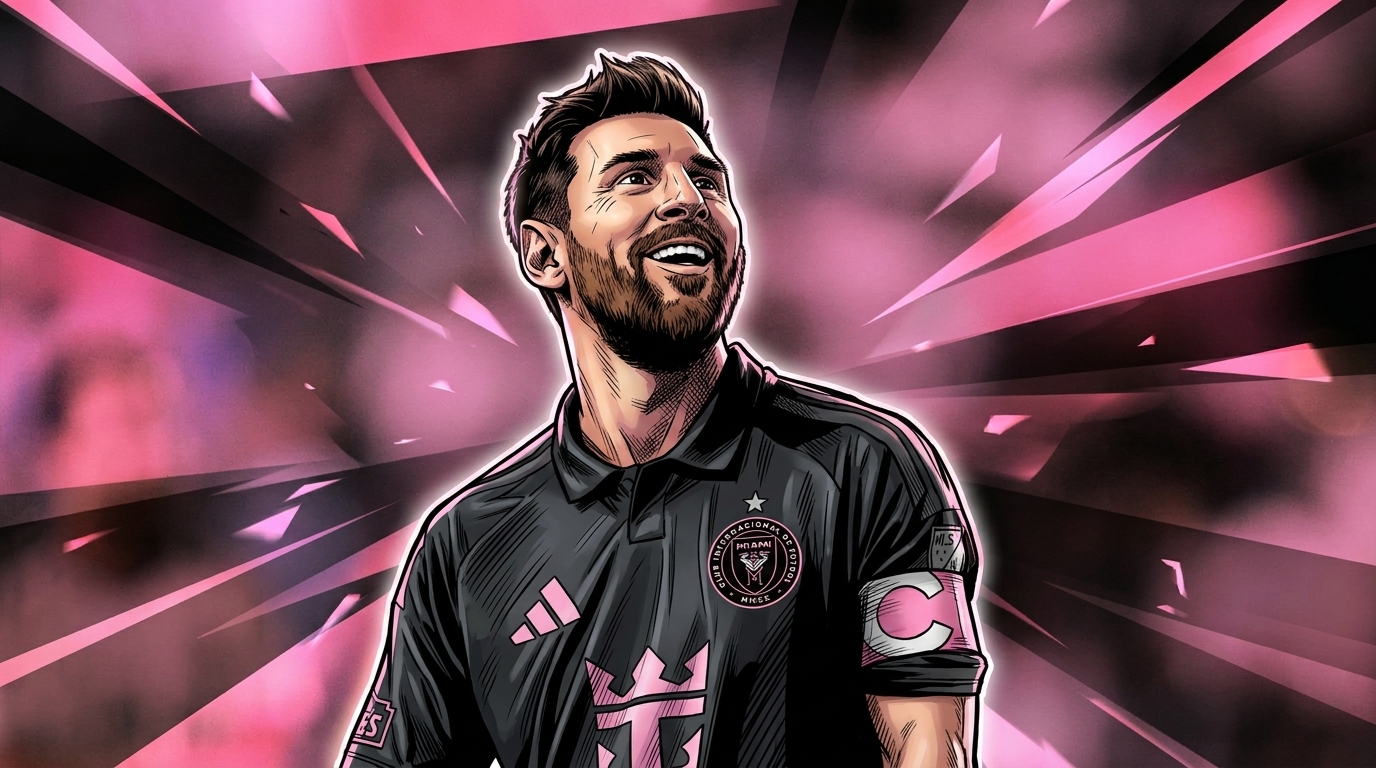
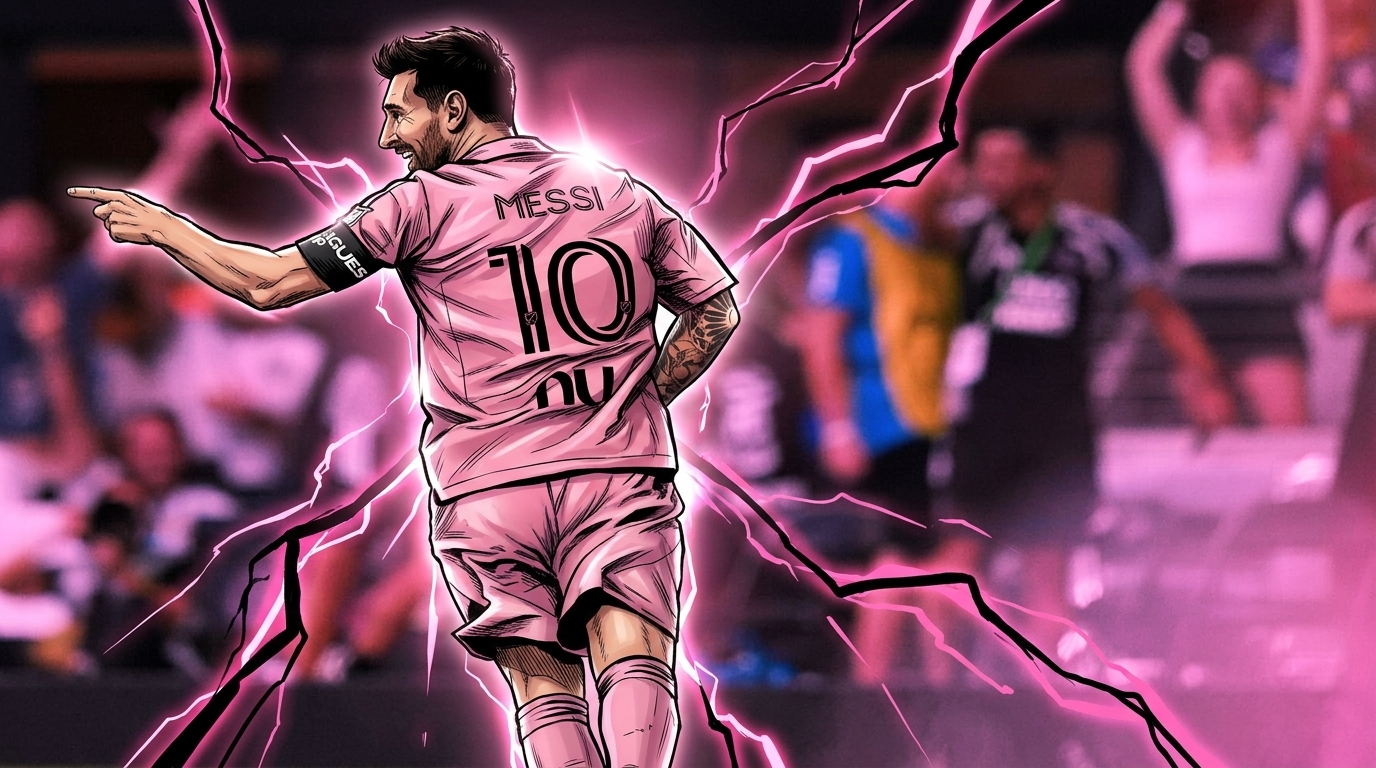
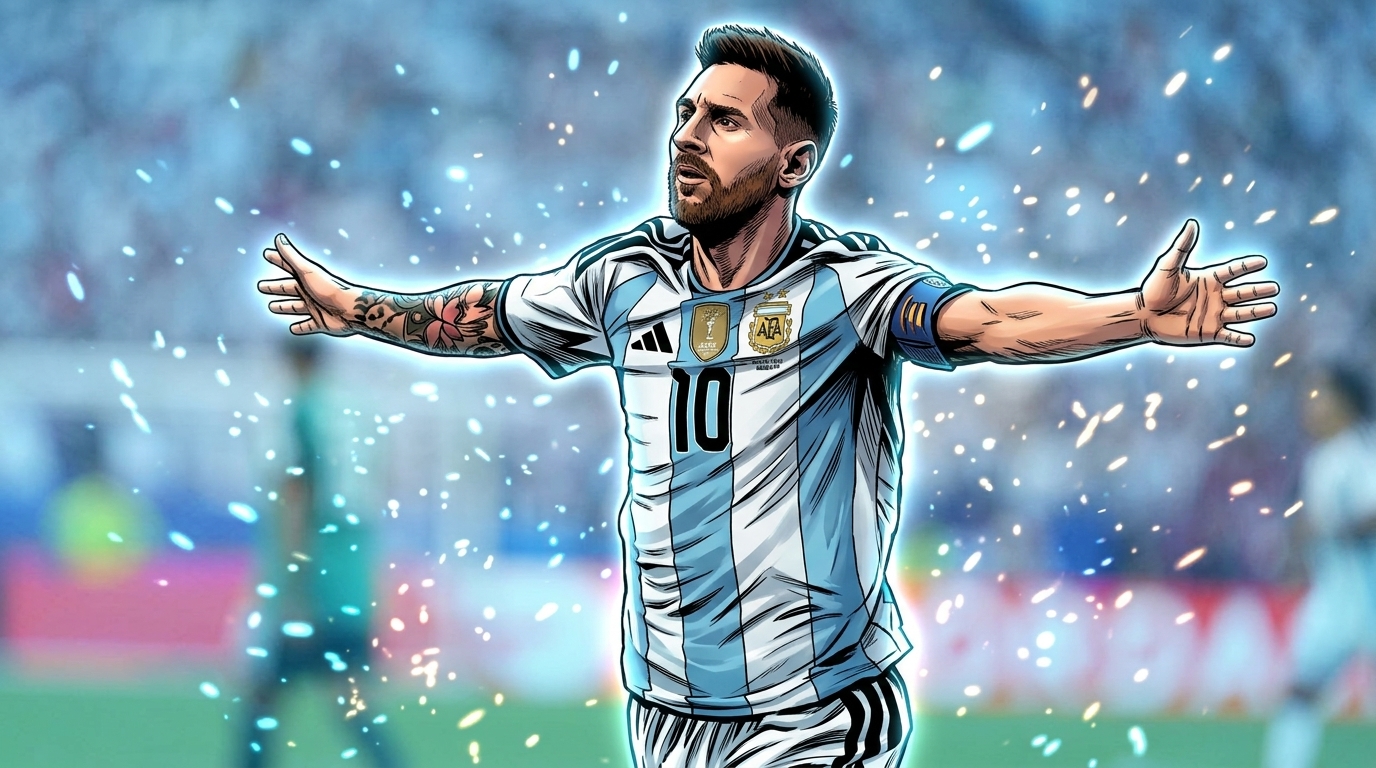
Then Lionel Messi went to Arrowhead Stadium on June 16 and scored three goals against Algeria to make the argument obsolete.
Per Sky Sports, Messi’s hat-trick (goals at approximately the 17th, 60th, and 76th minutes) on his 200th Argentina cap tied Miroslav Klose’s all-time record of 16 World Cup goals. (Klose built that number across four tournaments and 24 matches spanning 2002 to 2014. Messi is doing his accounting differently.) It was Messi’s 61st career hat-trick and, improbably, his first at a World Cup. Argentina won 3-0. And then, because timing in sport operates on its own logic, Portugal drew 1-1 with DR Congo the following day. Cristiano Ronaldo was “largely a peripheral figure,” as ESPN noted, and the bracket snapped into focus.
Will Messi and Ronaldo Actually Meet in the Quarterfinal?
Yes, and the evidence is now structural rather than speculative. Argentina sit in Group J alongside Algeria, Austria, and Jordan. Portugal are in Group K with DR Congo, Colombia, and Uzbekistan. Both nations entered as heavy favorites in their respective groups. Per ESPN’s bracket analysis, if both top their groups (the current trajectory suggests they will), the collision arrives in the quarterfinals.
This would be the first time Messi and Ronaldo have met with World Cup elimination on the line. In club football, the head-to-head has been exhaustively documented. At the international level, they’ve operated on separate tracks. That changes in the round of eight. The sports media is still framing this as “if.” The bracket says “when.”
What Messi’s Hat-Trick Actually Means for the Record Books
The Klose record carries a particular weight. Miroslav Klose was a specialist, a target forward who arrived at every major tournament and did what he was designed to do, reliably, for twelve years. He scored in four consecutive World Cups. Tying Miroslav Klose’s all-time record of 16 World Cup goals is not like breaking a lesser mark. It is the terminal number in the sport’s most respected tournament tally.
Messi arrived at his first goal of the record on his 200th international appearance, a number that, in context, represents a kind of sustained commitment to country that the earlier chapters of his career made people doubt. (The retirement announcement in 2016 after the Copa América final. The complicated relationship with the national team that predated Qatar. Those things existed. They existed right up until they didn’t.)
He is 38 years old. The previous oldest player to score multiple goals in a single World Cup game was Roger Milla, who was 38 and playing for Cameroon in 1990. But Milla’s tournament, the novelty comeback World Cup, was a curiosity, not a campaign. Messi’s is a record assault. Luis Scaloni, Argentina’s manager, told Sky Sports after the final whistle: “At a loss for words about Leo. What can I say? He’s incredible.”
There is also the anniversary. Messi scored his hat-trick against Algeria exactly 20 years after his World Cup debut, June 16, 2006, against Serbia. That kind of symmetry isn’t something you manufacture. It arrives, or it doesn’t, and then the editors at every publication scramble to make it the lede.
https://twitter.com/rioferdy5/status/2067076609610293511
Why Ronaldo’s Portugal Is Still a Threat Despite the Draw
The framing from The National captured it with characteristic economy: “One had a stormer and scored a hat-trick; the other had a stinker and scored none.” Portugal’s 1-1 draw with DR Congo was a loss of points, not a loss of prospects. DR Congo’s equalizer (Yoane Wissa in injury time, the country’s first-ever World Cup point) stings more narratively than it does in the table. Portugal still have Colombia and Uzbekistan remaining, and Joao Neves scored in the first half to put them ahead before the late collapse.
Ronaldo is 41. That number has become a recurring asterisk in coverage of this tournament, attached to every performance review like a warning label. He was largely absent against DR Congo, struggling to influence the match, unable to find the spaces that once opened automatically. The Ronaldo who won the 2016 Euros and has spent the subsequent decade in the Saudi Pro League is a different player than the one who lit up Champions League finals.
But Portugal is not a one-man operation. They have Joao Felix, Bruno Fernandes, Rafael Leao, and a defensive core that doesn’t need Ronaldo to be exceptional to progress. The draw is a data point, not a verdict. If Portugal win Group K (and they remain the favorites to do so), they arrive at a quarterfinal that the sport has been trying to schedule for a decade and a half.
The Greatest GOAT Debate Is About to Have an Answer
This is the part the sports media keeps underweighting. The Messi-Ronaldo debate has been preserved, in part, because the stakes were never ultimate. Club football titles, individual awards, league goals — all of it meaningful, none of it definitive, because the two men competed in adjacent rooms rather than the same one. The World Cup was always the missing variable. Messi won one in 2022. Ronaldo hasn’t.
A Messi-Ronaldo World Cup quarterfinal 2026 changes the geometry of the argument entirely. For fifteen years, the claim that Ronaldo’s lack of a World Cup title was his critical disqualifier sat alongside the counterargument that Messi had only won it once, late, at 35. Now they play each other. The bracket resolves the variable. One of them advances. The other goes home.
The GOAT debate has always been a referendum on which metrics you trust, which context you weight, which era of each player’s career you think matters most. On a given quarterfinal afternoon, none of that is abstract. It becomes the scoreboard. It becomes 90 minutes, or 120, or penalties, with elimination at stake for the first and likely last time.
Messi is on his sixth World Cup, which ties the record for most appearances. He has 16 goals. He just had his first hat-trick in the tournament at the age of 38 on his 200th cap. The bracket is set. The next few weeks will be spent debating probability. The quarterfinal will spend ninety minutes (or extra time, or penalties) settling it.
The only question now is which version of both players shows up when the moment arrives.