
There’s a specific phenomenon in professional sports that I think about more than is probably healthy. Call it the vacuum problem: a franchise selects a generational prospect into an organization with no core, no culture, and no established expectation of winning. The talent arrives. The talent stagnates. Years later, the front office acknowledges the environment failed the player as much as the player failed the environment.
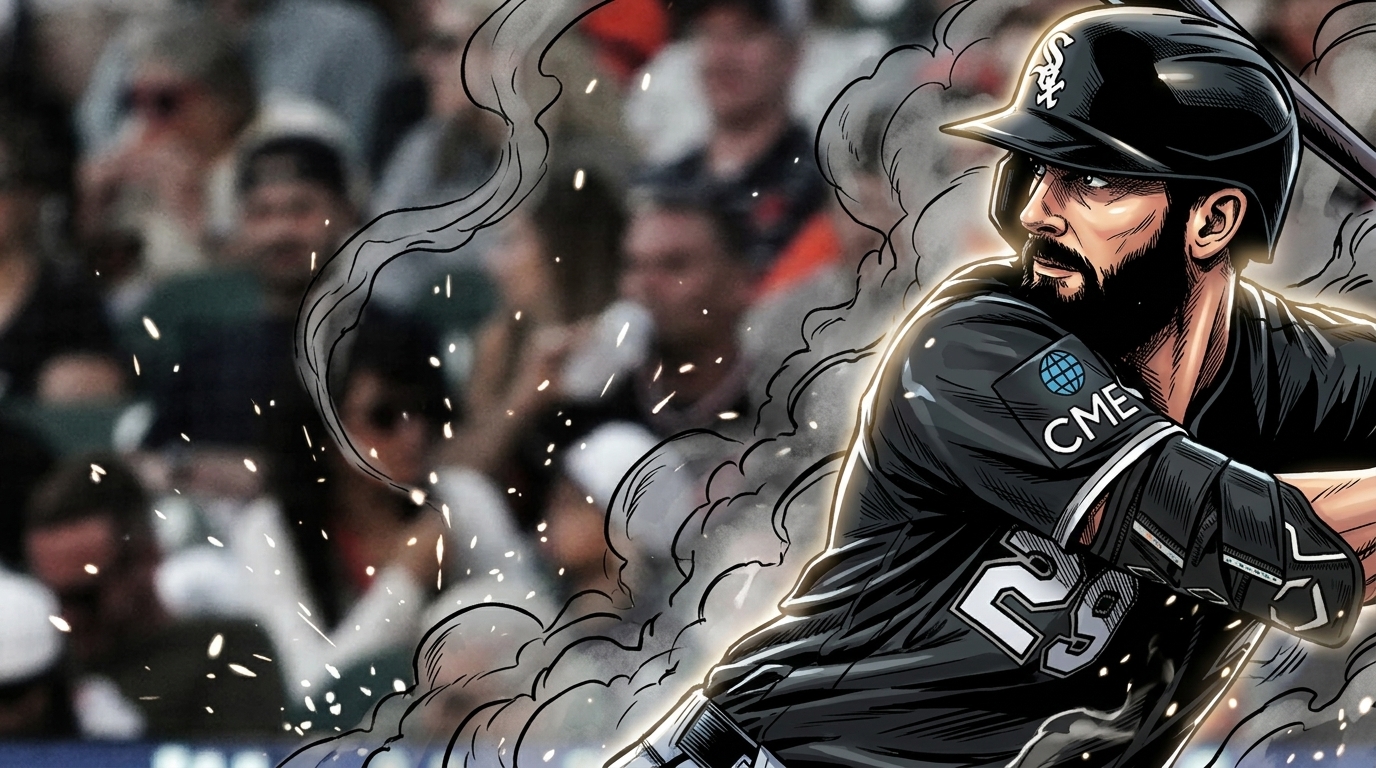
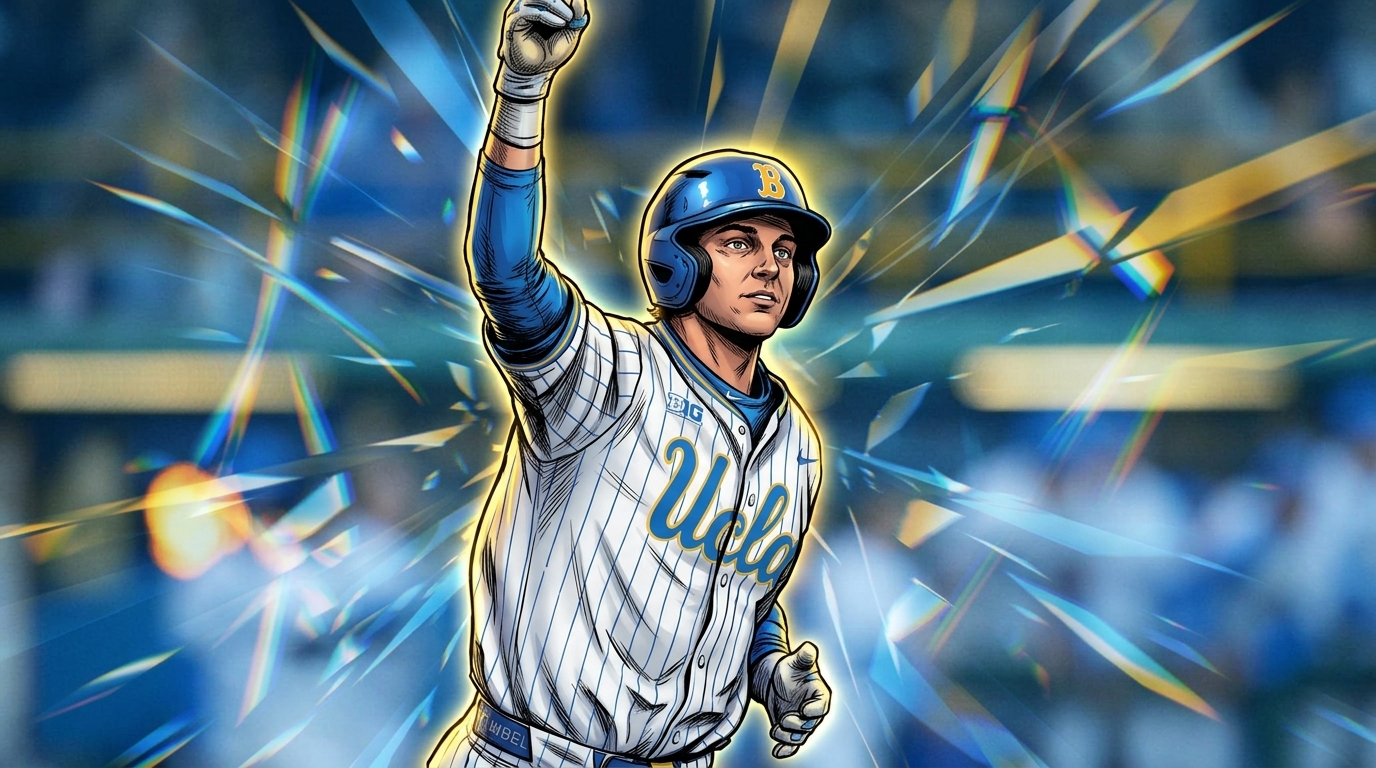
The Chicago White Sox have been running this experiment for three years — 121 losses in 2024 alone, an MLB record for the 162-game era, followed by the indignity of a draft lottery just to earn the right to fix it. On Saturday, they selected UCLA shortstop Roch Cholowsky with the No. 1 overall pick in the 2026 MLB Draft. He signed within the hour.
What’s different this time isn’t Cholowsky. It’s the organization he’s walking into.
What Cholowsky Is Actually Bringing
The MLB Pipeline comparison to Troy Tulowitzki is not hyperbole; it’s the baseline. Cholowsky finished his three-year UCLA career hitting .329/.447/.624 with 52 home runs in 178 games. His junior season: .320/.452/.636, 21 home runs, 60 RBIs, back-to-back Big Ten Player of the Year.
My sister called me the moment the pick was announced. She’s 22, pre-med at UCLA, and spent the spring watching this guy demolish Big Ten pitching from the student section. Her exact words: “I didn’t think it would actually happen this fast.” That’s the Cholowsky effect: he became so obviously inevitable that when it happened, it still felt sudden.
The number that matters most to me isn’t the .636 slugging percentage. CBS Sports noted the elite contact profile alongside the power, and the data bears this out in an unusual way. Per ESPN’s draft tracker, Cholowsky walked 36 times and struck out exactly 36 times in his junior season. That precision is a signal. A hitter with 1:1 walk-to-strikeout discipline generates power from zone command, not from random swing decisions. The scouting grades (65 field, 60 arm) round out a profile that projects as a perennial All-Star at the position.
He’s 21, and the third college shortstop taken No. 1 overall in draft history, joining Bill Almon in 1974 and Dansby Swanson in 2015. The production is real. The tools are real.
https://twitter.com/UnderdogMLB/status/2075995097385345303
All along, the more interesting question has been the destination, not the ceiling.
The Vacuum Problem — and Why It’s Different This Time
The White Sox have selected No. 1 overall twice before. Danny Goodwin in 1971 didn’t sign. Harold Baines in 1977 had a Hall of Fame career, but arrived into an organization that would spend the next several years losing before the 1983 division title gave him something to compete for.
The vacuum problem, in both cases, was time. Baines got there eventually. Goodwin never got there at all. Neither case tells you much about Cholowsky because neither case resembles the White Sox roster he’s joining.
Colson Montgomery is currently among the AL home run leaders at shortstop. Miguel Vargas made the 2026 AL All-Star team at third base. And then there’s Munetaka Murakami, the 26-year-old Japanese-born first baseman who, despite missing six weeks with a Grade 2 hamstring strain, is sitting at .240/.938 OPS with 20 home runs in 57 games and was named an AL All-Star reserve.
Murakami is the proof of concept. Per our piece on Murakami’s home run race with Schwarber, he was tracking as one of the most compelling power stories in the American League before the injury. He came back. He’s still tracking. And on Monday, he’ll be swinging in the Home Run Derby at Citizens Bank Park — the same park where Cholowsky was just called No. 1 — as the second Japanese-born player in Derby history after Shohei Ohtani.
The present and future of this White Sox rebuild are both, physically, in Philadelphia this week.
Is the White Sox Rebuild Finally Real?
Yes. The evidence is more specific than “they have good players now.”
Three years of 100-loss baseball produce a particular organizational disease: the prospect who arrives expecting to compete discovers he’s being asked to absorb losing as professional development, and either adapts downward or forces his way out. The White Sox’s previous rebuild suffered from this. Eloy Jiménez, Lucas Giolito, and the rest of the 2021-2023 core never cohered, partly because the organization couldn’t maintain the competitive environment that keeps prospects progressing on schedule.
Murakami changes this calculus. He’s already delivering at an .938 OPS pace, managing back from injury at 26. Vargas is an All-Star. Montgomery is hitting. Cholowsky will spend 2026 and probably 2027 in the minors, but when he arrives, there will be a functioning major league core above him: players who have won something, drawn national attention, given the organization a standard to defend.
The evidence suggests the rebuild is becoming a team.
What Comes Next
The path is legible. Cholowsky projects to debut in the 2027-28 range depending on development velocity. By then, Murakami will be 27 or 28, presumably in the middle of whatever the White Sox’s competitive window looks like. Montgomery provides shortstop depth; whether he shifts positions or Cholowsky debuts elsewhere in the infield, that’s a problem only teams with too much talent get to solve.
The Home Run Derby on Monday is the appetizer. Watch Murakami against Schwarber’s record-chasing season on Netflix and see what the White Sox’s present looks like. Then remember that Cholowsky just signed a few hundred feet from where Murakami will be swinging.
The data is pointing in one direction. Give me 18 months and I’ll tell you whether the White Sox actually closed the loop, but the evidence that they could is the strongest it’s been since 2005.