
Here is the question this data is going to answer: Are we watching two separate home run stories, or one argument about what baseball has become?
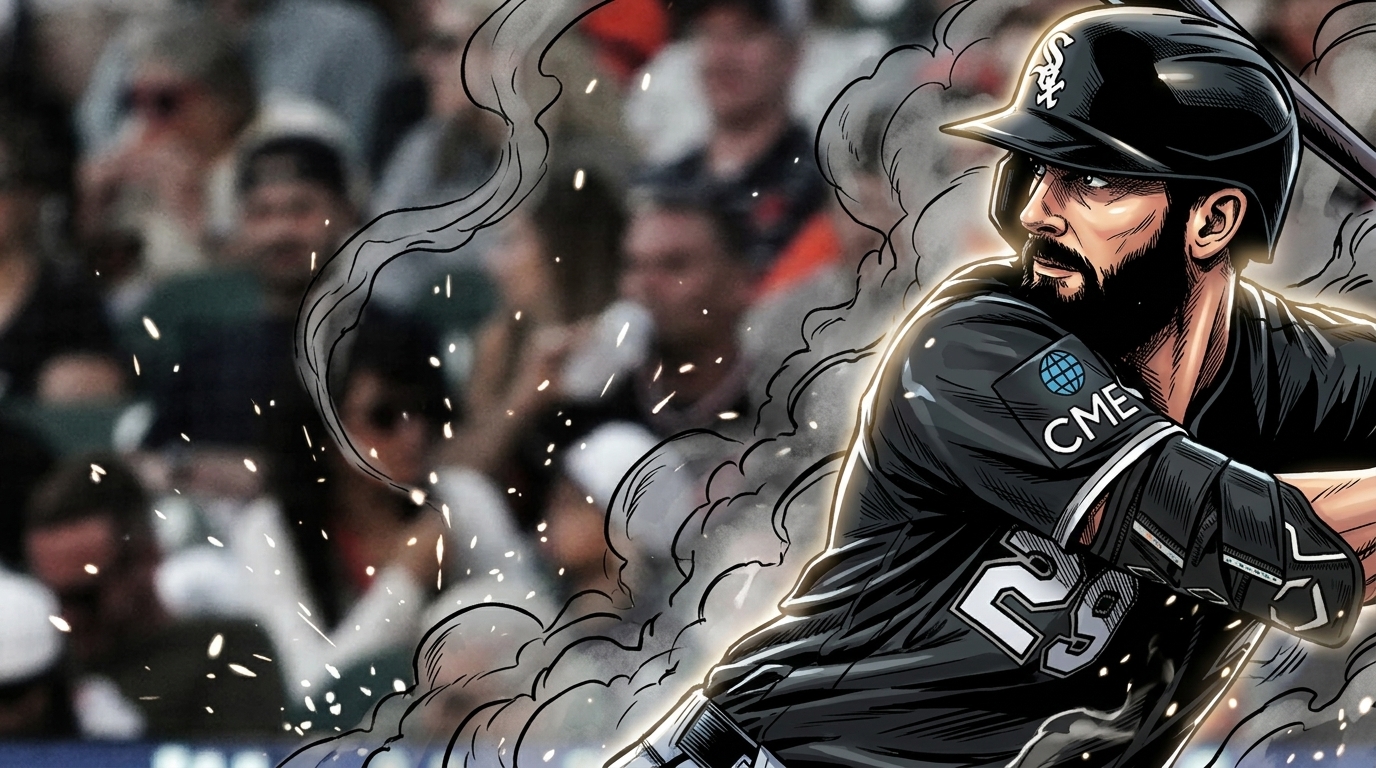
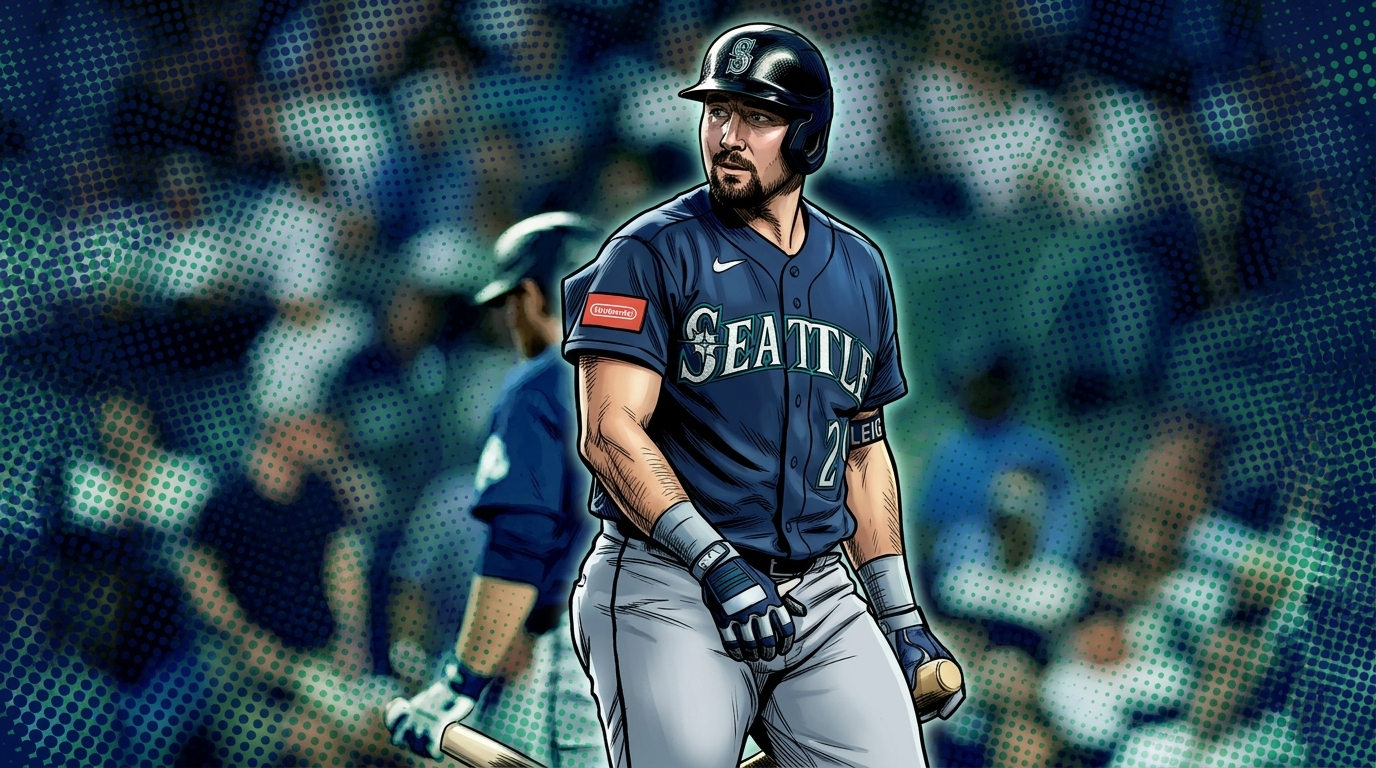
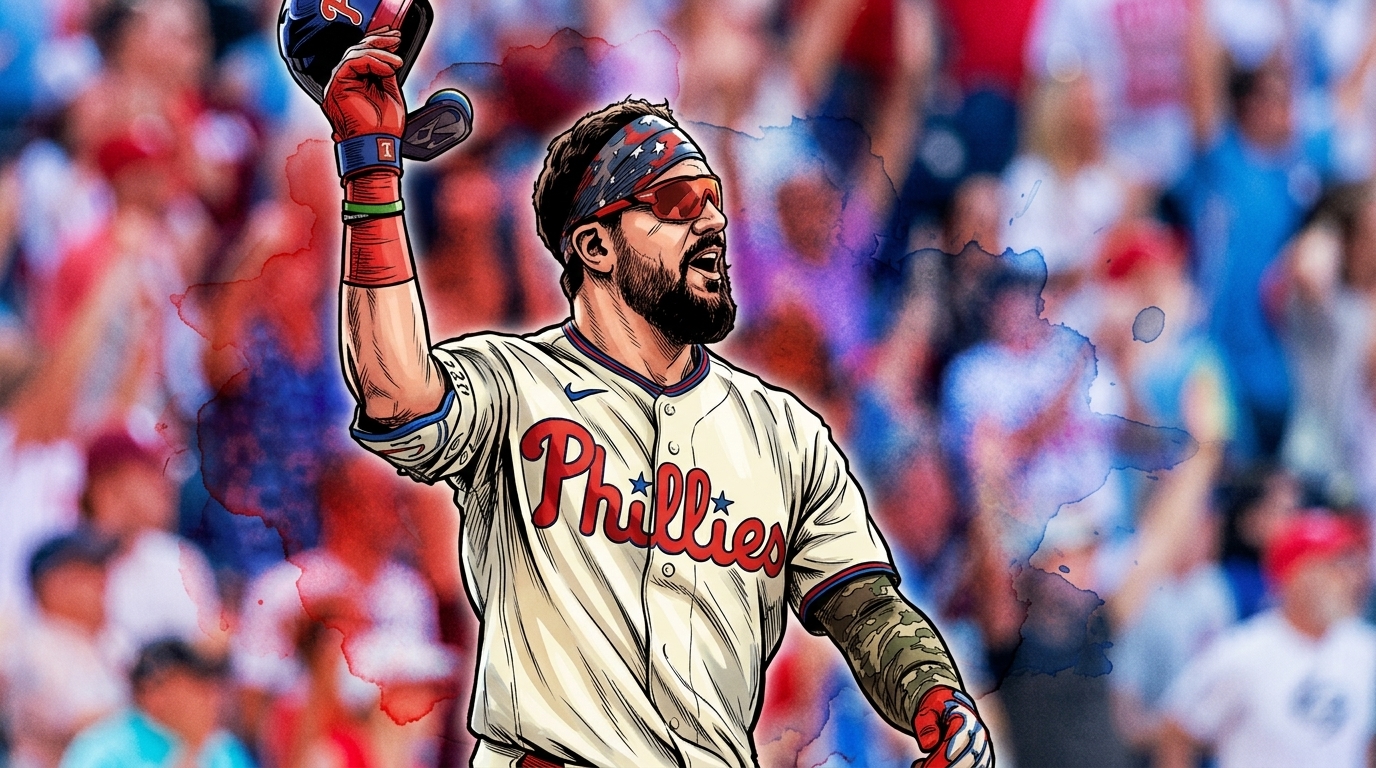
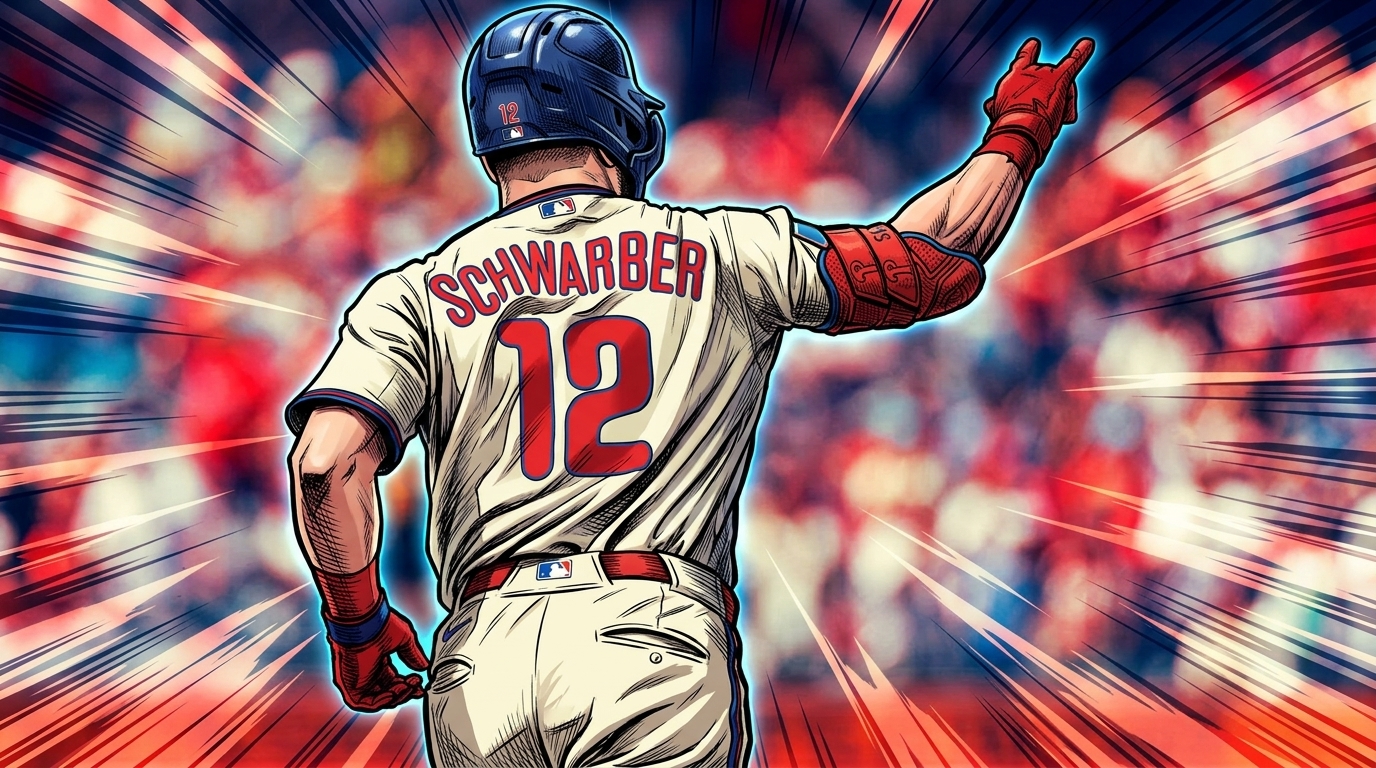
Kyle Schwarber has 21 home runs as of May 26. He is on pace for 66 or 67 — which would be third in MLB history. Munetaka Murakami has 18. He signed a two-year, $34 million contract that the market had priced at $80 to $180 million. These are not the same story. They are, however, the same indictment — one of what testing-era baseball can produce when a hitter peaks right, and one of what happens when international scouting collapses under the weight of its own assumptions.
Neither narrative is complete on its own. Together, they make the 2026 home run race the most compelling one since McGwire and Sosa were running side by side in 1998. The structure is almost identical: a veteran power masher with clean-era legitimacy questions chasing history, and an international import operating as the underdog counternarrative. The difference is that in 1998 the legitimacy questions were largely deferred. In 2026, they are the entire story.
Schwarber’s Pace in Historical Context: Where 66 Home Runs Actually Lands
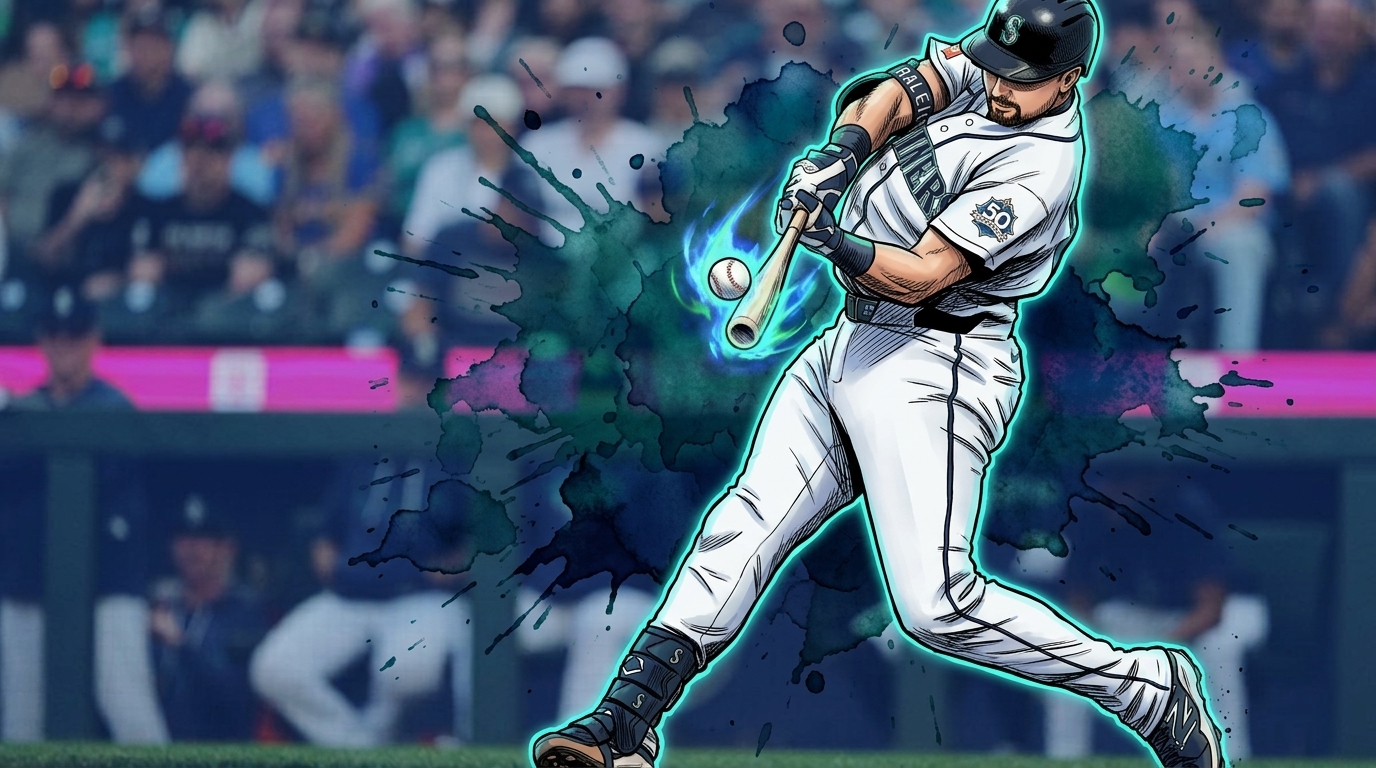
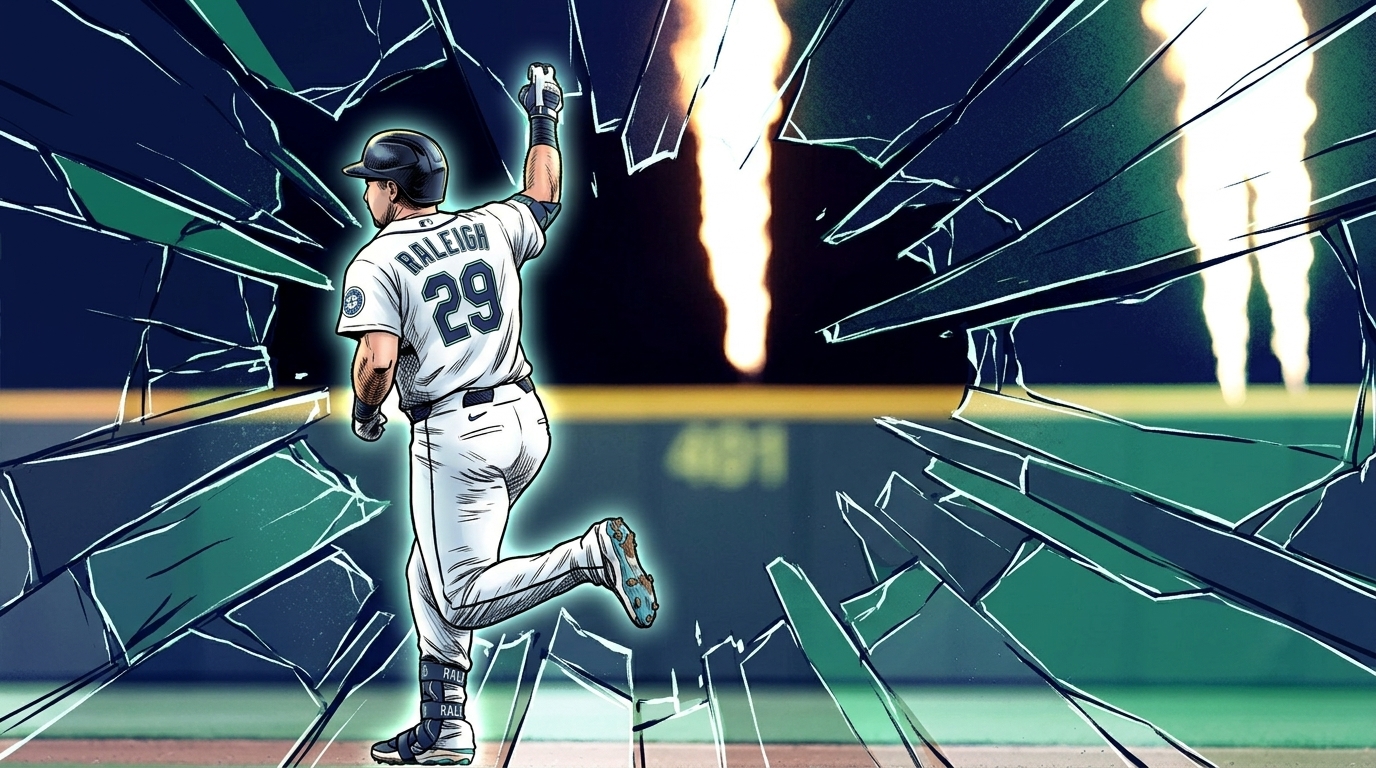
The 60-home run club has exactly seven members. Babe Ruth. Roger Maris. Mark McGwire twice (70 in 1998, 65 in 1999). Sammy Sosa three times (66 in 1998, 63 in 1999, 64 in 2001). Barry Bonds (73 in 2001). Aaron Judge (62 in 2022). Cal Raleigh (60 in 2025).
Of those seven, only Ruth, Maris, Judge, and Raleigh reached 60 in eras without credible performance-enhancing drug concerns. McGwire admitted use. Bonds was proven in federal court. Sosa’s name has never been cleared. The four “clean” entries in the 60-HR club represent two pre-integration-era records and two modern-testing-era seasons — Judge in 2022, Raleigh last year.
Schwarber at 66 or 67, if his season holds up without incident, would be only the second clean-era 60-plus season ever by a position player. That is the gravitational weight of what we are potentially watching. Per Bob Nightengale of USA Today, the only players in history to hit 66 or more home runs are Bonds, McGwire, and Sosa — all three of whom have PED narratives attached. Schwarber entering that company on the other side of the testing era is not a minor contextual footnote. It is the entire historical framing.
He reached 20 home runs on the earliest date in MLB history, surpassing Luis Gonzalez’s May 17, 2001 mark, per Stats Perform data cited by MLB.com. He is the 18th player in history with 20-plus home runs through his team’s first 49 games, per ESPN, and the first since Josh Hamilton in 2012. The only players to reach 25 home runs through 49 games were McGwire in 1998 and Bonds in 2001. Both finished at 70 and 73, respectively. Schwarber’s comparable through-49-game mark sits at 20, which projects more conservatively — but the trajectory is historically rare company regardless.
The Numbers Behind the Streak: What Schwarber’s Contact Data Actually Shows
The surface-level batting average — .230 — is a partial view of an incomplete picture. The number that matters is his OPS on contact: 1.407, per ESPN. For comparison, Raleigh’s OPS on contact during his 60-HR 2025 season was 1.218. Schwarber’s own 56-HR 2025 season came in at 1.191. His 2026 on-contact performance is materially better than any recent comp, including himself.
What that tells you analytically is that Schwarber’s contact, when it happens, is almost exclusively high-leverage contact. His three-true-outcomes rate sits at 56.8 percent. He hits .380 when he makes contact. That is not a slugger in decline managing his approach to survive at the plate — that is a hitter who has compressed his output into its most efficient form. Every ball in play has been weaponized.
The 12-home-run, 18-game stretch from April 26 to May 15, per ESPN, was the inflection point. Before that run, the pace was elite but containable. After it, the math started producing numbers that made the record-book comparison unavoidable. Career-wise, Schwarber has maintained a home run rate of 6.4 percent of plate appearances, placing him in the top four all-time among players with 300-plus career home runs. Since joining Philadelphia in 2022, he has hit 207 home runs — more than any NL player and second only to Judge across all of baseball in that span.
When asked about his historically outsized numbers against San Diego — 21 home runs in 50 career games — Schwarber told MLB.com: “It’s weird. I don’t know, it’s coincidental. I don’t know how else to explain it.” That’s an honest answer from a hitter who has largely stopped trying to rationalize what is happening and started just doing it.
Is Murakami on Pace to Break the Pre-June 1 Rookie Home Run Record?
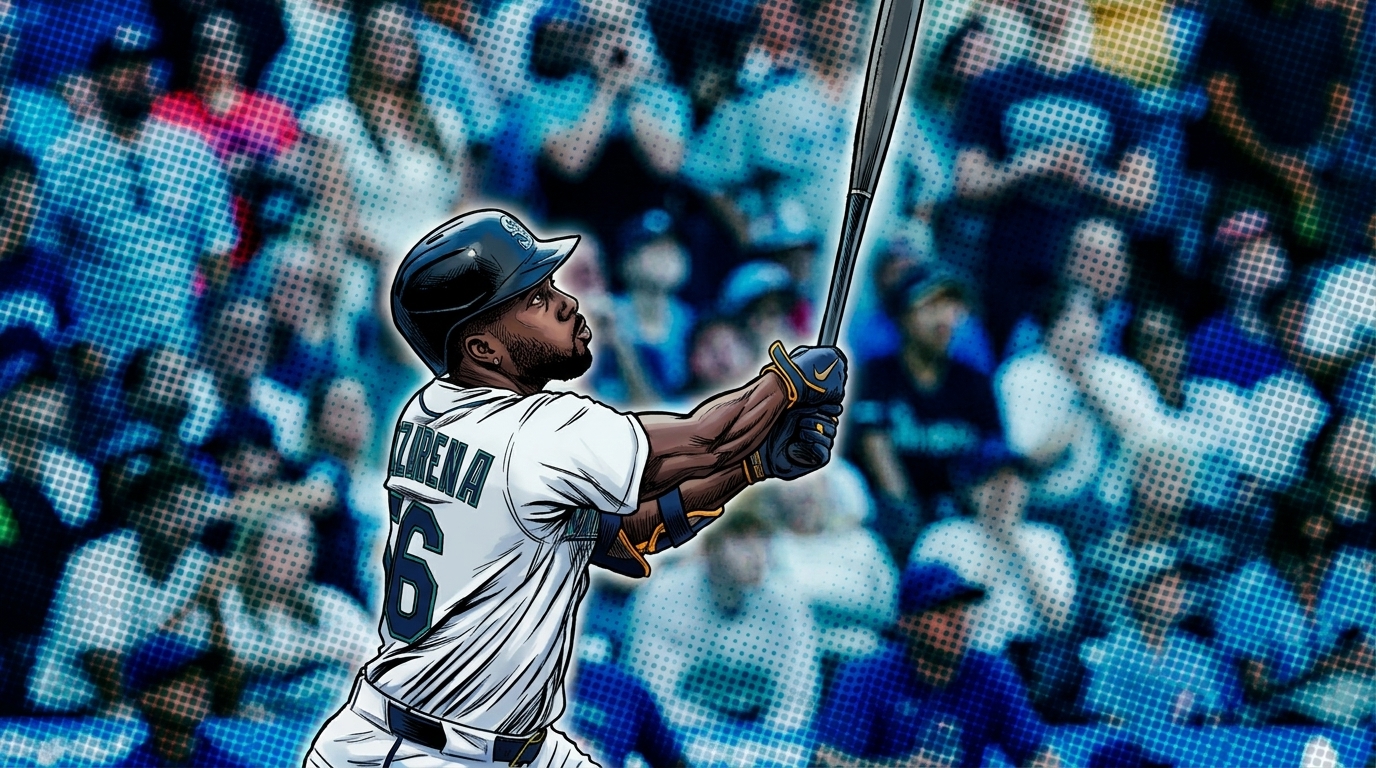
Munetaka Murakami entered May 27 with 18 home runs, one shy of the MLB record for most home runs by a rookie before June 1 — set by Pete Alonso in 2019 and Mark McGwire in 1987. At his current rate of one home run per 10.38 at-bats, per ChiCitySports, he has multiple games remaining to reach 19 before the June 1 threshold. The record is within reach.
That framing — rookie record — is itself a story that would be sufficient in most seasons. In this one, it is the secondary headline. Murakami is 26 years old. He broke Sadaharu Oh’s NPB single-season home run record in 2022, hitting 56 at age 22 with a 10.5 WAR season. He won back-to-back NPB MVP awards in 2021 and 2022. He is technically a major league rookie, but calling him a developing prospect stretches the label past any meaningful definition.
His Statcast profile in 2026 is not the profile of a player who snuck into the lineup. His chase rate sits at 22 percent — 22nd-lowest among 177 qualified MLB hitters, per ESPN — which places him in elite company by the most predictive plate-discipline metric available. He leads the majors in home runs off hard stuff: nine home runs off fastballs, sinkers, and cutters. He is the only MLB player this season to hit multiple home runs off pitches at 98-plus miles per hour. His longest home run — 451 feet off Ryan Thompson, per ESPN — is the kind of number that tends to end debates about whether power translates across leagues.
Diamondbacks pitcher Merrill Kelly put it this way after facing him, per ESPN: “I think there are going to be a lot of teams kicking themselves that they didn’t try harder to sign him.” A pitcher volunteering that kind of editorial on a hitter he just faced is a specific kind of confirmation that the scouting consensus got something very wrong.
How MLB Teams Passed on Murakami at $34M — and What the Scouts Got Wrong
The projection gap on Murakami’s contract is the number that should be in every analytics department’s post-mortem this offseason. MLBTR’s Top 50 list had him at $180 million over eight years. Kiley McDaniel at ESPN projected $80 million over five years. The final deal: two years, $34 million from the Chicago White Sox, plus a $6.575 million posting fee to the Yakult Swallows, per CBSSports.
The collapse of market interest around him was driven by a coherent but ultimately flawed set of concerns. His strikeout rate in NPB was 28.8 percent — fourth-highest in the league over a three-year stretch, per CBSSports and Yahoo Sports. His contact rate against 93-plus mph fastballs in Japan was 63 percent, against an MLB average of roughly 80 percent. His in-zone contact rate hovered in the low 70s, per Yahoo Sports market analysis, against an MLB average around 82 percent. Scouts also viewed him as effectively DH-only despite being listed at third base and first base.
Scouts framed him as elite power, elite NPB production, but dangerous enough plate-discipline risk that no team was willing to commit long-term capital. An anonymous MLB team official, per Yahoo Sports, summarized the pre-signing evaluation this way: “Like, can he actually hit?”
The answer, as of late May 2026, is yes. His 22 percent chase rate does not reflect a hitter struggling against big-league velocity. His hard-hit numbers are not the output of a player feasting on soft stuff. The strikeout concerns have not materialized at the level scouts projected. The White Sox — operating in the aftermath of a 60-102 2025 season, with the institutional willingness to absorb risk that a team in rebuild mode tends to develop — signed the most undervalued power hitter in the market. That team is now approximately 27-26 in 2026, hovering near second place in the AL Central.
For context on what was available at that price: the same offseason, multiple organizations committed $100 million-plus to free agents with far less verifiable production in their portfolios. The Murakami deal will be cited in market inefficiency discussions for years.
Two Races, One Narrative: Why the 2026 HR Story Is Bigger Than One Player
The 1998 McGwire-Sosa race worked as a sports narrative because it had structure. Two players, two different origin stories, running in parallel toward the same record. The race was bigger than either individual player because the contrast made each man’s story more legible.
The 2026 home run race has the same structural advantage. Schwarber is the veteran slugger making a clean-era case for a number that has only ever been reached in the PED era — if his season holds without incident, it would be the second clean-era 60-plus season and the first ever to land at 66 or above. Aaron Judge’s 62 in 2022 was historic. A 66 from Schwarber would be something the sport has genuinely never produced in the modern testing context.
Murakami is the international market-inefficiency case study: a player the league collectively undervalued by $50 to $150 million, signed by the team least expected to capitalize on the arbitrage, now second in the MLB home run race on a team that was historically bad 18 months ago. His 265 career NPB home runs translated, his plate discipline translated, and his exit velocity — 99th percentile barrel rate — is not going to regress to where scouts assumed it would.
For context on the broader picture: Aaron Judge sits at 17 home runs in third place, with a .401 wOBA and 55.5 percent hard-hit rate that suggests he’s capable of making this a three-player race. For more on the Yankees’ supporting cast around Judge this season, see our piece on Gerrit Cole’s return and the Yankees’ bullpen collapse.
And in the NL East, Schwarber is doing this in a division that has its own chaos — including the Mets, who just got a dramatic boost from Devin Williams’ walk-off grand slam against the Marlins.
Two home run races. Two arguments. One about what a clean-era hitter can do when everything clicks. One about what the market missed when it let a 265-home-run NPB slugger sign for $34 million. The sport has been waiting 25 years for a home run story it could root for without reservation. It may now have two of them running simultaneously, and the second one is almost more interesting precisely because nobody expected it at all.