
Every transcendent player has one loss that matters more than the rest. Not a regular season skid, not a first-round exit — a Finals loss. The kind that sits with you at 2 AM in a hotel room two years later and tells you exactly where you fell short. Call it The Crucible Timeline: the framework I use to map when a generational player experiences the loss that recalibrates everything. Jordan had Detroit’s Bad Boys. LeBron had the 2007 Spurs. Dirk had Dwyane Wade dismantling him in Miami.
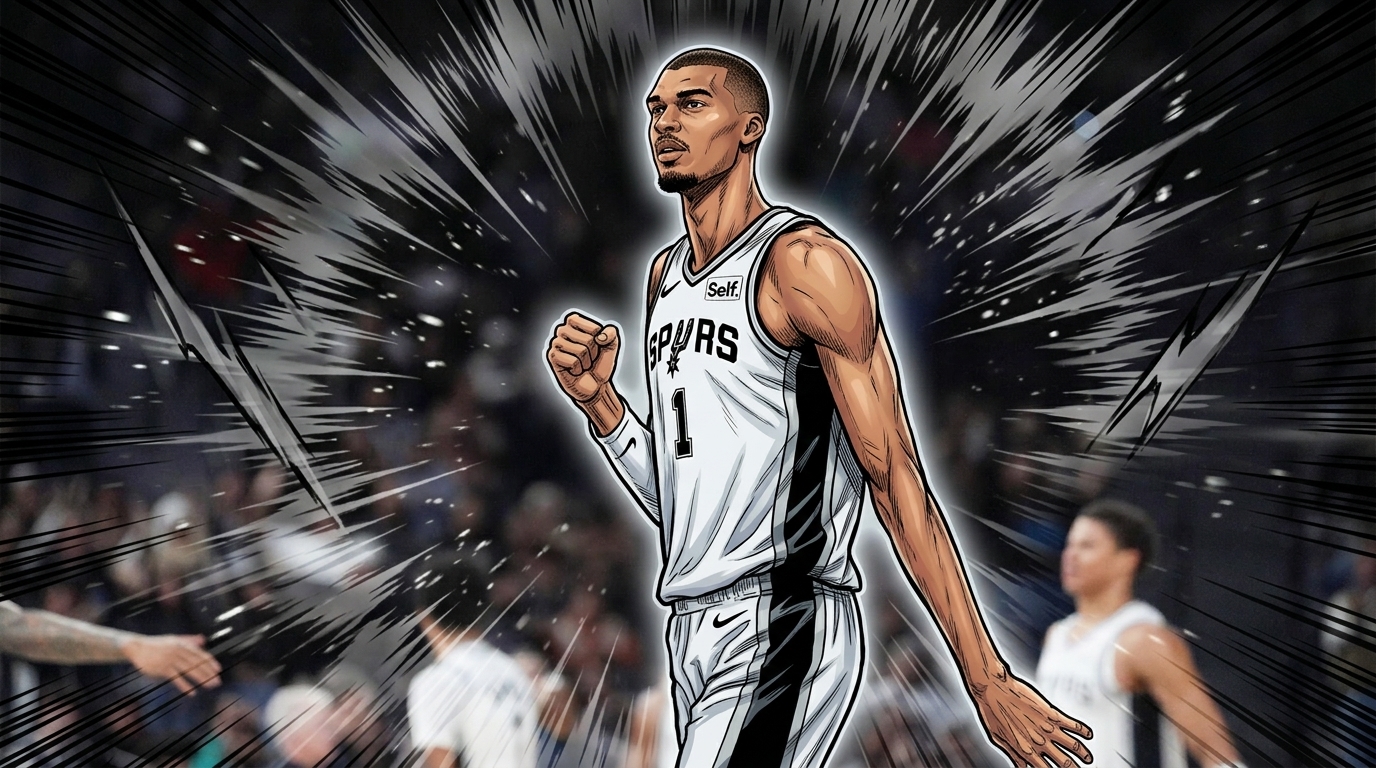
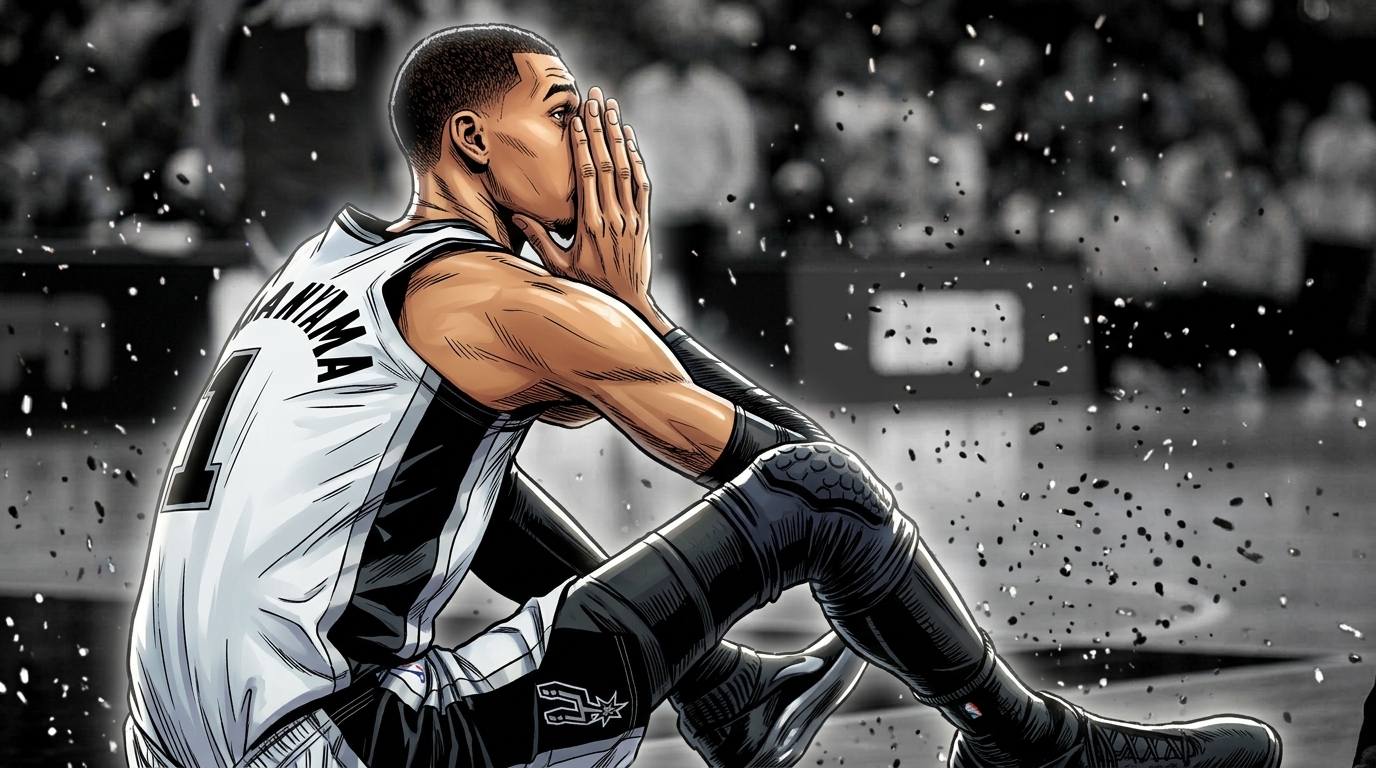
Victor Wembanyama just got his.
He’s 22 years old. And I ran this three different ways and got the same answer: that timing is not a tragedy. It’s an enormous advantage hiding inside a five-game series loss.
The Crucible Timeline
The framework works like this. For elite players, there is always a moment: a Finals appearance, or years of deep-playoff heartbreak, that forces a recalibration. Not just tactical adjustment. A fundamental rewiring of what winning requires. The interesting variable isn’t whether it happens. It always happens. The interesting variable is when.
Michael Jordan never appeared in an NBA Finals until he was 28. Before that, the Detroit Pistons eliminated him three straight years: 1988 at 25, 1989 at 26, 1990 at 27. Jordan had to wait for his crucible moment and then engineer an entire identity shift around it. He didn’t win his first ring until 1991. The gap between “Jordan we thought was transcendent” and “Jordan who actually won” spanned six years.
LeBron James reached the Finals at 22, swept 4-0 by the San Antonio Spurs in 2007. He averaged 22.0 points, 7.0 rebounds, 6.8 assists. Good numbers. On a Cavs team that was simply not equipped. His first championship came in 2012, five years later, at 27.
Dirk Nowitzki’s crucible arrived even later. He was 27 when the Mavericks blew a 2-0 series lead to the Heat in 2006, arguably the most catastrophic Finals collapse in the salary-cap era before the Spurs’ historic collapse in the Finals rewrote that particular ledger this week. Dirk didn’t win his first title until 2011 at 32. Five-year gap.
Wembanyama’s crucible just arrived at 22. Six years ahead of Jordan’s first Finals appearance. Same age as LeBron’s first Finals, but in a dramatically different context.
What Wembanyama’s Loss Actually Looked Like
Before the comparative analysis, the raw data deserves a proper read. Wembanyama averaged 26.0 points, 11.2 rebounds, 3.6 blocks, and 2.8 assists across five Finals games against the Knicks’ first championship in 53 years. He posted a 32-point, 8-rebound, 6-assist line in Game 3 on 11-of-18 shooting. He came into Game 5 and put up 19 points, 14 rebounds, and 5 blocks in a loss.
Woof.
The Spurs led at some point in every single game of this series. Every game. Against the team that just won the championship. The four Knicks victories came by a combined 16 points, the third-smallest combined winning margin for a championship team in Finals history. This was not a blowout series. This was not an exposure series. This was a five-game sequence that turned on a handful of possessions.
The number that does the most damage is the Q4 shooting line: 7.8 points per game on 34% from the field across the series. His guarantee before Game 5 showed exactly the competitive mentality the moment required. The execution in close-game situations did not match it. That’s the gap. That’s what the crucible reveals.
After the series, Wembanyama told ESPN: “This is the biggest lesson of my life. As a team, there’s no better experience than what we just lived.” And to Eurohoops: “The margin for error is very thin. Our domination stints are absolute. We absolutely dominated for most of the series. But our errors, our mistakes are punished so hard.”
He already understands what the framework predicts. That’s not nothing.
Is Wembanyama Already Ahead of Where Jordan and LeBron Were at 22?
Yes, by a significant margin on the metrics that matter. At 22, Jordan had not yet reached the Finals and was being eliminated before the conference finals. At 22, LeBron reached the Finals but averaged 22.0 points on a team that was outmatched before tip-off. Wembanyama at 22 averaged 26.0 points, 11.2 rebounds, and 3.6 blocks in the Finals on a team that led in every game.
https://twitter.com/FDSportsbook/status/2061125552430625171
The data here is unambiguous. Wembanyama’s production in the 2026 Finals exceeded LeBron’s 2007 Finals output by 4 points, 4.2 rebounds, and adds the shot-blocking dimension entirely. The team context is categorically different: the 2026 Spurs, averaging 25 years old as a roster (the youngest Finals team since the 1977 Trail Blazers), nearly won four separate games in a five-game series. The 2007 Cavs were eliminated in the same number of games without leading for significant stretches.
The Crucible Timeline framework generates a specific prediction: the earlier the crucible arrives relative to peak physical maturity, the more runway exists to integrate the lesson. Jordan integrated his lesson and won six titles. LeBron integrated his and won four. Even Nowitzki, starting the process at 32, won one. Wembanyama is beginning that integration at 22, with physical development still ongoing and a core that will age together.
The SI report on Wembanyama’s post-series mindset captured the precise competitive posture: “What I’m pissed about is, there’s probably a hundred games before we can be back in the Finals.” Not resignation. Not process-speak. Rage at the calendar. That’s the emotional signature of a player who understands exactly what they need to do and is angry about how long it takes to get back.
What Comes Next (and Why It Should Scare the Rest of the League)
The Game 4 collapse is the detail that will haunt the Spurs this offseason and define their motivation next season. San Antonio led 76-49 at halftime, a 27-point advantage that became the largest blown halftime lead in NBA Finals history. They scored only 30 points in the second half. OG Anunoby’s put-back with 1.2 seconds left sealed the Spurs’ catastrophic collapse and handed the Knicks a 107-106 win. That game was over at halftime by any prior historical standard. It was not over.
The Q4 failure rate and the Game 4 implosion point to the same underlying variable: fourth-quarter execution under championship pressure with the game in the balance. That is a learnable skill. It is also the specific skill Jordan developed during those three years of Detroit losses. The mechanism is the same. The timeline is just compressed.
What the rest of the NBA is now facing is a version of Wembanyama who has experienced every single thing the Finals demands: the crowd noise, the opponent adjustments, the weight of a blown lead. All before his 23rd birthday. By the time Jordan reached his first Finals, he was already 28 and had spent years engineering around his failures. Wembanyama has six additional years, minimum, to run that same engineering process.
The Knicks won. They earned it. Fifty-three years of waiting is real, and what Jalen Brunson built in that building this spring is legitimate.
But the framework is clear about what happens next. The player who loses the Finals at 22 on a team that led in every game and learns this specific lesson about fourth-quarter execution and margin management is not a repeat loser. The historical rate is near-perfect. Jordan learned it. LeBron learned it. Even Nowitzki, who didn’t start the process until 27 and didn’t complete it until 32, learned it.
Wembanyama just enrolled five years early. The rest of the league has until approximately 2028 to figure out what to do about that.
I don’t think they will.