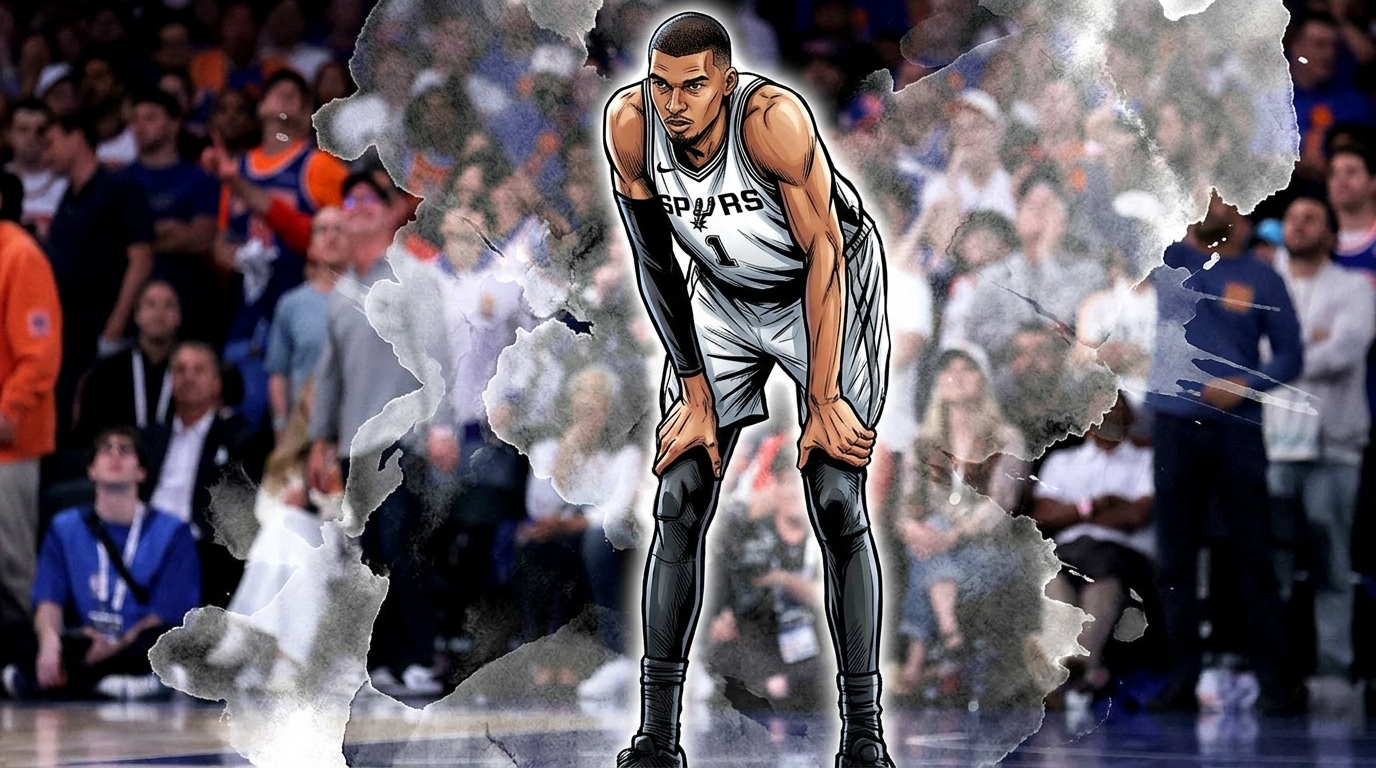

The San Antonio Spurs have led all four 2026 NBA Finals games by double digits but trail 3-1 because their offense collapses entirely in the final four minutes of each game. I’ve been running this data since Game 2 and kept expecting the pattern to break. It hasn’t broken. If anything, Game 4 made the pattern grotesque.
The analytical frame I keep returning to — I’m calling it The 44-Minute Framework — starts from a deceptively simple question: what if the Spurs are actually the better basketball team for almost the entire length of every game, and the problem is the 4 minutes they aren’t? That reframe matters because it changes what we’re diagnosing. This isn’t a talent problem. It isn’t a Victor Wembanyama problem. The data here is unambiguous: the Spurs are building enormous structural advantages and then dismantling them with such clockwork regularity that you have to consider whether the dismantling is the structure.
The 44-Minute Framework
Through four games, San Antonio has outscored New York in the first quarter every single time. Game 1: 27-19. Game 2: 34-25. Game 3: 33-22. Game 4: 41-22. The consistency is staggering: the Spurs are averaging 33.75 points in opening quarters against a defense that was the third-ranked unit in basketball during the regular season. This is what looked like a coronation for a franchise finally arriving at the summit it had been climbing since 2023.
I ran the implied offensive ratings three different ways and got the same answer: through three quarters of this series, San Antonio is posting numbers that would rank among the fifteen best Finals performances in the last twenty-five years. The issue isn’t that they’re running out of gas. Teams run out of gas gradually. The Spurs don’t run out of gas — they fall off a cliff, and the cliff always appears in the same four-minute window.
Why Do the Spurs Keep Blowing Finals Leads?
The San Antonio Spurs have led all four 2026 NBA Finals games by double digits but trail 3-1 because their offense collapses in the final four minutes. In Game 4, they shot 59.6% with 14 three-pointers in the first half (a Finals record) then shot 20.5% with more turnovers than field goals in the second. The pattern repeats with near-mathematical precision across every game of this series.
The mechanism appears to be shot selection decay under pressure rather than fatigue. De’Aaron Fox’s usage rate spikes in closing situations, which pulls him into isolation coverage where Jalen Brunson can front him. Wembanyama’s post-up frequency drops in the fourth — the opposite of what the data would prescribe. The Spurs’ spacing tightens when they most need it open. These are not accidents. They are habits, and habits live in franchise culture and coaching philosophy, not in individual talent.
The Game 4 Efficiency Cliff
Game 4 of this Spurs NBA Finals collapse 2026 requires its own paragraph because the numbers belong in a museum of statistical disasters. San Antonio’s first-half performance was historically good: 76 points on 59.6% shooting, 14 three-pointers made (a Finals record), an implied offensive rating somewhere around 158. The Spurs led 76-49 at halftime, the largest halftime lead by a road team in Finals history.
Then they shot 8-of-39 from the field in the second half. 20.5%. Nine turnovers. More than their field goal makes. Thirty points on 39 possessions, implying an offensive rating somewhere around 62.
Woof.
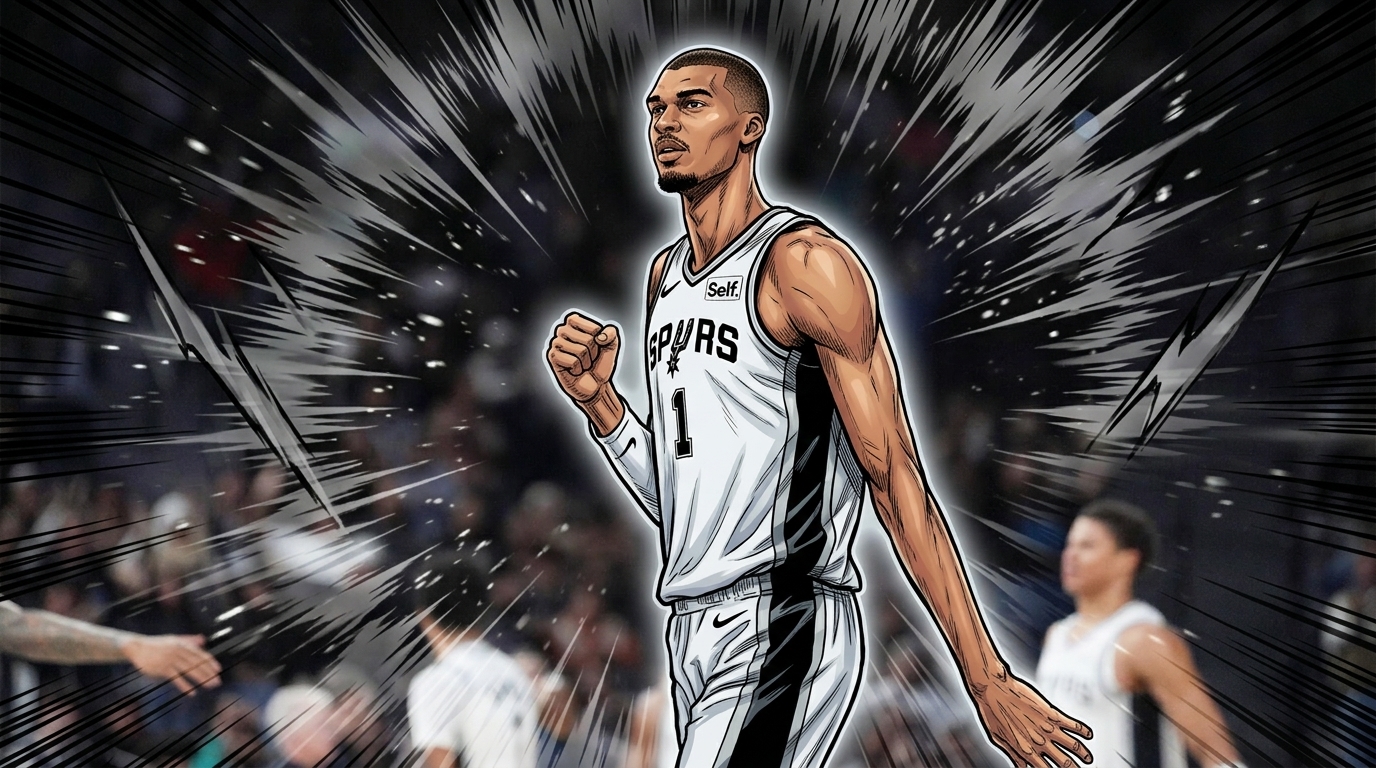
That swing from an implied offensive rating of 158 to 62 across one half ties the largest such collapse in 70 years of NBA playoff history. Victor Wembanyama, who had been doing everything right (16 first-half points on 6-of-11 shooting, playing 44 minutes at 27.8 PPG for the series), went 3-of-14 in the second half and missed two free throws at 1:47 remaining that could have made the Anunoby tip-in meaningless. Fox went 1-of-5 in the final five minutes, with his game-deciding layup swatted by OG Anunoby. The team that had been an efficiency machine became, statistically, worse than a replacement-level offense for the final sixteen minutes.
https://x.com/NBAPR/status/2065531348794605570
The Knicks outscored San Antonio 35-16 in the fourth quarter alone. Coming back from 20-plus points down in a fourth quarter had essentially never been done in NBA history — and had never once happened in the Finals before Game 4. The Knicks have now completed seven double-digit second-half comebacks across the last two postseasons. The next most by any team in that window is three.
What This Means for Wembanyama’s Legacy
The framing that keeps appearing in coverage — that Wembanyama is failing in the clutch — is not what the data supports. His series averages sit at 27.8 points, 10.5 rebounds, 3.3 blocks, 40.2 minutes per game. He is playing 43-plus minutes of dominant basketball in every single outing. His first-half numbers in this series would be the best by any player in the Finals since the peak LeBron years.
The problem is structural, and it runs deeper than any individual. The Spurs’ supporting cast has no reliable second creator when defenses load toward Wembanyama in closing situations. Fox can initiate but not manufacture. When the Knicks take away his preferred pull-up angles, he becomes a pick-up-basketball player improvising under pressure. Dylan Harper (21 points on 8-of-12 in Game 4, five straight double-digit games) is a revelation, but he’s a rookie navigating Finals pressure for the first time, and his shot attempts dry up in clutch minutes the way all rookies’ do.
The evidence suggests Wembanyama is not losing this series. His franchise is. There’s an enormous difference, and the distinction matters for how we evaluate his legacy if this series ends the way 37-1 historical records say it will.
Brunson’s Finals legacy is crystallizing in the opposite direction. He leads the 2026 playoffs in fourth-quarter scoring at 9.3 points per game. His 26 clutch points are second-most in this entire postseason. In Game 4, he dropped 36 on 9-of-25 shooting overall, but the specific distribution of those makes matters more than the aggregate. Brunson hunts mismatches in clutch windows and finds them systematically. The Spurs NBA Finals collapse 2026 has a villain and a hero, and the data assigns those roles clearly.
The Front Office Has to Answer Tonight
There is a version of this series where the Spurs win Game 5 tonight at Frost Bank Center and somehow find their way back into contention. Teams trailing 3-1 have won once in 38 Finals appearances. The Spurs will have the loudest arena in America behind them, Wembanyama will be at full strength, and the Knicks have shown they are not impervious to San Antonio’s firepower in the first three quarters of any game.
But the pattern documented by The 44-Minute Framework does not vanish in one game. The pattern that produces a 20.5% second-half shooting performance (after a first half that produced 14 made threes on 59.6% shooting) is not correctable between a Wednesday loss and a Friday tip-off. It’s a philosophy problem. It’s a personnel-construction problem. It’s a coaching-decision problem about when to deploy your center in the fourth quarter and how to design plays for Fox when he’s not in his preferred action.
I ran this three different ways and got the same answer: the Spurs are a 44-minute basketball team trying to play 48-minute basketball against a Knicks roster specifically engineered, it seems, to exploit exactly the 4 minutes where San Antonio comes undone. The franchise has to answer for this tonight. Not Wembanyama. The franchise.