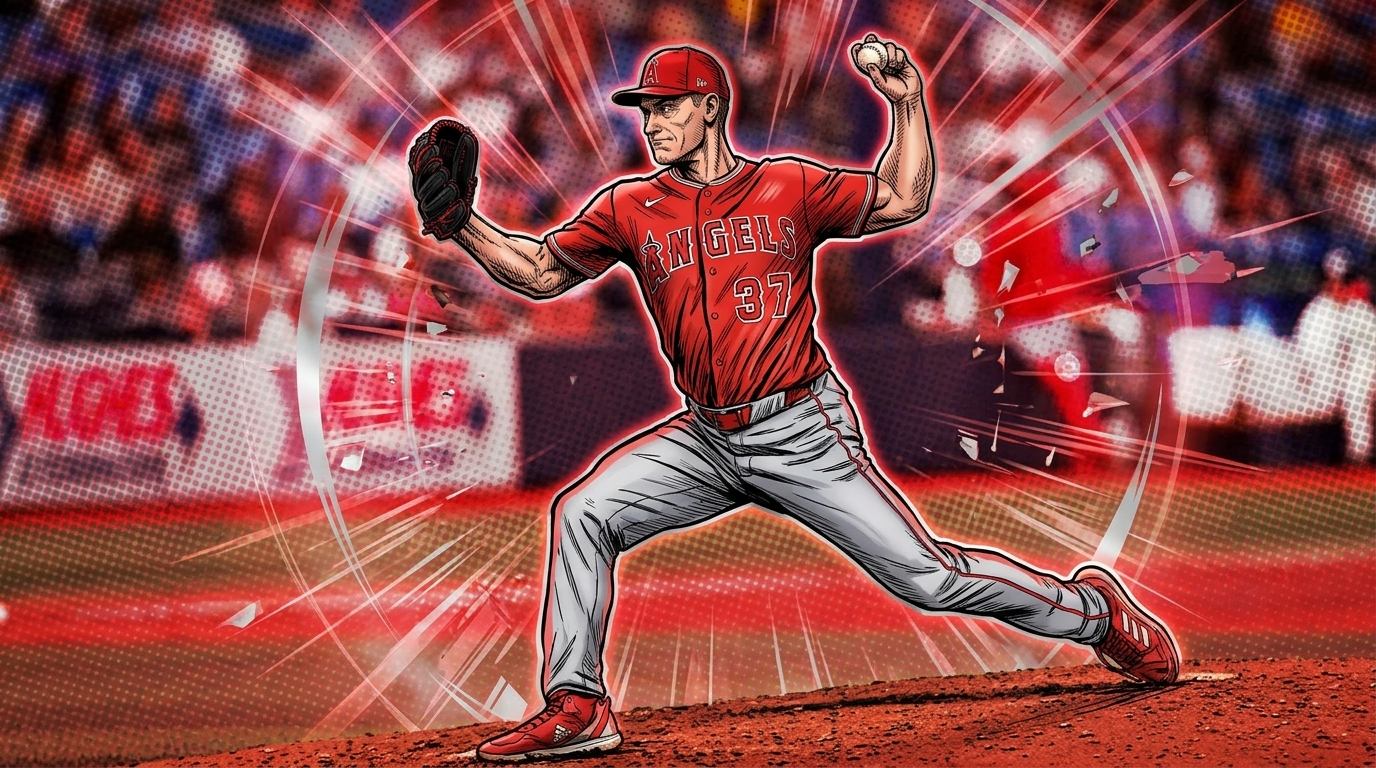

On May 30, at Tropicana Field in St. Petersburg, umpire Lance Barrett ejected three pitchers before a single pitch was thrown, on the grounds that they refused to leave the field after the national anthem ended. This is a thing that happened. The leadoff batter, Zach Neto, was already standing in the batter’s box. The Angels won 14-3 anyway, so in the practical sense, nothing occurred. In the institutional sense, baseball had another one of its moments.
The tradition, such as it is, involves bullpen players competing to be the last one standing on the field after the anthem concludes — a territorial ritual whose origins appear to be entirely vibes-based. Brent Suter of the Angels stood near the third-base dugout; his teammate Chase Silseth eventually decided he had better things to do and retreated. On the Rays side, Steven Wilson and Manuel Rodríguez held their ground near the first-base dugout, alongside Rays mascot DJ Kitty, who was presumably not subject to ejection. Barrett warned all three. They declined to be warned. Barrett ejected all three.
Suter called it “not the coolest way to get ejected, but one of the funnier ways to get ejected,” which is a characteristically measured assessment from a man who had, until that moment, never been ejected in his professional career. Wilson and Rodríguez, for their part, were both on the injured list and could not have pitched regardless of the outcome of the anthem standoff. Baseball had managed to eject two players whose participation in the actual game was already theoretical.
https://twitter.com/CloseCallSports/status/2060915428822815071
The ejections were characterized by Close Call Sports as “irrecusable,” which is the correct word for a situation in which the umpire’s authority derives from MLB Rule 8.01(b) — a broad grant of power to maintain order that contains no specific language about post-anthem territorial disputes. Barrett did not invent the law; the law simply happened to reach a situation it was not designed for and produced three ejections before the first inning began. The rule worked exactly as written. The outcome is nobody’s fault. This is the important thing to understand.
Seven to eight minutes elapsed after the anthem ended before Barrett acted — long enough for the league to have intervened, and long enough for nobody to bother. That duration is what makes this useful rather than merely funny. At the time, the Los Angeles Angels were 23-36, a record that suggests other concerns, and the two Rays pitchers who lost the standoff could not have pitched anyway. Suter had thrown 1⅔ innings the previous day and was unlikely to appear Saturday. Stakes, in every measurable sense, were zero. Enforcement was complete.
What baseball does, consistently and without apparent self-awareness, is apply written institutional structures to unwritten cultural codes in ways that reveal the internal logic of both to be equally arbitrary. The anthem standoff is a tradition that means nothing, enforced by a rule that says something else, adjudicated by an umpire who was technically correct. Everyone involved gets to go home knowing the system worked. Wade Meckler hit a grand slam in a 36-pitch first inning; the Angels scored fourteen runs; the ejected pitchers watched from wherever ejected pitchers go. The only actual casualty was Suter’s first-career-ejection story, which will now always begin with a geography dispute and a mascot.
For more on the ongoing institutional theater that is professional baseball, there’s always more MLB coverage.