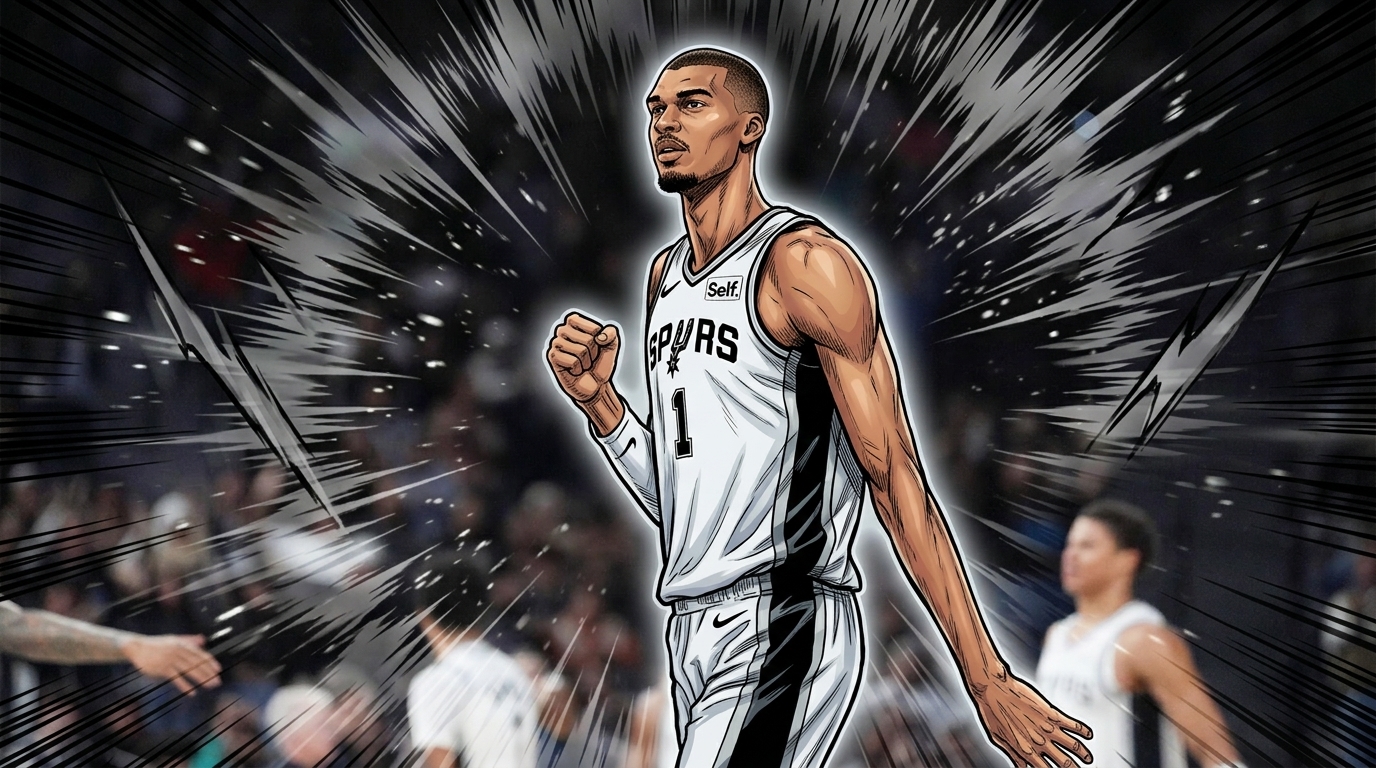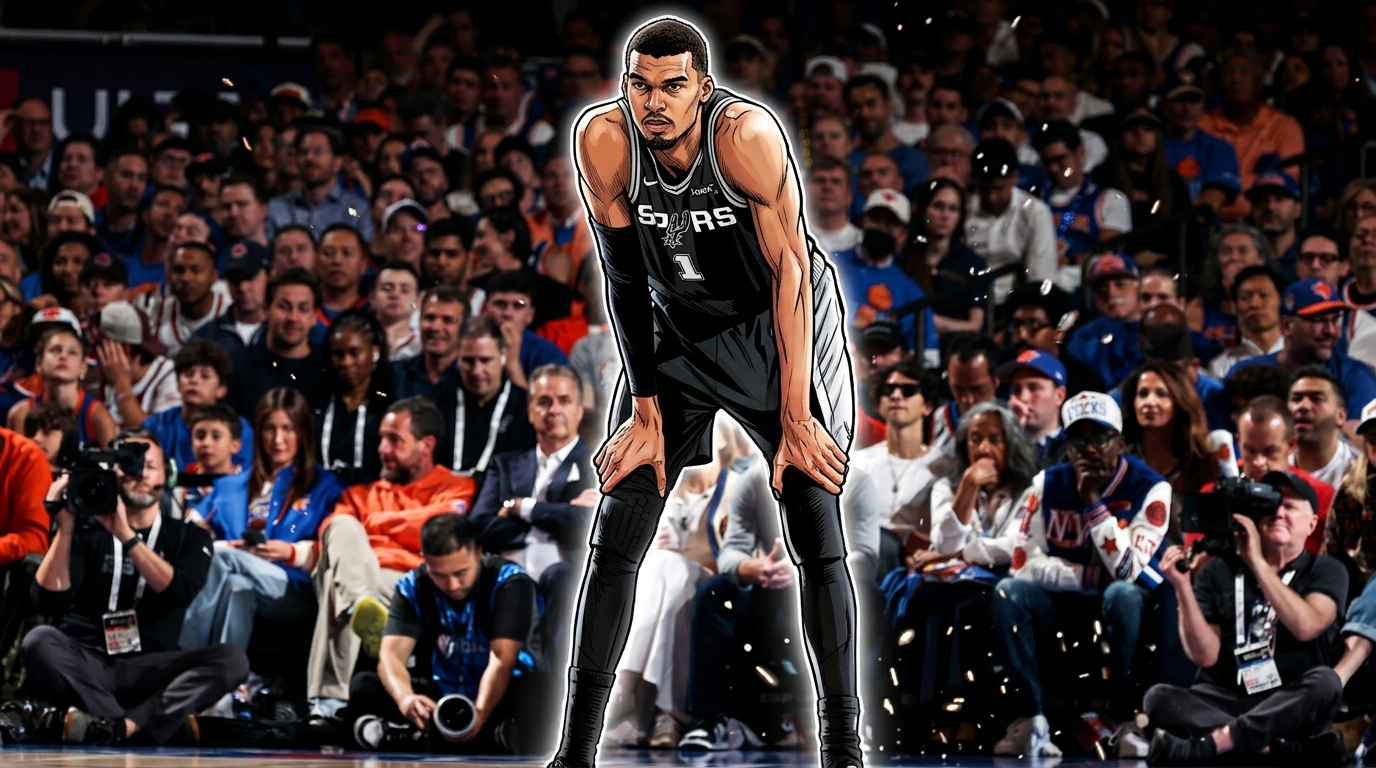

The question I keep returning to isn’t whether Victor Wembanyama is transcendent. He is. The question is what transcendence is actually worth when the underlying conditions of a basketball series have already been decided by the numbers.
I want to apply what I call The Closing Statement Protocol to Game 5 of the 2026 NBA Finals, a framework for stripping away the narrative residue of a series and asking, coldly, whether there exists any realistic combination of events that produces a different outcome. Not “could the Spurs win Game 5?” but: “Is there a coherent, data-supported path to three consecutive wins against this Knicks team?” Those are different questions. Only the second one matters on Saturday night.
The Closing Statement Protocol
The Protocol has three components. First, you establish the historical baseline. Second, you identify the core constraint: the one variable the trailing team cannot fix. Third, you ask whether the leading team has a correctable flaw that the trailing team is positioned to exploit. If the answer to the third question is no, the Protocol closes.
Let’s run it.
Can the Spurs Come Back From 3-1 in the NBA Finals?
What the 37-1 Record Actually Tells Us
The historical baseline is not ambiguous. Per ESPN, teams leading 3-1 in the NBA Finals are 37-1 all time. The only franchise to erase that deficit is the 2016 Cleveland Cavaliers, who beat a 73-win Golden State team that was not mentally prepared to close. It remains the most improbable result in Finals history.
The Spurs are not the 2016 Cavaliers. That’s not an insult. Virtually no team ever has been. But the comparison matters because the 3-1 record is only useful as context, not as probability. The real question is empirical: what did those Cavaliers have that allowed the reversal, and does San Antonio possess the equivalent?
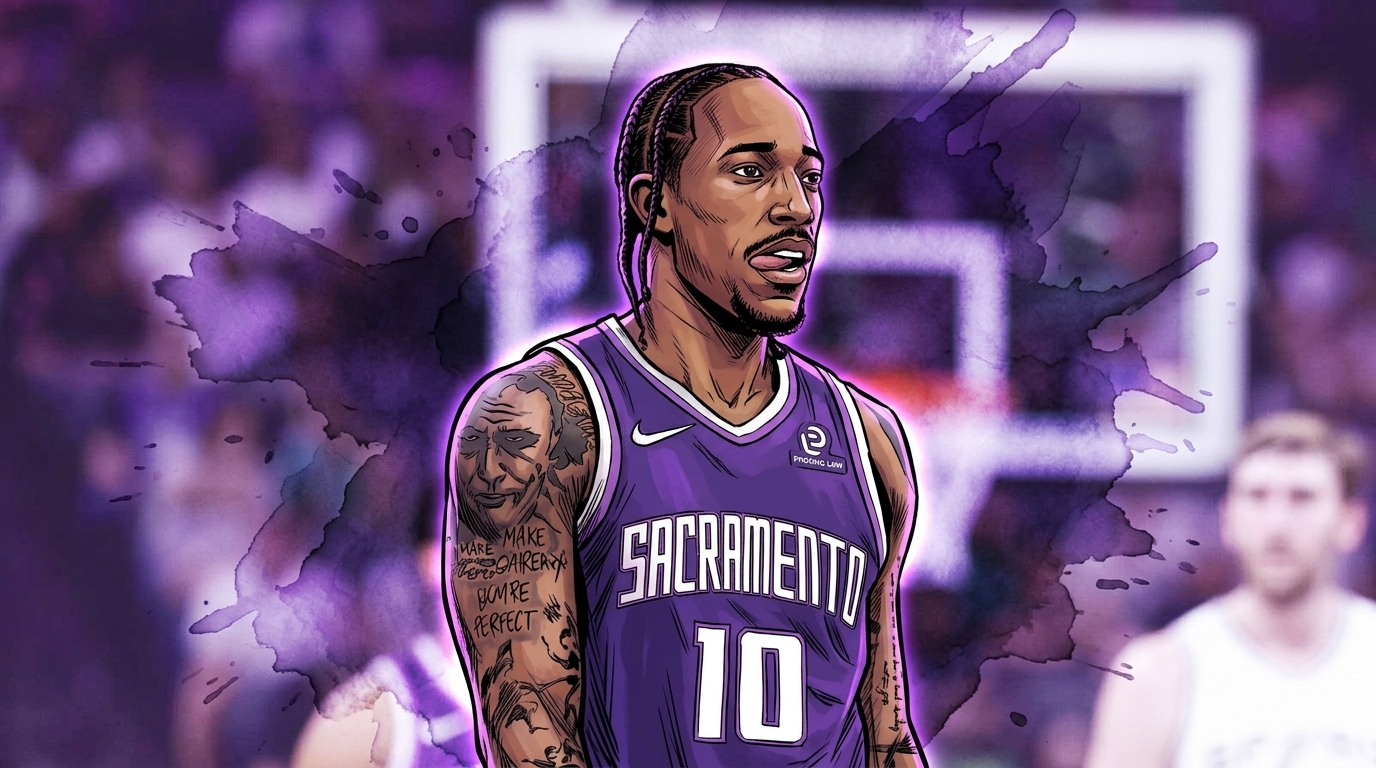
The 2016 Cavaliers had LeBron James averaging 29.7 points, 11.3 rebounds, and 8.9 assists for the series, per Basketball Reference. They had Kyrie Irving’s 41-point Game 5. They had a co-star who could carry games independently. The Spurs have Wembanyama, and then a significant drop to De’Aaron Fox, who attempted a layup with 11.1 seconds remaining in a one-point Game 4 lead instead of forcing a foul, per ESPN, a decision that gave New York the ball back and set up the finish that followed.
That single possession is not the reason the Spurs are down 3-1. But it is a useful illustration of the execution gap between what this team needs and what it currently has.
The Wembanyama Problem the Data Reveals
Here is where The Closing Statement Protocol gets uncomfortable for San Antonio, because the surface-level data on Wembanyama looks fine. He is averaging 27.8 points and 10.5 rebounds for the series, per ESPN and Yahoo Sports recaps. Those are legitimate superstar numbers. The problem is what happened in the games around those numbers.
Wembanyama scored 26 points in Game 1. The Spurs lost by 10. He scored 29 points in Game 2, his best game to that point in the series, and the Knicks won by one. In Game 3, the one game San Antonio won, he had 32 points, 8 rebounds, and 6 assists. But the Knicks also shot poorly from three. Both conditions had to be simultaneously true: Wembanyama at his best, and New York below its baseline. In Game 4, he shot 9-for-25 from the field, missed two crucial free throws with 1:47 remaining per ESPN, and the Knicks completed the largest comeback in NBA Finals history, erasing a 29-point deficit.
Woof.
Think about what that sequence actually says. The Spurs won precisely one game where Wembanyama was exceptional AND the Knicks underperformed. They lost three games where Wembanyama was good-to-great and the Knicks were operating anywhere near their baseline. That is not a Wembanyama problem — he cannot be asked to do more than he is doing. That is a roster-depth problem, and roster-depth problems don’t get fixed between Saturday morning shootaround and tip-off.
The Knicks’ offense generated quality looks in Game 1 while shooting just 26 percent from three, per StatMuse data, and still won by 10. Their 2026 playoff three-point clip sits at 40 percent. When they are shooting at their true talent level, the margin of victory is not close. When they are shooting below it, Brunson (30 points in Game 1, 36 points in Game 4) compensates. That is a two-layer offense that the Spurs have spent four games unable to neutralize simultaneously.
For context on why this matchup broke the way it did, our pre-series tactical breakdown anticipated the Anunoby problem, and the largest comeback in NBA Finals history documents exactly how Game 4 unraveled.
Anunoby, per ESPN analysis, is a defender the Spurs simply don’t have an answer for. He scored the clinching put-back with 1.2 seconds remaining in Game 4:
https://x.com/NBA/status/2064914494598381940
A 29-point lead, gone. The game closed by the same player who has been a problem all series. Not randomness. That is a pattern.
What San Antonio Would Need to Win Three in a Row
The third component of The Closing Statement Protocol requires identifying a correctable Knicks flaw. I ran this three different ways and got the same answer: there isn’t one that the Spurs are positioned to exploit.
New York’s defense does not have a catastrophic weak link. Their offensive system generates efficient shots even when individual components underperform. Brunson has not had a bad game in this series by any reasonable standard. Their bench depth has not been a liability. The Spurs’ path to three consecutive wins would require Wembanyama to sustain his Game 3 performance across three games while the Knicks simultaneously shoot below 35 percent from three in all three. The law of large numbers says that combination is not coming.
Wembanyama knows this at some level, even through the competitor’s refusal to accept it. “Everybody knows we are going to do it,” he said after Game 4, per multiple outlets. And also, from the same postgame session with ESPN: “It just feels like we worked too hard and give up our leads. It just hurts.” Both things are true simultaneously: the belief and the grief. The grief is more statistically accurate.
Mitch Johnson said after Game 4: “We feel like we’ve decided the outcome of all four games.” The data agrees, and credits the other side: New York’s margin for error is simply larger.
The Protocol closes. The core constraint — a Spurs supporting cast that cannot carry an independent offensive load and makes critical late-game execution errors — is not fixable in 48 hours. The historical baseline is 37-1. The correctable Knicks flaw does not exist in the data.
Game 5 is Saturday in San Antonio. The crowd will be extraordinary. Wembanyama will be extraordinary. He has averaged 27.8 points and 10.5 rebounds against the best team in the NBA this year, and none of it has been enough, and Saturday will not change the math. The data here is unambiguous: the Knicks are closing this out, and the only question left is whether they do it in front of their own fans next week or on the road Saturday night.
My projection: New York wins Game 5 and the 2026 NBA championship. Brunson gets the Finals MVP conversation. Wembanyama gets a harder, more useful education than any victory could have given him. That’s cold comfort for San Antonio, but it’s where the numbers point, and the numbers have been pointing there since Game 2.