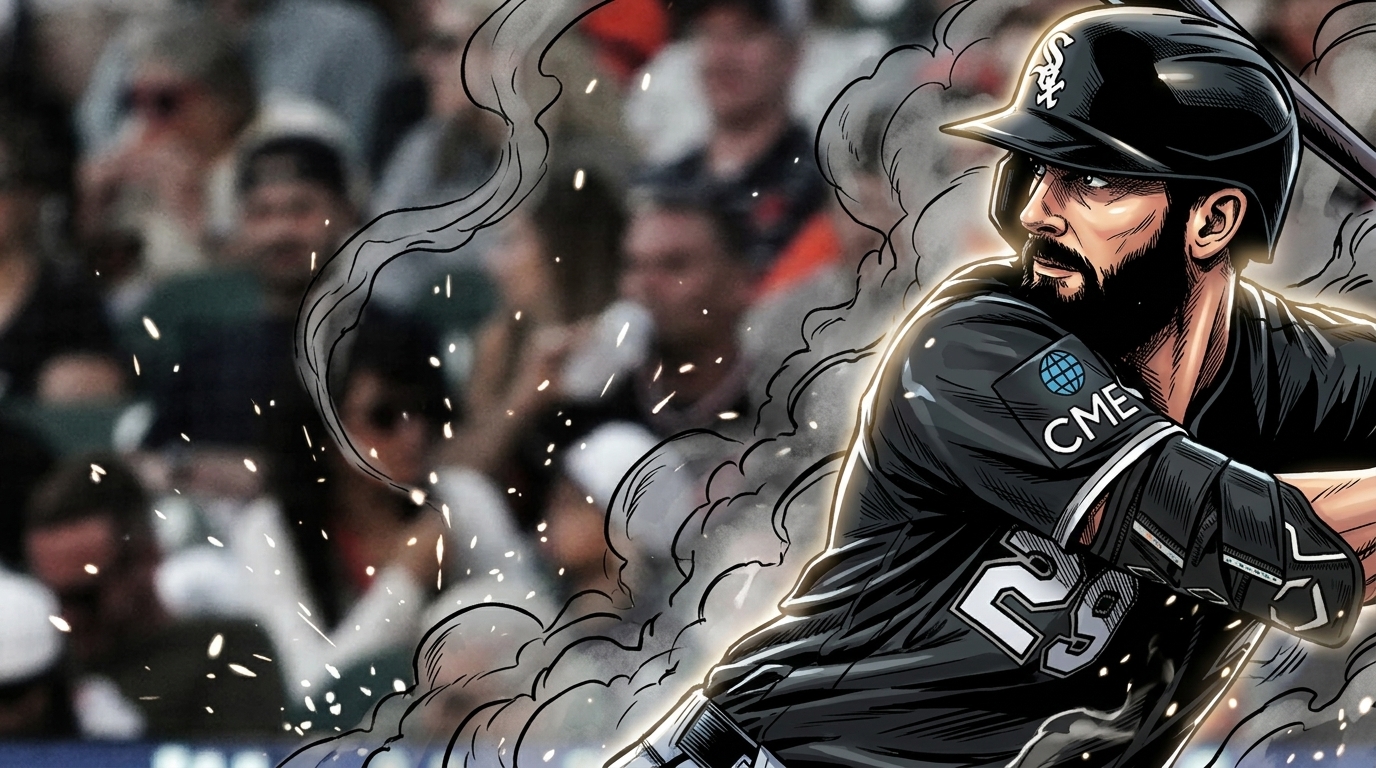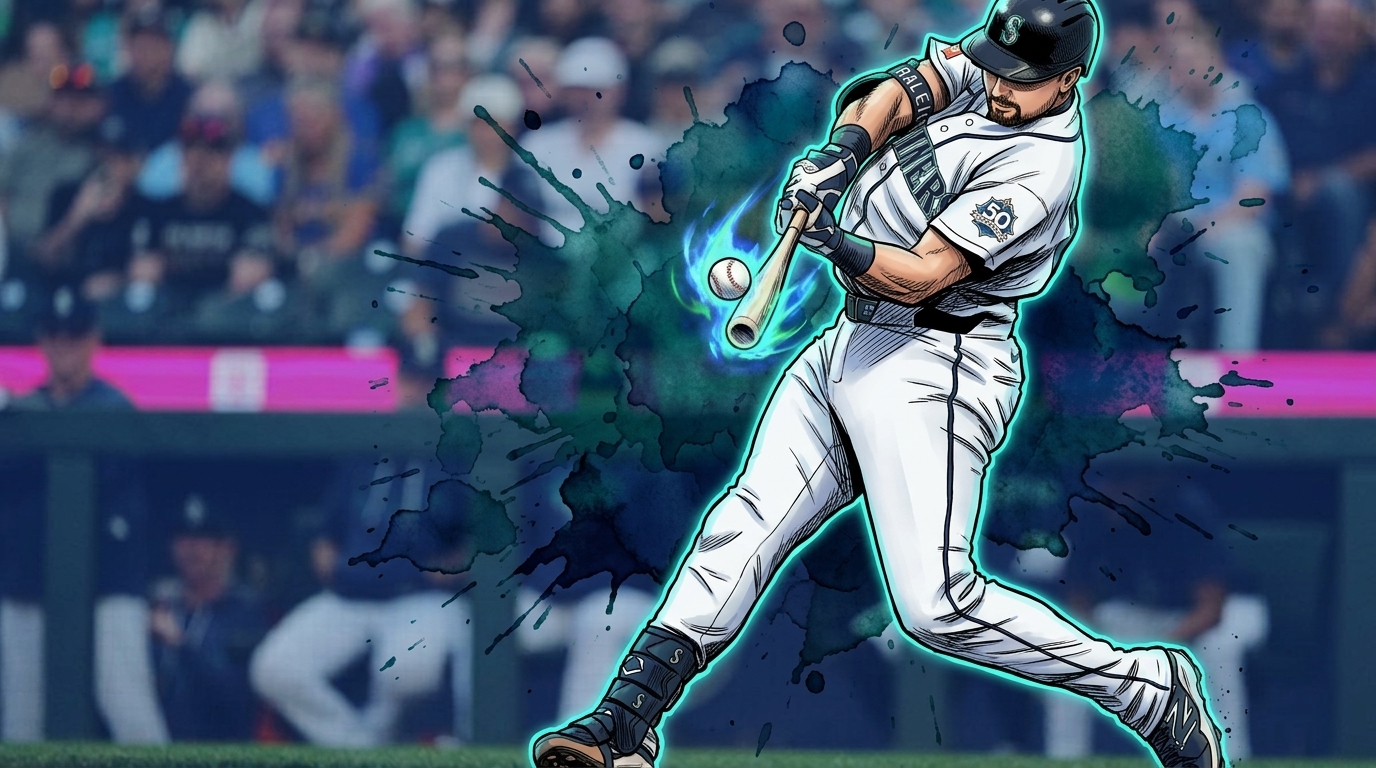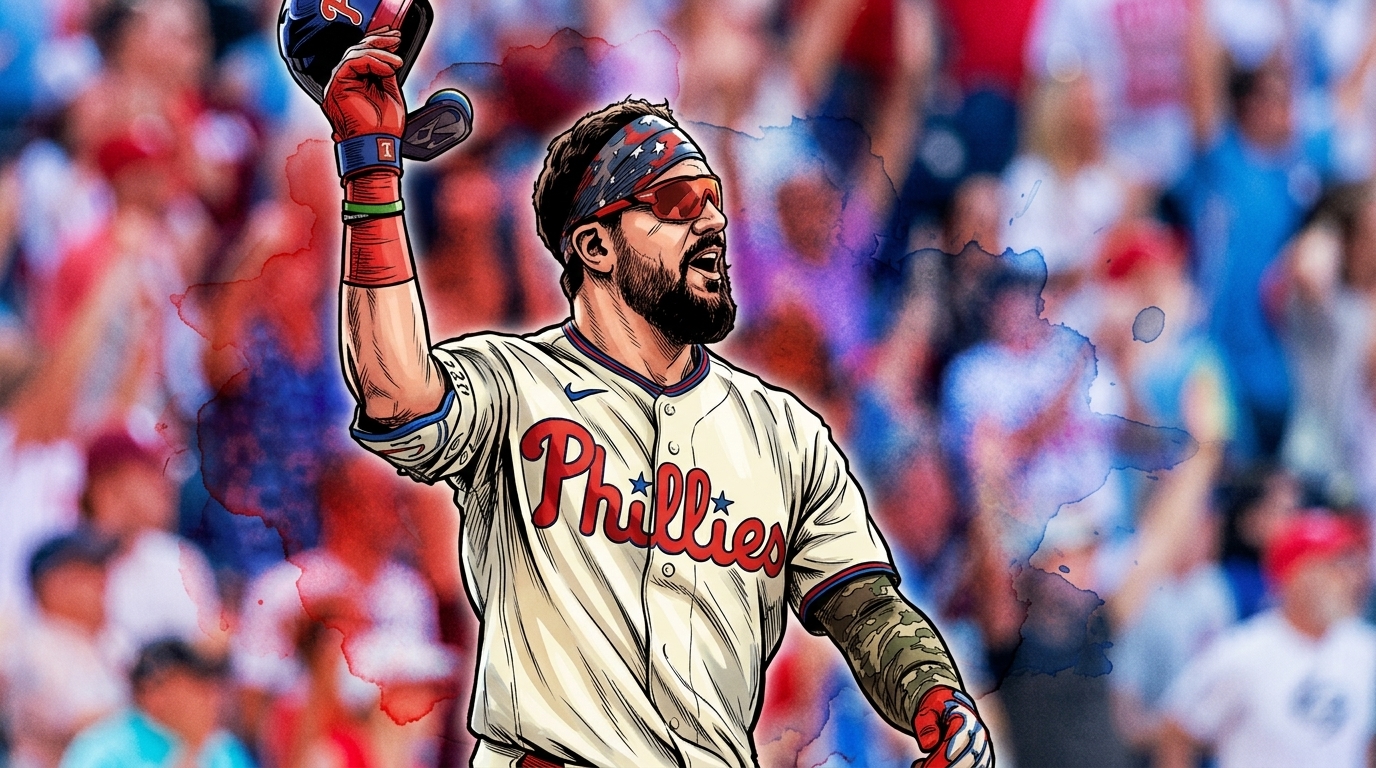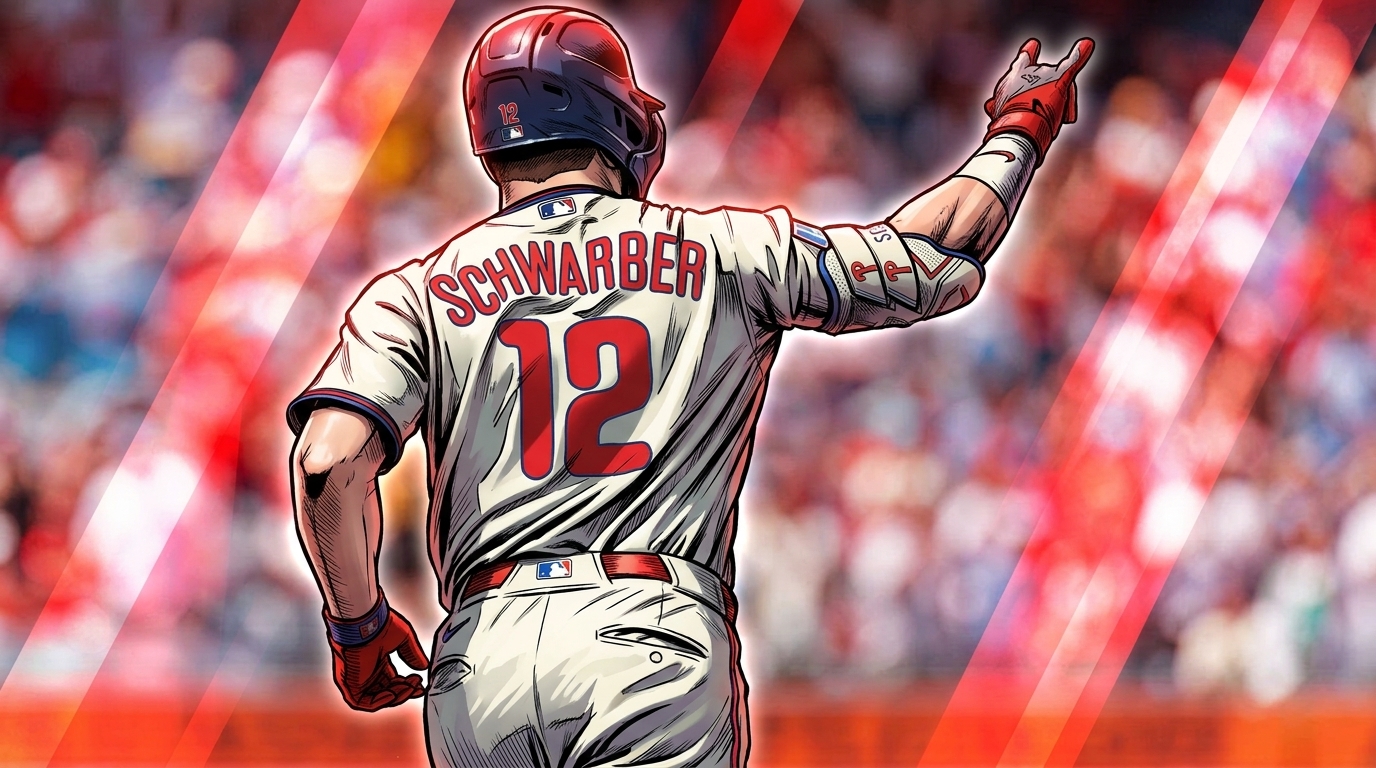

Picture the moment before it happens. Schwarber steps into the box at Citizens Bank Park — his park, his crowd — and 42,000 people who’ve been waiting for this all week go completely sideways. Not polite All-Star applause. The kind of noise that registers on equipment, the kind that made the 2023 NLCS broadcasts sound like the microphones were failing. He hasn’t swung yet. The pitcher hasn’t tossed the first ball yet. And already the building is vibrating.
That’s Monday night. And it’s a gift.
I don’t mean that in the greeting-card sense. I mean that the alignment of circumstances required to produce this specific event — Kyle Schwarber, 32 home runs, Citizens Bank Park, the Home Run Derby — is genuinely unusual. Athletes of his caliber almost never get to do the thing the way Schwarber gets to do it here. No defensive responsibility. No pitch sequencing. No analytics department hovering over his launch angle with a clipboard and a grievance. Just: throw the ball, hit it as far as you can, repeat until the crowd loses its mind or your arms fall off.
https://twitter.com/MLB/status/2067721666793177232
The Derby has a complicated reputation in baseball circles, and not without reason. Pitchers avoid it reflexively. Contact hitters worry about their swing mechanics getting scrambled by repetitive max-effort cuts. There are people in front offices who would quietly prefer their guys skip it. For most participants, there’s a real cost-benefit calculation involved.
Schwarber doesn’t have that problem. He is, by design and disposition, a left-handed masher who has built his entire offensive identity around one proposition: find a pitch he can elevate and do damage to it. His approach — walking a ton, hunting specific pitches, swinging with full intent when he gets one — is on pace for one of the great power seasons in baseball history. Loosening that swing in a Derby doesn’t wreck anything. It’s just more of the same thing, pointed at a slower pitch, with a better soundtrack.
There’s something worth noting about how the Derby itself actually works, participation-wise. It’s one of the genuinely voluntary events in a sport that rarely extends that courtesy to its players. Clubs can’t mandate it. Nobody’s contractually obligated. Schwarber said publicly that he had two conditions: his lower back needed to cooperate, and he needed to make the All-Star team. Both happened. He opted in on his own terms. In professional baseball, that kind of autonomy is rarer than it sounds.
He’s done the Derby before, and the record is mixed in a way that makes Monday stranger and better. In 2018 at Nationals Park he made the finals, went toe-to-toe with Bryce Harper on Harper’s home turf, and lost 19-18 in a round that would’ve been legendary if he’d won it. In 2022 he went out in the first round to Albert Pujols, which is a fine way to lose but still a loss. Then last summer he hit three home runs on three swings in an All-Star Game tiebreaker and walked off with the MVP. His relationship with these showcase moments has a particular arc to it: the near-miss, the early exit, the clutch redemption. Now he’s doing the Derby at home, with the loudest crowd he’ll ever have behind him, and his Phillies teammate Bryce Harper — the same guy who beat him in 2018 — in the bracket alongside him. The symmetry of that is so absurd it feels constructed.
The 32 home runs aren’t just a Derby credential, though they’re that too. They’re evidence. Schwarber will be 33 years old this season, and the conventional wisdom about power hitters in their mid-30s has always been that the decline is inevitable and close. The production says otherwise. The walk rate is elite. The exit velocity on his home runs is averaging 106.6 mph. The approach isn’t eroding — if anything, the selectivity has gotten sharper. He’s hitting the ball 460 feet to Colorado in April and 457 feet on a June night because he’s waiting for pitches he can actually punish.
Monday at Citizens Bank Park, he’s going to get an endless supply of those.
The crowd will be ridiculous. The noise will be legitimately uncomfortable for anyone standing near an open mic. Schwarber will stand in the box in his cream Phillies uniform and swing at pitches traveling roughly half the speed of what he sees every day, and the building will behave as if every ball he makes contact with is the most important ball ever struck on this continent. Some will go 430 feet. Some might go farther. The Philadelphia crowd will treat each one like a personal favor.
Which, in a sense, it is. This city doesn’t produce a lot of gentle sporting moments. It tends toward drama, disappointment, and occasionally transcendent chaos. A night where the city’s best player gets to hit a baseball as hard as he possibly can, in his own stadium, for no stakes at all, and the crowd rewards every swing with the loudest sound in the building — that’s not a small thing. That’s All-Star Week actually delivering on what it keeps promising. Take the rare joy when it shows up. It doesn’t owe you anything.