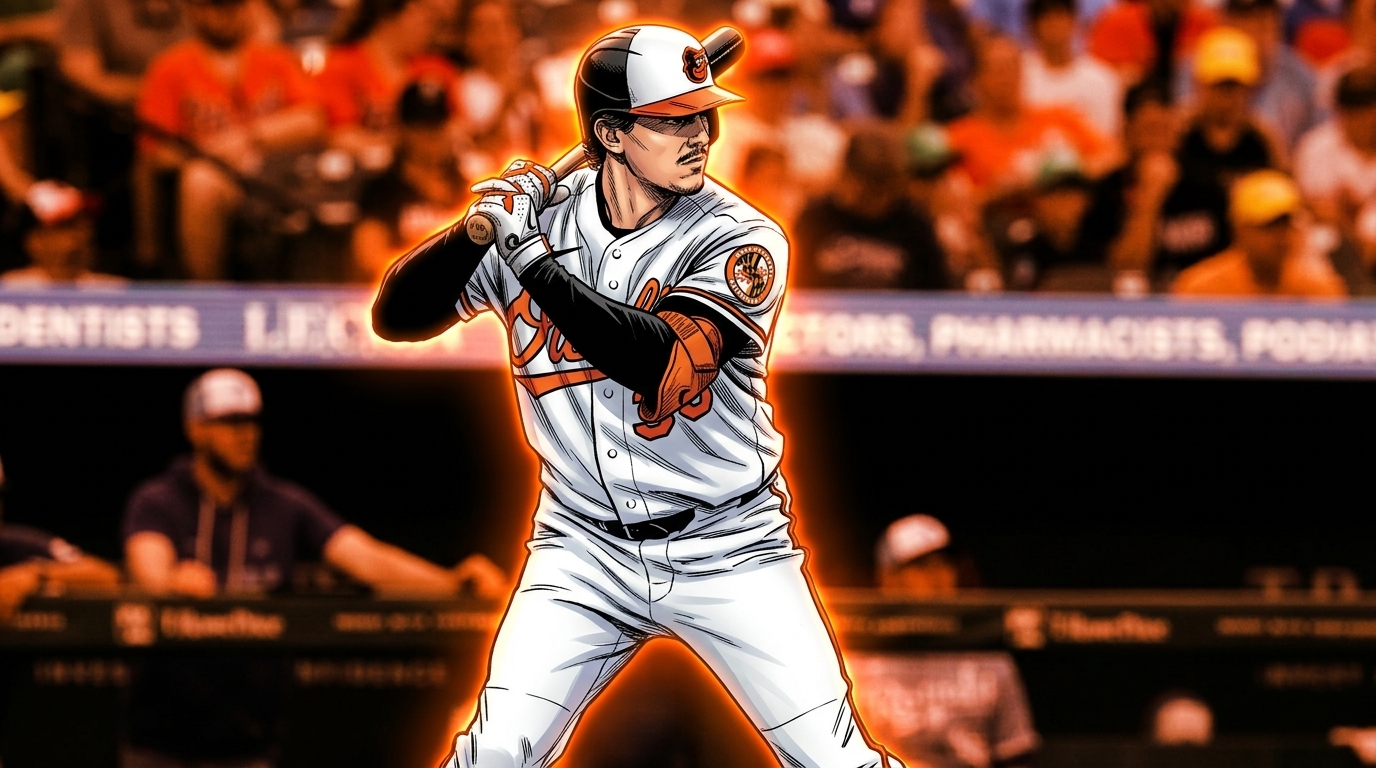

How do you “certainly listen” on a player with a 70% chance of staying put?
We’ve been sitting with that question all week, because the Orioles have somehow made two reports true at the same time. Jeff Passan and Kiley McDaniel reported that Baltimore “aren’t exactly looking to trade” Rutschman but “are certainly listening” on him, and in the same report, put the odds of an actual deal at just 30%. Neither framing cancels the other out. Baltimore is living inside both facts at once.
The number that actually explains this is 2033, not 30: the year Samuel Basallo’s contract runs through, an eight-year, $67 million extension the Orioles handed their catcher-of-the-future five days after his major league debut last August. I think that timeline says more about the Rutschman situation than any probability ESPN can produce. Baltimore locked up the heir apparent almost a full year before this week’s trade chatter started. That’s not a front office reacting to a listening tour it hadn’t anticipated. It’s a front office that already knew where this was headed.
Rutschman himself is on the injured list right now, a 10-day stint for left wrist inflammation picked up mid-swing, with a return targeted around July 29. It hasn’t dented his standing around the league — he earned his third career All-Star selection this year despite a season that reads more complicated than star-caliber on the stat sheet: .251, a .764 OPS, 8 home runs and 47 RBI through 67 games. Respectable numbers for a catcher. Not the numbers of a player a team trades from a position of strength, and not the injury report you want attached to the guy you’re supposedly shopping.
Will the Orioles Actually Trade Adley Rutschman?
Passan and McDaniel put the odds at 30%, and Baltimore is genuinely fielding calls rather than deflecting them. But the club isn’t shopping its former No. 1 pick so much as pricing him, and locking Basallo through 2033 before resolving anything with Rutschman is the clearest signal of which posture wins out.
Baltimore’s listening tour goes beyond one catcher, too. Passan’s reporting also has the Orioles taking calls on Jackson Holliday and Colton Cowser, which tells you the Orioles are doing standard-issue deadline diligence across the roster rather than shopping one specific piece. A front office fielding offers on everyone looks less desperate than a front office fielding offers on the guy fans assume is available.
The Baltimore Banner’s Andy Kostka flagged the part of this that actually complicates a deadline deal:
https://twitter.com/afkostka/status/2082883354752377323
Baltimore isn’t just fielding calls with a healthy Rutschman as leverage. It’s doing it with both catchers on the injured list at once — which is its own kind of practical complication working against any deal getting done this week, because the club has no obvious in-house replacement plan at catcher until one of them is back.
Why Basallo’s Deal Matters More Than the Rumors
The Basallo contract extension isn’t a response to this week’s rumors. Baltimore signed him on August 22, 2025, five days after his debut and roughly 11 months before any Rutschman trade chatter surfaced. That timing means the plan predates the listening tour entirely.
Full terms: a club option for 2034 worth $18 million, or a $7 million buyout, stacked on top of the guaranteed eight years. A move made that far ahead of the deadline reads less like a hedge against losing Rutschman and more like a plan built on the assumption that Rutschman would still be catching in Baltimore, with Basallo waiting behind him rather than replacing him outright.
That plan got messier this month. Basallo went on the 10-day IL on July 22 with right shoulder inflammation after leaving a game against Houston, meaning Baltimore has spent the back half of July with both catchers unavailable at once. The Orioles claimed catcher Yohel Pozo off waivers from the Cardinals and later swapped him onto the active roster for Sam Huff to cover the gap. A team scrambling for waiver-wire catching depth isn’t a team with the roster flexibility to also trade its starter before the deadline, whatever the phone calls say.
What 30% Odds Actually Tell Us
I don’t think 30% is Baltimore hedging its bets. I think it’s close to the real number — high enough to reflect calls the front office is genuinely taking, low enough to reflect a club that already knows who it’s building around behind the plate for the next decade.
Passan and McDaniel also reported almost no chance of Rutschman and the Orioles agreeing to a long-term extension, which rules out the tidy ending, too. Put the two data points together and a picture emerges of a club keeping Rutschman through his arbitration years, taking calls to learn what the market thinks he’s worth, and letting Basallo’s number do the talking about who it trusts long-term. My read, ranked: Rutschman is more likely to get moved next winter, once the wrist is healed and the numbers look like a three-time All-Star’s again, than at this deadline while he’s compromised and any return would reflect it. Baltimore isn’t in a hurry, and it doesn’t need to be.
Elsewhere at the deadline, other contenders are running the same math on different names. The price tag on Tarik Skubal has already reshaped what rival front offices think a true ace costs in return, and another team’s deadline calculus around that same market shows how fast asking prices move once one blockbuster gets set. Baltimore’s Rutschman math is quieter, but it’s running on the same clock everyone else is watching.
Watch how today ends. If the deadline passes with Rutschman still in orange and black, that’s the real answer, not the percentage attached to it. A godfather offer could still change Baltimore’s math in the final hours, but the Basallo timeline tells you which outcome the front office actually built toward. For where Holliday, Cowser and the rest of this fit in, keep an eye on the rest of the deadline coverage as the day plays out.