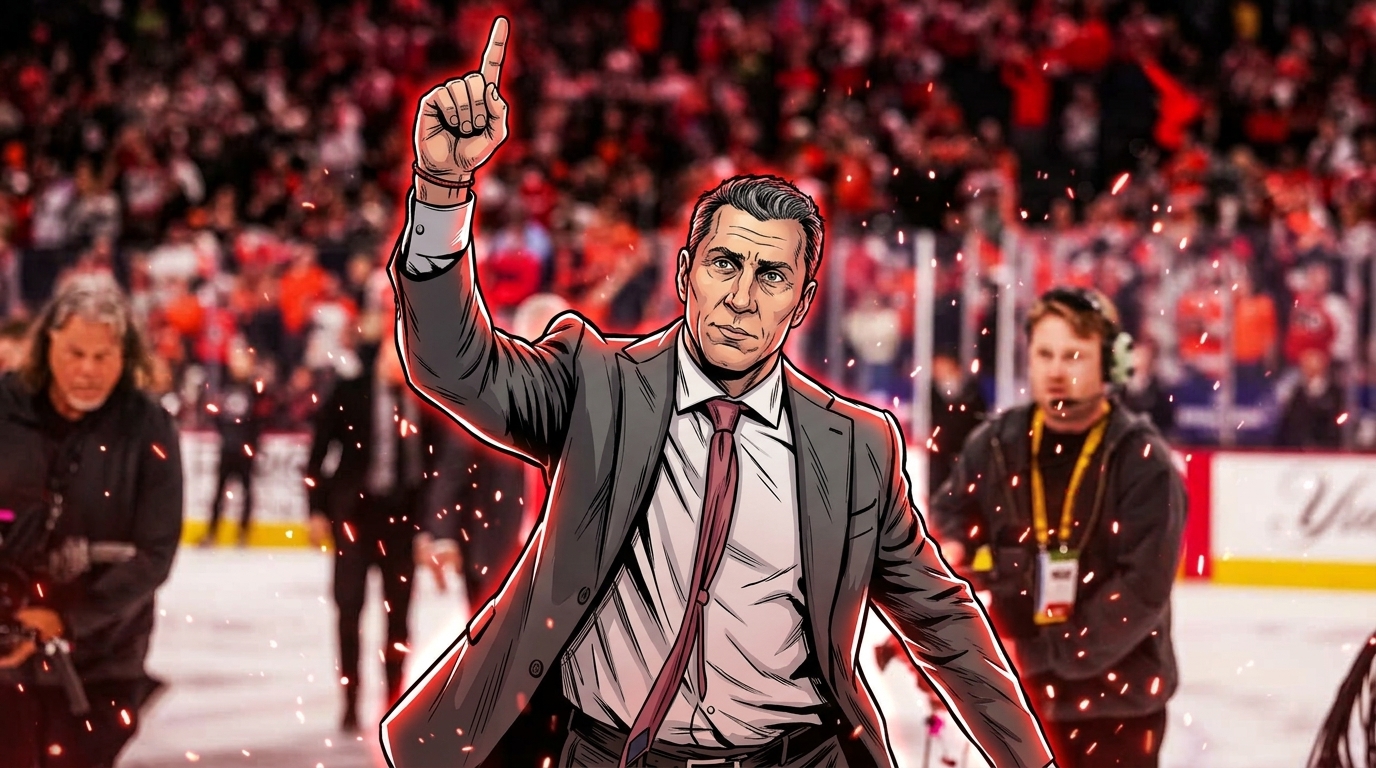

The NHL has spent twenty years failing to market Rod Brind’Amour, and last night in Las Vegas he made the league look stupid for not trying.
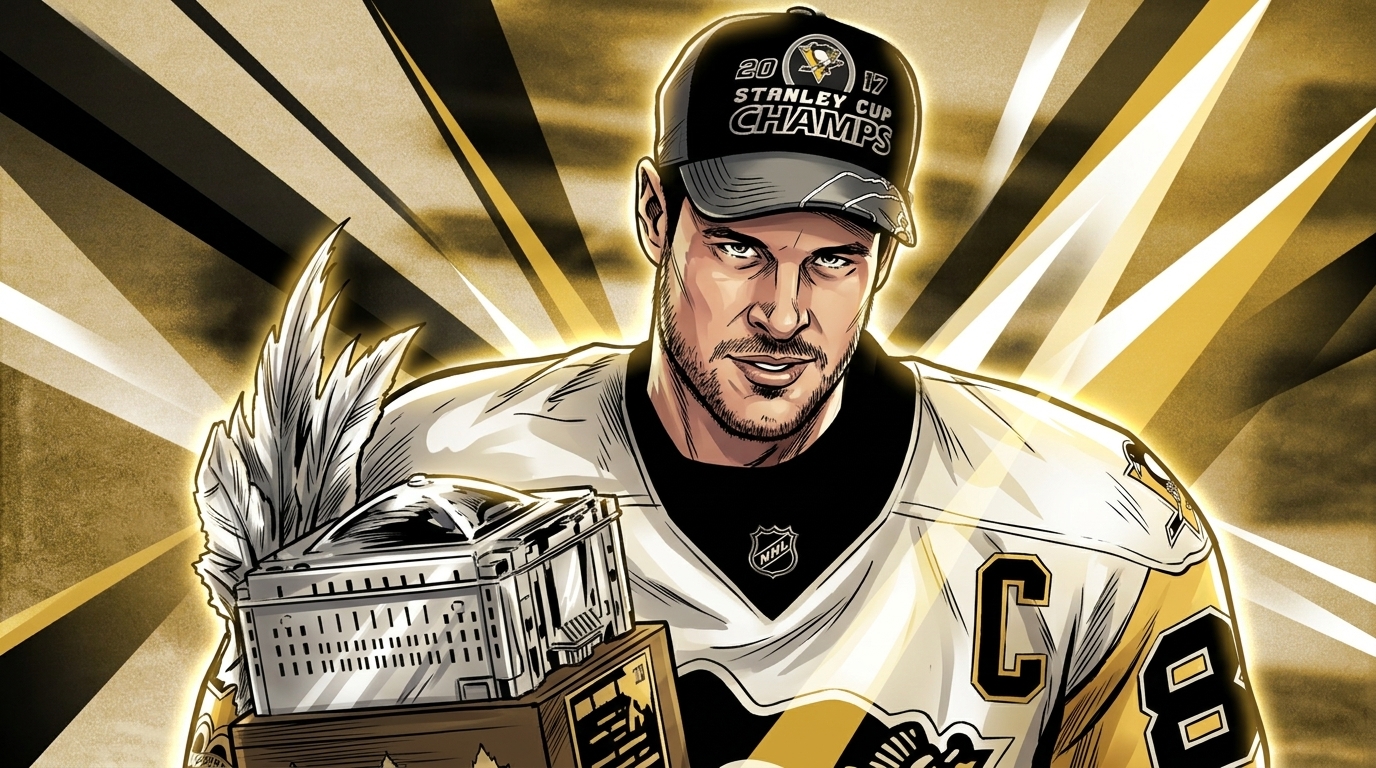
Brind’Amour hoisted the Stanley Cup on the ice at T-Mobile Arena on Sunday, June 14, 2026 (Carolina Hurricanes 3, Vegas Golden Knights 0, series over), and if you watched him do it, you saw something the sport has not produced since 1956. He won as captain of this franchise. He won as head coach of this franchise. He is the fourth human being in NHL history to accomplish both, joining Toe Blake, Hap Day, and Cooney Weiland in a list so short it fits in a sentence; he is the first since Blake did it seventy years ago in Montreal. Rod Brind’Amour Stanley Cup history is not a phrase that requires explanation or qualifier. It is just a fact, sitting there, daring you to find its equal.
The metaphor I keep returning to is the deed to a house — not the mortgage, not the lease, the deed. Most players pass through franchises like tenants; they occupy the space, they maintain the pipes, they leave. Brind’Amour never left. He took the Cup as the tenant in 2006 at age 34, then stayed, learned the building’s bones, became the landlord, rebuilt the furnace twice, and lifted the same trophy in the same arms twenty years later. The deed transferred. What makes this genuinely strange, the thing the NHL’s marketing department cannot figure out how to bottle, is that the building isn’t even in the same city it was when he first held the keys. The Hurricanes are still the Hurricanes; Brind’Amour is still Brind’Amour; the Cup is still the Cup. Everything else changed. That’s the whole point.
The game itself was the quietest championship announcement imaginable. Taylor Hall scored at 3:47 of the first period on a breakaway, which is almost insultingly simple for a clinching goal; Jackson Blake added a goal and an assist; Nikolaj Ehlers closed it empty-net. Brandon Bussi stopped 22 shots for his first career playoff shutout, which is a sentence worth reading twice given that he didn’t enter this series until Game 3. Vegas went 18 minutes and 37 seconds between shots on goal in the second and third periods combined. Carter Hart, whose team had never been shut out in a Cup Final appearance, faced exactly that. The Hurricanes didn’t beat the Golden Knights so much as slowly remove all the oxygen from the building and wait. It is the best underdog story in the 2026 playoffs distilled to a single period of hockey: methodical, airless, completely Carolina.
Jordan Staal won the Conn Smythe. “That’s a lot of years,” he said, which is either the most understated playoff MVP acceptance speech in recent memory or a precise description of what this organization has done. “You want to win it again and again and again.” Staal has been here long enough to understand what it means that Brind’Amour has been here longer. The coach who won as captain; the captain who watched his coach become the franchise’s institutional memory; the institutional memory that just wrote itself a second chapter. Brandon Bussi’s unlikely series-turning performance deserves its own reckoning, but it only happened because the structure Brind’Amour spent eight years building as head coach was solid enough to absorb a goalie change in the third game of the Stanley Cup Final without blinking.
Brind’Amour picked up the trophy, tossed it — thirty-four and a half pounds of silver and history, caught, and hugged. The NHL will put that on a highlight reel and call it a moment. It is a moment; it is also the logical conclusion of a franchise relationship that has no modern parallel. Toe Blake won as player and coach for Montreal between 1944 and 1968; the game has changed so completely since then that the comparison barely holds. What Brind’Amour did is not Blake redux. It is its own thing, in its own era, for its own reasons, none of which the league fully understood while they were happening.
Taylor Hall, whose career has wandered through New Jersey, Arizona, Buffalo, Boston, and now Raleigh, put it simply: “My career has taken a lot of different turns, but to end up here with this group of guys and to do this is amazing.” Brind’Amour’s career did not take turns. It went somewhere and stayed. That’s the rarer trick, and it turns out the NHL has been sitting on the best story in the sport for two decades without knowing what the hell to do with it.