
The Carolina Hurricanes are one win from the Stanley Cup and the most honest answer to “who is their best player” is a shrug; not because the team lacks talent, but because the team has so thoroughly dissolved individual talent into a functioning system that the question itself becomes category error.
Walk into any sports bar in America tonight before the 8 PM puck drop at T-Mobile Arena and try the experiment. Ask the person next to you to name the best player on the team that is one period of good hockey away from ending a 20-year franchise drought. You will get a long pause. Maybe Sebastian Aho, who has four goals and two assists across 12 playoff games, numbers that no serious person would describe as a superstar output. Maybe someone will remember the best story in hockey this spring and think harder. They will not arrive at a confident answer, because the Carolina Hurricanes, the NHL’s best regular-season team for three straight years, have built something that the sports-media industrial complex genuinely does not know how to sell: a complete team with no face on the poster.
This is not Carolina’s problem. This is the NHL’s problem.
The league has spent the better part of two decades trying to build a marketing apparatus around singular stars: Connor McDavid’s skating, Alexander Ovechkin’s shot, the way you can put one face on a billboard and sell a series. The Hurricanes are structured as a rebuke to that entire approach. Rod Brind’Amour built a team that runs on system and depth and a collective buy-in so complete that when the team’s best individual piece broke, the machine simply absorbed the break and kept running.
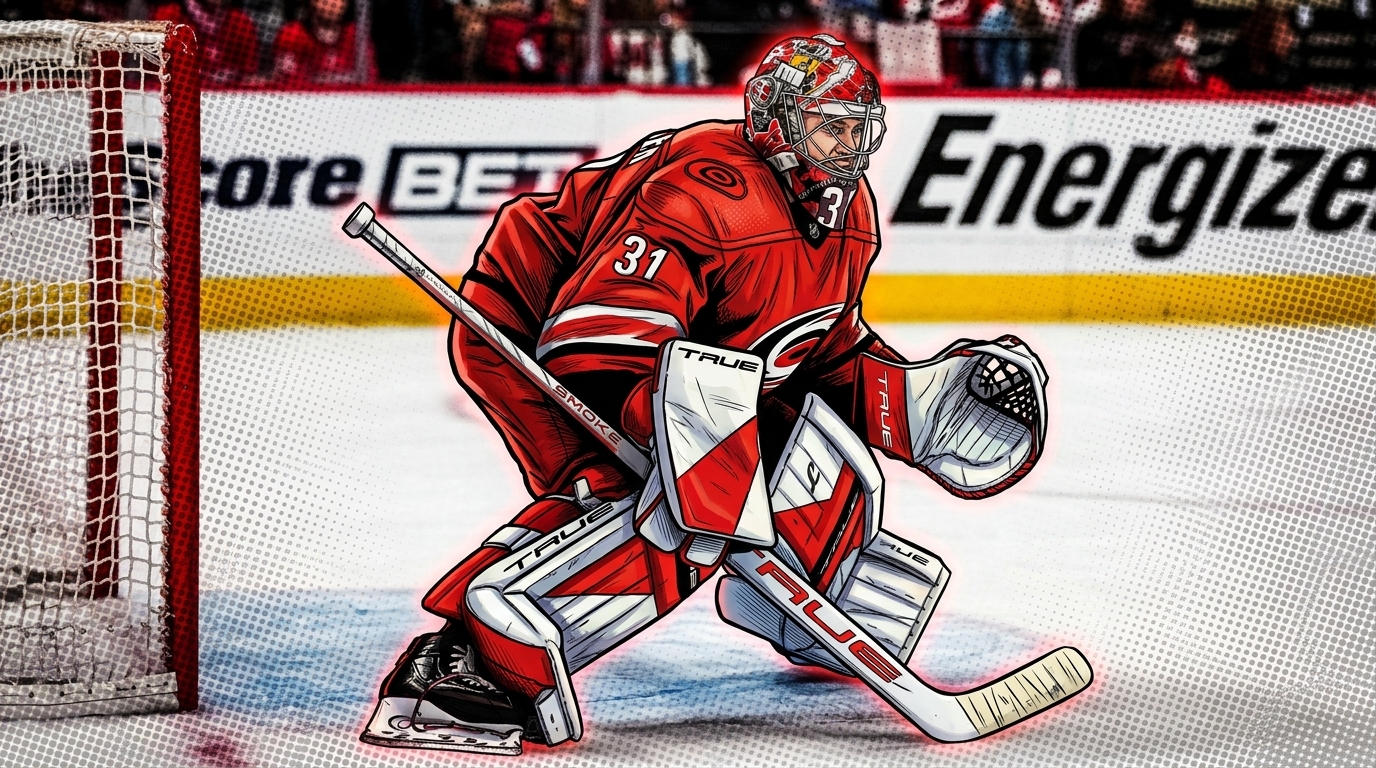
The piece that broke was Frederik Andersen; the absorption was so smooth it was almost comic.
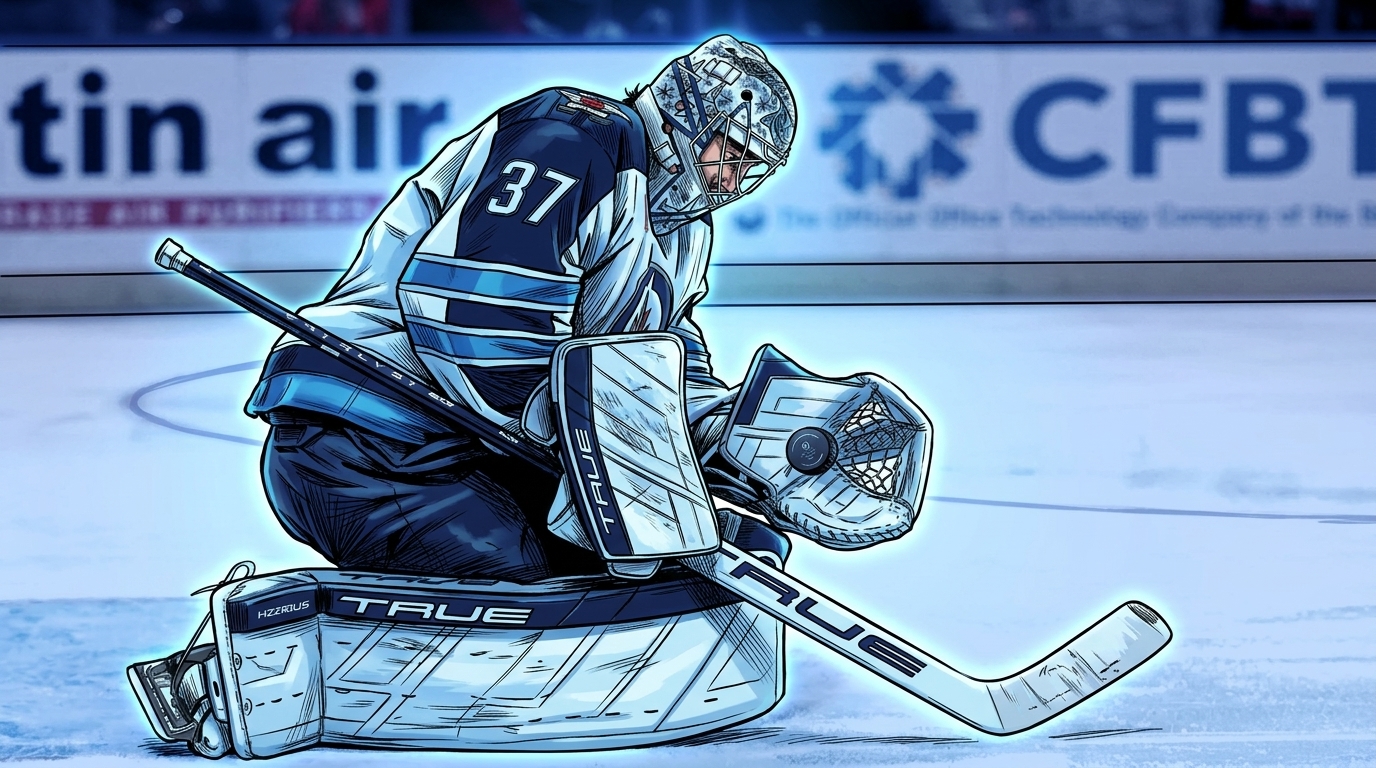
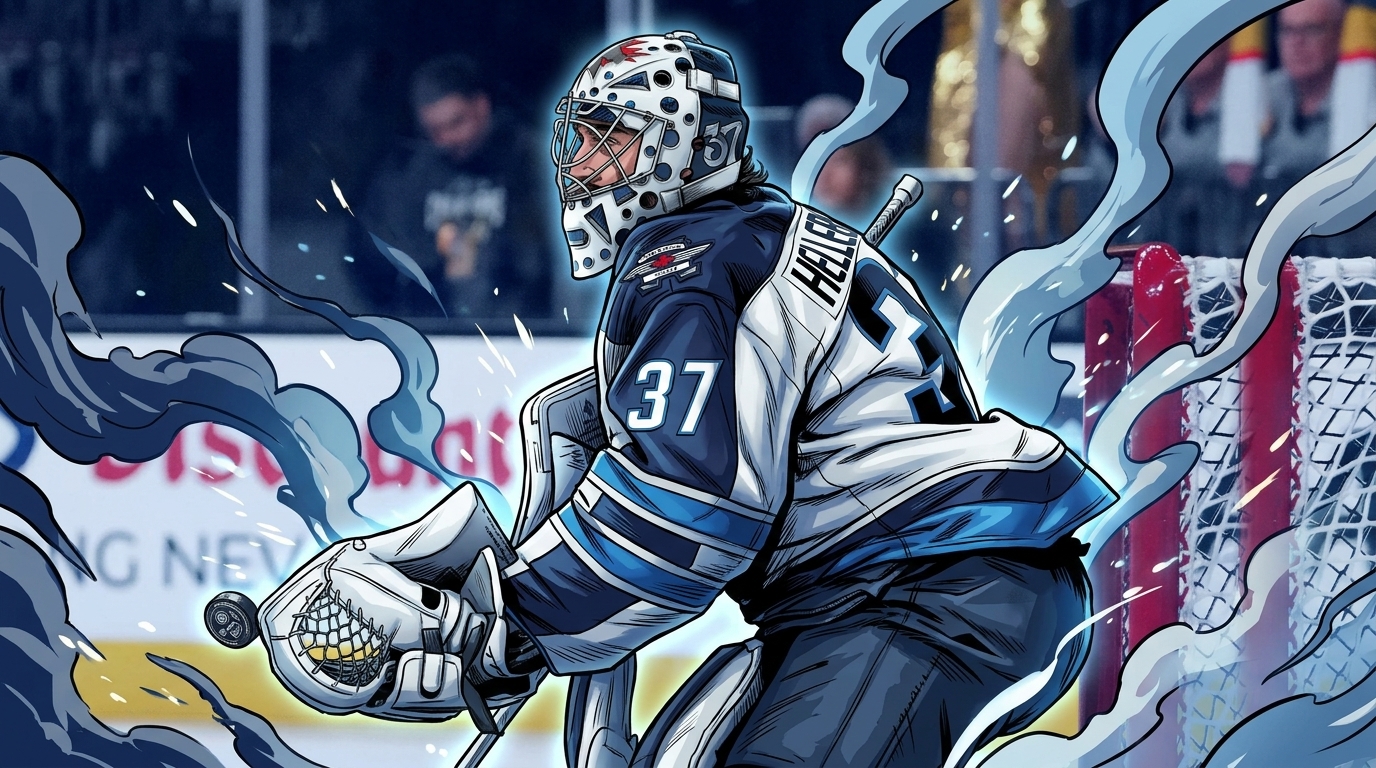
Consider the geometry of what happened. Andersen entered the Final as the most statistically dominant playoff goalie in recent memory: 12-1 record, .931 save percentage, 1.56 goals-against average, three shutouts, a franchise record five career playoff shutouts. He was, by almost any individual measure, the answer to the “who is their best player” question. Then, in Game 3, Carolina pulled him mid-period after four goals on 16 shots. The team replaced him with Brandon Bussi — a 27-year-old with a rookie designation and a name that, if you mentioned it to the average NHL fan three weeks ago, would have produced the same long pause as the “best player” question. The kid who replaced him won Games 4 and 5. Andersen is listed as available for Game 6. Brind’Amour won’t say who starts.
The goalie situation is a miniature of the whole thesis. In Raleigh, this is apparently fine. The machine ate the goalie controversy the same way it eats everything else: systematically, without drama, in a way that produces wins and generates almost no usable television content.
And then there is Jordan Staal, who is 37 years old and plays center and whose name, if you polled non-hockey fans, would generate approximately the same recognition as a solid but unremarkable defensive lineman on a middle-market NFL franchise. Staal has scored in all five games of this Final; he has tied an NHL record for longest goal-scoring streak in a Stanley Cup Final, a mark that stood for 53 years, held by names you actually have to think about — Yvan Cournoyer in 1973, Jean Beliveau in 1956, Maurice Richard in 1951. Staal leads all Final skaters in face-off win percentage at 69% and ranks in the 94th percentile in skating distance. NHL EDGE stats have him as the Conn Smythe frontrunner. He scored the Game 4 winner.
The punchline, if the Hurricanes close tonight, is that the most complete team in hockey may hand the Conn Smythe Trophy to a 37-year-old depth center nobody outside Raleigh can pick out of a lineup. Vegas meanwhile has Tomas Hertl, Alex Pietrangelo, Jonathan Marchessault — Yardbarker ran a piece this week on how the Golden Knights have the star power in this matchup, which is technically true and completely beside the point of what is happening on the ice.
Game 1 of this series drew 4.78 million viewers on ABC, the highest Stanley Cup Final opener since Blues-Bruins 2019, up 54% from the last ABC Cup Final opener. People are watching. They just can’t tell you what they’re watching for, exactly, because the NHL has not given them a hook to hang it on.
Brind’Amour said before Game 6: “It’s the hardest one. You’ve got a little more distractions now. We’re a focused group, and we’re not two steps ahead here.” This is what it sounds like when the machine speaks.
https://twitter.com/NHL/status/2043113506493399272
What happens tonight in Las Vegas is either the closing chapter of the strangest deep run in recent hockey memory or the forcing function for a Game 7. What will not happen, regardless of the result, is that anyone will suddenly be able to tell you who the Carolina Hurricanes’ best player is. The system is the player. The system is the star. The NHL just hasn’t figured out how to put a system on a billboard; and until they do, the best team in hockey will keep winning games in front of a nation of people who will tell you, if pressed, that they definitely meant to watch more hockey this year.