
We’ve been watching the Carolina Hurricanes through four playoff rounds now, and at some point — somewhere around the third straight time Jordan Staal scored in a Cup Final game — it became genuinely difficult to explain how this team has operated at the absolute fringes of the national sports conversation. They went 12-1 through the first three rounds to reach the Stanley Cup Final, where they now lead the Vegas Golden Knights 3-2. They are 15-3 this postseason. They are 60 minutes from their first Stanley Cup since 2006. And the dominant media narrative this week belongs to the New York Knicks, who haven’t won anything yet either.
The Hurricanes are the anti-story of this entire sports moment. No Taylor Swift. No celebrity section. No mayor of Raleigh booking confetti vendors. Just a 37-year-old captain doing things not done since the Eisenhower administration, an undrafted waiver-wire goalie with 111 AHL games on his resume, and a franchise 60 minutes from capping the most quietly dominant playoff run in modern NHL history.
Why Has Nobody Been Talking About the Hurricanes?
The short answer: the NBA Finals launched at the same time, the Hurricanes play in a mid-sized Southern market, and the national hockey media gravitates toward original-six nostalgia. Carolina doesn’t manufacture narrative. They just keep winning.
The longer answer is more interesting. The Carolina Hurricanes 12-1 run to the Stanley Cup Final 2026 should be the kind of story that demands column inches. Their only loss through the first three rounds was a 6-2 game against Montreal in ECF Game 1, right after an 11-day bye. The last team to enter a Cup Final at 12-1 was the 1976 Montreal Canadiens. Those Canadiens won. The Hurricanes have 4.9 million people watching per game on ABC, the most-watched Final since Blackhawks-Lightning in 2015. The audience exists. The story is there. We just haven’t been covering it.
What Does 12-1 Actually Mean Historically?
The 1976 Canadiens (Guy Lafleur, Ken Dryden, Larry Robinson) went 12-1 into the Final and swept the Flyers. That is the standard Carolina is now matching. (The Flyers probably feel fine about not being mentioned in this historical comparison, for what it’s worth.) The 2026 Hurricanes are not a dynasty in the traditional sense. They do not have a superstar in the Wayne Gretzky-Sidney Crosby lineage. What they have is a suffocating defensive structure, a power play that has turned series in a matter of shifts, and two completely different goalies who have somehow both been exactly good enough when needed.
The Carolina Hurricanes’ 12-1 run to the Cup Final is more impressive when you consider the path: three rounds, one loss, no particularly easy series. This is not a team that stumbled into the Final because the bracket opened up. They earned it at every step, and they’ve carried that momentum into a 3-2 Finals lead.
The Three Stories That Make This Team Remarkable
Jordan Staal is doing something that hasn’t been done in 70 years.
Staal’s run through the record books deserves its own paragraph, its own section, its own retrospective documentary. Instead it’s getting approximately the same coverage as a mid-June golf tournament. He is 37 years old. He has 6 goals in 5 Cup Final games. He has scored in each of the first five games of this Cup Final, a feat not accomplished since Jean Beliveau in 1956. The list of players who have scored in each of the first five games of a Cup Final: Cyclone Taylor in 1918, Maurice Richard in 1951, Jean Beliveau in 1956, and now Jordan Staal in 2026. You are watching history being made by a man who had 2 goals through the first three playoff rounds and has since found another gear that his team apparently had in reserve.
His Game 4 goal, a diving move that tied the series at 2-2, is the kind of play that generates instant legend status in cities with more media saturation. Staal, afterward, was characteristically understated: “Having so much fun out there. Finding a way to get that mug.” The mug being the Stanley Cup. The man is 37, won his first Cup in 2009 with Pittsburgh as a role player (4 playoff goals that year), and has now spent 17 years becoming the kind of player who leads his own team to one. Carolina’s Jordan Staal Stanley Cup Final goal streak 2026 is the best individual performance in a Cup Final in years, and most of America is watching the Knicks.
Brandon Bussi should not exist.
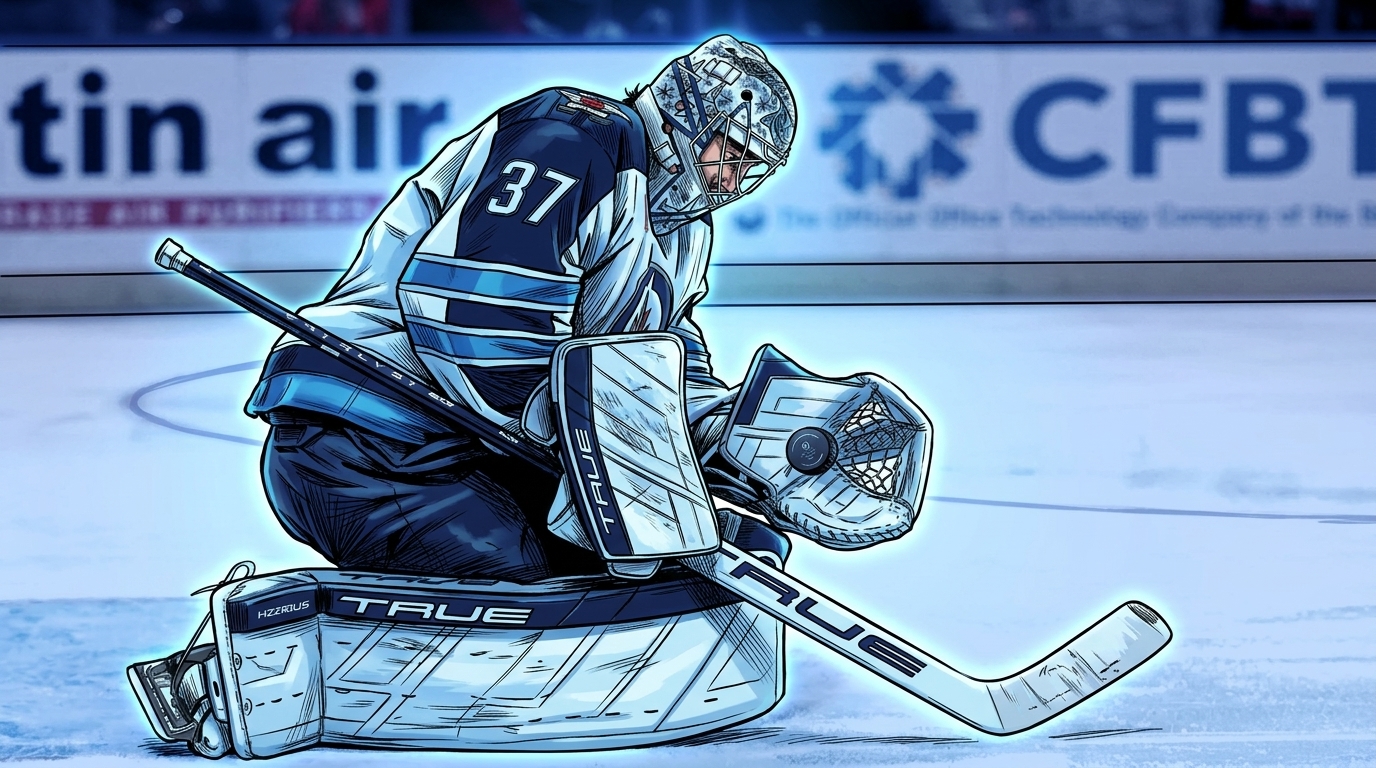
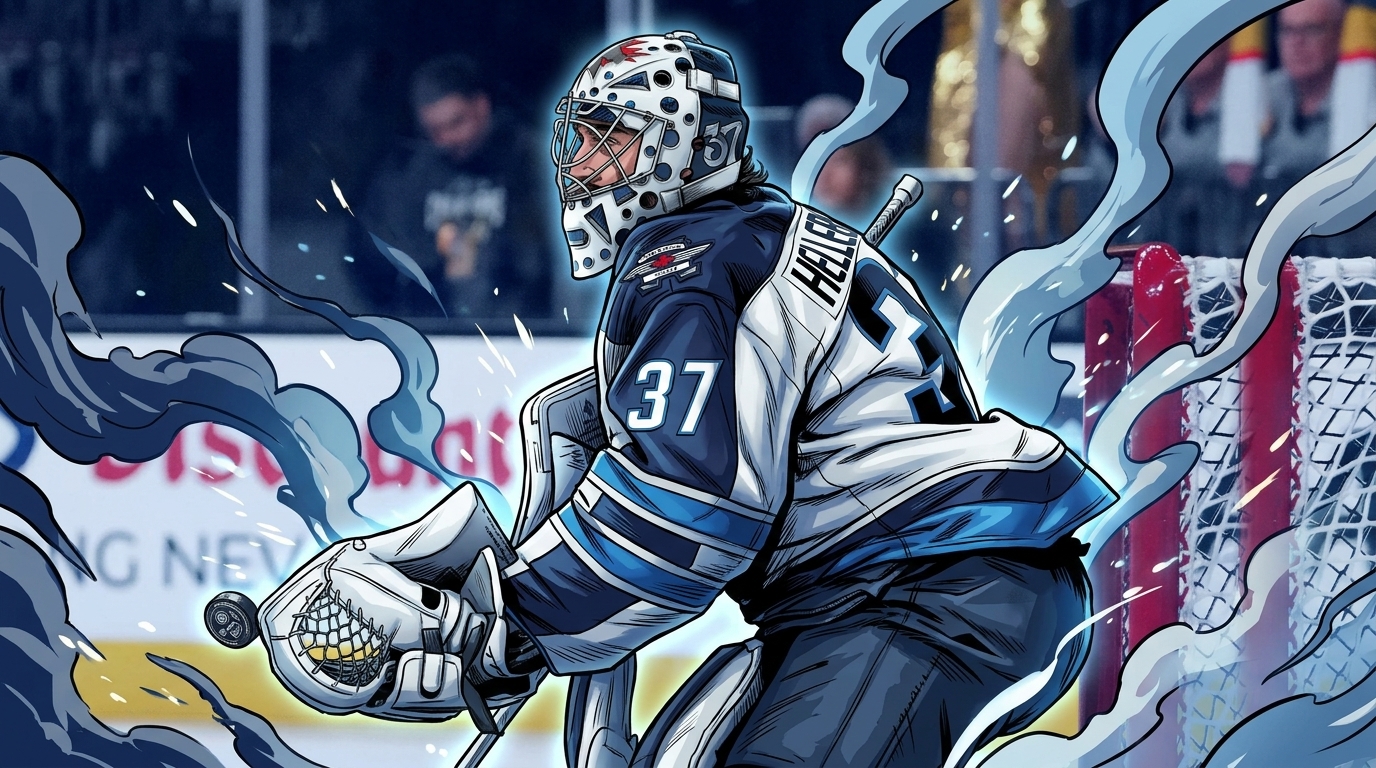
Bussi’s improbable playoff debut is the kind of biographical detail that screenwriters would reject for being too convenient. He went undrafted. He played 111 AHL games across three organizations. The Florida Panthers claimed him on waivers in October 2025, and then Carolina claimed him off Florida’s waivers that same month. He went 31-6-2 in the regular season and became the fastest goaltender in NHL history to win 25 games (in case you’d like a number that should have appeared on SportsCenter at some point this spring). He started Games 2, 4, and 5 of the Stanley Cup Final.
Game 5: 22 saves on 24 shots, including a critical pad save on Tomas Hertl with 1:20 remaining. Carolina’s 15-3 playoff run — from the first-round sweep through the Cup Final — runs directly through Bussi’s pads. “I would have liked to have kept the second one out so we could keep everybody calmer,” he said afterward, which is an extremely measured thing to say when you are an undrafted waiver-wire pickup making saves in overtime-or-die situations at the Stanley Cup Final. (Bussi has apparently absorbed the team’s entire organizational personality, which can be summarized as: win games, say little, keep the existential commentary to a minimum.)
Carter Hart is doing something strange and fascinating.
Hart, the starting goalie for Games 1, 3, and presumably Game 6 on Sunday in Vegas, has allowed exactly 4 goals in every single one of his 5 Final starts. Every game. 4 goals. This has never happened before in Cup Final history. It is either a remarkable coincidence or evidence that the Golden Knights have exactly one gear and Carolina has exactly one gear and they are producing the same result with machine-like consistency. The series has been high-scoring. The 4.9 million viewers tuning in on ABC through the first three games suggests at least some of them are there for the action — but Hart’s scoreline reliability is its own kind of performance art at this point.
https://twitter.com/NHL/status/2065234242213212347
What to Watch for in Game 6
Hurricanes at Golden Knights, Sunday in Las Vegas. Carolina leads 3-2 and needs one win to close it out. The Golden Knights, to their credit, have not rolled over. Andrei Svechnikov scored two power play goals in Game 5 to keep things interesting, but Carolina took the game anyway. Vegas will have its crowd. The T-Mobile Arena environment is genuinely one of the louder buildings in hockey, and the Golden Knights have proven they can generate momentum at home.
What actually matters Sunday: whether Jordan Staal’s goal streak reaches six games (Beliveau had 6 in 1956; Staal is already his equal at 5), whether Bussi or Hart starts in goal (the Hurricanes have rotated based on matchups and rest, and both have been serviceable enough to win), and whether Carolina’s historically dominant playoff run — 12-1 entering the Finals, 15-3 overall — survives the one remaining variable: a Golden Knights team playing with nothing to lose in front of 18,000 fans who understand exactly what elimination means.
The 2006 Cup was won by a Carolina team that nobody expected to be there either. That team had Eric Staal (Jordan’s older brother). Seventeen years later, the younger Staal is here, and he has been better in this Final than Eric was in that one. The franchise has a type. They find players the league undervalues, build structures the league underestimates, and then show up in June and ask everyone to pay attention.
We haven’t been paying attention. Game 6 is Sunday. Start now.