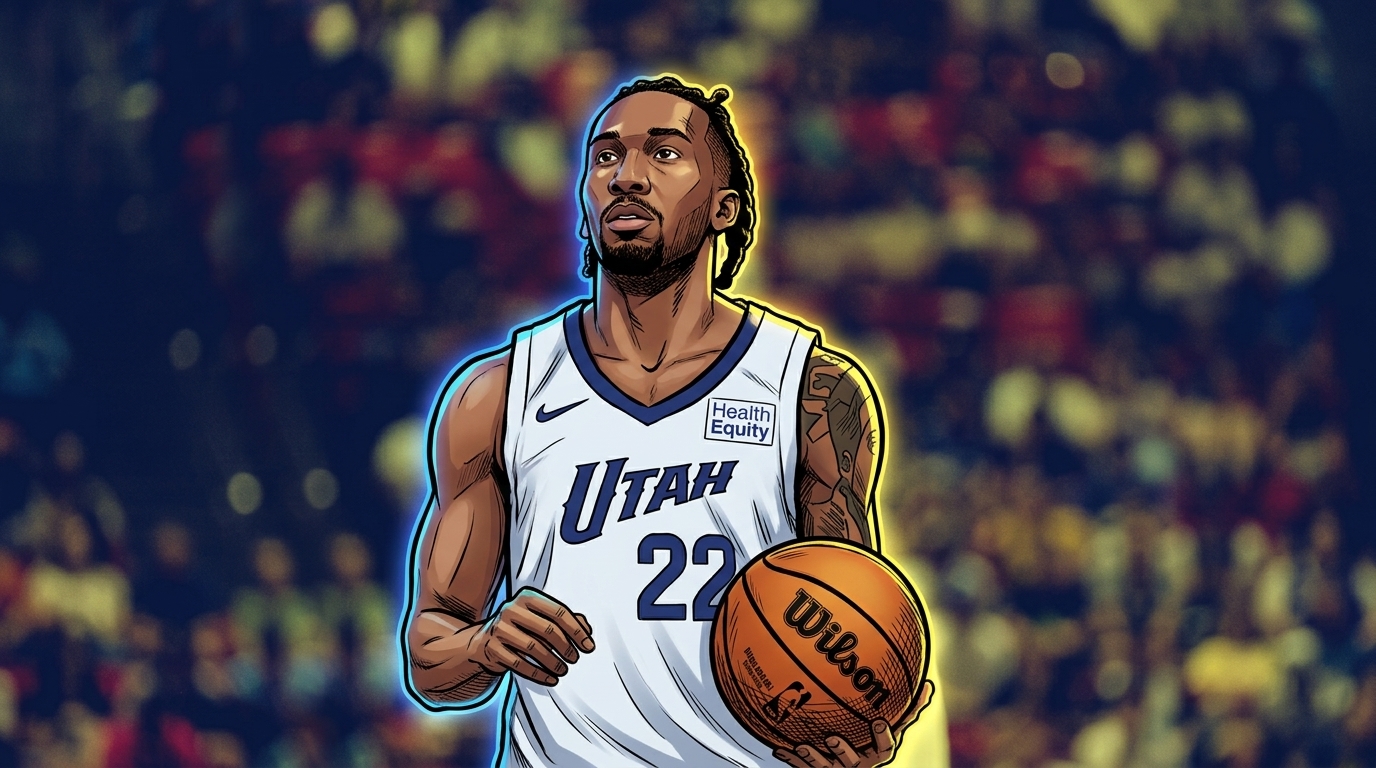

Twenty-eight points in a Summer League debut doesn’t prove anything. Neither does eight turnovers. Both happened on the same July evening at the Huntsman Center, and together they outline the exact question the next four years will answer: did Utah find the piece that makes everything work, or did Washington get the safer bet at No. 1?
That’s the ledger Darryn Peterson opened Friday night, and it’s going to take considerably longer than one overtime win to close it.
What 28 Points in July Actually Tells Us
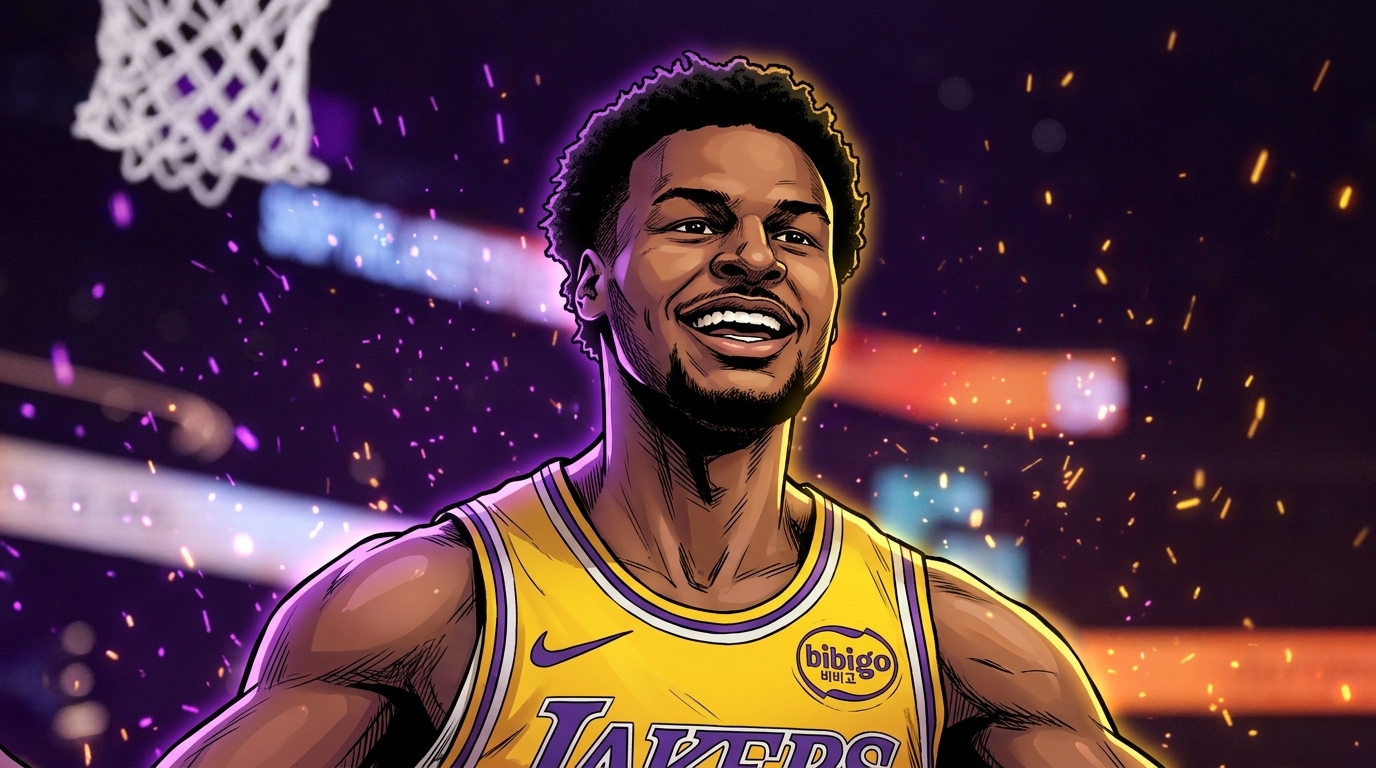
Peterson finished the Jazz’s 103–102 overtime win over Atlanta with 28 points. That’s a game-high, and per field-level media coverage, the most by any top-two pick in their Summer League debut over the past decade. He shot 11-for-21 from the field and connected on 4 of 7 attempts from three, a 57% clip from distance that would make any team’s analytics department sit up straight.
https://x.com/NBA/status/2073545558778843475
The more telling detail is the distribution. Eighteen of those 28 points came in the second half and overtime, including the game-winning three. That’s not a stat line built on early garbage-time padding. When the game tightened and the Hawks found a way back into it, Peterson reached for another gear. He found one.
At Kansas this past season, Peterson averaged 20.2 points and 4.2 rebounds in 24 games, shooting 38.2% from three, per NBC Sports’ pre-draft big board. That’s a mark that held up against serious defensive attention in the Big 12. The translation question was never whether the skill was real. It was whether a 6’3” guard with cramping issues traced to high creatine intake (a pre-draft concern that has since been resolved) could handle the physical demands of an 82-game season as a No. 2 pick carrying franchise expectations.
Friday’s performance doesn’t answer that. What it does is confirm the skill package is intact and that Peterson’s late-game instincts are functional at this level. The game-winner wasn’t lucky — it was the product of someone who knows where his shot comes from.
The asterisk, and it’s a real one: eight turnovers. That’s a number that would concern any front office, and it should. Peterson coughed the ball up more than anyone else in the game. Some of that is Summer League noise: new teammates, new reads, competitive nerves on a big stage. Some of it might be a genuine handling concern for a guard who will face full-court pressure every night in the league. The Jazz have to believe it’s the former. The evidence from the rest of the box score gives them reason to.
Two Rebuilds, One Draft Class, Zero Overlap
What makes this draft class genuinely interesting, and what makes the rest of our NBA coverage worth following through the summer, is that Utah and Washington didn’t just select different players. They selected different philosophies.
The Jazz took Peterson and paired him with Keyonte George, 22 years old and coming off a breakout third season (23.6 points, 6.1 assists per game, per Jazz beat coverage). That’s a scoring backcourt built around two players who create their own shot, who can play in pick-and-roll, and who generate three-point volume at a rate that fits how modern offenses operate. Utah traded away Donovan Mitchell and Rudy Gobert in 2022 and spent three years clearing the roster. Peterson is the declaration that the clearing phase is over.
Washington went the other direction. AJ Dybantsa is 6’9”, positionless, and led the nation in scoring at BYU with 25.5 points, 6.8 rebounds, and 3.7 assists per game on 51% shooting, per CBS Sports pre-draft coverage. Those numbers don’t require a favorable read to look good. He’s paired with Alex Sarr, the No. 2 pick in the 2024 draft, who posted 16.3 points, 7.4 rebounds, and 2.0 blocks in his second season. Washington didn’t rebuild — they accelerated. And they built that acceleration around size and versatility rather than guard scoring.
Neither approach is wrong. That’s what makes the comparison productive rather than circular. The Jazz are betting that the league will continue to reward elite guard play and three-point creation. The Wizards are betting that length and positional flexibility are the more durable assets over a four-year window. Both bets have strong historical support.
Dybantsa’s $66.9 million rookie contract reflects what the Wizards believe they got: a player whose floor is substantially higher than most top picks because his skill set doesn’t depend on a specific role or offensive system. That’s the argument for him at No. 1. It’s a serious argument.
Was Darryn Peterson the Better No. 1 Pick?
A CBS Sports pre-draft roundtable showed a majority of analysts favoring Dybantsa, with a meaningful minority making the case for Peterson. That split didn’t resolve cleanly before draft night, and Friday didn’t resolve it either.
What the debate usually comes down to is this: Dybantsa’s size gives him a projection ceiling that’s arguably safer: a 6’9” forward who can score from everywhere and rebound is harder to scheme against than a guard, regardless of how good that guard is. Peterson’s counter-argument is that truly elite guard scoring (the kind that creates advantages on the move, generates open threes for teammates, and manufactures points in late-game situations) is rarer than size. The league produces 6’9” forwards who can do a lot of things. It produces far fewer guards who close overtime games on the road.
The Jazz, Danny and Austin Ainge operating with the full conviction of a front office that has waited since 2011 for a top-three pick, looked at that tradeoff and chose the guard. They reportedly took Peterson despite chatter about his landing preferences and despite the majority draft consensus pointing toward Dybantsa. That’s a franchise-defining swing, and it lands squarely in the “bold” column rather than the “safe” one.
The data here is unambiguous on one point: Peterson’s debut output exceeded expectation on the production side and fell short on the ball-security side. Both of those data points are real. The question is which one has more predictive weight over four seasons. Summer League, by design, doesn’t have enough sample to say.
The July 9 Preview Won’t Settle Anything — and That’s the Point
Utah and Washington meet on July 9 in Las Vegas. Peterson vs. Dybantsa, in person, with cameras and narratives attached. The temptation will be to treat it as evidence. Follow our NBA coverage to see how that matchup actually develops. The context will matter more than the result.
The better frame is this: these two franchises are running a four-year natural experiment in parallel. Same draft class, same rebuild timeline, completely different construction logic. By 2029, one of them will look prescient. The other will look like a cautionary tale about the road not taken. That’s not pessimism. That’s how franchise-altering draft picks work. Most of them produce that binary outcome eventually.
Peterson’s 28 points are Round 1 of the argument, not the verdict. He won Friday. He made the game-winner. He also turned it over eight times against a team that isn’t going to pressure him the way playoff defenses will. Dybantsa hasn’t played yet. The ledger is open, the first entry favors the Jazz, and the conversation has four years of runway.
The evidence suggests Peterson is exactly what Utah drafted him to be. The question of whether that’s the right thing to build around (whether guard-first beats forward-first when the league gets serious again in October) is the only question that matters now. And it won’t be answered in July.