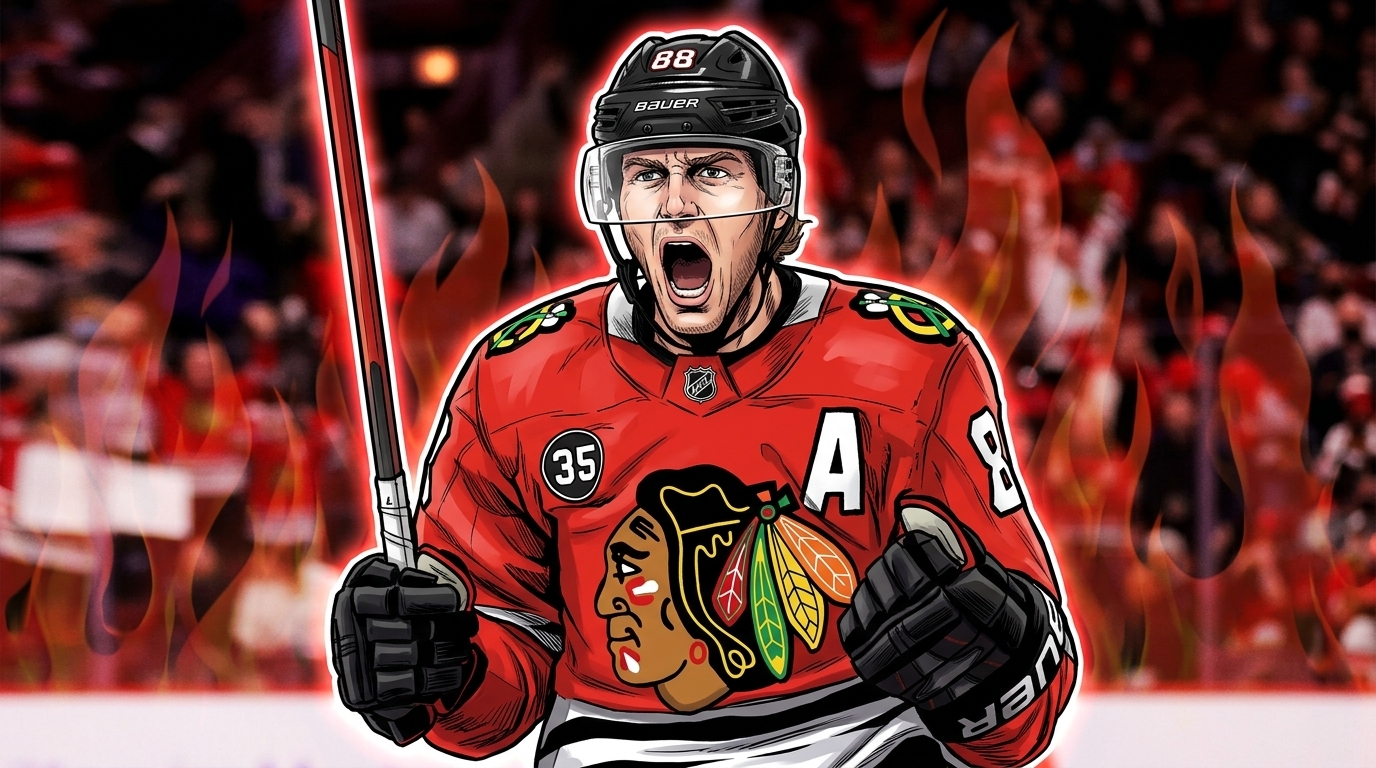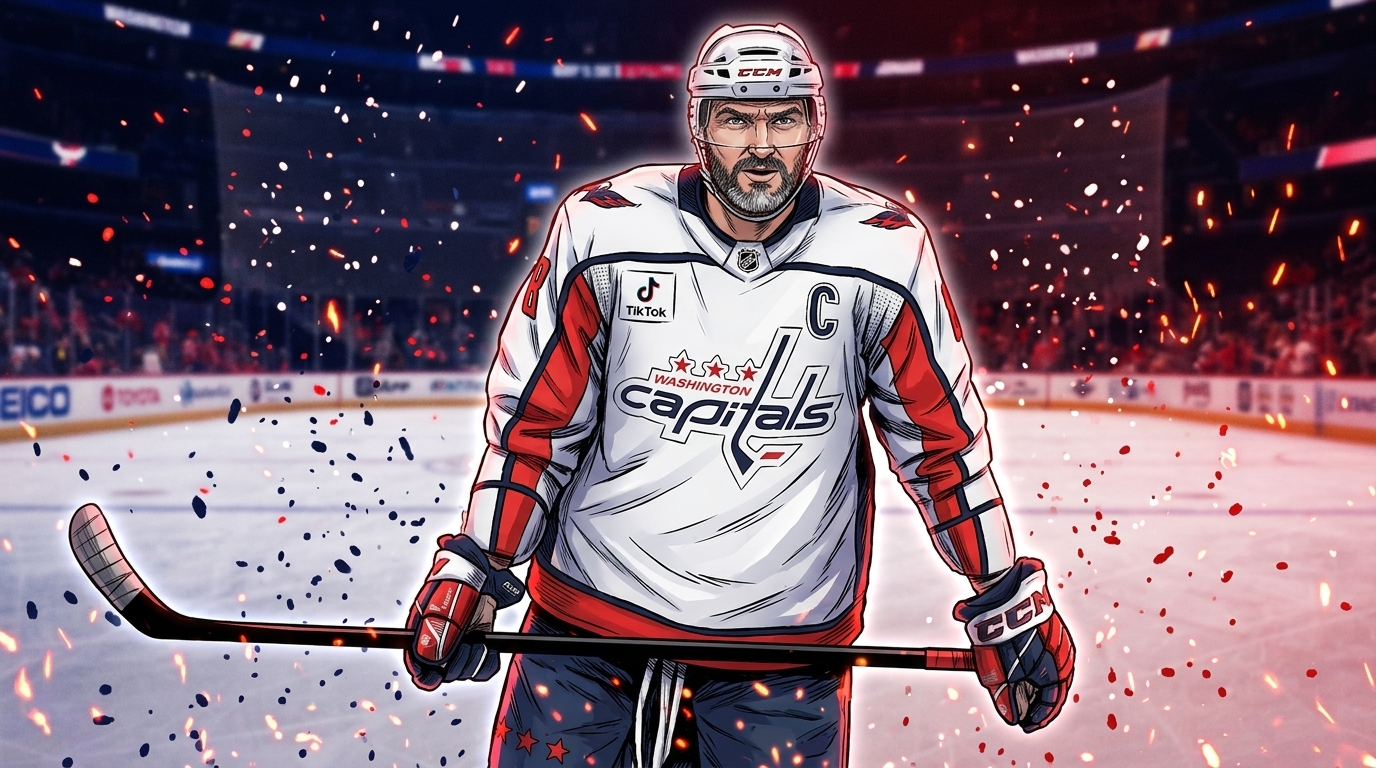

The strangest thing about Alex Ovechkin re-signing with the Washington Capitals for his 22nd NHL season isn’t that he did it at 40 years old; it’s that the whole transaction had the administrative texture of a library card renewal.
A press release from the Capitals’ communications department. No press conference. No agent planting a story at 11pm so the takes could marinate for a week. The announcement landed on July 2, the same week NBA free agency opened, and it was immediately submerged under twenty fathoms of LeBron James deliberation content. Which is, when you think about it, exactly what Ovechkin wanted. The man has been in Washington for twenty years; he knows how to disappear into his own silence.
The press release format is worth treating as a text. Press releases are where organizations perform competence. They list credentials, they manage tone, they protect the brand. This one just said the thing. Contract terms: $1 million base salary, a $3.25 million signing bonus, and a $4.75 million games-played bonus that kicks in at ten games; that’s $4.25 million AAV if his body holds. GM Chris Patrick’s quote confirmed he could “still produce offensively” and remained “the driving force of our team.” That was it. The 929 career goals, the all-time record, the statistical universe he inhabits — none of it needed restating. The Capitals put out a press release the way a man who has already won every argument in a room simply sits down.
https://twitter.com/Capitals/status/2072719675754963451
Ovechkin’s own statement, as reported by RMNB, read: “I’m back! Thank you to everyone for giving me and my family the time to make this decision. I’m healthy. I love playing hockey and competing to win.” The formal version. He also, separately, said “I’m back, babes.” Both are authentic; neither required a satellite truck.
Meanwhile, LeBron James — also 41, also entering what might be the last chapter of one of the two or three greatest careers in the history of professional basketball — informed the Lakers he intends to play elsewhere in 2026-27 and has not yet indicated where. His agent Rich Paul told reporters the decision wouldn’t happen “anytime soon,” possibly not until Summer League in early July. The suitor list contains four teams. Sports media has been running the story on a continuous loop since July 1 with a resolution percentage of zero. For what it’s worth: this is completely rational behavior. LeBron playing out his free agency as a week-long cultural event is not vanity; it’s alignment with a league whose business model runs on exactly this kind of attention. The NBA and its media partners built that machine together. You don’t opt out of the machine. The machine is how the league pays its players.
The Ovechkin-LeBron contrast works precisely because neither man is misbehaving. Hockey culture has always valorized the quiet professional: keep your head down, show up in September, let the play do the commentary. Ovechkin has spent twenty years being that, and for what it’s worth, what his return means for Washington goes deeper than the signing itself. He played all 82 games last season at 40 years old, scored 32 goals, and became the first human to reach 900 career goals. The statement of presence was already complete. The one-year deal is a formality ratifying something everyone already knew. The gap between the two leagues — salary cap rules, revenue splits, media rights structures — explain a lot of the divergence in how these moments get handled.
What’s left is the thing that can’t be explained structurally: Ovechkin actually seems to prefer it this way. Not as a pose, not as a brand strategy for the hockey-guy-who-doesn’t-do-brands — he’s been doing it since before that was a legible option. He signed the paper. He said he’s back. He said it to the babes. The announcement got buried, and he was probably already on a boat somewhere not reading his mentions. That’s not a philosophy; it’s just the guy.
Twenty-two seasons. One franchise. A press release.