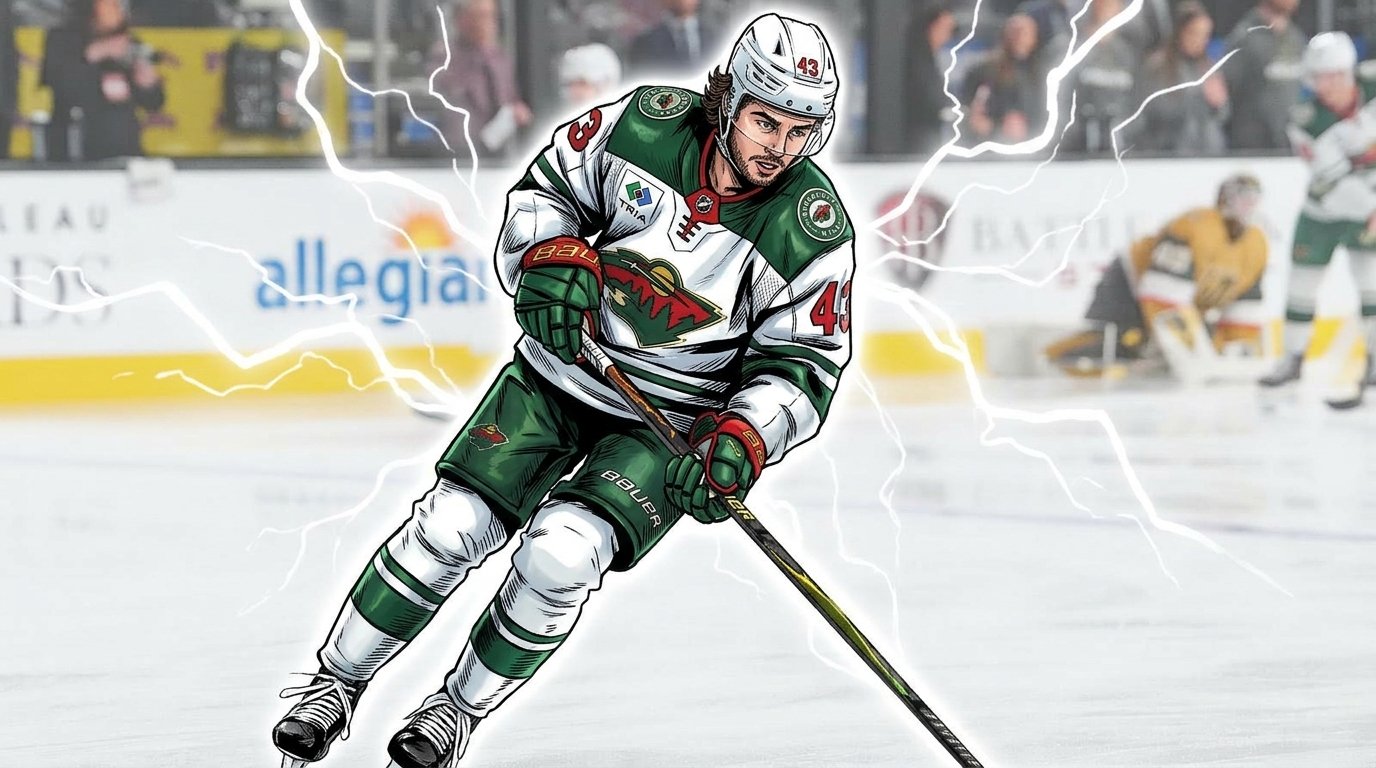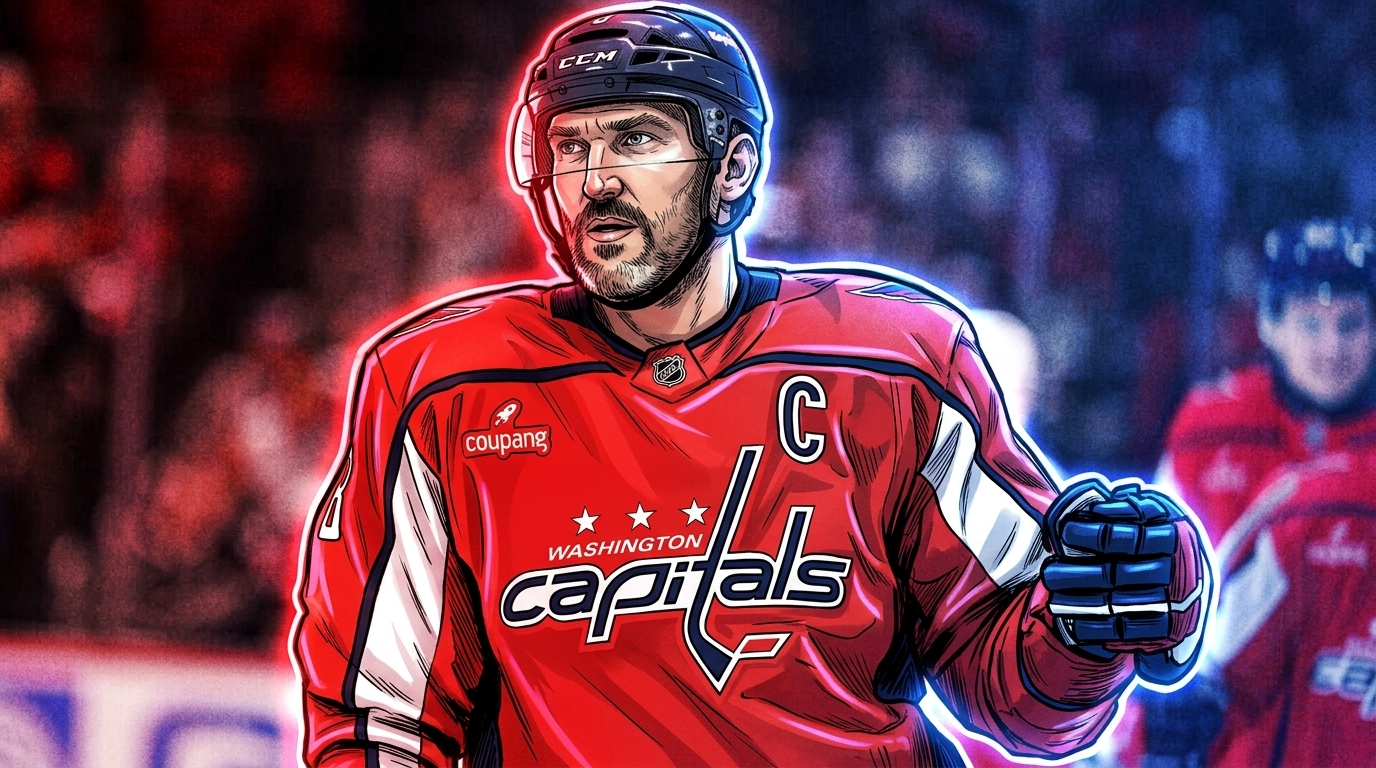

Alex Ovechkin has every reason to stop playing hockey — the goals record, the Cup, the legacy beyond reasonable dispute — and he has signed another contract anyway, which tells you more about him than anything he ever did on ice.
The Washington Capitals announced the re-signing July 2, 2026: one year, up to $9 million in salary and bonuses. The structure is almost tenderly absurd. There’s a $4.75 million games-played bonus that triggers after 10 games; as if the Capitals felt the need to put nearly $5 million in Ovechkin’s path to formalize what everyone already knew. The man scored 929 regular-season goals. He would play the tenth game for free — the Capitals know this damn well, and they paid him anyway, which is the most sensible thing either party has done.
His statement on the matter, in full:
“I’m back! Thank you to everyone for giving me and my family the time to make this decision. I’m healthy. I love playing hockey and competing to win. I’m excited to come back and join my teammates so we can fight for a playoff spot and have a chance to win.”
Forty-one words. No meditation on legacy; no reckoning with mortality or the arithmetic of diminishing returns. Just: I’m back. My father spent thirty-two years as a high school English teacher and still marks up my articles with a red pen when I visit. His most consistent note is that the best sentences don’t have extra parts. Ovechkin’s statement is, by that measure, nearly classical.
https://x.com/Capitals/status/2072719675754963451
The metaphor that fits here isn’t mechanical. It’s a manuscript — the kind written by someone who genuinely doesn’t believe the story is finished. Some books end without resolution because the author has concluded that resolution was never the point; the reader waits for a final chapter that would make everything cohere, and it doesn’t come, because the author keeps writing. Ovechkin has the Cup, collected in 2018. He passed Wayne Gretzky’s all-time goals record on April 6, 2025, and now sits 35 ahead of it at 929. He scored 32 goals at 40 years old — third most in NHL history for that age bracket, behind Gordie Howe and Johnny Bucyk — and became the first player ever to record two hat tricks in the same season at 40. He is not out of things to say. Or at least he doesn’t think he is.
The counterargument is worth naming honestly: maybe this refusal is integrity rather than compulsion. The tidy retirement — the chosen exit, the farewell tour, the narrative arc that closes at the moment most flattering to the legend — is its own kind of fiction. Most of the athletes we remember as genuinely great were eventually pulled from stages they didn’t choose to leave. There’s a real argument that Ovechkin’s indifference to his own mythology is the most honest thing about him.
The institutional machinery, though, has its own tell. His teammate Alex Tuch found out the re-signing happened via the team group chat. “It was pretty funny,” Tuch said; the greatest goal-scorer in NHL history announcing his return through the same channel used to organize airport pickups. This is how it works now: the Capitals construct a bonus structure to incentivize behavior a 41-year-old would exhibit regardless, and everyone treats this as perfectly normal, because at some point in the last decade Alex Ovechkin stopped being a participant in the sport and became a permanent feature of it. He’s starting his 18th season as Capitals captain — third longest in NHL history, behind Sidney Crosby and Steve Yzerman. He scored his 1,000th career goal last season. In September he will turn 41, and sometime after that he will score his 930th, and the building will make the noise it always makes, and Ovechkin will look approximately as surprised as a man can look doing something he has now done 930 times.
For whatever comes next in the NHL — including how the Hurricanes won the Cup last season, which is the team Ovechkin wasn’t on — there’s always a next.