
We’ve spent the last two weeks watching the NBA dissolve into three separate competitions that happen to share a league name. The East decided it was time to panic-buy stars. The West decided chaos was a personality. And one team in Ohio did almost nothing, and ended up with the most interesting situation in basketball. Everyone spent so much time reacting to the big moves that they missed the biggest story entirely.
Here is what everyone got right. Here is what they missed.
Who Actually Won the East’s Star Trade Arms Race?
The East’s superteam arms race produced three plausible contenders, each betting that experience and star power beats continuity. Miami got Giannis. Philadelphia stacked a third star onto Embiid and Maxey. Toronto brought Kawhi back home. None of them is obviously wrong. All of them are fascinating gambles.
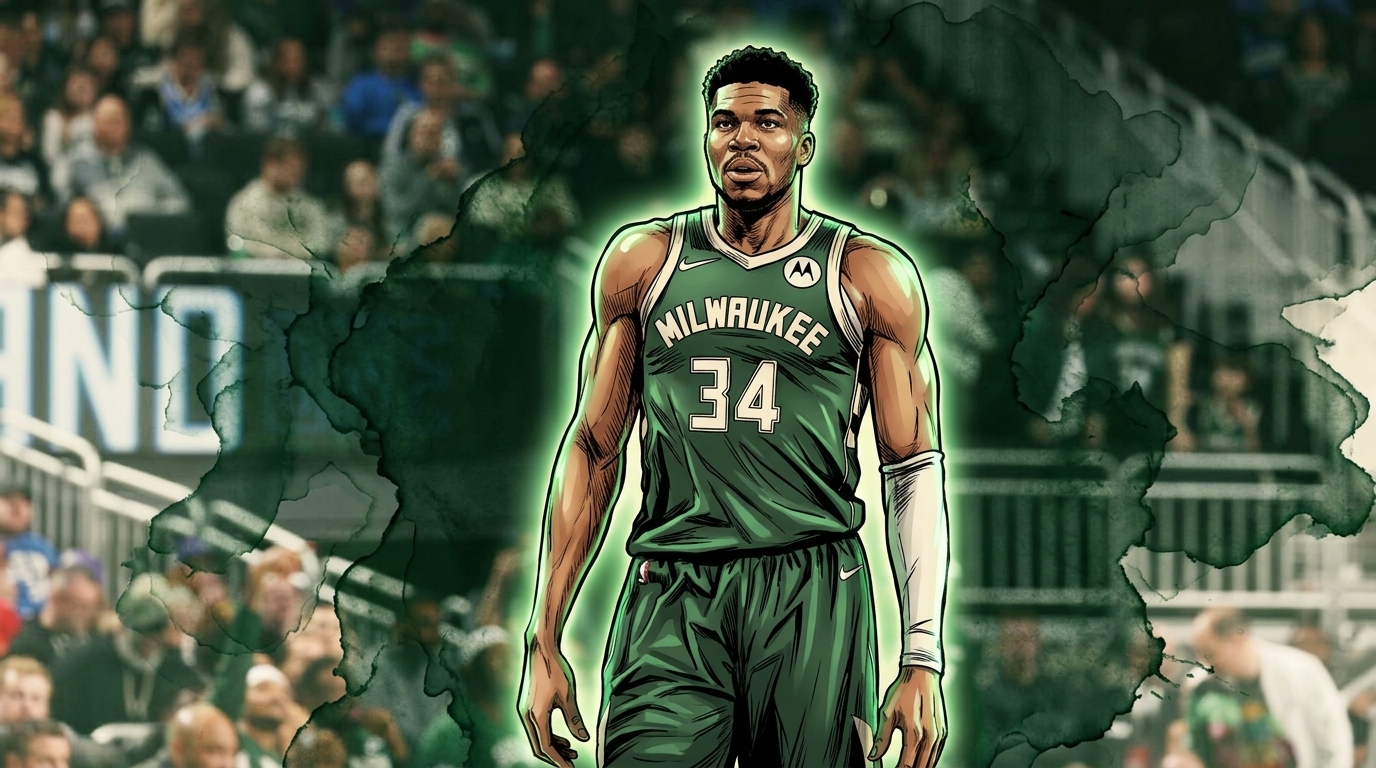
Start with the move that landed with the most force. Per Shams Charania, the Giannis Antetokounmpo trade to Miami went official on July 6 — the Greek Freak, 31 years old and coming off a 27.6-point, 9.8-rebound season, now paired with Bam Adebayo in South Beach.
https://x.com/ShamsCharania/status/2069266716551508221
The East’s reaction to landing Giannis was predictably breathless, and the breathlessness is justified. Per Ben Golliver at ESPN, Giannis has been available for 75% of possible games across his career. Compare that to Kawhi Leonard’s 54% over five seasons and the availability argument lands hard. This is not the Kawhi situation. This is a 31-year-old who, when healthy, plays basketball that makes defenders look confused about basic geometry.
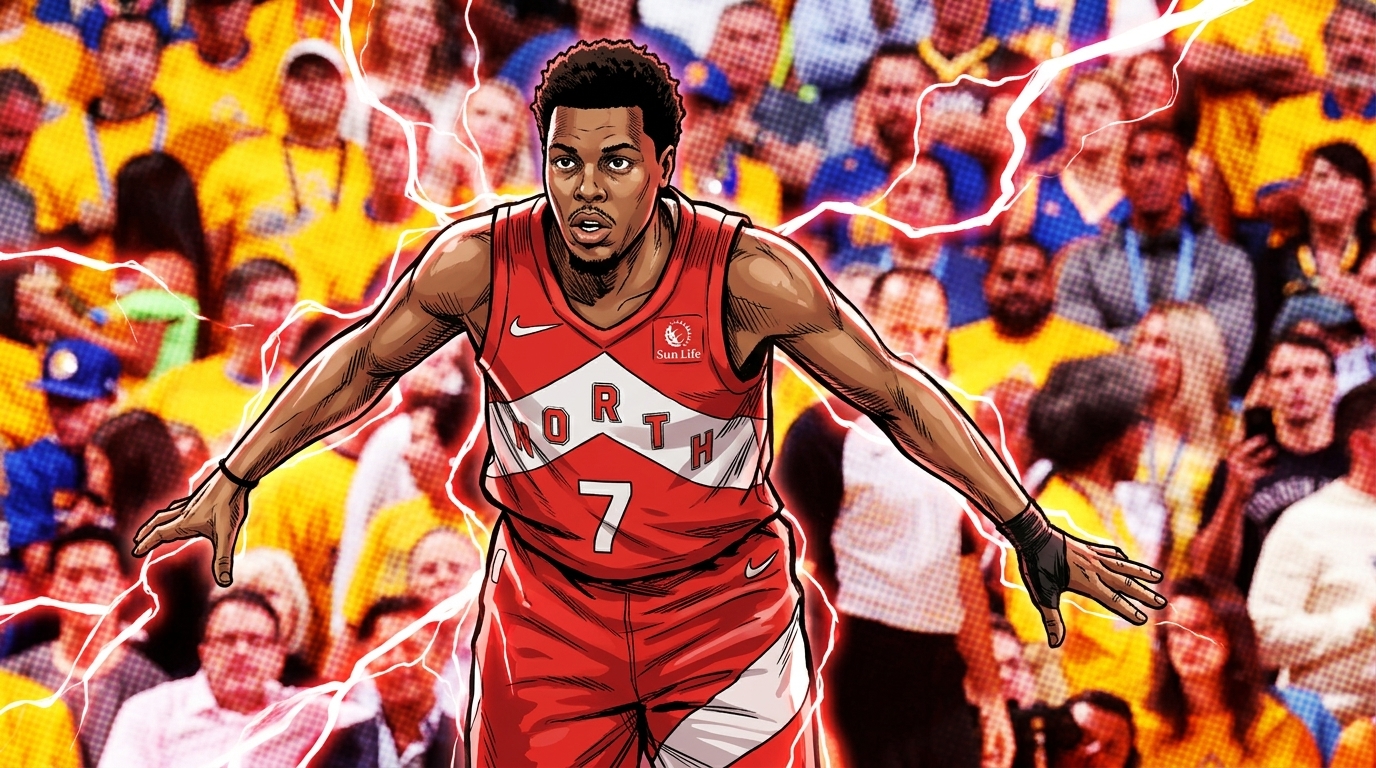
Toronto got Kawhi back at 35 (he turns 35 this week), fresh off an All-NBA Second Team season at 27.9 points per game. He played 65 games in 2025-26. The Ringer described the potential defensive trio Toronto could build as “an ultra-switchy, incredibly long, and über-intense trio defensively that could bring the league to its knees.” (The Ringer also noted, in the same breath, that this trio requires Kawhi to actually play basketball, which has historically been treated as optional.)
Philadelphia added Jaylen Brown, traded from Boston on July 6 for Paul George and picks, giving Joel Embiid, Tyrese Maxey, and VJ Edgecombe a third star to work with. Brown’s reaction to the trade was “excited and disappointed,” which is a sentence structure that captures Jaylen Brown’s entire career. (For what it’s worth, “excited and disappointed” is also an accurate description of following the Boston Celtics for the last five years.) The Ringer framed Brown’s role as stylistically similar to Shai Gilgeous-Alexander but with less efficiency and more volatility. That framing is either damning or exciting depending on how you feel about volatility.
I believe all three of these moves are defensible. I also believe that “defensible” is not the same as “good.”
What Happens When the West Goes Full Chaos Mode?
The Western Conference made different bets. Not on proven stars pairing cleanly, but on potential that has consistently refused to actualize. The results are two rosters that are genuinely unknowable, which is either thrilling or terrifying depending on your relationship with uncertainty.
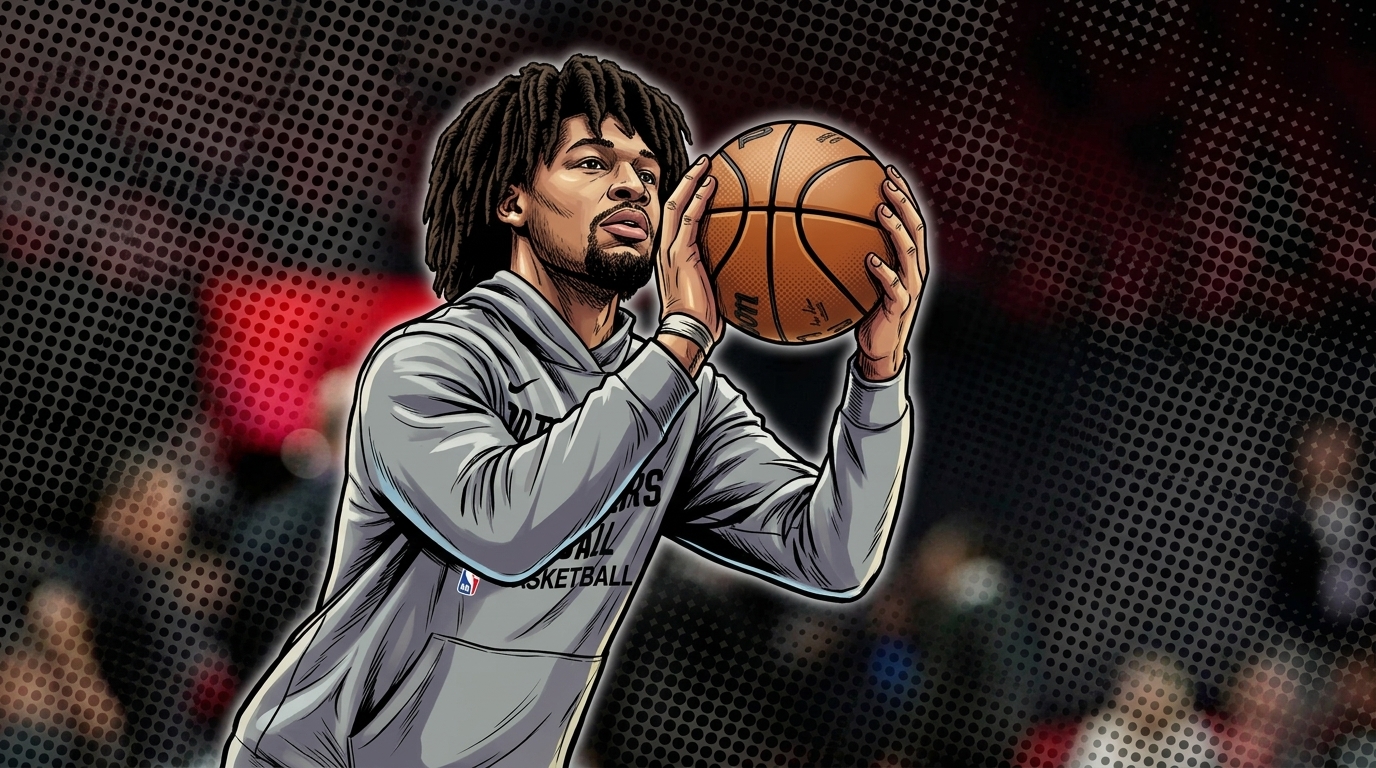
Portland acquired Ja Morant from Memphis for Jerami Grant and Kris Murray (no draft picks included), which tells you something about how the league values what Morant has become. The numbers are difficult: 19.5 points and 8.1 assists per game last season, but in just 20 games. Seventy-nine total games over three seasons combined. The Ringer called him “a possible has-been who barely plays basketball” on an $87 million deal, which is the most efficient sentence written about this trade.
He joins a Portland backcourt that includes Scoot Henderson, Jrue Holiday, and Damian Lillard — the latter returning from a torn Achilles that cost him the entire 2025-26 season. Four guards. The Trail Blazers have decided that the cure for injury-driven unavailability is to acquire more players with injury-driven unavailability. (Portland’s plan, as best I can tell, is that at least one of these guards will be healthy at any given moment.)
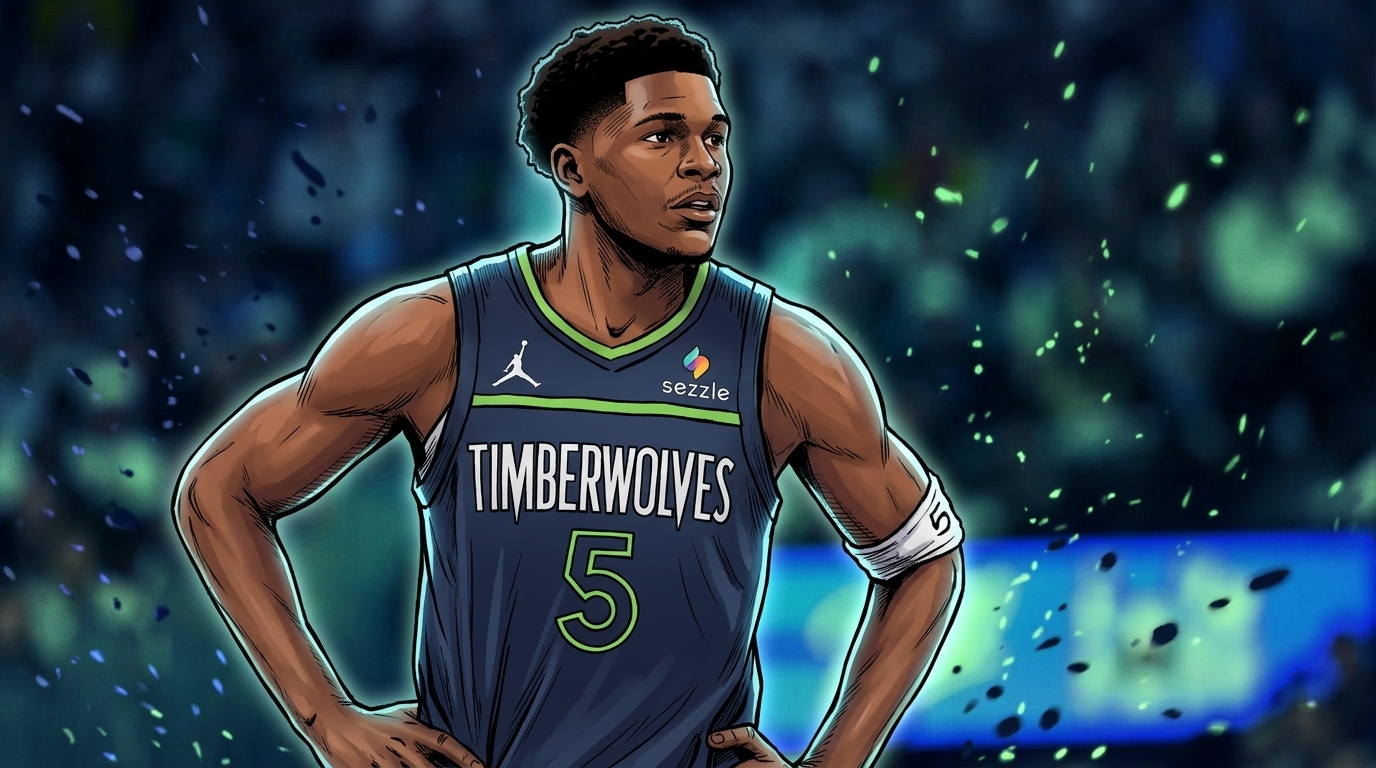
Minnesota’s acquisition of LaMelo Ball from Charlotte, sending Naz Reid and three pick swaps among other assets, pairs LaMelo’s 20.1 points and 7.1 assists with Anthony Edwards. The Edwards-LaMelo pairing looks spectacular on paper: LaMelo generated 123.3 offensive points per 100 possessions with Charlotte, per The Ringer, and pairing him with Edwards’s gravitational pull could produce something genuinely special. Or the ball-handling responsibilities could get messy and the defense could suffer and we could spend the winter writing about wasted potential. Both outcomes remain equally plausible.
This is the West now: vivid, chaotic, and impossible to confidently predict. Two rosters built for highlight reels and nursing staff overtime.
Why Did the Quiet Team End Up with the Most Interesting Situation?
The team that did the least made the most durable decision. Cleveland did not trade for a star. It kept the one it had, and Mitchell’s $273 million extension is the quiet move that deserves the most noise.
Donovan Mitchell signed a four-year, $273 million extension with the Cavaliers on July 7, the first day he was eligible. He left roughly $80 million on the table: he could have waited for a five-year supermax next summer. He didn’t wait. Brian Windhorst at ESPN called it “a huge victory for the Cavs organization,” which is notable because Windhorst had previously said he did not expect Mitchell to sign this summer. Mitchell led Cleveland to the Eastern Conference Finals in 2026, the franchise’s first trip since 2018. He is a seven-time All-Star who chose commitment over leverage.
The counterargument writes itself: Miami locked up a two-time MVP. Philadelphia stacked three stars. Toronto brought back a legend. Cleveland… re-signed its existing guy at a discount. The splash-to-splash comparison makes Cleveland look like it missed the party.
Here is why that framing is wrong. The Cavaliers now have Mitchell plus Evan Mobley plus Jarrett Allen plus James Harden (declining his option but expected to return). That is a legitimate contender without adding anyone. And Mitchell’s early commitment (the loyalty signal embedded in the money he left behind) has made Cleveland the frontrunner in the LeBron James sweepstakes. Marc Stein has written that “more and more these other teams see Cleveland as the scenario to beat” for LeBron, now 41 and a free agent after eight seasons in Los Angeles. Rich Paul, LeBron’s agent, said “I don’t think this happens anytime soon,” which in agent-speak means it is actively being discussed.
The three NBAs that formed this week: an East arms race built on star power and legitimate championship ambition; a West that chose spectacular uncertainty over safe incrementalism; and Cleveland, which won the offseason by not chasing it.
I think the team that won the week was the one that made its star feel wanted enough to take less money. Everything else is noise until those rosters play real games: Giannis in South Beach, Kawhi in Toronto, Brown in Philly, Morant in Portland, LaMelo running pick-and-roll with Edwards. The Cavaliers already have a real team, a committed star, and the most compelling recruiting pitch in the league.
That is not nothing. In this offseason, it might be everything.