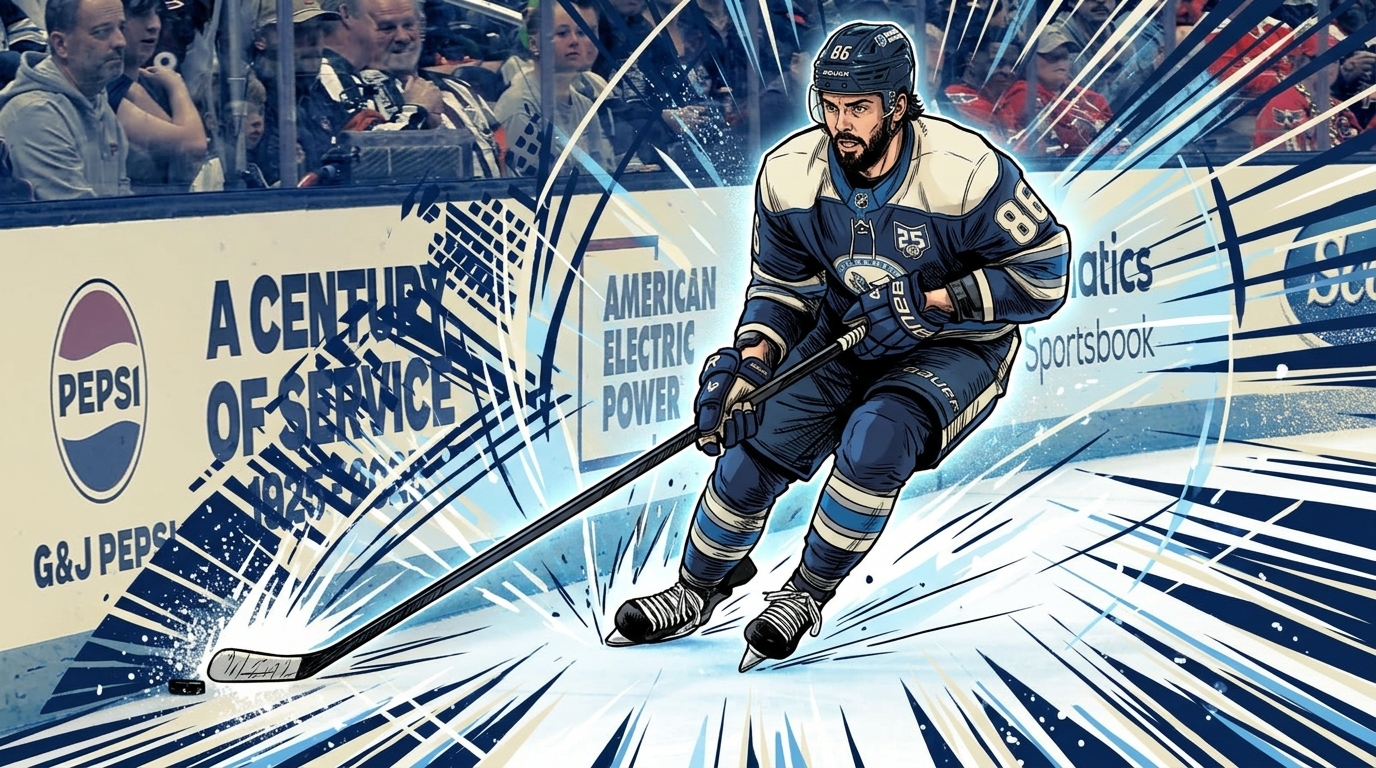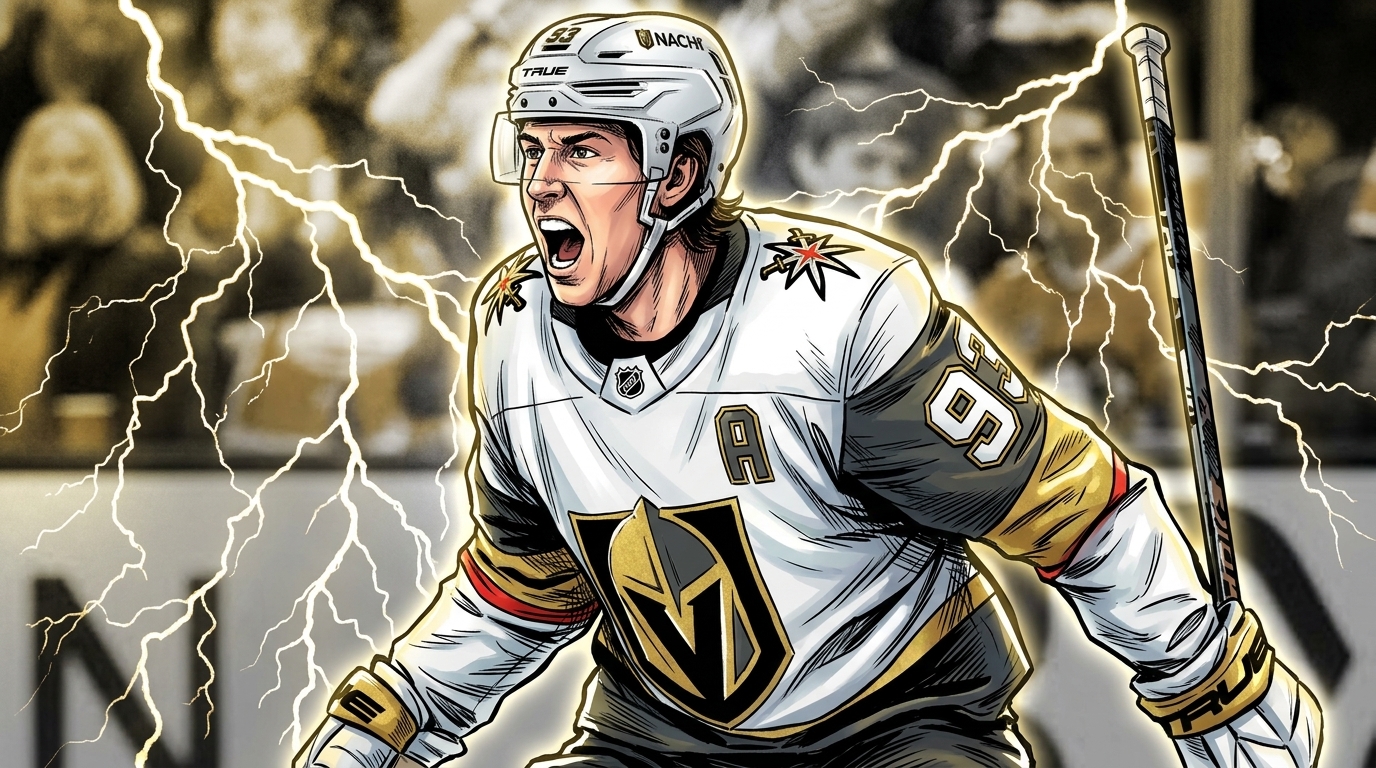

Mitch Marner entered the 2026 NHL playoffs at +6,600 to win the Conn Smythe. He is now, statistically, the best player in these playoffs; he leads all scorers with 21 points in 15 games, leads in primary assists, leads in shorthanded points, and carries the best plus-minus on a Vegas team that just swept the Presidents’ Trophy winners in four games. The engraver has a name ready. Toronto missed the playoffs entirely.
The structure of this is important. Marner spent nine seasons with the Maple Leafs. Nine seasons and never past the second round; seven first-round exits, two losses in the second round, a franchise that spent the better part of a decade constructing elaborate explanations for why the core was the problem and the core was specifically, pointedly, Mitch Marner. The media ecosystem that covers Toronto hockey is not small. It is loud and it is relentless and it spent years building a case that Marner’s playoff disappearances, his one goal in fifteen elimination games as a Leaf, his big contract and small moments, added up to a verdict. The verdict was that he was the reason.
He left. The sign-and-trade sent him to Vegas for eight years and $96 million; Toronto received Nic Roy, which is the hockey equivalent of a certificate of appreciation. Then Marner posted a farewell on Instagram — “I gave everything I had, but in the end it wasn’t enough. That’s hard to admit because I wanted it so badly for all of us” — and the discourse moved on to the next thing, as discourse does.
The next thing turned out to be Mitch Marner winning hockey games at a rate that has no recent precedent in his career. His previous playoff best was 14 points in 11 games. He has 21 in 15. His previous career playoff goal high was three; he has seven. Vegas swept Colorado — the best team in the regular season — and Marner was the best player in that series. After the clincher, he said it had been through some dark times in hockey to reach this point, which is the kind of thing you say when you have been doxed by fans, when your home address has been shared online, when you required full-time security after a playoff exit, when someone littered your yard, when the criticism was, in your own words, “a real mental grind.”
Jeff O’Neill on TSN said it plainly: “It’s amazing to me listening to grown-ass men, who have families and important jobs, and they’re like, ‘I can’t believe he might win a Stanley Cup. It’s just awful.’”
https://twitter.com/OurLeafsNation/status/2059617585109368976
The reaction from Toronto corners of the internet has been, predictably, incoherent — a mixture of rooting for him now that it doesn’t matter, insisting this proves nothing about his years there, and the occasional honest admission that watching him thrive the moment he left is difficult to categorize as anything other than what it is. Eric Francis put it cleanly: “If the Conn Smythe Trophy were handed out today, the engraver would simply carve Mitch Marner into the silver and call it a night. Imagine telling a Leafs fan that two years ago. They’d have laughed, cried or thrown a waffle.”
https://twitter.com/EricFrancis/status/2059061376040198320
The waffle line is doing a lot of work, but Francis is right about the broader picture. The narrative that sustained an entire media infrastructure for the better part of a decade — Marner can’t do it in the playoffs, Marner shrinks, Marner is the ceiling — has no clean exit now. The man leading the Hurricanes-Knights matchup entering June 2 is the same man Toronto spent years identifying as the ceiling. The ceiling went to Vegas, signed an eight-year deal, and is four wins away from lifting a trophy that the franchise that drafted him fourth overall has not touched since 1967.
You can watch this the way you watch most institutional failures: slowly, then all at once. The institution decided what the problem was. The problem left. The problem is now the betting favorite for playoff MVP. What player movement is reshaping every sport right now reveals, in sport after sport, is that the narrative always outlasts the evidence until it can’t anymore. This is the moment it can’t anymore.
Toronto, meanwhile, is watching the playoffs on television. This is a fact that requires no further analysis.