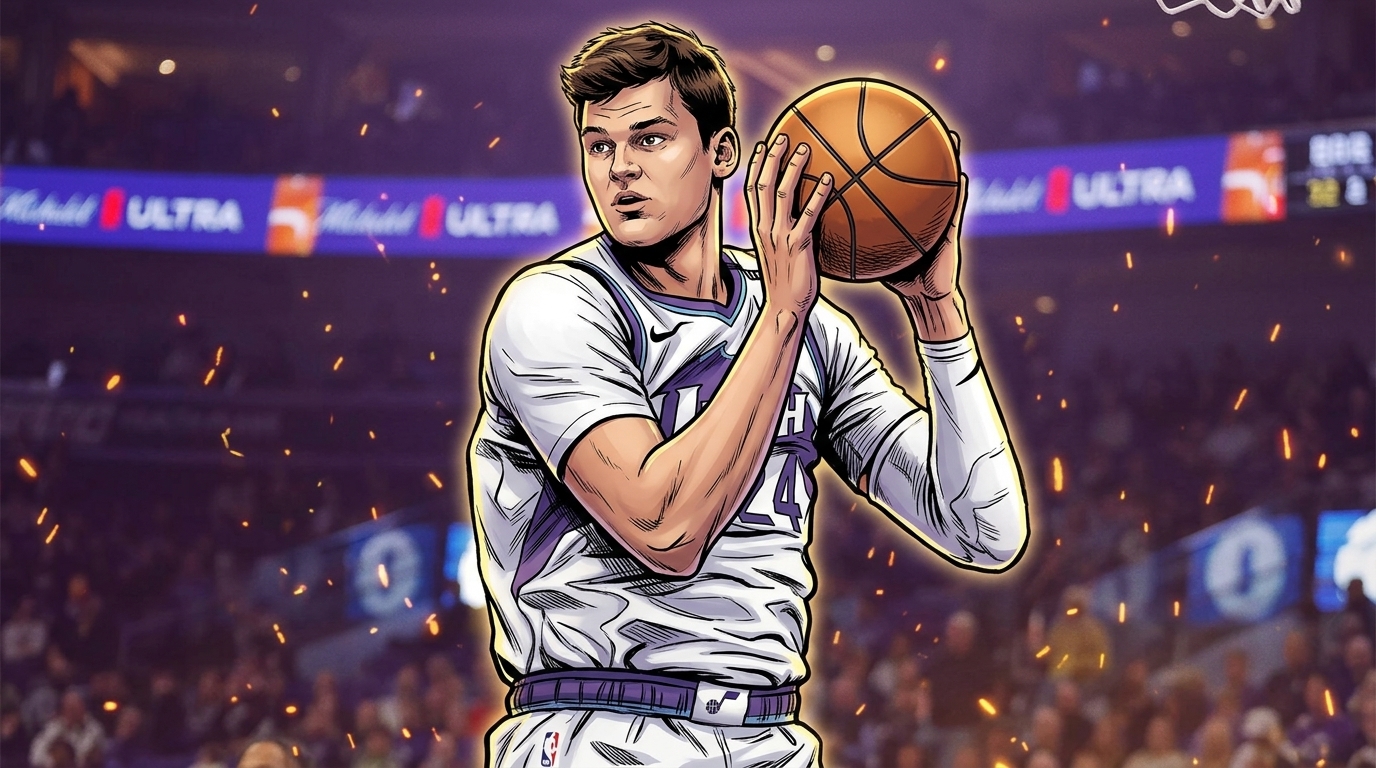

The Los Angeles Lakers entered this offseason holding five first-round trade assets. They have used four of them — two unprotected picks (2031, 2033) and two swap rights (2028, 2030) — to acquire Walker Kessler from the Utah Jazz. Per ESPN’s Bobby Marks, the Lakers now have no tradable first-round picks for seven years. One signing. Seven years of draft capital, gone.
https://x.com/ShamsCharania/status/2072342603673075962
That is the math. Whether it is genius or reckless depends almost entirely on one variable.
What Kessler Actually Brings
Start with what the Lakers are getting, because the defensive case is legitimate. In the 2024-25 season, Kessler averaged 11.1 points, 12.2 rebounds, 4.6 offensive boards (that last number led the league), and 2.4 blocks per game while shooting 66.3% from the field, per Basketball-Reference. He ranked top-three in rim protection that season. He is 25 years old, under contract for four years at $130 million, and represents the exact archetype Luka Doncic’s offense needs: a lob threat who can clean up every miss Luka creates driving into three defenders at midnight.
My sister is finishing her pre-med requirements at UCLA this fall and has watched exactly four NBA games in the last two years, all Lakers games with me. After the third one she said, “Why does Luka keep getting hammered at the rim with nobody to throw it to?” That is, more or less, the problem Kessler solves.
The 2025-26 season is the asterisk: a torn labrum forced Kessler’s trade request from Utah and limited him to five games. The injury, not his play, defined that year. His prior season was the real sample.
The Pick Price: Four Assets, Seven Years
Here is where the Lakers’ front office made a choice that will either look visionary or catastrophic, with very little middle ground available.
The Rudy Gobert trade to Minnesota in 2022 is the closest comparable: same archetype, elite defensive center with limited offensive creation, acquired at premium price. The Timberwolves sent four unprotected first-round picks, swap rights, and multiple rotation players to Utah. Minnesota reached the Western Conference Finals in 2023-24, which was legitimately impressive. They also traded Gobert in 2025 when the cap math became unworkable, having never won a championship. A massive asset haul for one run.
The Lakers paid four assets for a younger center at a lower price. That is not nothing. The Kessler deal costs about half as much in pick currency as the Gobert trade, and Kessler is 25 against Gobert’s age 30 at acquisition. The math is better. It is not obviously bad.
What it is, is all-in. After this trade and LeBron’s decision to leave, the Lakers have constructed their entire future around Luka Doncic plus Kessler plus Austin Reaves’ massive extension. No draft capital to patch holes, absorb a bad contract, or pivot if the plan fractures.
You could call this the Anti-Golden State Model. The Warriors built their dynasty by drafting Steph Curry, Klay Thompson, and Draymond Green, then kept their picks even during championship windows. They had flexibility. The Lakers have just elected to have none.
Did the Lakers Overpay for Walker Kessler?
Depends what you mean by overpaid.
In isolation: four first-round assets for a player who has shot 26.6% from three for his career and missed almost an entire season to injury. Yes, that sounds expensive. Kessler is not a franchise player. He cannot create his own shot. He will not win you a game in the fourth quarter when Luka is on the bench. He is a complementary piece, and the Lakers paid complementary-piece price in capital that teams typically reserve for stars.
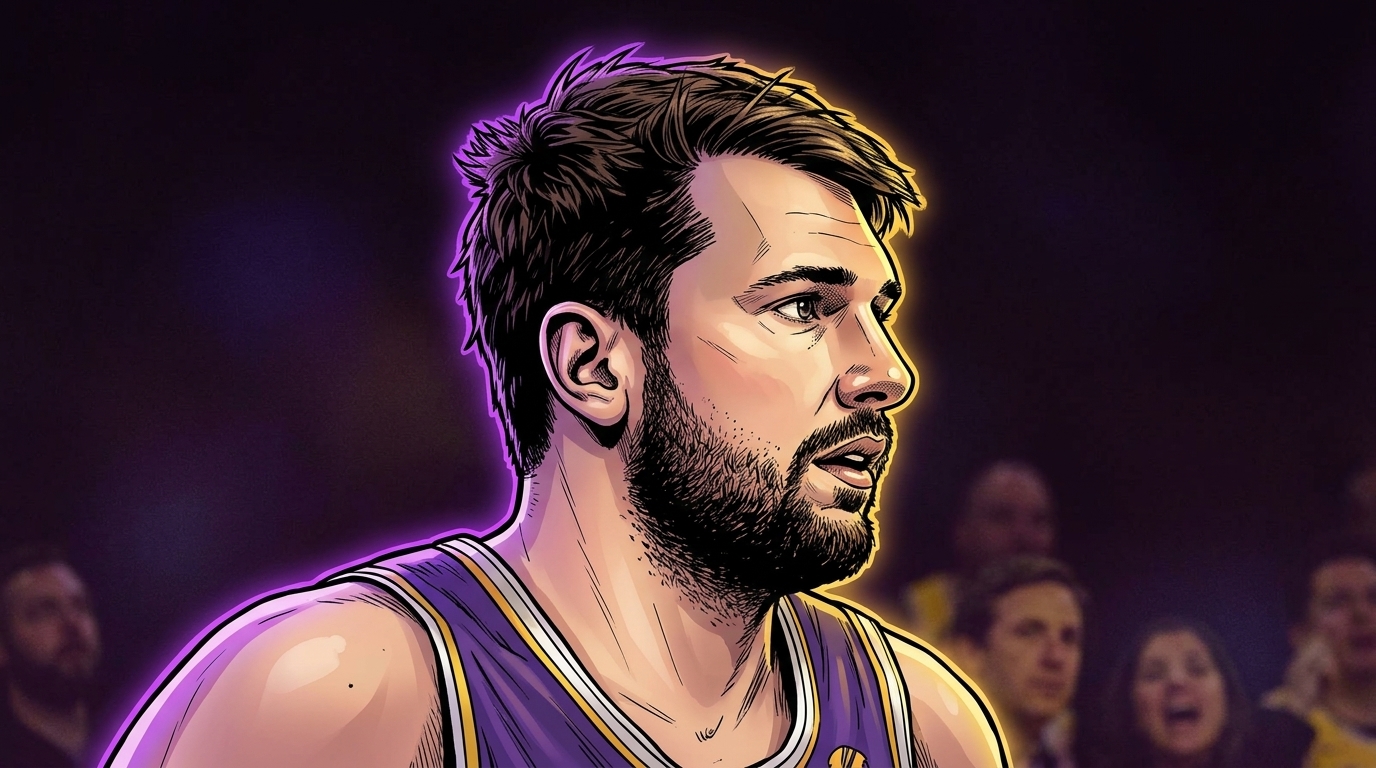
But context matters. Luka Doncic averaged 33.5 points, 8.3 assists, and 7.7 rebounds across 64 regular season games in 2025-26, per ESPN, winning the NBA scoring title. That version of Luka operating alongside Kessler’s rim protection and offensive rebounding is a genuinely frightening combination. The league’s best scorer paired with the league’s best offensive rebounder. Kessler converts the kick-outs Luka generates. Kessler gets every lob Luka fires. Kessler cleans every floater that doesn’t fall.
The concern is not about whether the fit works. The fit is obvious. The concern is about what happens if the star is not there to make it work.
The One Condition Under Which This Bet Pays Off
Luka Doncic suffered a Grade 2 left hamstring strain on April 2, 2026. He missed the final 15 regular season games. He missed the entire playoffs: every game, every round, the whole bracket. The Lakers watched from home.
He is expected to be healthy for the 2026-27 season opener. The hamstring is not a structural concern on its own. But a Grade 2 hamstring tear in a player who logs heavy minutes and carries enormous offensive responsibility is a data point, not an anomaly to dismiss.
The Lakers have now built a team with zero draft flexibility on the assumption that Luka Doncic will play 65-plus games per season and perform at All-NBA level for seven consecutive years. That is the single condition under which this trade pays off. Not “if Luka is good.” If Luka is available. If he stays on the floor. If the hamstring heals and does not recur. If the body holds through the 2027, 2028, 2029 seasons with no significant interruption.
The optimistic case is real: Luka is 27, generational, and arguably better now than he was two years ago. Kessler is exactly what he needs. The window is real. Go ahead and picture it.
Now picture what the Lakers do in 2030 if Luka misses 30 games in each of the next two seasons, and they have no picks to work with. They will have paid an elite rim protector with assets they cannot replace, for a window that never opened.
The Gobert trade at least gave Minnesota a run. The Lakers have bet more efficiently. They have also bet everything on the health of one player who just showed, in the most visible moment of the year, that his body can fail him at exactly the wrong time.
This trade works if Luka stays healthy. He has to. There is no Plan B anymore — they traded it.