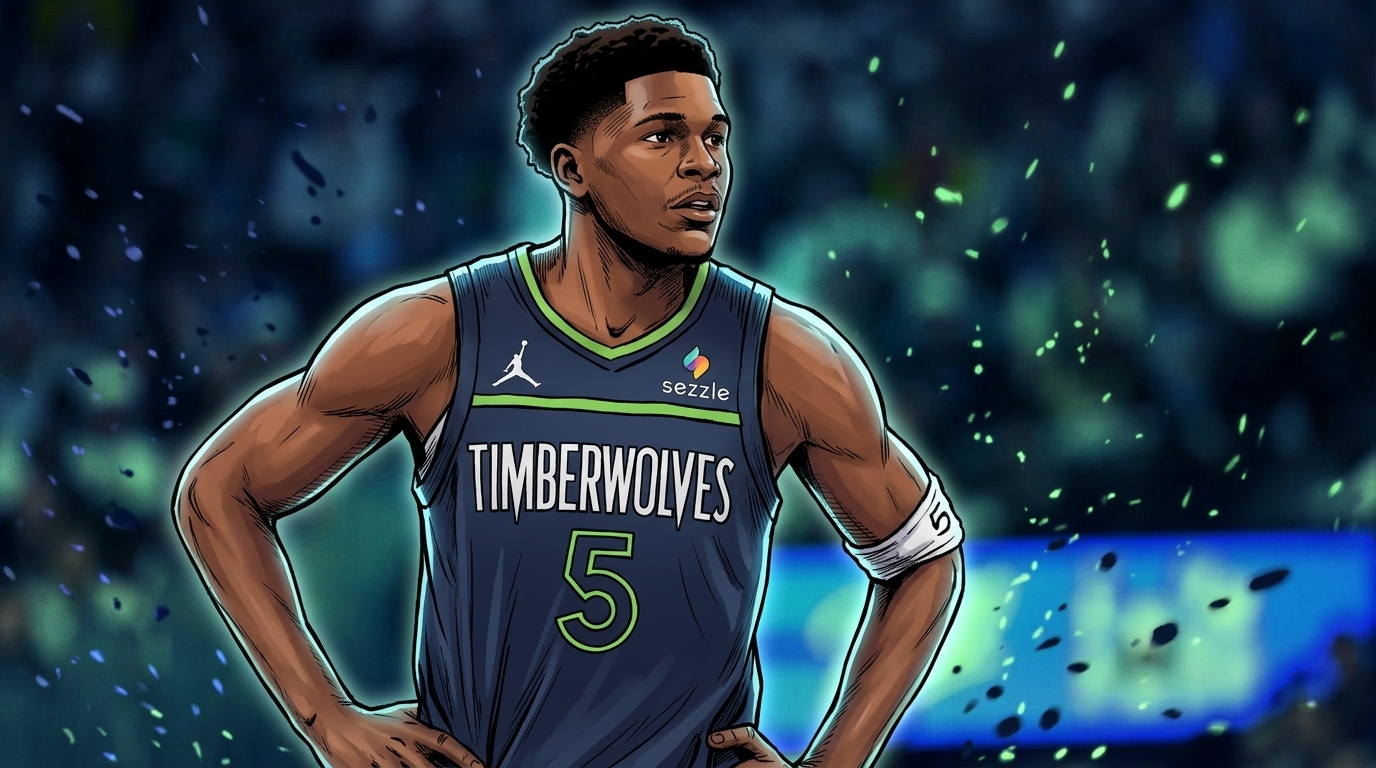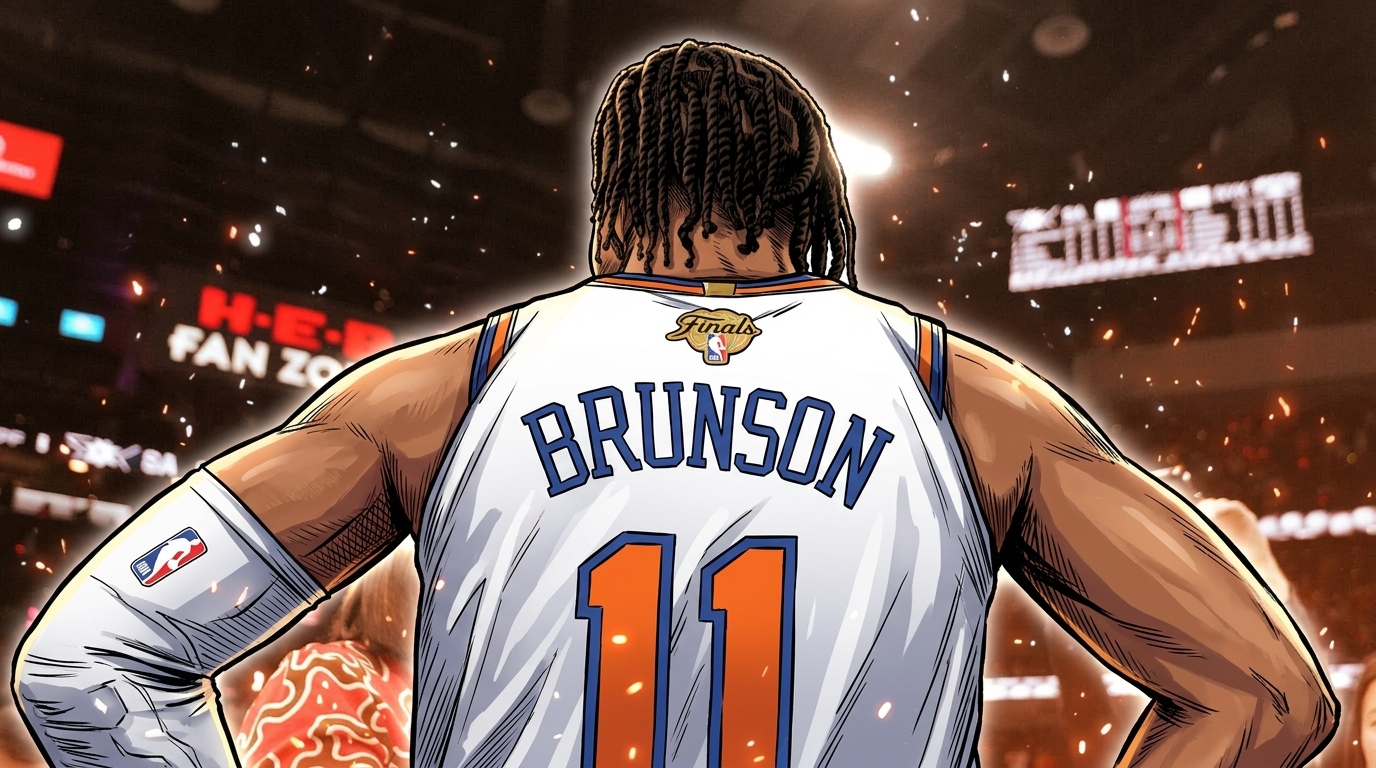
We have watched this city do something unusual over the last three weeks: start to believe.
Not cautiously. Not the braced, shoulders-up belief of a fanbase conditioned to absorb punishment, always keeping one eye on the exit. This is the other kind. The kind that accumulates in real time, in the specific way that only happens when a team keeps winning games it had no business winning, keeps finding new ways to answer, and keeps producing a player who performs better the higher the stakes get. The Knicks lead the San Antonio Spurs 3-1 in the NBA Finals. Game 5 is Saturday at 8:30 PM ET in San Antonio. And New York is one win away from something it hasn’t done in 53 years: win a championship.
The city has been close before. That is the distinction worth making, and it is worth making precisely because it gets blurred in the current noise. New York teams have been close before. The 1994 Knicks were in the Finals. The 1999 Knicks (an eight-seed, missing Patrick Ewing) somehow got to the Finals and lost in five. The franchise has suffered through near-misses and spectacular collapses in sufficient volume to constitute a regional tradition. (The culture appears to resist resetting.) But this is not a story about a city being here before. It is a story about this specific roster, this specific construction, being somewhere genuinely new.
Can the Knicks Close Out on the Road?
Yes. The more useful version of that question is how.
The Knicks finished the regular season 23-19 on the road, good enough to be functional without being elite. More importantly, they won Games 1 and 2 in San Antonio to open this series. Road wins in a Finals environment against the league’s most hyped young franchise. That is not noise. Teams that go 2-0 on the road to open a Finals are not flukes; they execute. The Frost Bank Center crowd will be at a pitch not heard in San Antonio since the Duncan era, and the Knicks have already proven they can play through it. Per ESPN, there is no structural reason the road beats them Saturday: the personnel that won in San Antonio in June is the same personnel traveling back.
Why This Knicks Team Is Built Differently
The 1994 Knicks were Patrick Ewing and then everyone else. That is not a slight. Ewing was one of the five best players in basketball, and the surrounding cast (Oakley, Starks, Mason, Harper) had real value. But when Ewing left the floor with foul trouble in Game 7 against Houston, the architecture became visible. The load-bearing wall was gone, and the building wobbled. The 1999 team was worse in this regard: Ewing was injured, the roster leaned on Sprewell’s 26 points per game in the Finals, and the Spurs systematically took him away when it mattered.
This team does not have a single load-bearing wall.
Jalen Brunson is averaging 26.9 points and 6.2 assists through 17 playoff games and delivered 36 points with seven assists in Game 4. He is the best player in this series. Wembanyama’s offensive production has been intermittent against the Knicks’ defensive schemes, and his team scored 76 first-half points in Game 4 then 30 in the second, a swing of 46 that tells you something real about sustainability. We covered the tactical preview before Game 1, and the gap between their impact on outcomes has only grown.
But OG Anunoby is the variable that makes this team something the Ewing and Sprewell squads never were. Anunoby is averaging 19.9 points on 57/47.4/85.7 shooting splits in this postseason. He was the first player off the NBA.com Finals MVP ladder as of June 11. In Game 4, he scored 33 points on 10-of-15 shooting, made seven threes, and with 1.2 seconds left and the series on the table, tipped in Brunson’s missed three-pointer to win it. He joins Stephen Curry, Kobe Bryant, Reggie Miller, and Klay Thompson as the only players with 60-plus points and 10-plus threes over any two-game Finals span. That is the kind of company that usually only assembles once a generation. (Anunoby arrived here by way of a Toronto trade that looked, at the time, like a reasonable asset swap.)
Then there is Karl-Anthony Towns, Mikal Bridges, Josh Hart. None of them is the primary option, but each would be a centerpiece on half the franchises in this league. The front office spent several years filling specific positional gaps, not just accumulating talent. The result is a team with redundant answers to defensive coverage. You can’t take Brunson away without opening OG. You can’t switch every screen without giving Bridges clean threes. The Ewing teams didn’t have that. The Sprewell team absolutely didn’t have that.
What Game 5 Actually Requires
The Spurs are not going quietly. They won Game 3 in New York, and the Game 4 comeback from 29 down was the largest deficit erased in Finals history. It required a near-perfect second half from two players performing at their ceiling simultaneously. That is not something you can schedule. It happened because the Knicks stayed in an impossible game long enough for something impossible to occur.
Saturday in San Antonio requires something more deliberate. Three things specifically.
First: Brunson through contact in the fourth quarter. The Spurs have been physical with him all series (the Wembanyama shove in Game 3 drew no flagrant upgrade), and their adjustment will be to force him into the most contested possible shots late. He went 9-of-11 from the line in Game 4. More of that, please.
Second: OG’s three-point rate. He made seven threes in Game 4, a rate that will not repeat, and shouldn’t need to. What needs to repeat is the shot selection: open corner threes, catch-and-shoot off Brunson drives, not contested pull-ups. If the Spurs adjust to take away the corner, someone else has to knock down the kick-out. That someone is probably Bridges.
Third: second-half defense, applied from the opening tip. The Spurs scored 76 points in the first half of Game 4 on 14 made threes. Then 30 in the second. The Knicks tightened coverages, switched differently, took away the specific actions that generated those open looks. That is their best version of themselves, and they have to bring it from the opening possession in San Antonio, not manufacture it after falling 20 down.
https://twitter.com/NBA/status/2062375805343170779
That tweet captures what Game 1 confirmed: Brunson is capable of simply taking games. He did it in San Antonio already. The question is whether the surrounding cast executes well enough that he doesn’t have to.
The 1999 Shadow and Why It Doesn’t Apply
There is a version of this piece that spends three paragraphs on what this rematch was supposed to mean for the Spurs: the franchise passing the torch from Duncan to Wembanyama, the symmetry of the opponent, San Antonio’s second dynasty beginning where the first one did. That story was compelling in October. It is not the operative story in June.
The 1999 Knicks were eight-seeded and held together with tape. They had no business being in the Finals, which is why losing there carried a particular sting: not because expectations were crushed, but because something unlikely had almost become something real. The 1994 team carried the weight of genuine expectation and came up one Starks shooting performance away. Both losses calcified into the specific type of New York basketball grief that gets passed down like a family heirloom.
This team arrived at 3-1 by design. That is the Brunson family’s complicated relationship with this series compressed into something almost too neat: Rick Brunson was on that 1999 roster. He didn’t play in the Finals. His son will, Saturday, in the same arena, with a chance to close out the same franchise his father’s team lost to. Whatever you think the narrative is doing here, it is doing too much. And it is also simply accurate.
The 1999 shadow doesn’t apply because the circumstance is inverted. The Spurs are the team in position to pull off the comeback now. The Knicks are the team trying to close. And this Knicks team was assembled specifically for the task of winning a series like this. Not the city, not the history, not the grief accumulated across five decades. The roster.
Growing up in Milwaukee, I watched teams that were built to win everything, and teams that were built to be competitive. The difference usually only becomes visible when you’re up 3-1 in a Finals and have to go close it out somewhere loud and hostile. The Bucks built for it in 2021 and went to Phoenix and did it. The Knicks, if Brunson’s post-Game 4 quote means what it sounded like (“go out and do something about it”), believe they have built for it now.
Saturday will clarify that. Game 5, Frost Bank Center, 8:30 PM. The Knicks have been to San Antonio twice already this series and left with two wins. The 1973 banner is fifty-three years old. The arithmetic is simple. The execution is what’s left.