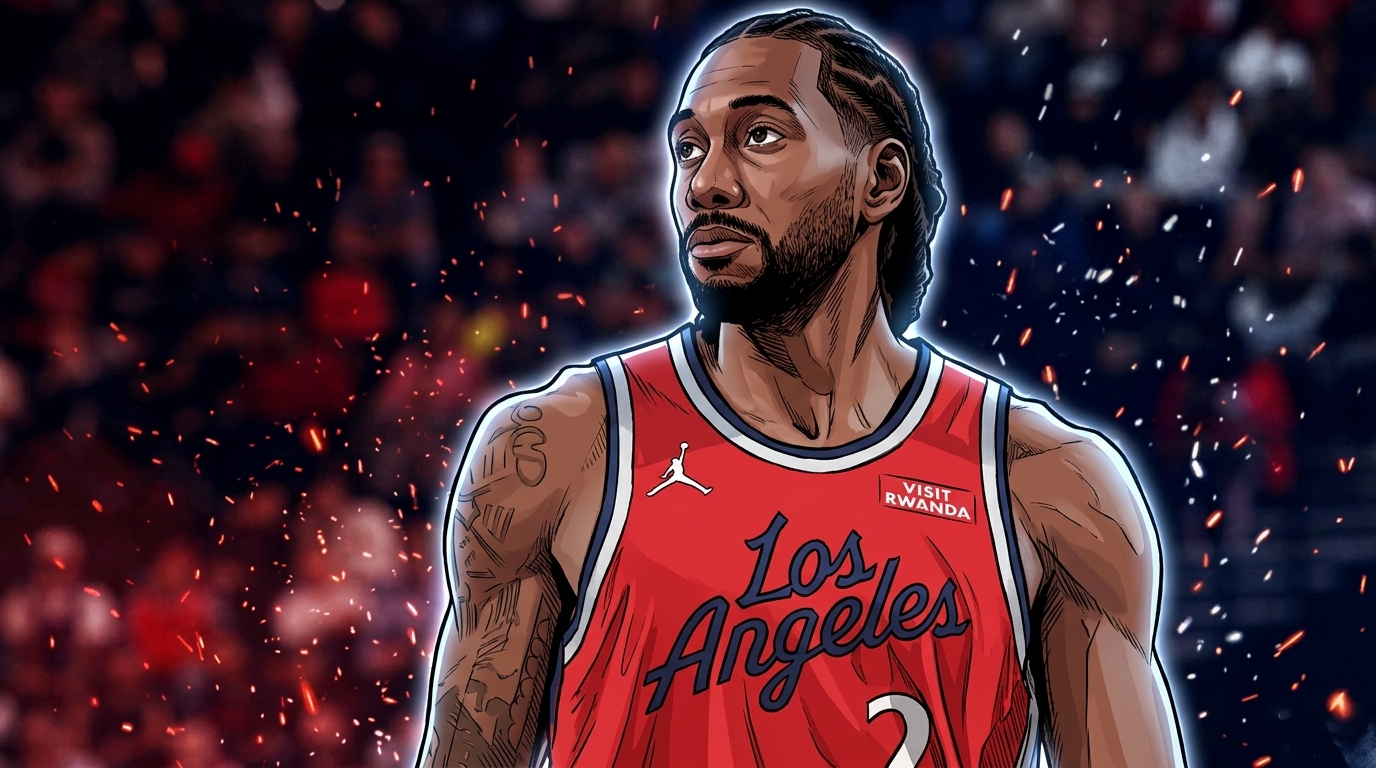

Joe Sanberg was sentenced to 14 years in federal prison for a $248 million fraud scheme, and somewhere in Toronto, Kawhi Leonard is still waiting to find out if he gets to play basketball there again.
The timeline is the tell. According to ESPN’s Shams Charania, the Los Angeles Clippers and Toronto Raptors agreed in principle on June 30th to trade Kawhi back to the city where he won his championship, the place where “The Shot” happened, where a whole country adopted him for one improbable spring. The NBA then informed the Raptors they would need to “assume the risk of any potential outcome” of an ongoing investigation into Kawhi’s $28 million endorsement deal with Aspiration, a sustainability fintech company that the Clippers had locked into a $300 million, 23-year sponsorship. Toronto declined. The trade is frozen. Kawhi waits.
The investigation itself has been running since September 2025, when the league hired Wachtell, Lipton, Rosen & Katz, one of Wall Street’s most prominent law firms, after “Pablo Torre Finds Out” reported on the alleged no-show arrangement. Nearly a year in, the NBA says outside counsel expects to “finalize its work in the coming weeks.” No deadline. No accountability. Just weeks.
What Sanberg’s conviction actually reveals is the operational logic of an arrangement that the NBA has known about for years and tolerated as a matter of institutional convenience.
The Clippers say they were victims: that Sanberg defrauded them alongside everyone else, that they never funneled money to Kawhi through Aspiration, that Steve Ballmer’s $60 million personal investment in the company makes them aggrieved parties, not co-conspirators. That defense might even be partially true. The problem is that “team-arranged endorsement deal as de facto salary supplement” is not an exotic scheme someone invented to fleece the Los Angeles Clippers. It is a known instrument, openly discussed, and selectively enforced. The league chose to look elsewhere when the co-signatories were paying out quietly. It is paying attention now because one of them is going to federal prison for 14 years for crimes a U.S. District judge described as “among the worst I’ve ever seen.”
I keep thinking about what it means that Kawhi Leonard and his uncle Dennis Robertson sat for interviews with investigators. They answered questions about a deal where Kawhi allegedly received $28 million for essentially nothing, that the entire ecosystem of NBA business development made structurally possible. The league built a salary cap with enough gaps that teams have always sought creative routes around it. Aspiration was one route. The difference between Aspiration and a dozen other arrangements is that Aspiration’s founder is currently facing a prison sentence that exceeds what most violent offenders receive.
The Raptors did the correct thing by refusing to absorb the investigation’s risk. Brandon Ingram, Gradey Dick, three first-round picks, and two seconds is too steep a price to pay for an asset whose league status is contingent on a law firm’s timeline. But the correct move for Toronto doesn’t make the situation less absurd for Kawhi, who agreed to go home and is now waiting for due diligence on someone else’s financial crimes to resolve before he can play a game.
Follow all of this in our NBA coverage as the investigation moves toward its conclusion — whenever the league decides that is.
https://twitter.com/ShamsCharania/status/2075293917118136739
The NBA is not investigating whether the system broke. It is investigating whether it can make the break Kawhi’s problem.