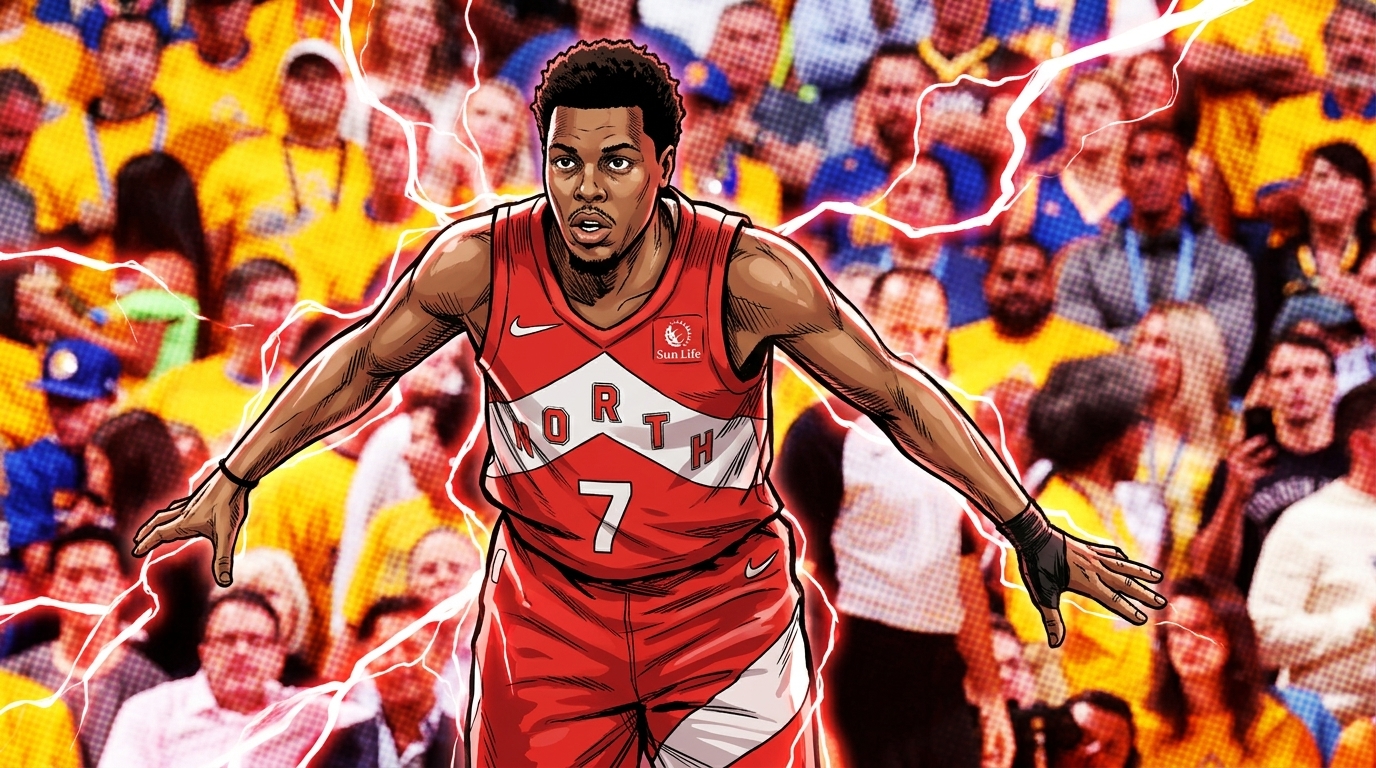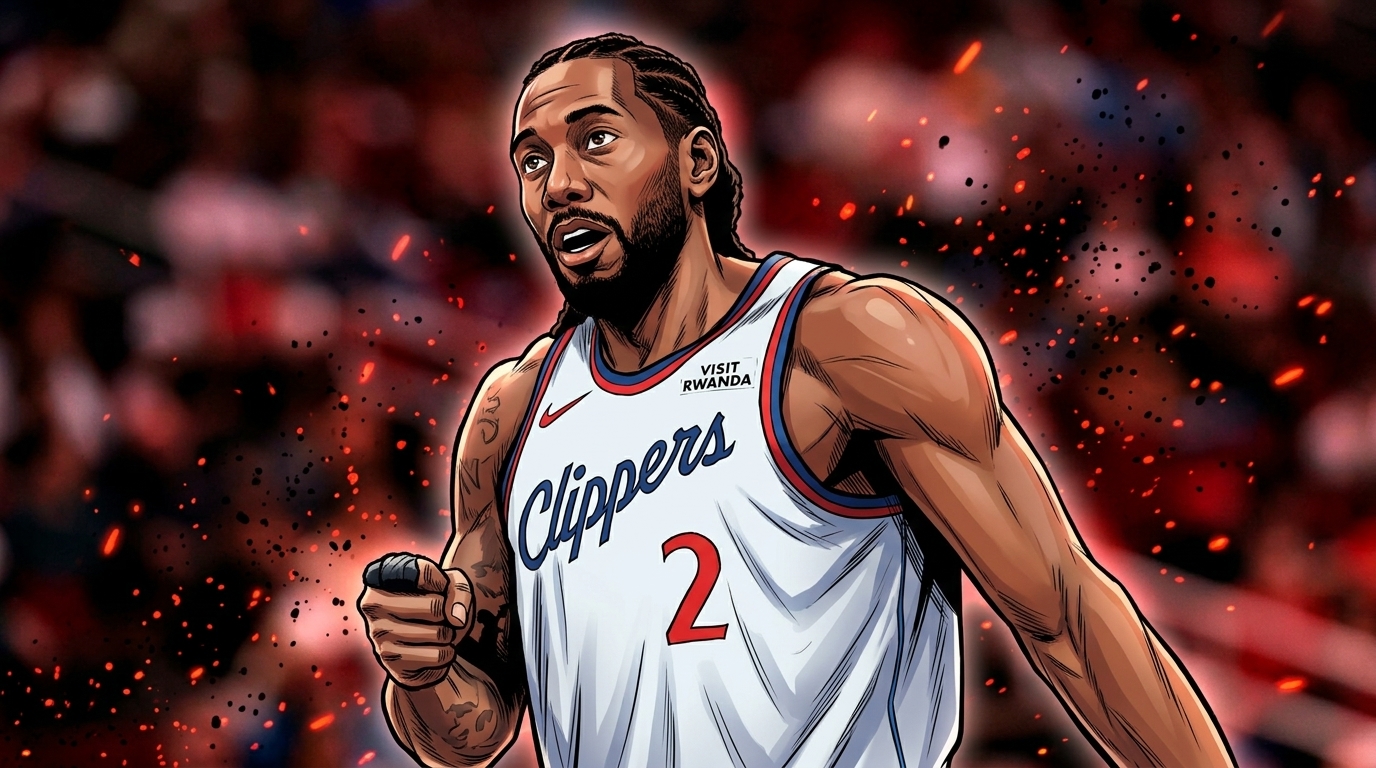
The NBA has always told its best stories through geography. Players leave cities — sometimes loudly, sometimes in silence — and what happens next becomes the narrative that defines them. We’ve been watching this pattern repeat for thirty years, and we’ve gotten fairly good at reading the signs. What we couldn’t have scripted is Kawhi Leonard, the most private superstar in modern basketball, choosing to write his final chapter in the one city he left without saying goodbye.
The Clippers traded Kawhi Leonard back to Toronto on June 30. The Raptors sent Brandon Ingram, Gradey Dick, two unprotected first-round picks (2031 and 2033), a 2027 pick swap, and two second-round picks to Los Angeles. By one accounting, Toronto surrendered more assets than they gave up in the 2018 deal that originally brought Kawhi there. The Raptors paid more to get him back than they paid to get him the first time. (The Clippers, for their part, got a younger player in Ingram, a solid young wing in Dick, and a collection of picks that may matter in a half-decade. They also got rid of a 35-year-old with a chronic injury history and the league’s most complicated relationship with playoff health. Whether that constitutes a win depends entirely on your time horizon.)
https://twitter.com/ShamsCharania/status/2072042756562731501
The trade is currently on hold pending an NBA investigation — one sentence of context that shouldn’t distract from the more interesting question: why Toronto, and why now?
The answer ESPN reported is specific and layered. Kawhi told other teams he would only sign his extension — a two-year, $123.7 million deal — with the Raptors. He trusts Raptors performance director Alex McKechnie, who has managed his body since the championship run. He’s comfortable under Bobby Webster’s front office. He believes Scottie Barnes gives Toronto a real foundation. He’s 35 years old, coming off a career-best regular season — 27.9 points, 6.4 rebounds, 65 games — and he chose the city that loved him over the city that raised him. He grew up in Compton. He signed with the Clippers in 2019 to be close to home. Six years and four playoff disappointments later, he hired a new agent and pointed back north.
That tells you something, even coming from a man who tells you almost nothing.
Toronto’s history with star players reads like a departure board. Damon Stoudamire demanded out. Tracy McGrady left the summer after his best season. Vince Carter was effectively pushed out, and then spent years making sure everyone knew it. Chris Bosh left for Miami in the 2010 free agency wave that also took LeBron James to South Beach — the same LeBron who would become the defining parable of the NBA homecoming when he returned to Cleveland in 2014 and won the franchise’s first championship two years later. The Ringer called this trade Toronto’s first successful star recruitment in franchise history. That’s not hyperbole. It might actually be true.
The LeBron arc is the obvious comparison — star leaves in complicated circumstances, city harbors complicated feelings, star comes back older and with something to prove, city forgives because winning is a universal solvent. But Kawhi’s situation has a different texture. LeBron left Cleveland after seven years and two Finals appearances; the city felt betrayed, but LeBron had given them something real. Kawhi left Toronto eighteen days after the championship parade. Eighteen days. He averaged 28.5 points, 9.8 rebounds, and 4.2 assists across the 2019 Finals — won Finals MVP, became only the third player in NBA history to claim that award with two different teams alongside LeBron and Kareem Abdul-Jabbar — and then was gone before the confetti had fully settled.
What he did not do, at any point, was acknowledge what Toronto gave him. There was no farewell. No letter to the city. No press conference. He’d played one year on a loaded team, won a title on Og Anunoby’s closing defense and a bouncing corner four that will live in Canadian sports mythology forever, and then prioritized family proximity back in Southern California. Which is a completely human thing to do. And which left Toronto with a championship and a strange, unresolved feeling about the man who delivered it.
The silence, it turns out, wasn’t indifference. In January of this year, Kawhi showed up at a youth clinic in Scarborough — the kind of appearance he almost never makes — and said quietly: “Toronto is still in my heart.” At the time it registered as a pleasant aside, the sort of thing athletes say at community events. In retrospect it was the opening of a negotiation.
The basketball case is more complicated than the emotional one. Kawhi is 35. His knees have been a recurring story for the better part of six years — torn ligament in 2021, missed the entire 2021-22 season on ACL rehab, torn meniscus in 2023, two playoff games in 2024. The 2024-25 season showed he could still be the player everyone remembered — 25 points, 8 rebounds, 5 assists in a seven-game series against Denver — and this past regular season was the best scoring campaign of his career. But there’s no version of this deal where the injury history disappears. The Raptors paid an ascending young star in Ingram, an ascending young wing in Dick, and a significant future asset in those unprotected picks for a 35-year-old whose availability remains the operative variable in every projection.
And yet ESPN’s analysis of the deal lands in the territory of “Toronto probably second-best in the East.” The Knicks are reigning champions and the conference’s baseline. But Kawhi plus Scottie Barnes — 19.4 points, 8.4 rebounds, 5.6 assists, one of the best wing defenders in the league, locked up for five years at $224.2 million — is a different conversation than whatever Toronto was running last year (offensive rating: 115.0, ranked 15th, quietly one of the league’s worst offenses). Barnes is the infrastructure. Kawhi is the missing variable that changes what the infrastructure can do.
The Raptors are not a championship team today. I believe they become one in the next two seasons if Kawhi’s body cooperates — and I believe “if Kawhi’s body cooperates” is doing significant work in that sentence. What McKechnie and the Toronto medical staff did with him in 2018-19 remains one of the more impressive load management success stories in recent memory, which is exactly why Kawhi identified McKechnie as a reason he’d only sign in Toronto. He knows what he needs. He knows who can provide it. That combination of self-knowledge and institutional trust is more valuable than any amount of cap flexibility.
The NBA’s geographic storytelling works because it maps personal choices onto arenas full of people who’ve built emotional investments in players who had no obligation to reciprocate. Kawhi never reciprocated — not in 2019, not in any of the years since. The Scarborough clinic was the first signal. The trade request that brought him back was the confirmation.
What “home” means for someone who famously never showed anyone what it meant to him is the most interesting question this trade produces. It’s probably not sentimentality. Kawhi doesn’t work that way. It’s probably closer to legibility — a desire to end somewhere that makes narrative sense, in a building where the crowd has been holding a place for him since that bouncing four, with a young star in Barnes who doesn’t need him to be anything other than what he still is.
Toronto has been a one-way door for franchise-level talent since the franchise existed. The stars came, and then they left, and the city learned to hold them loosely. This time the door swung the other way. Watch what the Raptors do when it actually opens.