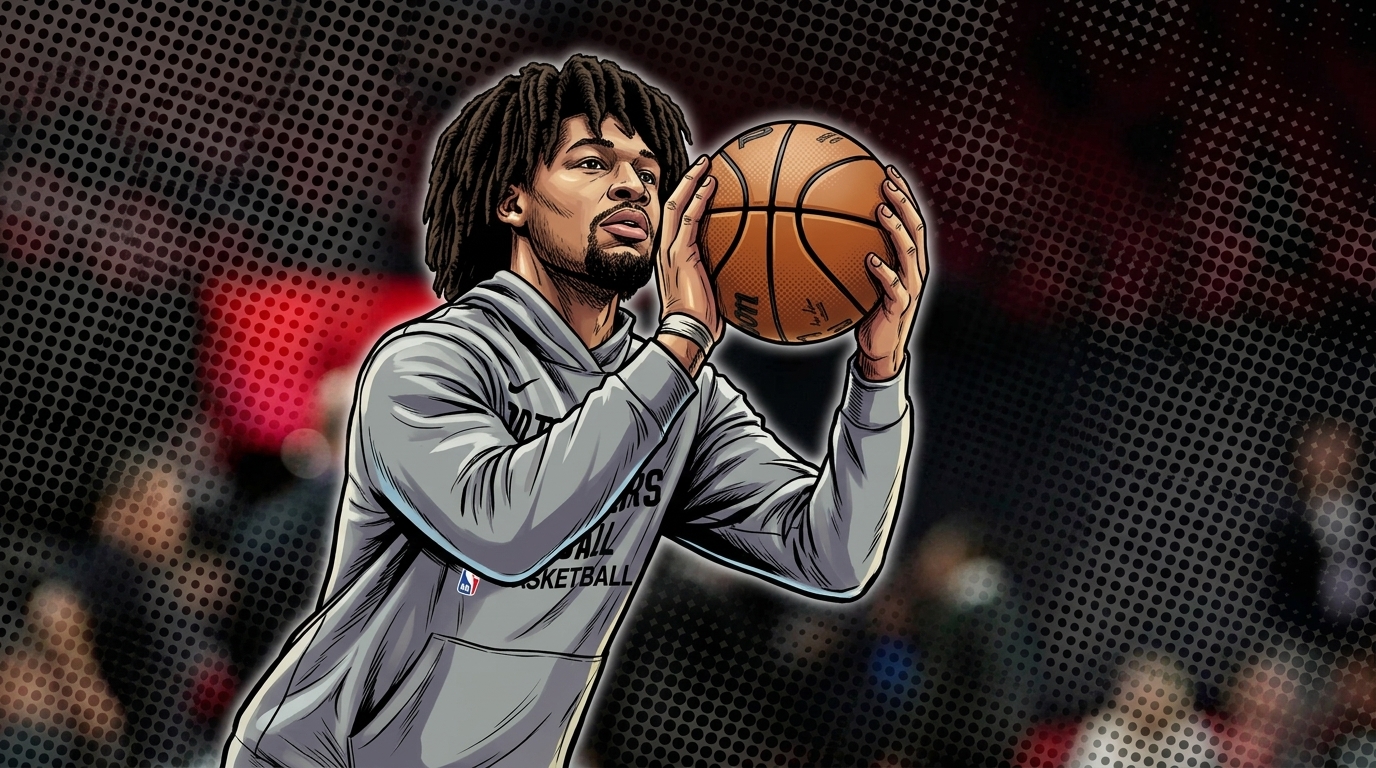

In the 2021-22 season, Ja Morant was averaging 27.4 points per game, winning the Most Improved Player award, and finishing seventh in MVP voting. Teams were building defensive schemes around stopping him. His supermax extension, five years and $231 million, looked like one of the shrewder long-term bets in the league. The question then was whether Memphis could build a title contender around him fast enough.
The question now, according to Brian Windhorst on ESPN, is different: “When I say he has no value, I don’t even think that’s accurate. I think he has what they call in the league, negative value. Meaning teams weren’t willing to take Ja Morant unless the Grizzlies also added draft compensation.”
That is a specific, damning statement. The data behind it tells a story worth mapping carefully.
The Negative Value Ledger
Think of the Negative Value Ledger as a balance sheet: assets on one side, liabilities on the other. What Morant brings to a prospective trade partner versus what he costs. The ledger only makes sense if you run both columns honestly.
On the asset side: Morant remains a legitimately elite penetrator when healthy. His career averages of 22.4 points, 7.4 assists, and 4.6 rebounds are the profile of a franchise player. At 26 years old, there is still a reasonable upside argument. A 6’2”, 174-pound guard with his burst and finishing ability at the rim does not grow on trees.
The liability column, though, is extensive.
Availability. Over the 2023-24 and 2024-25 seasons combined, Morant played just 59 games. That is two seasons of near-absence from a player owed franchise-player money. In 2025-26, he played 20 games before a UCL sprain ended his year. Three consecutive seasons of significant missed time is the kind of pattern that shuts down a trade market before conversations even start.
Shooting. Morant’s three-point percentage has been below 31% for four straight seasons. Four seasons is a trend, not a sample problem. A below-average three-point shooter at his size and salary forces defenses to sag, clogs driving lanes, and limits offensive spacing for every teammate. At his peak, teams could live with this because his gravity off the dribble compensated. At 23.5% from three in his 20-game 2025-26 appearance, that calculus collapses.
Off-court incidents. In March 2023, Morant appeared on Instagram Live at a Denver club brandishing a gun, drawing an eight-game suspension that cost him roughly $1.9 million in salary. Two months later, a second video emerged of him flashing a gun while leaving a Memphis gathering. The resulting 25-game suspension cost approximately $7.6 million and cast a long shadow over his reputational standing league-wide.
The contract. Per Spotrac, Morant is owed $39.4 million this season, $42.2 million in 2026-27, and $44.9 million in 2027-28, with a 15% trade bonus layered on top.
https://twitter.com/spotrac/status/2009691737883849047
Add those numbers together: $87 million over the two seasons after this one, in exchange for a player who has been healthy for 20 games in the past year. That is the liability column. The ledger does not balance.
Why Does Ja Morant Have Negative Trade Value?
Ja Morant has negative trade value because four problems compounded at once: he missed 59 games across two seasons due to injuries and suspensions, his three-point shooting has stayed below 31% for four straight years, he is owed $87 million over two seasons with a trade bonus, and two gun-related suspensions damaged his standing with decision-makers across the league.
Woof.
No single factor on that list would be disqualifying by itself. Plenty of players have been injured. Plenty have navigated off-court baggage. Plenty shoot poorly from three. The compounding is what killed the market. Each problem amplified the others, and what you get at the end is a player that teams will only accept with draft picks going the other direction.
Three Teams, Zero Interest
The clearest evidence of Morant’s negative trade value isn’t theoretical. It’s the summer of 2026 playing out in real time.
Bleacher Report reported that the Minnesota Timberwolves, who spent part of the offseason searching for a lead guard upgrade, ultimately moved in a different direction, signing Ayo Dosunmu to a five-year, $112 million deal. The New Orleans Pelicans signaled no interest, drafting Jeremiah Fears at No. 7 as their long-term point guard answer. The Sacramento Kings also selected a point guard early in the draft and are considered unlikely to pursue a Morant trade.
Three teams with real need at the position, real cap flexibility, and real organizational will to win. Zero takers without draft compensation going the other way.
Kendrick Perkins put it plainly on ESPN: “Teams were asking Memphis to attach picks in order to take Ja Morant, not the other way around.”
https://twitter.com/HeatCulture13/status/2019762348085420049
The dynamic Perkins describes inverts every assumption around star-player trades. Normally, the team acquiring the star surrenders draft capital. The star is the prize. When the direction reverses, when the team holding the star must pay others to take him, that is the textbook definition of negative trade value. It’s the same mechanism that governed Darius Garland’s exit from Cleveland, which required a second-round pick sweetener to complete, or the Rob Dillingham sign-and-trade, which involved a first-round pick swap just to make the economics land.
The difference is that Morant’s contract is substantially larger and longer than either of those. The gap between what he costs and what he can reliably provide is wider. Even in our Giannis trade analysis, we documented how elite players can lose trade market leverage when salary, health risk, and timing converge against them. Morant’s situation takes that dynamic further. He’s not just leverageless. He’s a liability on the ledger.
What Happens to the Grizzlies Now
Memphis is not standing still. The Grizzlies hold one of the largest trade exceptions in NBA history at $29 million, selected Cam Boozer at No. 3 in the 2026 Draft, and cleared significant salary by trading Desmond Bane to Orlando and Jaren Jackson Jr. to Utah. The organizational intent is legible: rebuilding around youth, and Morant, as currently constituted, does not fit the timeline.
Windhorst’s read on what comes next is stark: “I think we’ve probably seen the last moments of Ja Morant in a Grizzlies uniform.”
That may be accurate. The more interesting analytical question is what Morant’s market looks like in twelve months if he stays healthy. A full season, 65-plus games at something close to his 2021-22 form, would change the ledger meaningfully. His availability problem goes from three-year pattern to injury history. His three-point shooting becomes one data point rather than a trend. Teams that passed this summer would revisit.
The evidence suggests that is a real possibility, not a guaranteed one. UCL sprains carry a meaningful recovery timeline, and his 2025-26 season offered no statistical reason for optimism before it ended. Twenty games, 41.0% from the field, 23.5% from three. The best version of Morant that sample surface is his pre-supermax self, before the inflated contract created the gap between expectation and output.
Memphis holds a $44.9 million player they cannot move and a rebuild that needs to accelerate. The Negative Value Ledger right now runs one direction. Whether Morant can flip it depends entirely on what he does next season on the floor, and whether his body cooperates long enough to let him try.
For more on NBA front offices navigating franchise resets, follow our NBA coverage.