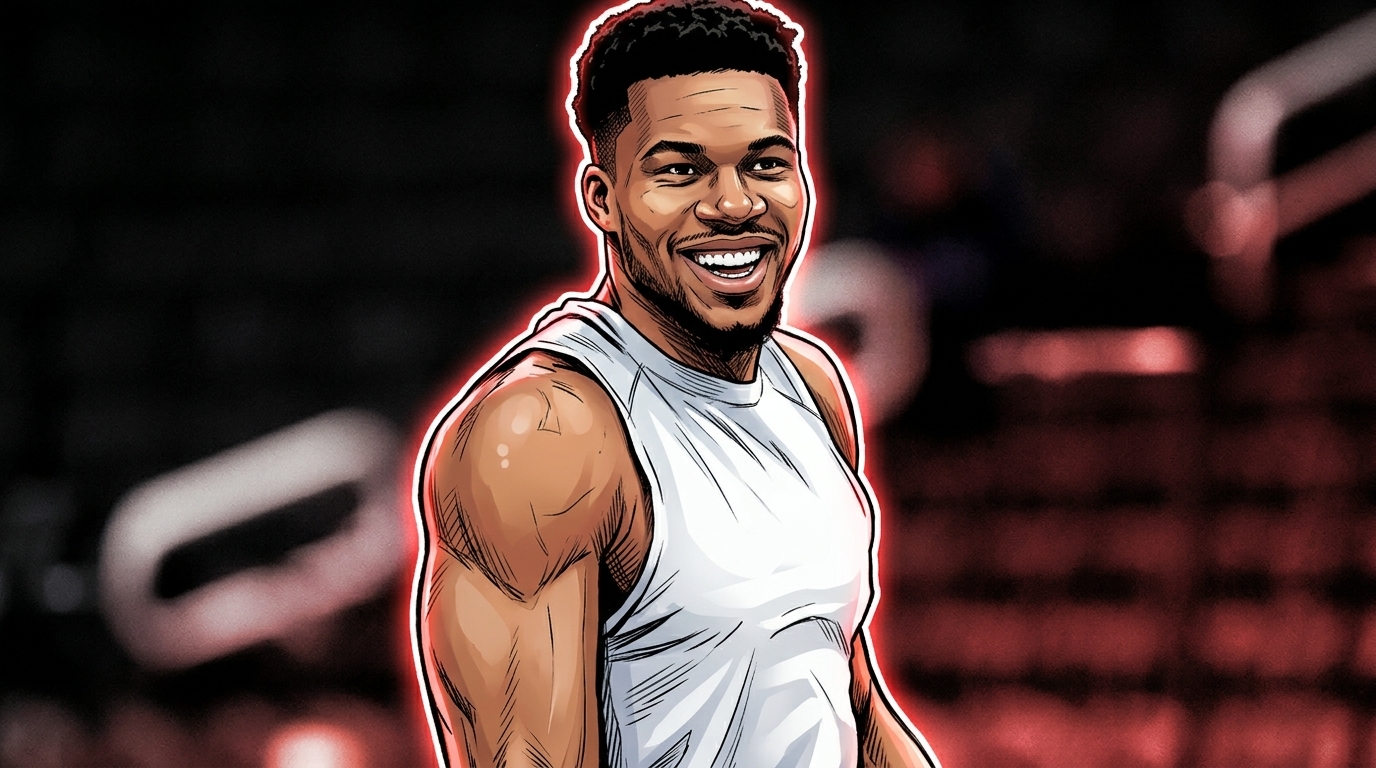

January 28. That’s the date the NBA set in stone when it released the 2026-27 schedule Thursday, and it’s the one people in Wisconsin have been dreading since summer: Giannis Antetokounmpo, back in Fiserv Forum, wearing Miami Heat red and black instead of the green and cream that carried his first thirteen seasons. We’ve known this game was coming since the trade closed. What we didn’t have until this week was a night to put on the calendar — a tip time, a Prime Video slot, a date instead of a vague sense of dread.
Seven months. That’s the gap between the trade closing and the game itself — barely enough time for the moving boxes to settle, let alone for a fan base to make peace with watching two MVP seasons play out in a different jersey.
Run the tape back further and the number that matters isn’t seven months, it’s thirteen years. Antetokounmpo has never played a regular-season game against the Bucks. He never had to. He was the Bucks, in the way a franchise occasionally fuses itself to one player for a decade-plus stretch. January 28 breaks that streak in about the most public way the league could stage it: a marquee window, a national broadcast, no soft landing.
The Milwaukee Bucks sent Antetokounmpo and Bobby Portis to Miami on July 6 for Tyler Herro, Kel’el Ware, Jaime Jaquez Jr., Kasparas Jakucionis, three first-round picks, a 2030 pick swap, and a second-rounder, as ESPN detailed when the deal closed. That return is now the actual skeleton of the Bucks’ 2026-27 season, and Thursday’s schedule release was the first real chance to see how the league built around it. It starts, fittingly, with Rivalry Week.
Antetokounmpo’s résumé in Milwaukee needs no dressing up: two MVPs (2019, 2020), a championship in 2021, Finals MVP to go with it. Thirteen seasons is a career for most players. For him it was a warmup act. (The front office has spent six weeks explaining, in various careful phrasings, why building around Herro and three firsts beats the alternative. Nobody has fully bought in yet, including, I’d guess, a few people inside the building. Six weeks removed from the trade, the pitch still sounds like a team trying to convince itself as much as anyone watching from outside it.)
The particulars: tip-off is 9:30 p.m. ET, the broadcast is Prime Video, and the whole thing sits inside the NBA’s Rivalry Week window, alongside a full slate of other reunion games the league seeded into the schedule for exactly this storyline. Giannis Antetokounmpo walking back into the building that built him, wearing someone else’s colors, is precisely the moment a schedule-release day exists to produce.
There’s a smaller subplot buried in the same date. Jan. 28 also marks the first meeting between Bam Adebayo and his former teammate since the trade sent Herro to Milwaukee, which matters mostly because of what happened between the two of them at summer league, where a scrimmage turned into a real physical altercation, as Clutch Points reported. One night, two grudges. That’s the type of scheduling coincidence a marketing department dreams about and could never actually manufacture on purpose. The league’s scheduling office either got lucky or knew exactly what it was doing.
Herro, for his part, has been framing the move as a fresh start instead of a consolation prize. “I probably have the biggest chip on my shoulder that I’ve had in my career, coming to Milwaukee,” he said after the trade. “Obviously there’s going to be people who probably don’t think we’ll win many games, but that’s the opposite of what we’re thinking. We want to win as many games as possible and really set a culture from day one.” That’s a lot of certainty for a team that just traded away a two-time MVP, and I think it’s the right posture regardless — you don’t rebuild a fan base’s trust by hedging in August.
Both franchises are betting on time working in their favor, just in opposite directions. Miami is betting Antetokounmpo has enough left to open a title window immediately, with Bam Adebayo and a roster built to win now. Milwaukee is betting that three first-round picks, a 2030 swap, and four players still establishing their NBA identities will be worth more in year three than two more Antetokounmpo playoff runs would have been in year one. Neither team gets confirmation on January 28. That night just puts a face on the bet.
Which is really what January 28 is for. Not the game itself, which is unlikely to mean much in the standings by late January, but as a marker: the day the trade stops being a transaction on a page and becomes a building with a scoreboard, and a reaction from twenty thousand people who spent thirteen years cheering for the guy walking out in the wrong jersey. Schedule-release day produces a lot of noise every August. This is the one date from Thursday’s release that actually gets circled on refrigerators in Wisconsin.
The Bucks’ own social team wasted no time turning the release into content:
https://x.com/Bucks/status/2087978813405757765
That’s a decent bit for August. Whether it reads the same way in late January, with the actual return game four days out, is a separate question entirely.
What to watch between now and then: how Milwaukee’s new pieces look by midseason, since Ware and Jaquez are still finding their NBA feet and Jakucionis is a long-shot asset whose value only shows up over years; whether Miami’s title window opens as fast as its front office is betting; and whether Fiserv Forum boos or applauds when Antetokounmpo’s name gets called during introductions. My guess is both, in that order, and that the building settles on something more complicated than either by the fourth quarter. The schedule gave us the date. What Milwaukee does with the five months before it is still the more interesting story.